
7 Powerful Hold Cleaning in Singapore for Faster Cargo Clearance
Singapore Port operates on precision. Bulk carriers arriving with coal, grain, fertilizers, or minor bulks face one shared reality: cargo clearance depends heavily on hold condition. Even a technically sound vessel can face delays if holds fail inspection. Hold Cleaning in Singapore is therefore not an operational afterthought. It is a strategic requirement tied to safety, compliance, and commercial performance.
This article explains how professional hold cleaning practices in Singapore support faster cargo acceptance, protect vessels, and align with global maritime standards.
Singapore’s Role in Global Bulk Shipping
Singapore sits at the heart of Asian trade lanes. Its port authorities expect vessels to meet internationally aligned cleanliness and safety benchmarks. These expectations mirror best practices seen in leading maritime regions such as the UAE, where operational discipline and inspection readiness are non-negotiable.
For you as an operator, this means hold cleaning must be planned with the same rigor as cargo stowage or voyage execution.
Why Hold Cleaning Directly Affects Cargo Clearance
A ship’s hold is like a warehouse that moves across oceans. If residues from a previous cargo remain, contamination risks rise immediately. Charterers, shippers, and surveyors know this, which is why hold inspections are often decisive.
Clean holds help you:
- Pass cargo surveys on first inspection
- Avoid costly re-cleaning alongside
- Maintain charter party compliance
- Reduce idle port time
In Singapore, where berth schedules are tight, these advantages translate directly into speed.
Regulatory Framework Governing Hold Cleaning
IMO Expectations and Safety Baselines
The International Maritime Organization (IMO) establishes safety and environmental standards that influence how hold cleaning is conducted. Confined space entry procedures, ventilation requirements, and crew safety measures stem directly from IMO guidance.
MARPOL Convention and Residue Management
The MARPOL Convention regulates how wash water, residues, and waste are handled. In Singapore, authorities expect zero tolerance for improper discharge. Proper collection and disposal are as important as the cleaning itself.
IMCA Guidance on Safe Working Practices
The International Marine Contractors Association (IMCA) provides practical safety frameworks often adopted during cleaning operations, especially when shore teams or specialist contractors are involved.
IAPH and Port-Level Alignment
Through bodies like the International Association of Ports and Harbors (IAPH), Singapore aligns its inspection culture with other leading world ports, creating consistency across regions.
Safety: The First Measure of Quality
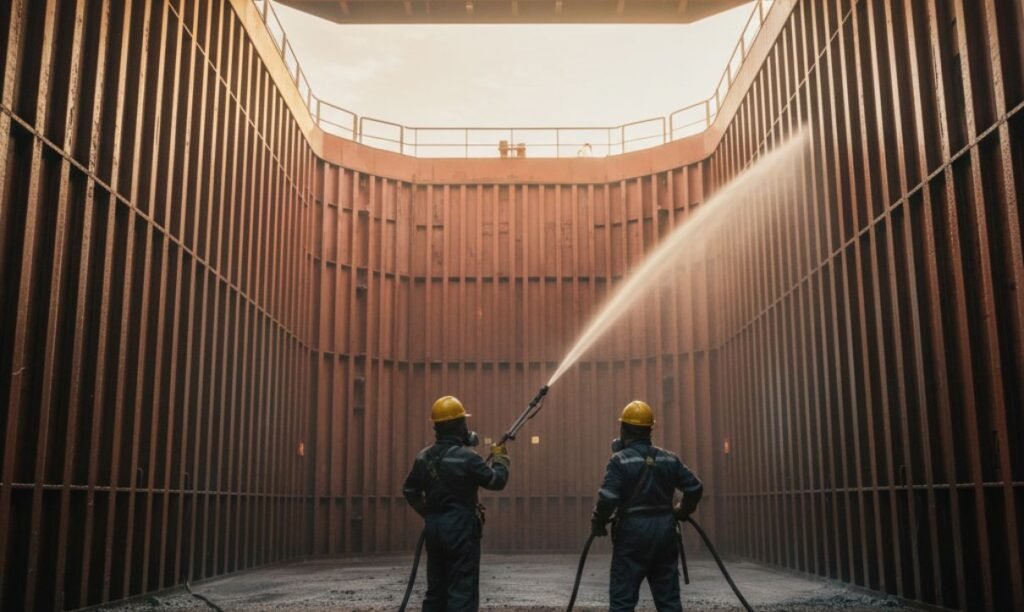
Hold cleaning exposes crews to dust, slippery surfaces, and enclosed spaces. Safety failures delay operations faster than any technical issue.
Professional cleaning programs include:
- Risk assessments before work begins
- Controlled access and permit systems
- Adequate lighting and ventilation
- Continuous supervision during cleaning
When safety is managed well, cleaning progresses smoothly and predictably.
Environmental Protection and Cost Control
Environmental discipline is not just regulatory compliance. It is cost control in disguise. Proper residue handling reduces the risk of fines, cargo rejection, and reputational damage.
Vessels that follow structured cleaning standards often see fewer disputes with charterers and faster acceptance by terminals.
Bulk Carrier Hold Cleaning Standards in Singapore
Cleaning After Coal and Ore Cargoes
Coal and iron ore leave abrasive residues that can damage coatings. Dry sweeping followed by targeted washing prevents long-term corrosion.
Preparing Holds for Grain and Food Cargo
Grain cargoes demand near-sterile conditions. Even small residues can lead to rejection. Surveyors apply standards aligned with Marine Supercargo Final Quality Rules when assessing readiness.
Fertilizer and Chemical Bulk Residues
Fertilizers and chemical bulks can be hygroscopic or corrosive. Neutralization and thorough drying are essential before loading the next cargo.
Inspection and Documentation Workflows
Cleaning without documentation is incomplete. Singapore inspectors rely on records to verify compliance.
Typical documentation includes:
- Pre-cleaning condition reports
- Cleaning method statements
- Disposal and waste tracking records
- Final hold inspection certificates
Clear paperwork shortens inspection time and builds trust with surveyors. Learn more about 7 Proven Vessel Hold Cleaning Services in Abu Dhabi.
A Real-World Port Scenario
Consider a bulk carrier discharging coal and scheduled to load grain in Singapore. The crew rushes cleaning, leaving traces in hatch corners. During inspection, surveyors reject the holds. The vessel loses its loading window and waits 36 hours.
A structured cleaning plan with documented inspections would have prevented the delay entirely.
Industry Practice and Integrated Services
Global operators like Cleanship.co illustrate how hold cleaning fits into a broader compliance model. Their industry practice often combines:
- Worldwide tank and hold cleaning operations
- Cargo supervision and compliance support
- Drug and alcohol testing services to reinforce crew safety
These elements work together to reduce operational risk rather than acting as standalone services.
Why UAE Practices Matter in Singapore Operations
The UAE has become a benchmark region for disciplined marine cleaning due to its strict port controls and high cargo volumes. Singapore mirrors this approach. Operators familiar with UAE standards often adapt smoothly to Singapore’s expectations, benefiting from procedural consistency.
Future Trends in Hold Cleaning
Mechanization and Efficiency Tools
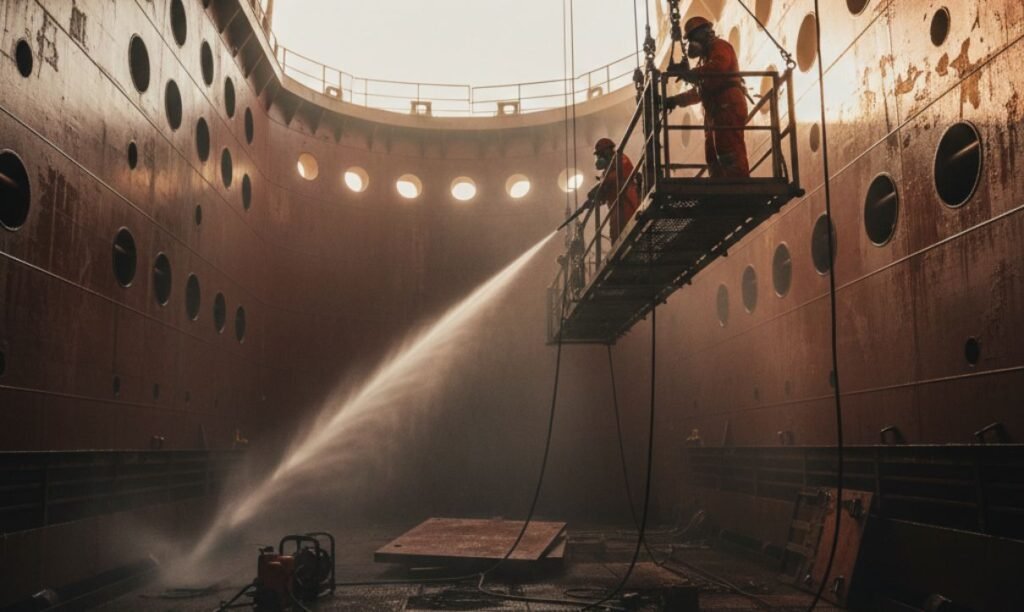
Mechanical sweepers and advanced washing equipment reduce manual effort while improving consistency.
Environmentally Safer Cleaning Methods
Low-water and biodegradable cleaning solutions are gaining acceptance as environmental scrutiny increases.
Digital Inspection Records
Electronic logs and photo-based reports allow faster review by charterers and port authorities, cutting approval times.
Speed Comes from Preparation, Not Rushing
Fast cargo clearance is the result of preparation. When cleaning plans, safety systems, and documentation are aligned, inspections become routine rather than obstacles.
Conclusion
Hold Cleaning in Singapore plays a decisive role in cargo readiness and port efficiency. First, strict alignment with IMO, IMCA, MARPOL, and IAPH standards protects you from inspection delays. Second, disciplined safety and environmental practices reduce long-term costs and disputes. Third, structured documentation ensures faster cargo acceptance and smoother port operations.
For operators seeking consistent compliance across global ports, service providers such as Cleanship.co reflect established industry practice. Their integrated approach to cleaning, inspection, and crew safety supports reliable maritime operations and professional standards.
FAQs:
Singapore applies internationally aligned inspection standards. Surveyors assess cleanliness, safety, and documentation carefully. Vessels that prepare thoroughly usually pass inspections quickly, while poorly cleaned holds often face delays or re-cleaning requirements.
Not always. Cleaning requirements depend on the previous and next cargo combination. Sensitive cargoes like grain or food products require higher cleanliness standards than industrial bulks such as coal or ore.
Hold cleaning focuses on dry cargo residues, corrosion prevention, and surface cleanliness. Tank cleaning deals with liquid residues, vapors, and chemical compatibility, requiring different equipment and safety controls.
Inspectors typically review cleaning records, waste disposal evidence, safety permits, and final inspection reports. Clear documentation reduces inspection time and supports faster cargo clearance.
Specialists bring standardized procedures, trained personnel, and compliance expertise. This reduces risk, improves inspection outcomes, and helps vessels meet port and charterer expectations efficiently.