
Introduction: Why Hold Tank Cleaning in Jebel Ali Is Mission-Critical
Jebel Ali Port is one of the busiest maritime hubs in the world. With high vessel traffic, mixed cargo profiles, and strict inspections, hold tank cleaning in Jebel Ali is not a background operation—it is a frontline compliance activity. Whether you operate tankers, bulk carriers, or multipurpose vessels, clean tanks and holds directly affect cargo acceptance, crew safety, and port clearance.
We often compare a vessel’s tank or hold to a reusable container. If it is not cleaned correctly after each use, the next cargo pays the price. In Jebel Ali, the price can be delayed, penalties, or rejected cargo.
Why the UAE Leads in Marine Cleaning Standards
Strategic Global Trade Location
The UAE connects Asia, Europe, and Africa. Jebel Ali Port serves as a transshipment and loading hub, demanding fast, reliable, and compliant marine services.
Zero-Tolerance Inspection Culture
Authorities follow international frameworks closely. Inspections are detailed, and documentation gaps are rarely overlooked.
High-Value Cargo Movement
From petrochemicals to food-grade bulk cargo, the diversity of cargoes requires precise tank and hold cleaning standards.
What Is Hold Tank Cleaning in Jebel Ali? (Plain Language)
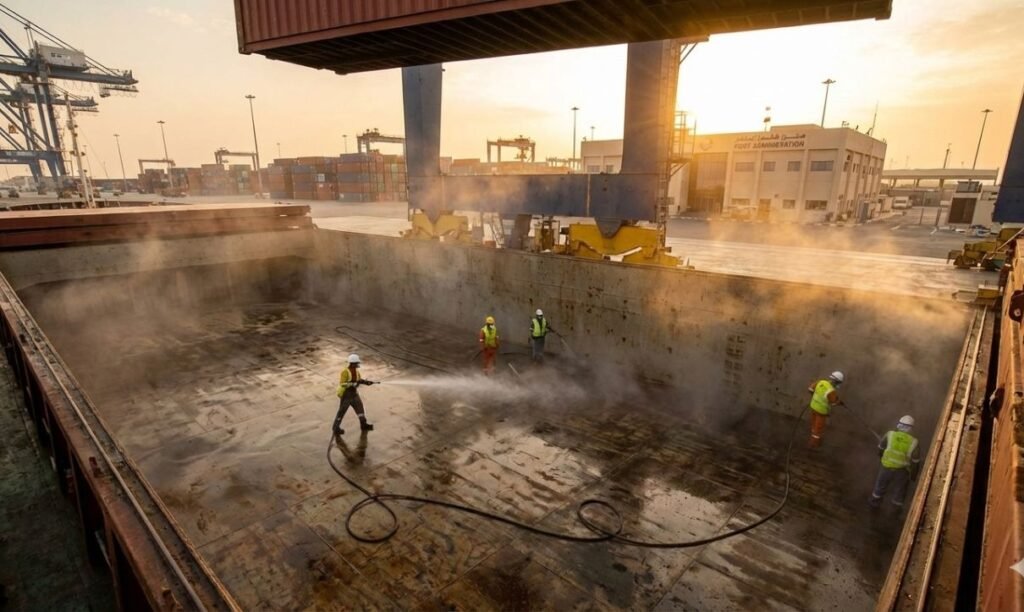
Hold tank cleaning in Jebel Ali is the process of removing residues, vapors, sludge, rust, and contaminants from cargo tanks and combined hold-tank spaces. The aim is to make the space safe, compliant, and suitable for the next cargo.
In hold tank cleaning in Jebel Ali, this often includes:
- Chemical washing
- High-pressure water jetting
- Gas freeing and ventilation
- Sludge removal
- Drying and inspection
Regulatory Framework Governing Hold Tank Cleaning in Jebel Ali
IMO: The Global Baseline
The International Maritime Organization defines safe handling, residue management, and pollution prevention standards.
MARPOL Convention
MARPOL regulates tank washings, oily residues, and disposal procedures. Non-compliance can lead to severe penalties.
IMCA Operational Safety Practices
IMCA guidelines influence confined space entry, gas testing, and permit systems during tank cleaning.
IAPH and World Ports Alignment
Jebel Ali aligns with IAPH principles, emphasizing sustainability and standardized port operations.
Benefit 1: Guaranteed Compliance with International Regulations
The first and most critical benefit of hold tank cleaning in Jebel Ali is regulatory compliance. Clean tanks reduce the risk of inspection failures under the IMO and MARPOL frameworks.
Compliance-driven cleaning ensures:
- Acceptable gas readings
- Proper waste handling
- Clear inspection records
Clean tanks are easier to certify and faster to approve.
Benefit 2: Protection of Cargo Integrity Across Voyages
Tank contamination is one of the most common causes of cargo claims. Residual chemicals, odors, or moisture can ruin the next cargo.
Professional hold tank cleaning in Jebel Ali protects:
- Cargo purity
- Chemical compatibility
- Contractual cargo specifications
In practice, a well-cleaned tank is a silent insurance policy.
Benefit 3: Safer Working Environment for Crew
Tank interiors are confined spaces with serious risks. Toxic vapors, oxygen deficiency, and slippery residues can quickly turn dangerous.
Professional cleaning operations follow safety-first workflows:
- Gas testing before entry
- Continuous ventilation
- Permit-to-work systems
Many operators adopt industry practices similar to Cleanship.co, combining cleaning operations with drug and alcohol testing services to reinforce crew safety and accountability.
Benefit 4: Faster Turnaround and Reduced Port Delays
Time pressure at Jebel Ali is real. Delays caused by failed inspections or re-cleaning can disrupt entire voyage schedules.
Efficient hold tank cleaning in Jebel Ali helps:
- Meet port windows
- Avoid re-inspection
- Maintain charter commitments
Speed without compliance is risky. Compliance with speed is profitable.
Benefit 5: Environmental Protection and Cost Control
Improper tank cleaning can lead to illegal discharge and environmental damage. MARPOL violations are costly and reputation-damaging.
Professional cleaning ensures:
- Controlled waste collection
- Approved disposal channels
- Reduced environmental footprint
Environmental protection and cost efficiency go hand in hand.
Benefit 6: Lower Long-Term Maintenance and Corrosion Risk
Residues accelerate corrosion inside tanks and holds. Over time, this leads to steel degradation and coating failure.
Regular hold tank cleaning:
- Preserves coatings
- Reduces steel wastage
- Extends tank lifespan
Preventive cleaning is cheaper than structural repairs.
Benefit 7: Stronger Commercial Credibility with Charterers
Charterers prefer vessels with a clean inspection history. Surveyors remember ships that pass on the first look.
Consistent cleaning leads to:
- Faster cargo acceptance
- Fewer disputes at delivery
- Better commercial reputation
Clean tanks reflect disciplined vessel management.
Tank, Hold, and Bulk Carrier Cleaning Standards
Tank Cleaning
Focuses on chemical compatibility, gas freeing, and residue control.
Hold Cleaning
Targets dry cargo residues, dust, rust scale, and moisture.
Bulk Carrier Considerations
Bulk carriers require special attention to dust suppression and drying, especially for food-grade cargoes.
All follow the same principle: clean, safe, and documented spaces.
Inspection and Documentation Workflow
Professional hold tank cleaning in Jebel Ali is incomplete without records. Standard workflows include:
- Pre-clean condition reports
- Cleaning method statements
- Gas-free certificates
- Final inspection sign-off
Marine supercargo professionals often verify compliance against final quality rules before cargo acceptance.
Real-World Example from Jebel Ali
A product tanker switching from chemical cargo to clean petroleum products faces strict tank acceptance criteria. Without proper cleaning and gas-free certification, loading is delayed. Structured hold tank cleaning transforms a high-risk transition into a routine operation.
Global operators like Cleanship.co reflect these industry practices through coordinated cleaning, inspection support, and compliance documentation.
Future Trends in Hold Tank Cleaning
Automation and Robotics
Remote-controlled cleaning tools reduce human exposure.
Eco-Friendly Chemicals
Biodegradable agents aligned with MARPOL expectations.
Digital Inspection Records
Photo and sensor-based reporting improve transparency and speed.
Innovation is shaping safer and cleaner operations.
Key Operational Lessons for Ship Operators
- Cleaning is a compliance process, not just labor
- Safety protocols protect both crew and schedule
- Documentation is as important as physical cleanliness
Conclusion
Hold tank cleaning in Jebel Ali is a core operational requirement for modern shipping. First, it ensures compliance with international regulations such as IMO and MARPOL. Second, it protects cargo quality while creating a safer working environment for the crew. Third, it supports faster turnaround and stronger commercial credibility in one of the world’s most demanding ports.
For operators seeking consistent compliance, reliable documentation, and maritime service excellence, working with an experienced provider like Cleanship.co aligns cleaning operations with global best practices and long-term vessel performance.
FAQs:
Q1. How often should hold tanks be cleaned?
Hold tanks should be cleaned after every cargo discharge, especially when changing cargo types. Regular cleaning prevents contamination, corrosion, and inspection failures, particularly in regulated ports like Jebel Ali.
Q2. Is hold tank cleaning mandatory under MARPOL?
MARPOL regulates residue handling and discharge rather than cleaning itself. Proper hold tank cleaning ensures compliance by controlling waste and preventing illegal discharges into the sea.
Q3. What is the difference between tank cleaning and hold cleaning?
Tank cleaning deals with liquid cargo residues and gas-free certification, while hold cleaning focuses on dry cargo residues and dust removal. Both require different tools but similar safety and compliance standards.
Q4. Who inspects tanks after cleaning in Jebel Ali?
Inspections are typically conducted by port surveyors, charterer representatives, or marine supercargo professionals who verify cleanliness, gas readings, and documentation.
Q5. Why use professional services instead of crew-only cleaning?
Professional teams provide specialized equipment, safety systems, and compliance documentation. Crew-only cleaning often lacks the technical depth required for modern inspections at ports like Jebel Ali.