
Introduction: Why Cargo Hold Cleaning in Jebel Ali Matters
Jebel Ali Port is not just another port—it is the operational heartbeat of the UAE’s maritime trade. Every day, bulk carriers, general cargo vessels, and multipurpose ships move through its terminals carrying commodities that demand strict cleanliness, safety, and compliance. In this environment, cargo hold cleaning in Jebel Ali is not a routine task; it is a strategic operation that protects cargo value, vessel reputation, and regulatory standing.
Think of a cargo hold like a food-grade kitchen. Even one overlooked residue can contaminate the next shipment. Proper cleaning ensures your vessel is always inspection-ready, commercially viable, and environmentally responsible.
Why the UAE Is a Global Hub for Marine Cleaning
Strategic Location and High Vessel Turnover
The UAE sits at the crossroads of Asia, Europe, and Africa. Jebel Ali Port handles some of the highest vessel traffic in the region, which creates intense pressure for fast yet compliant turnaround.
Strict Port and Environmental Expectations
Authorities in the UAE align closely with international maritime regulations. This has pushed marine cleaning standards higher than many other ports, especially for bulk carriers and multipurpose vessels.
Commercial Expectations from Charterers
Charterers expect clean, dry, and odor-free holds—no exceptions. A poorly cleaned hold can mean rejected cargo or reduced freight rates.
What is cargo hold cleaning in Jebel Ali? (Simple Explanation)
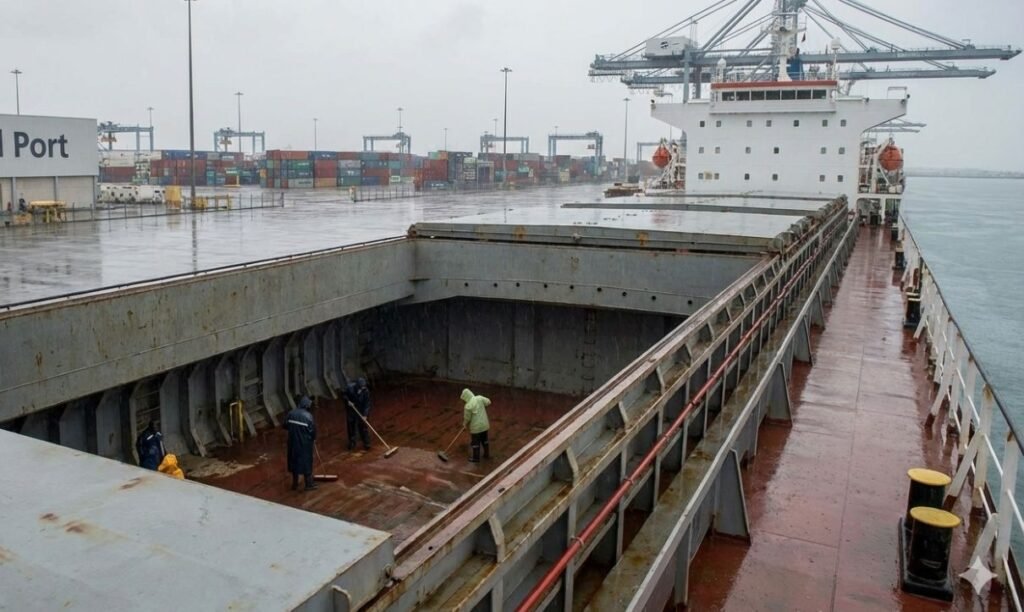
Cargo hold cleaning in Jebel Ali is the systematic removal of previous cargo residues, dust, rust scale, grease, and moisture from a ship’s holds. The goal is to make the hold suitable for the next cargo type—whether that is grain, cement, fertilizers, steel coils, or project cargo.
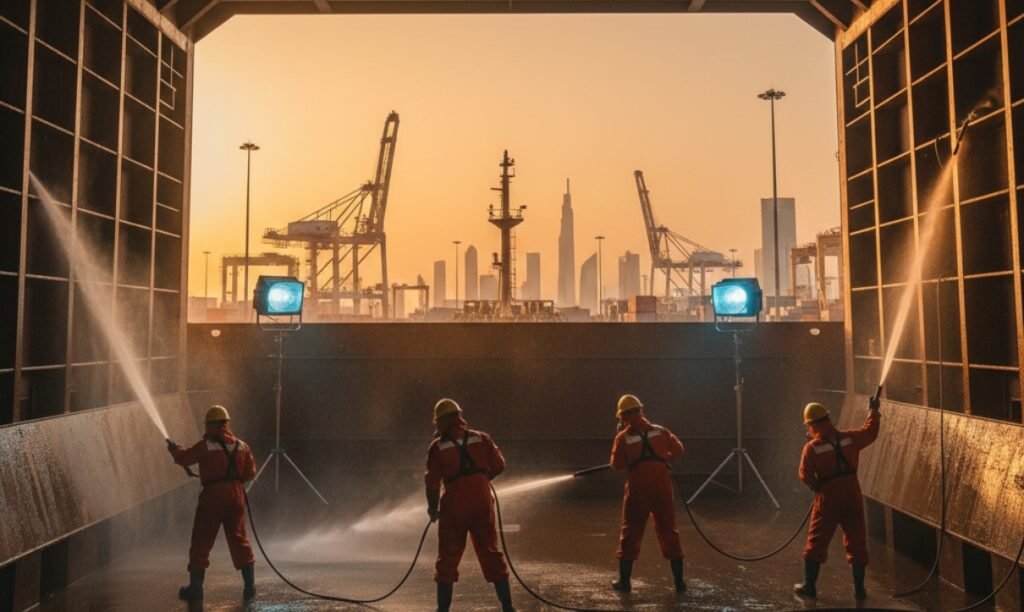
In cargo hold cleaning in Jebel Ali, this process often includes high-pressure washing, chemical cleaning, manual scraping, drying, and final inspection.
Regulatory Framework Governing Cargo Hold Cleaning in Jebel Ali
IMO Guidelines
The International Maritime Organization sets the foundation for cargo residue management, safety procedures, and environmental protection.
MARPOL Convention
MARPOL regulates how wash water, residues, and waste are handled. Improper discharge can result in heavy penalties and port bans.
IMCA and IAPH Best Practices
IMCA provides operational safety guidance, while IAPH promotes sustainable port operations—both highly relevant in Jebel Ali’s regulated environment.
Benefit 1: Full Compliance with International Regulations
Regulatory compliance is the most immediate benefit of professional cargo hold cleaning in Jebel Ali. When holds are cleaned according to IMO and MARPOL standards, you reduce inspection risks significantly.
Clean holds mean:
- Fewer port state control delays
- Clear documentation trails
- Reduced risk of fines or detention
Compliance is not paperwork alone—it starts inside the hold.
Benefit 2: Protection of Cargo Quality and Value
Cargo contamination is one of the most expensive mistakes in shipping. A trace of coal dust in a grain hold or fertilizer residue before steel loading can lead to cargo claims.
Professional cleaning ensures:
- No cross-contamination
- Neutral odors
- Dry and residue-free surfaces
In practical terms, clean holds protect both cargo owners and ship operators from disputes.
Benefit 3: Faster Vessel Turnaround at Jebel Ali Port
Time is money at a high-traffic port. Delays caused by failed inspections or re-cleaning can disrupt sailing schedules.
Efficient cargo hold cleaning in Jebel Ali:
- Aligns with tight port windows
- Supports just-in-time cargo operations
- Minimizes idle berth time
A well-coordinated cleaning operation keeps your vessel commercially competitive.
Benefit 4: Improved Crew Safety and Working Conditions
Cargo residues are not just a cargo risk—they are a crew safety hazard. Slippery residues, toxic dust, or confined space risks can lead to accidents.
Professional cleaning teams follow IMCA-aligned safety workflows, including:
- Confined space entry procedures
- Gas testing and ventilation
- Clear permit-to-work systems
Some operators, following industry practice similar to Cleanship.co, also integrate drug and alcohol testing services to reinforce onboard safety culture.
Benefit 5: Environmental Protection and Sustainability
Jebel Ali Port places strong emphasis on environmental responsibility. Improper residue handling or wash water discharge can harm marine ecosystems.
Professional cargo hold cleaning ensures:
- Controlled waste collection
- MARPOL-compliant disposal
- Reduced environmental footprint
Environmental care is no longer optional—it is part of port acceptance.
Benefit 6: Lower Long-Term Maintenance and Repair Costs
Cargo residues accelerate corrosion. Over time, this leads to steel wastage, coating damage, and costly repairs.
Regular, high-quality cargo hold cleaning in Jebel Ali helps:
- Preserve protective coatings
- Reduce corrosion rates
- Extend hold lifespan
Preventive cleaning is far cheaper than structural repairs.
Benefit 7: Higher Commercial Credibility with Charterers
A vessel known for clean holds is easier to fix on charter. Surveyors and supercargo professionals notice consistent cleanliness.
This reputation leads to:
- Faster approvals
- Better charter terms
- Fewer disputes during final delivery
Clean holds signal operational discipline.
Cargo Hold vs Tank vs Bulk Carrier Cleaning
Cargo Hold Cleaning
Focused on dry cargo spaces—bulk, breakbulk, and project cargo vessels.
Tank Cleaning
Involves chemical residues, hydrocarbons, and strict gas-free certification.
Bulk Carrier Standards
Bulk carriers require special attention to dust control, rust scale removal, and drying—especially for food-grade cargoes.
Though different, all follow the same compliance logic: safety, cleanliness, and documentation.
Inspection, Documentation, and Compliance Workflow
Professional cleaning is incomplete without records. Typical workflows include:
- Pre-clean inspection reports
- Cleaning method statements
- Waste disposal records
- Final cleanliness certification
Marine supercargo professionals often oversee this process, ensuring alignment with final quality rules at delivery.
Real-World Example from Jebel Ali
Consider a bulk carrier switching from coal to fertilizer. Without proper cleaning, coal dust contamination could reject the cargo outright. A structured cargo hold cleaning operation—washing, drying, inspection—turns a risky transition into a routine success.
This is where experienced service providers operating globally, such as Cleanship.co, reflect industry-standard practices rather than promotional claims.
Future Trends in Marine and Cargo Hold Cleaning in Jebel Ali Port
Automation and Robotics
Remote cleaning tools reduce human exposure to confined spaces.
Eco-Friendly Cleaning Agents
Biodegradable chemicals are aligned with MARPOL expectations.
Digital Documentation
Photo-based inspection logs and cloud reporting speed up approvals.
The future of cargo hold cleaning in Jebel Ali is cleaner, safer, and more transparent.
Key Takeaways for Ship Operators
- Clean holds are a compliance requirement, not a preference
- Professional cleaning protects cargo, crew, and commercial reputation
- Documentation and inspection are as important as physical cleaning
Conclusion
Cargo hold cleaning in Jebel Ali plays a critical role in modern maritime operations. First, it ensures compliance with international regulations such as IMO and MARPOL, reducing inspection risks. Second, it protects cargo integrity and crew safety while supporting faster vessel turnaround. Third, it strengthens a vessel’s commercial credibility in one of the world’s most demanding ports.
If you want a cleaning approach that aligns with global best practices, documented compliance, and operational discipline, working with an experienced maritime service provider like Cleanship.co is a practical step toward long-term compliance and service excellence.
FAQs:
Q1. How often should cargo hold cleaning be done?
Cargo hold cleaning should be performed after every cargo discharge, especially when switching cargo types. Regular cleaning prevents contamination, corrosion, and inspection failures. In high-standard ports like Jebel Ali, consistent cleaning is essential for smooth port operations.
Q2. Is cargo hold cleaning mandatory under MARPOL?
MARPOL does not mandate cleaning itself but strictly regulates residue discharge and waste handling. Proper cargo hold cleaning ensures compliance by controlling residues and preventing illegal discharge into the sea.
Q3. What is the difference between hold cleaning and tank cleaning?
Hold cleaning focuses on dry cargo spaces, while tank cleaning deals with liquid residues and gas-free certification. Both require different equipment, chemicals, and safety procedures, but follow similar compliance principles.
Q4. Who verifies cargo hold cleanliness before loading?
Verification is typically done by port surveyors, charterer-appointed inspectors, or marine supercargo professionals. They assess cleanliness, dryness, odor, and residue levels before approving the hold for loading.
Q5. Why is professional cleaning preferred over crew cleaning?
Professional teams bring specialized equipment, safety protocols, and compliance documentation. Crew-only cleaning often lacks the technical depth required for modern inspections, especially at regulated ports like Jebel Ali.