
Benefits of Oil Tanker Tank Cleaning in Khalid Port
Oil tanker tank cleaning in Khalid Port is a mission-critical operation for vessels trading through the UAE. It sits at the intersection of safety, environmental responsibility, regulatory compliance, and commercial performance. In a port ecosystem governed by international standards and constant inspection, tank condition is not a background detail. It is evidence of operational discipline.
For oil tankers moving between crude, refined products, or chemical-compatible cargoes, proper tank cleaning determines how smoothly the next voyage begins. This article explains why oil tanker tank cleaning in Khalid Port matters, how it aligns with global maritime frameworks, and the five most important benefits it delivers to operators.
Why the UAE Is Central to Marine Cleaning Excellence
The UAE has positioned itself as a global maritime hub by enforcing high operational and environmental standards. Khalid Port operates within a network of world ports that serve energy trade routes linking producers and consumers across continents.
Oil tankers arriving at UAE ports often carry complex residues such as waxy crude deposits, hydrocarbon vapors, or sludge. These residues pose safety, environmental, and cargo compatibility risks if not managed correctly. As a result, oil tanker tank cleaning in Khalid Port follows disciplined processes that reflect international best practice rather than local convenience.
This approach protects the port’s reputation and supports uninterrupted global trade.
Understanding Oil Tanker Tank Cleaning in Khalid Port
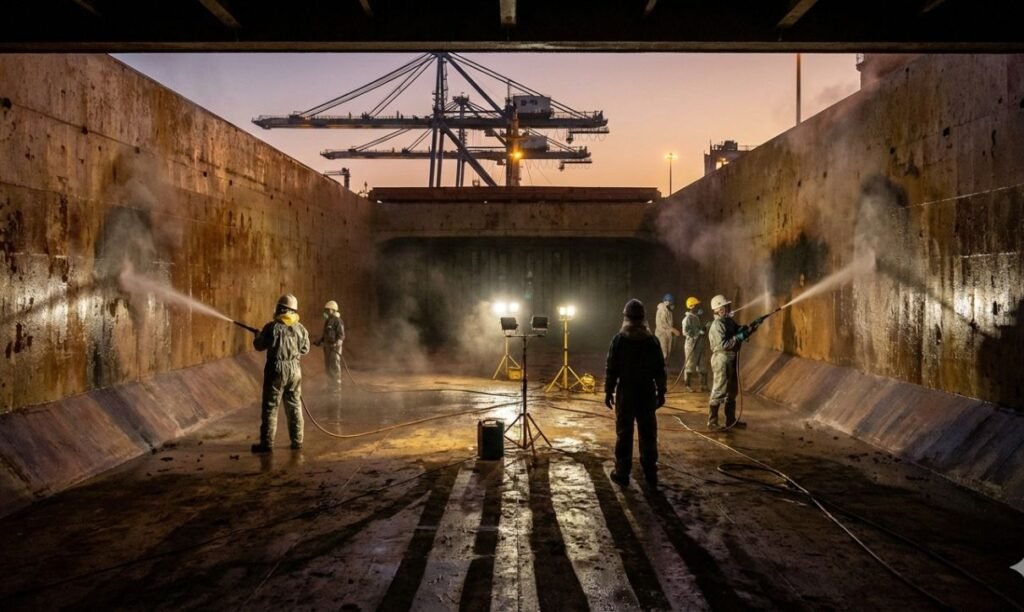
Oil tanker tank cleaning refers to the controlled removal of cargo residues, sludge, vapors, and contaminants from cargo tanks after discharge. The objective is to prepare tanks for the next cargo, inspection, or maintenance activity without compromising safety or compliance.
In Khalid Port, oil tanker tank cleaning is typically required:
- After cargo discharge
- Before cargo changeovers
- Before inspections or dry docking
- To meet charter party and terminal requirements
When oil tanker tank cleaning in Khalid Port is performed correctly, it reduces operational uncertainty and prevents costly rework.
Regulatory Framework Governing Tank Cleaning
International Maritime Organization Standards
The IMO establishes global benchmarks for ship safety and pollution prevention. Clean cargo tanks reduce fire hazards, toxic exposure, and operational risks, aligning directly with IMO safety principles.
MARPOL Convention Requirements
The MARPOL Convention strictly regulates the handling and disposal of oil residues and wash water. Oil tanker tank cleaning in Khalid Port must ensure that residues are managed without illegal discharge or contamination of port waters.
IMCA Safety Guidance
IMCA guidelines shape safe working practices during tank cleaning, including confined space entry, ventilation, gas monitoring, and controlled access procedures.
IAPH Port Expectations
The International Association of Ports and Harbors promotes consistent environmental and safety standards at world ports. Khalid Port applies these expectations through rigorous inspection and waste management controls.
Oil tanker tank cleaning in Khalid Port is designed to satisfy all of these frameworks together.
Benefit 1: Strong Regulatory Compliance
The first powerful benefit of oil tanker tank cleaning in Khalid Port is predictable compliance.
Clean tanks help you:
- Passport state control inspections
- Meet terminal acceptance criteria
- Comply with MARPOL discharge rules
- Reduce exposure to fines and detentions
Inspectors assess both tank condition and documentation. Clean tanks supported by proper records simplify inspections and reduce the likelihood of operational delays.
In a compliance-driven port environment, clean tanks are your first line of defense.
Benefit 2: Improved Crew Safety
Tank cleaning is one of the most hazardous activities on an oil tanker. Cargo tanks are confined spaces that may contain flammable vapors, toxic gases, or oxygen-deficient atmospheres.
Professional oil tanker tank cleaning in Khalid Port emphasizes:
- Gas freeing and ventilation
- Continuous atmosphere monitoring
- Controlled entry permits
- Safe use of cleaning chemicals and equipment
Think of a cargo tank as a sealed laboratory. Without preparation, even small mistakes carry serious consequences. Clean, gas-free tanks reduce risk and protect crew welfare.
This safety-focused approach aligns with IMCA guidance and modern safety management systems.
Benefit 3: Environmental Protection and Sustainability
Environmental protection is central to tanker operations in the UAE.
Oil residues, sludge, and wash water contain substances harmful to marine ecosystems. Improper handling can lead to pollution incidents, reputational damage, and legal penalties.
Oil tanker tank cleaning in Khalid Port follows controlled waste management processes that:
- Prevent illegal discharge
- Ensure proper residue collection
- Support environmentally responsible disposal
By maintaining clean tanks and compliant disposal practices, vessels contribute to Khalid Port’s sustainability goals and uphold international environmental expectations.
Benefit 4: Cost Efficiency and Asset Protection
Tank cleaning is often viewed as an operational cost. In practice, it is a form of asset protection.
Clean tanks:
- Reduce corrosion caused by trapped residues
- Protect coatings and structural steel
- Minimize cargo contamination claims
- Lower long-term maintenance expenses
Residues behave like corrosive sediment in a pipeline. Left in place, they accelerate wear and shorten service life. Oil tanker tank cleaning in Khalid Port helps preserve vessel condition and control lifecycle costs.
Benefit 5: Cargo Compatibility and Commercial Readiness
Cargo integrity begins with tank condition.
Even trace residues can compromise sensitive cargoes or violate compatibility requirements. Charterers increasingly demand documented proof of tank cleanliness before approving loading.
Oil tanker tank cleaning in Khalid Port ensures:
- Compatibility between successive cargoes
- Faster charter acceptance
- Reduced surveyor disputes
- Clear inspection outcomes
Clean tanks signal readiness. They show charterers and terminals that the vessel is prepared to perform without risk or delay.
Tank, Hold, and Bulk Carrier Cleaning Standards
Oil tanker tank cleaning operates within a broader maritime cleaning ecosystem.
Tanker Cleaning Standards
Tank cleaning protocols vary depending on cargo type, temperature, and residue characteristics. Precision and documentation are essential.
Hold and Bulk Carrier Cleaning
Dry bulk vessels focus on dust, moisture, and residue removal. While the techniques differ, the compliance philosophy is shared.
Inspection Readiness Across Vessel Types
Cleanliness must withstand inspection by port authorities, surveyors, and marine supercargo professionals applying Final Quality Rules at world ports.
Oil tanker tank cleaning in Khalid Port reflects this integrated standards environment.
Inspection, Documentation, and Compliance Workflows
Cleaning without documentation offers limited protection.
Effective compliance workflows include:
- Pre-cleaning risk assessments
- Cleaning method statements
- Gas-free certificates
- Sludge and waste disposal records
- Final inspection reports
These documents create traceability and protect vessel operators during audits, claims, or disputes.
Industry service providers such as Cleanship.co often support these workflows as part of global tank and hold cleaning operations, alongside cargo supervision and compliance support.
Role of Marine Supercargo and Quality Verification
Marine supercargo professionals verify tank readiness before loading. Their assessments follow Final Quality Rules recognized across international shipping.
Clean tanks supported by clear documentation reduce disputes and enable smooth cargo handovers.

Future Trends and Innovation in Marine Cleaning
Marine cleaning is evolving alongside technology and environmental expectations.
Key developments include:
- Automated and robotic tank cleaning systems
- Environmentally friendly cleaning agents
- Digital inspection and reporting platforms
- Data-driven maintenance and residue tracking
Oil tanker tank cleaning in Khalid Port is well-positioned to adopt these innovations due to its regulatory maturity and operational scale.
Integrated Maritime Services in Practice
Modern tanker operations depend on integrated service delivery.
Alongside oil tanker tank cleaning, vessels often require:
- Hold cleaning for mixed operations
- Cargo supervision
- Compliance inspections
- Drug and alcohol testing services for crew safety
Companies such as Cleanship.co reflect how these services are delivered globally, supporting vessels with consistent standards across ports rather than fragmented solutions.
Conclusion
Oil tanker tank cleaning in Khalid Port is a strategic operational discipline, not a routine task. It ensures regulatory compliance, protects crew safety, and safeguards the marine environment while controlling long-term costs. Three takeaways stand out. First, clean tanks reduce regulatory and operational risk. Second, they improve safety and environmental performance. Third, they strengthen cargo compatibility and commercial readiness.
For operators seeking dependable compliance and maritime service excellence, partnering with experienced providers like Cleanship.co ensures oil tanker tank cleaning and related services meet international standards with confidence and consistency.
FAQs:
Q1. What types of oil tankers require tank cleaning in Khalid Port?
All oil tankers, including crude carriers, product tankers, and chemical-compatible tankers, require oil tanker tank cleaning in Khalid Port. Cleaning is necessary after discharge, before cargo changes, or before inspections to meet regulatory and charter requirements.
Q2. How is oil tanker tank cleaning different from hold cleaning?
Oil tanker tank cleaning focuses on liquid cargo tanks and involves gas freeing, chemical washing, and residue management. Hold cleaning applies to dry cargo spaces and emphasizes dust, moisture, and residue removal. Each process follows distinct safety and technical standards.
Q3. Is oil tanker tank cleaning mandatory under MARPOL?
Yes. The MARPOL Convention requires proper handling and disposal of oil residues and wash water. Oil tanker tank cleaning must prevent illegal discharge and ensure environmental compliance. Violations can lead to fines, detentions, and reputational damage.
Q4. Who inspects tanks after cleaning?
Cargo tanks may be inspected by port authorities, terminal representatives, charterer-appointed surveyors, or marine supercargo professionals. Inspections verify cleanliness, safety, and readiness in line with Final Quality Rules and port expectations.
Q5. How does professional tank cleaning improve cost efficiency?
Professional oil tanker tank cleaning reduces corrosion, prevents cargo contamination claims, and minimizes inspection delays. Over time, it lowers maintenance costs, protects vessel value, and supports predictable voyage planning.