Dighi Port has become an important maritime gateway on India’s western coast, handling a wide range of commercial vessels, including bulk carriers, tankers, offshore support vessels, container feeders, and coastal cargo ships. As vessel traffic continues to increase, operators are searching for efficient inspection methods that reduce downtime without compromising safety. This is why ROV Hull Inspection in Dighi has become a preferred solution for many shipping companies.
A Remotely Operated Vehicle (ROV) allows marine inspectors to examine a vessel’s underwater hull while it remains afloat. Equipped with high-definition cameras, powerful lighting systems, and precision maneuvering controls, an ROV captures detailed visual data without requiring extensive diver intervention in many inspection scenarios. The result is a faster, safer, and highly accurate assessment of underwater structures.
Whether a vessel requires a routine condition survey, pre-drydock assessment, or class-supported underwater inspection, ROV Hull Inspection in Dighi provides valuable information that helps shipowners make informed maintenance decisions.
What is ROV Hull Inspection?
ROV Hull Inspection in Dighi is an underwater inspection service that uses a remotely operated vehicle to examine the submerged areas of a vessel while it remains afloat. Controlled from the surface by trained operators, the ROV transmits live high-definition video and captures detailed images of underwater components.
The inspection typically covers the hull plating, propeller, rudder, sea chests, thrusters, bilge keels, sacrificial anodes, and intake gratings. The recorded footage enables technical managers to assess the condition of underwater structures without immediately scheduling dry docking.
This technology has become an essential part of modern vessel maintenance because it combines efficiency with reliable inspection data.
Why ROV Hull Inspection is Valuable in Dighi
Dighi’s growing commercial activity means many vessels operate under strict turnaround schedules. Delaying departures for underwater inspections is often impractical unless repairs are absolutely necessary.
Choosing ROV Hull Inspection in Dighi allows shipowners to inspect underwater structures during scheduled port stays, cargo operations, or bunkering activities. The inspection delivers detailed visual evidence that helps determine whether maintenance can be postponed or should be scheduled immediately.
This flexibility helps shipping companies reduce unnecessary maintenance expenses while maintaining operational reliability.
1. Improves Inspection Accuracy
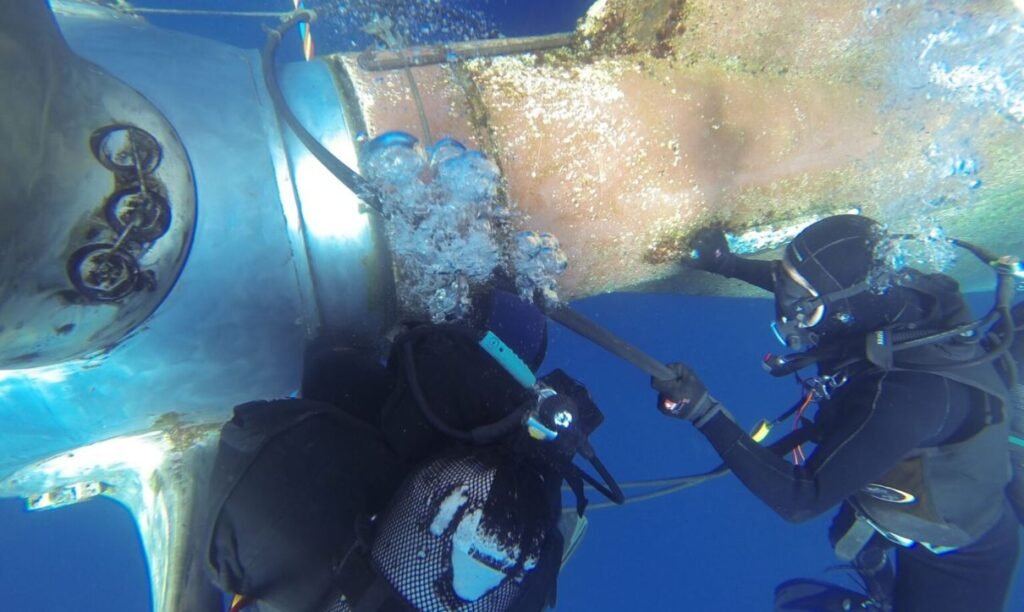
One of the biggest advantages of ROV Hull Inspection in Dighi is the exceptional image quality produced by modern inspection systems. High-definition cameras combined with powerful underwater lighting provide detailed footage of submerged structures.
For example, an offshore support vessel arriving in Dighi for routine maintenance can undergo a complete hull inspection using an ROV. Engineers reviewing the recorded footage can clearly identify coating damage, corrosion, marine growth, or mechanical defects without relying solely on written observations.
Accurate visual evidence supports better maintenance decisions.
2. Enhances Operational Safety
Underwater inspections sometimes involve challenging environmental conditions. Strong currents, poor visibility, or confined spaces may increase risks during diver operations.
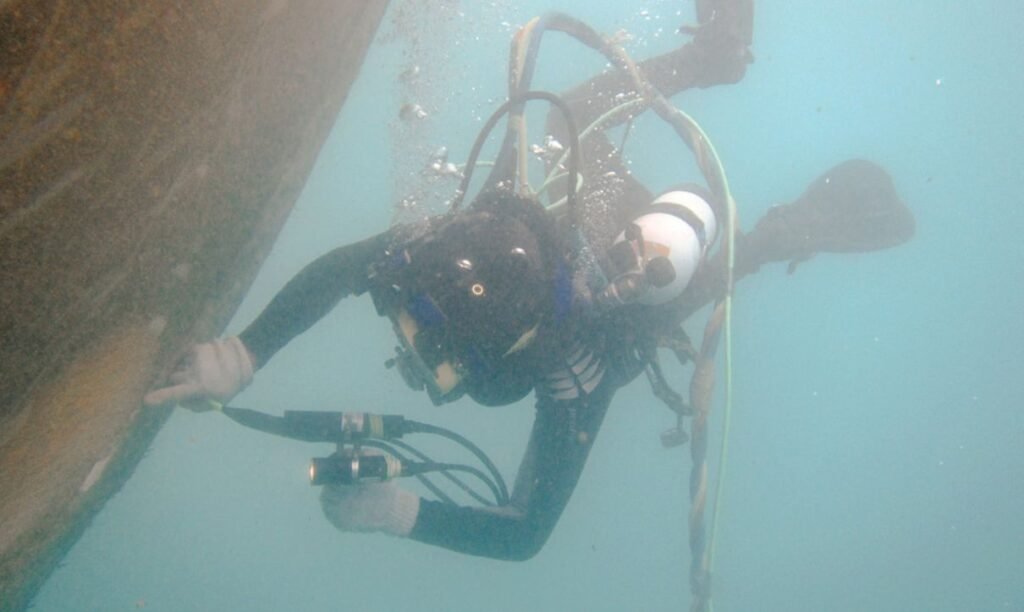
Professional ROV Hull Inspection in Dighi minimizes these challenges by allowing remotely controlled equipment to inspect difficult underwater areas. While divers may still be required for certain specialized tasks, ROV technology significantly reduces unnecessary underwater exposure.
This contributes to safer inspection procedures for marine personnel.
3. Reduces Vessel Downtime
Time spent waiting for inspections can affect voyage schedules and commercial commitments.
With ROV Hull Inspection in Dighi, vessels often complete underwater inspections during normal port activities without entering dry dock. Cargo loading, unloading, or bunkering may continue alongside the inspection whenever operational conditions allow.
Reducing downtime improves vessel availability and supports more efficient fleet management.
4. Supports Preventive Maintenance
Preventive maintenance depends on accurate information rather than assumptions.
Routine ROV Hull Inspection in Dighi helps identify coating deterioration, corrosion, marine growth, damaged anodes, or propeller defects before they become serious maintenance issues. Technical managers can then schedule repairs during planned maintenance periods instead of responding to unexpected failures.
This proactive maintenance strategy improves long-term vessel reliability.
5. Assists Classification and Technical Surveys
Many classification societies and shipowners require reliable underwater documentation to support technical evaluations.
Professional ROV Hull Inspection in Dighi provides high-definition videos, underwater photographs, and detailed inspection reports that assist classification reviews, insurance documentation, and maintenance planning.
The recorded footage also becomes part of the vessel’s technical maintenance history for future reference.
6. Reduces Inspection Costs
Dry docking a vessel solely for visual underwater inspection can be expensive, especially when no repairs are ultimately required.
Choosing ROV Hull Inspection in Dighi allows operators to assess underwater structures while the vessel remains afloat. If the inspection confirms satisfactory condition, shipowners may avoid unnecessary maintenance costs and optimize future dry dock planning.
This makes inspection budgets more predictable and efficient.
7. Supports Better Asset Management
Every underwater inspection generates valuable information that supports long-term fleet maintenance.
Regular ROV Hull Inspection in Dighi enables technical managers to compare inspection results over multiple years, monitor coating performance, evaluate structural condition, and prioritize maintenance investments.
For fleet operators managing several vessels, consistent inspection records simplify maintenance planning across the entire fleet.
Technologies Used During ROV Hull Inspection
High-Definition Underwater Cameras
Modern ROV systems use advanced underwater cameras capable of capturing highly detailed video in challenging marine environments. Even small coating defects, corrosion, or marine growth become clearly visible during inspection.
The recorded footage allows technical experts to perform detailed reviews long after the inspection is completed.
Precision Navigation Systems
ROVs use thrusters, positioning systems, and remote control technology to navigate around complex underwater structures with precision.
This allows operators to inspect difficult areas such as sea chests, rudders, thruster tunnels, and propeller assemblies without compromising inspection quality.
Digital Reporting and Video Documentation
Following ROV Hull Inspection in Dighi, service providers prepare comprehensive digital reports that include underwater photographs, recorded videos, inspection observations, and maintenance recommendations.
These reports provide valuable documentation for technical departments, classification societies, insurers, and vessel owners.
Choosing the Right ROV Hull Inspection Provider in Dighi
Selecting a qualified marine inspection company is essential for obtaining reliable inspection results. Shipowners should work with providers that employ experienced ROV operators, maintain advanced inspection equipment, and understand commercial vessel maintenance requirements.
A professional inspection company does more than record underwater video. They interpret inspection findings, identify maintenance priorities, and provide practical recommendations that support efficient vessel management.
Experience working in Dighi’s port environment also helps ensure inspections are completed safely and without unnecessary operational delays.
Conclusion
ROV Hull Inspection in Dighi has become an essential service for modern shipping companies seeking accurate underwater inspections with minimal operational disruption. By combining advanced imaging technology with experienced marine professionals, ROV inspections provide reliable information that supports preventive maintenance, classification compliance, and long-term asset protection.
From improving inspection accuracy and reducing downtime to enhancing safety and lowering maintenance costs, ROV Hull Inspection in Dighi delivers measurable benefits for commercial vessel operators. As maritime technology continues to evolve, ROV inspections will remain a key component of efficient underwater vessel management.
FAQs:
Q1. What is ROV Hull Inspection in Dighi?
ROV Hull Inspection in Dighi is an underwater inspection service that uses a remotely operated vehicle equipped with cameras and lighting to examine a vessel’s submerged structures while it remains afloat.
Q2. Which vessel components are inspected using an ROV?
The inspection generally covers the hull, propeller, rudder, sea chests, thrusters, intake gratings, sacrificial anodes, bilge keels, and other underwater structures.
Q3. Why is ROV hull inspection better than traditional visual inspection?
ROV inspections provide detailed high-definition video, improve safety by reducing diver exposure in many situations, support accurate documentation, and often reduce operational downtime.
Q4. Can ROV Hull Inspection be completed without dry docking?
Yes. Professional ROV Hull Inspection in Dighi is performed while the vessel remains afloat, allowing inspections to take place during scheduled port stays or routine operations.
Q5. How often should vessels undergo ROV hull inspections?
Inspection frequency depends on vessel type, operating conditions, classification requirements, maintenance schedules, and company policies. Many commercial operators include routine ROV Hull Inspection in Dighi as part of their preventive maintenance strategy.