
Chennai Port handles a steady flow of bulk carriers moving coal, clinker, fertilizers, gypsum, and food grains. In this high-traffic environment, ship hold cleaning in Chennai is not a routine task—it is a compliance-driven operation tied directly to cargo safety and vessel turnaround time.
Charterers, marine supercargo inspectors, and port authorities demand strict cleanliness standards before loading begins. Failure to meet these standards can lead to cargo rejection, demurrage, and reputational damage. Professional hold cleaning teams operate within clear frameworks set by IMO, IMCA, the MARPOL Convention, and IAPH World Ports guidelines to ensure safe and lawful operations.
The Operational Reality at Chennai Port
Chennai’s humid coastal climate accelerates corrosion inside cargo holds. Bulk cargo residues harden quickly in tropical conditions. Tight berthing schedules leave little margin for cleaning delays.
Marine supercargo inspectors apply detailed checks based on Marine Supercargo Final Quality Rules. They examine tank tops, frames, ladders, and bilges for residues, rust scale, and moisture. Efficient ship hold cleaning in Chennai anticipates these inspection points before surveyors step onboard.
Why Clean Holds Protect Commercial Interests
A contaminated cargo hold can result in rejected shipments. For example, leftover coal dust inside a hold scheduled for wheat loading can cause immediate refusal. Cleaning errors often lead to charter-party disputes and insurance claims.
Professional contractors understand that hold cleaning is not cosmetic. It protects cargo integrity, ensures contract compliance, and safeguards vessel reputation.
Regulatory Framework Governing Hold Cleaning
International standards define how cleaning operations must be performed.
The International Maritime Organization (IMO) sets global safety and pollution-prevention rules.
The MARPOL Convention governs waste handling and discharge prevention.
IMCA provides operational safety guidance for marine contractors, especially confined space entry.
IAPH World Ports standards promote sustainable and safe port operations.
Reputable providers of ship hold cleaning in Chennai align their methods with these frameworks to reduce operational and environmental risk.
Solution 1: High-Pressure Water Jetting
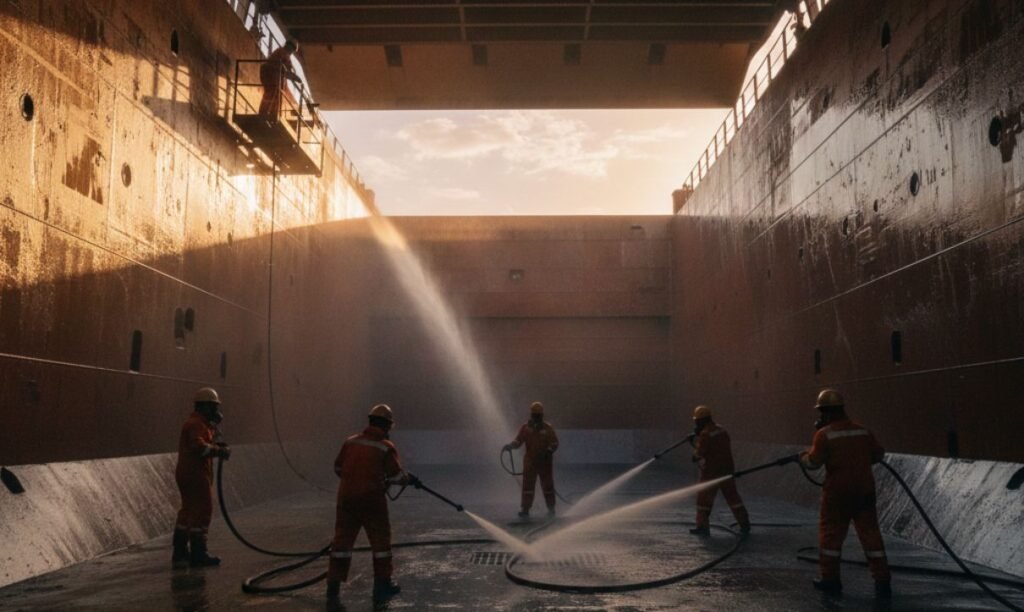
Industrial water jetting removes hardened cargo residues and loose scale from steel surfaces. Pressure settings must match coating condition to prevent damage.
Experienced technicians calibrate pumps and nozzles carefully. They also control water runoff to comply with MARPOL waste handling rules.
Solution 2: Confined Space Entry Protocols
Cargo holds qualify as confined spaces. Oxygen deficiency, toxic vapors, and poor ventilation present serious hazards.
IMCA guidance and IMO safety codes require atmosphere testing, mechanical ventilation, entry permits, and standby rescue arrangements. Before entry begins, crews conduct gas detection and risk assessments.
Safe ship hold cleaning in Chennai always prioritizes personnel protection alongside operational efficiency.
Solution 3: Mechanical Descaling and Rust Control
Chennai’s humidity accelerates steel corrosion. Rust flakes contaminate sensitive cargo such as grains and fertilizers.
Mechanical brushing, chipping tools, and industrial vacuum systems remove loose scale effectively. Teams inspect structural members and corners where corrosion often accumulates.
Rust control remains one of the most common causes of inspection rejection, making this step critical.
Solution 4: Residue Collection and Disposal Compliance
Cleaning generates wastewater, sludge, and debris. Disposal must follow MARPOL Convention guidelines and local port environmental rules.
Licensed contractors transport waste to approved shore facilities. Proper documentation protects vessel operators from regulatory penalties and environmental liability. Read more about Hold Tank Cleaning in Abu Dhabi: 7 Powerful Safety Gains.
Solution 5: Drying and Moisture Elimination
After washing, drying becomes the next challenge. Chennai’s coastal air slows natural evaporation.
Industrial air blowers and dehumidification methods help reduce moisture levels. Surveyors inspect tank tops and bilges to confirm dryness before loading.
Effective ship hold cleaning in Chennai integrates drying verification into the workflow to avoid last-minute inspection failures.
Solution 6: Pre-Inspection Readiness Checks
Experienced contractors perform internal quality checks before calling supercargo inspectors.
They examine ladders, upper frames, hatch coamings, and under-deck structures. These areas often trap residues.
Pre-inspection reduces the risk of survey rejection and saves valuable berth time.
Solution 7: Coordinated Multi-Team Execution
Large bulk carriers contain multiple holds. Sequential cleaning wastes time.
Professional teams deploy parallel crews across holds, supported by synchronized equipment logistics. This approach reduces port stay and supports charter compliance.
Equipment Standards and Technical Capability
Serious contractors invest in calibrated pumps, certified gas detectors, non-sparking tools, and personal protective equipment compliant with IMO and IMCA safety expectations.
Maintenance records, inspection logs, and training certifications form part of audit documentation. Equipment reliability directly influences cleaning quality and safety outcomes.
Environmental Stewardship at Chennai Port
The MARPOL Convention prohibits uncontrolled discharge of operational waste. IAPH World Ports initiatives emphasize sustainability and pollution prevention.
Responsible contractors use containment barriers and wastewater collection systems to prevent harbor contamination. Environmental compliance protects both the vessel and the port ecosystem.
Coordination with Port Authorities
Cleaning operations require work permits, timing approvals, and safety clearances from port officials.
Established providers of ship hold cleaning in Chennai maintain working relationships with harbor authorities and terminal operators. Smooth coordination prevents operational bottlenecks and inspection delays.
Documentation and Audit Preparedness
Shipowners and charterers expect full documentation. Reports typically include:
Gas testing logs
Confined space permits
Waste disposal certificates
Photographic evidence
Completion certificates
These documents support insurance compliance and charter-party obligations. Read more about the 7 Proven Bulk Carrier Hold Cleaning in Ajman Port Benefits.
Workforce Training and Competence
Technician skill levels determine operational success. Training includes confined space entry certification, hazard awareness, emergency response drills, and equipment handling.
Familiarity with bulk cargo types common to Chennai improves cleaning strategy and inspection readiness.
Insurance and Risk Mitigation
Professional contractors carry marine liability insurance aligned with port risk exposure. Pre-task risk assessments and toolbox meetings help reduce incident probability.
Risk management protects crew safety and financial stability.
Benchmarking and Industry Standards
Global operators often compare cleaning performance with recognized industry benchmarks. Platforms such as Cleanship.co promote standardized marine cleaning expectations and quality verification processes.
Benchmark alignment signals that contractors operate within recognized international frameworks while respecting local port regulations.
Commercial Impact of Professional Cleaning
Efficient ship hold cleaning in Chennai reduces demurrage exposure, prevents cargo claims, and improves charter compliance. First-pass inspection approval shortens port stay and enhances operational predictability.
In competitive bulk shipping markets, reliability matters as much as cost.
Future Trends in Hold Cleaning Operations
Technological advances are improving water recovery systems, corrosion monitoring tools, and digital inspection reporting.
As Chennai Port expands cargo volumes, demand for higher efficiency and stricter compliance will increase. Contractors who invest in safety, documentation, and environmental responsibility will remain competitive.
Conclusion
Professional hold cleaning protects cargo quality, regulatory compliance, and vessel reputation. In a high-volume port like Chennai, strict alignment with IMO regulations, IMCA guidance, the MARPOL Convention, IAPH World Ports standards, and Marine Supercargo Final Quality Rules is essential. Skilled contractors combine technical equipment, trained personnel, and structured documentation to ensure smooth inspections and minimal delays.
If your vessel is calling at Chennai, secure a qualified cleaning partner early in the port planning cycle. Proactive coordination prevents costly disruptions and ensures your cargo operations proceed without compliance setbacks.
FAQs:
For a Panamax bulk carrier, cleaning may take 12–36 hours depending on residue type, hold condition, and inspection requirements.
Yes. Wastewater handling and residue disposal must follow MARPOL Convention standards and local port environmental rules.
Atmosphere testing, ventilation, confined space permits, rescue planning, and compliance with IMCA and IMO safety codes are mandatory.
Common reasons include loose rust scale, hidden residues in frame corners, standing water, and incomplete drying.
Partial surface cleaning may begin during discharge in some cases, but full confined space entry typically occurs after holds are declared empty and safe.