
Benefits of Hold Cleaning in Khalid Port
Hold cleaning in Khalid Port is not just about removing visible dirt from cargo holds. It is a disciplined maritime process that protects cargo quality, ensures regulatory compliance, safeguards crew safety, and supports efficient vessel operations. In a port like Khalid Port—positioned at the heart of UAE trade routes—cleanliness standards are closely tied to global shipping expectations.
If you operate bulk carriers or multipurpose vessels calling at UAE ports, hold cleaning in Khalid Port plays a decisive role in how smoothly your voyage continues. This article explains why it matters, how it aligns with international regulations, and what practical benefits you gain when it is done right.
Why the UAE Is a Leader in Marine Cleaning
The UAE has built its maritime reputation on efficiency, compliance, and reliability. Ports such as Khalid Port handle cargoes ranging from coal and clinker to grains, fertilizers, and steel products.
Each cargo leaves behind residues with different risks:
- Dust that contaminates food-grade cargo
- Moisture that causes corrosion
- Chemical traces that violate charter requirements
Because UAE ports serve global trade lanes, they must meet the expectations of international shipowners, charterers, and regulators. Hold cleaning in Khalid Port reflects this reality by following globally accepted cleaning and inspection standards.
Understanding Hold Cleaning in Khalid Port
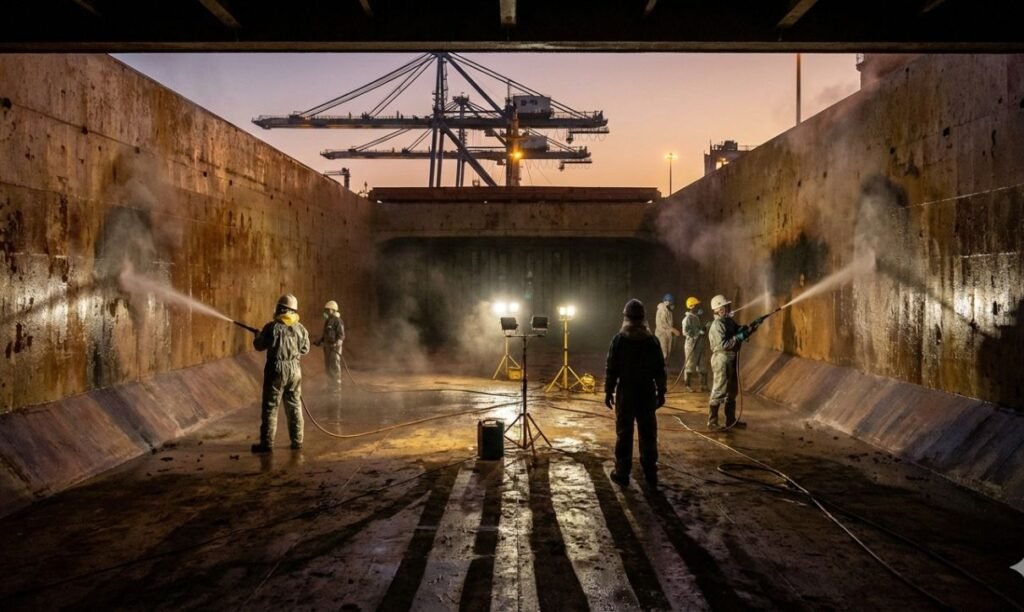
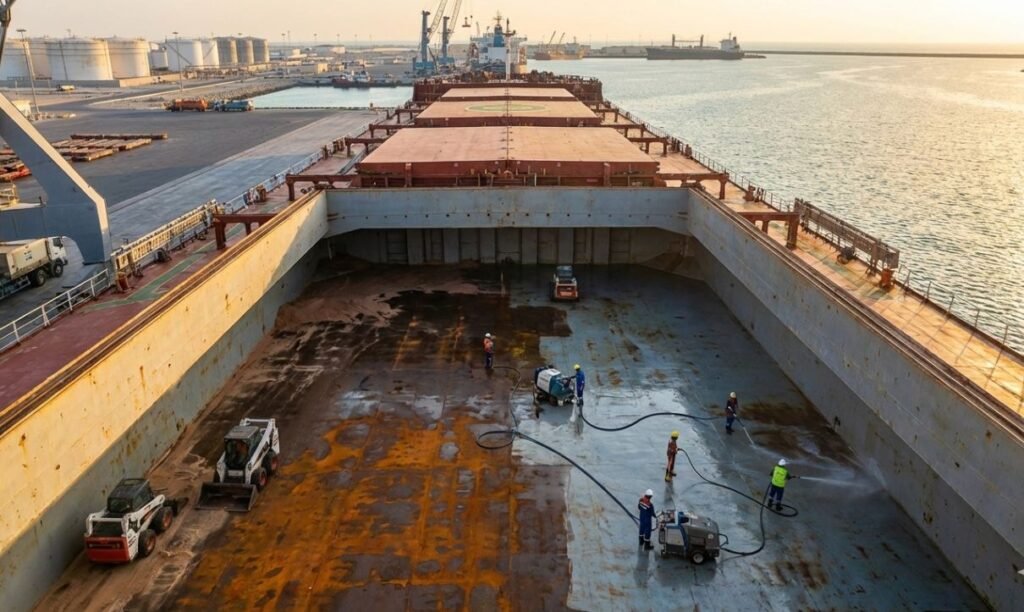
Hold cleaning refers to the systematic removal of cargo residues, dust, rust scale, moisture, and odors from cargo holds after discharge. The goal is to prepare the hold for the next cargo safely and compliantly.
In Khalid Port, hold cleaning is typically required:
- After dry bulk discharge
- Before loading sensitive or food-grade cargo
- Before vessel inspections
- To meet charter party cleanliness clauses
When cleaning at Khalid Port is done correctly, it ensures the vessel is commercially ready without delays or disputes.
Regulatory Framework Governing Hold Cleaning
International Maritime Organization (IMO)
The IMO establishes global standards for ship safety and environmental protection. Clean cargo holds reduce risks associated with fire hazards, contamination, and unsafe working conditions.
MARPOL Convention
The MARPOL Convention regulates pollution from ships. Improper hold cleaning can result in illegal discharge of residues or wash water, leading to serious penalties.
IMCA Safety Guidance
The International Marine Contractors Association (IMCA) provides best practices for confined space entry, working at height, and hazard control during cleaning operations.
IAPH Port Expectations
The International Association of Ports and Harbors (IAPH) promotes safe, sustainable port operations. Khalid Port applies these principles through strict cleanliness and waste management expectations.
Hold cleaning in Khalid Port is designed to satisfy all these requirements together, not in isolation.
Benefit 1: Protection of Cargo Quality
The first and most visible benefit of hold cleaning in Khalid Port is cargo protection.
Residues from previous cargoes can:
- Stain or contaminate new cargo
- Affect moisture-sensitive goods
- Cause odor transfer
For example, a hold previously carrying coal dust must be thoroughly cleaned before loading grain. Even fine dust particles can lead to cargo rejection.
Clean holds protect cargo integrity and preserve commercial trust between shipowners and charterers.
Benefit 2: Strong Regulatory Compliance
Ports in the UAE enforce compliance rigorously. Clean cargo holds demonstrate that you take regulations seriously.
Proper hold cleaning helps you:
- Passport state control inspections
- Meet charter party cleanliness clauses
- Avoid environmental penalties
- Reduce insurance disputes
Inspectors often assess holds visually and through documentation. Hold cleaning in Khalid Port ensures your vessel meets expectations without last-minute corrective actions.
Benefit 3: Improved Crew Safety
Hold cleaning is physically demanding and potentially hazardous work.
Risks include:
- Confined space hazards
- Slips and falls
- Exposure to dust or residues
- Working at height
Professional cleaning procedures focus on ventilation, safe access, and controlled cleaning methods. A clean, dry hold is safer to work in than one filled with residue and moisture.
By prioritizing safety, the hold cleaning in Khalid Port aligns with IMCA guidance and modern safety management systems.
Benefit 4: Environmental Protection
Residues left in cargo holds often contain substances harmful to the marine environment. If mishandled, wash water and debris can enter port waters.
Hold cleaning in Khalid Port follows controlled waste handling practices that:
- Prevent illegal discharge
- Ensure proper residue collection
- Protect surrounding marine ecosystems
Environmental responsibility is now a core expectation of global shipping. Clean holds support Khalid Port’s commitment to sustainable operations.
Benefit 5: Cost Efficiency and Asset Protection
Hold cleaning is often viewed as an operational expense. In reality, it is a form of preventive maintenance.
Clean holds:
- Reduce corrosion caused by trapped moisture
- Protect coatings and structural steel
- Lower long-term repair costs
- Minimize cargo damage claims
Think of residue like sand left in machinery. Over time, it accelerates wear. Hold cleaning in Khalid Port helps preserve the vessel’s condition and control lifecycle costs.
Benefit 6: Faster Turnaround and Operational Efficiency
Delays cost money.
Dirty holds often lead to:
- Cargo loading delays
- Additional cleaning demands from charterers
- Failed inspections
Proper hold cleaning in Khalid Port ensures that vessels are ready to load on schedule. This efficiency reduces port stay duration and improves voyage planning reliability.
Benefit 7: Commercial Readiness and Reputation
Clean holds signal professionalism.
Charterers, surveyors, and marine supercargo professionals look for evidence that a vessel is well-managed. The hold condition often shapes their perception of the entire operation.
Hold cleaning in Khalid Port supports:
- Smooth cargo acceptance
- Fewer disputes
- Stronger commercial relationships
A clean hold tells a clear story: this vessel is ready for business.
Tank, Hold, and Bulk Carrier Cleaning Standards
Hold cleaning does not exist in isolation.
Bulk Carrier Hold Cleaning
Bulk carriers require holds that are clean, dry, and odor-free. Standards depend on cargo type and charter terms.
Tank and Hold Coordination
Some vessels handle both liquid and dry cargoes. Cleaning standards must be coordinated to prevent cross-contamination.
Inspection Readiness
Cleanliness is verified through inspection. Standards must withstand scrutiny from surveyors, marine supercargo, and port authorities.
Hold cleaning in Khalid Port integrates these standards into a practical operational framework.
Inspection, Documentation, and Compliance Workflows
Cleaning alone is not enough. Documentation proves compliance.
Effective workflows include:
- Risk assessments before cleaning
- Cleaning method statements
- Waste disposal records
- Final inspection reports
These records protect vessel operators during audits, inspections, or claims.
Industry service providers such as Cleanship.co often support these workflows as part of global tank and hold cleaning operations, alongside cargo supervision and compliance support.
Role of Marine Supercargo and Quality Rules
Marine supercargo professionals verify cargo readiness and cleanliness. Their assessments are guided by Final Quality Rules used across international shipping.
Clean holds reduce disputes and support smooth cargo handovers at world ports.
Future Trends and Innovation in Marine Cleaning
Marine cleaning is evolving with technology and sustainability goals.
Key trends include:
- Mechanized and robotic cleaning tools
- Eco-friendly cleaning agents
- Digital inspection reporting
- Data-driven maintenance planning
Ports like Khalid Port are well-positioned to adopt these innovations due to their regulatory maturity and operational scale.
Integrated Maritime Services and Industry Practice
Modern maritime operations rely on integrated services.
Alongside the hold cleaning, vessels often require:
- Tank cleaning
- Cargo supervision
- Compliance inspections
- Drug and alcohol testing services for crew safety
Companies such as Cleanship.co reflect how these services are delivered globally, supporting vessels with consistent standards rather than fragmented solutions.
Conclusion
Hold cleaning in Khalid Port is a strategic operational practice, not a routine chore. It protects cargo quality, ensures regulatory compliance, and supports crew safety while controlling long-term costs. The three key takeaways are clear. First, clean holds reduce regulatory and commercial risk. Second, they improve safety and environmental performance. Third, they enhance operational efficiency and vessel reputation.
FAQs:
Q1. What types of vessels require hold cleaning in Khalid Port?
Bulk carriers, multipurpose vessels, and ships carrying dry cargoes require hold cleaning in Khalid Port. Cleaning is especially critical when changing cargo types or loading food-grade materials. Clean holds help meet charter requirements and port inspection standards.
Q2. How is hold cleaning different from tank cleaning?
Hold cleaning focuses on dry cargo spaces and involves removing dust, residues, rust scale, and moisture. Tank cleaning applies to liquid cargo tanks and includes gas freeing and chemical washing. Both processes follow different technical and safety standards.
Q3. Is hold cleaning mandatory under MARPOL?
Yes, MARPOL requires proper handling and disposal of cargo residues. Hold cleaning must prevent illegal discharge of waste into port waters. Non-compliance can result in fines, delays, or vessel detention.
Q4. Who inspects cargo holds after cleaning?
Cargo holds may be inspected by port authorities, charterer-appointed surveyors, or marine supercargo professionals. Inspections verify cleanliness, dryness, and readiness in line with Final Quality Rules and charter terms.
Q5. How does professional cleaning improve cost efficiency?
Professional hold cleaning reduces corrosion, prevents cargo contamination claims, and minimizes delays. Over time, it lowers maintenance costs and protects vessel value, making it a cost-effective operational practice.