
Bulk Carrier Hold Cleaning in Jebel Ali
Bulk carrier hold cleaning in Jebel Ali Port is a mission-critical operation that sits at the intersection of cargo safety, regulatory compliance, and commercial performance. In one of the world’s most active ports, bulk carriers routinely shift between coal, grain, fertilizer, minerals, and steel—each cargo leaving behind risks if holds are not cleaned to the right standard.
This article explains five powerful bulk carrier hold cleaning in Jebel Ali Port, why the UAE has become a benchmark for marine cleaning quality, and how professional operators manage safety, inspections, and compliance without disrupting vessel schedules.
Why Jebel Ali Is Central to Bulk Carrier Operations
Jebel Ali Port serves as a gateway between East and West. Bulk carriers calling here often operate on tight charter windows with zero tolerance for delay.
You are working in an environment defined by:
- High cargo turnover
- Strict port state control
- Diverse charterer requirements
- Extreme heat and humidity
Because of this, bulk carrier hold cleaning in Jebel Ali Port must meet higher operational and documentation standards than many global ports.
What Bulk Carrier Hold Cleaning in Jebel Ali Port Really Means
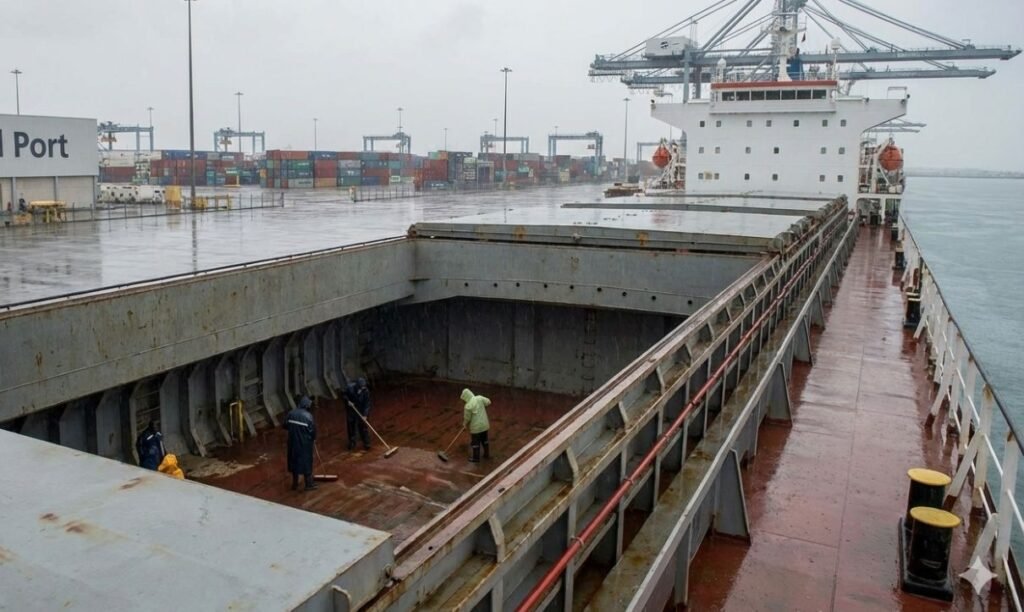
Bulk carrier hold cleaning in Jebel Ali Port is the systematic removal of cargo residues, dust, rust scale, moisture, and contaminants from cargo holds. The goal is simple: prepare the vessel for the next cargo without risk of contamination, corrosion, or rejection.
In practice, bulk carrier hold cleaning in Jebel Ali Port is more like resetting a warehouse between tenants—every trace of the previous cargo must be removed before the next one arrives.
Regulatory Environment Governing Bulk Carrier Hold Cleaning in Jebel Ali Port
Cleaning standards in Jebel Ali are shaped by international and port-level regulations. You are expected to align with globally recognized frameworks.
These include:
- IMO safety and pollution-prevention guidelines
- MARPOL Convention rules on residue discharge and waste handling
- IMCA operational best practices for marine activities
- IAPH port safety and sustainability guidance
Compliance is not optional. Inspection failures can lead to detention, re-cleaning costs, and commercial disputes.
Service 1: Dry Bulk Carrier Hold Cleaning in Jebel Ali Port for Cargo Compatibility
Dry cleaning is one of the most widely used methods in bulk carrier hold cleaning in Jebel Ali Port, especially when transitioning between compatible dry bulk cargoes.
This service typically involves:
- Manual sweeping and shoveling
- Air blowing to remove fine dust
- Industrial vacuuming of residues
Dry cleaning is fast, water-free, and cost-efficient. It is ideal for cargoes where moisture must be avoided, such as cement or certain mineral products.
Service 2: High-Pressure Water Washing
When cargo residues are sticky, compacted, or corrosive, dry methods are not enough. High-pressure water washing becomes essential.
In Jebel Ali, this method is commonly used after:
- Fertilizers
- Salt
- Sugar
- Clay-based cargoes
Water pressure is carefully controlled to avoid damaging coatings. The process is similar to cleaning a concrete silo—thorough, methodical, and focused on hard-to-reach corners.
Service 3: Rust Scale Removal and Surface Preparation
Rust scale is a hidden risk in bulk carriers. In the UAE’s humid conditions, corrosion can accelerate quickly if not addressed.
Bulk carrier hold cleaning in Jebel Ali Port often includes:
- Mechanical scraping and chipping
- Spot treatment of corroded areas
- Surface smoothing to reduce future buildup
Removing rust is not just cosmetic. Loose scale can contaminate cargo and fail inspections conducted by marine surveyors.
Service 4: Dehumidification and Moisture Control
Moisture is one of the most common causes of cargo damage claims. For cargoes like steel coils, bagged goods, or grains, dry holds are essential.
Professional cleaning programs include:
- Ventilation management
- Dehumidifier deployment
- Dew point monitoring
Think of it as climate control for cargo spaces. Without it, even a clean hold can fail inspection.
Service 5: Pre-Loading Inspection and Documentation
Cleaning work is only complete when verified. In Jebel Ali Port, inspection readiness is just as important as physical cleanliness.
This service includes:
- Visual inspections under proper lighting
- Photographic records
- Checklist-based compliance reports
Organizations such as Marine Supercargo and World Ports emphasize that proper documentation reduces disputes and speeds up cargo acceptance.
Bulk Carrier Cleaning vs Tank and Hold Cleaning
Bulk carrier hold cleaning shares principles with tank and general hold cleaning, but has unique challenges.
Key differences include:
- Larger surface areas
- Structural frames and brackets that trap residues
- Higher dust generation
Professional operators apply consistent standards across tanks, holds, and bulk carriers to reduce operational risk.
Why the UAE Sets High Marine Cleaning Standards
The UAE has positioned itself as a global maritime leader. Ports like Jebel Ali enforce strict compliance because they handle high-value, international cargo flows.
This environment drives:
- Better safety culture
- Stronger environmental controls
- Higher inspection success rates
Bulk carrier hold cleaning in Jebel Ali Port reflects this discipline.
Safety Systems in Hold Cleaning Operations
Hold cleaning is a confined space activity with real risks. Professional safety systems are non-negotiable.
These include:
- Permit-to-work procedures
- Gas testing and ventilation
- PPE and emergency readiness
- Crew fitness programs, including drug and alcohol testing
Safety protects people, schedules, and reputations.
Environmental Protection and Waste Handling
Environmental compliance is central to hold cleaning operations. Under MARPOL Convention rules, residues and wash water must be managed responsibly.
Best practices include:
- Controlled residue collection
- Approved disposal facilities
- Accurate recordkeeping
This approach protects marine ecosystems and ensures port clearance without delays.
Industry Practice Example: Cleanship.co
Companies such as Cleanship.co illustrate how professional marine service providers operate in Jebel Ali. Their work typically reflects industry norms, including:
- Global tank and hold cleaning operations
- Cargo supervision and compliance support
- Crew safety services, such as drug and alcohol testing
This reference highlights standard industry practice rather than promotion.
Inspection and Compliance Workflow
A structured workflow supports consistent results in bulk carrier hold cleaning in Jebel Ali Port.
Typical stages include:
- Pre-cleaning assessment
- Method selection
- Cleaning execution
- Inspection and reporting
- Final clearance for loading
This process aligns with IMO and IMCA expectations and reduces last-minute surprises.
Cost Efficiency Through Proper Planning
Poor cleaning costs more than good cleaning. Cargo rejection, rework, and off-hire time quickly exceed initial savings.
Efficient cleaning:
- Reduces delays
- Improves inspection outcomes
- Protects charter relationships
Think of it as preventive maintenance for cargo operations.
Future Trends in Bulk Carrier Hold Cleaning
Marine cleaning is evolving, and Jebel Ali is often at the forefront.
Emerging trends include:
- Eco-friendly cleaning agents
- Water recycling systems
- Digital inspection records
- Predictive maintenance planning
Innovation improves sustainability without sacrificing performance.
Conclusion
Bulk carrier hold cleaning in Jebel Ali Port is a core operational discipline, not a secondary task. First, proper cleaning protects cargo quality and prevents costly claims. Second, compliance with IMO, MARPOL Convention, IMCA, and IAPH standards ensures smooth port operations. Third, structured inspections and documentation reduce disputes and delays.
For operators seeking consistent compliance, safety, and maritime service excellence, working with experienced providers is essential. Cleanship.co represents a professional, compliance-driven approach aligned with global best practices in bulk carrier operations.
FAQs:
Q1. Why is bulk carrier hold cleaning critical in Jebel Ali Port?
Jebel Ali handles diverse cargoes under strict inspection regimes. Poorly cleaned holds can lead to cargo rejection, delays, and financial penalties. Proper cleaning ensures compliance, protects cargo integrity, and supports fast vessel turnaround.
Q2. How does bulk carrier hold cleaning differ from tank cleaning?
Bulk carrier cleaning focuses on large, open cargo spaces with structural frames that trap residues. Tank cleaning involves enclosed systems and liquid residues. Both follow similar compliance principles but use different methods and safety controls.
Q3. What role does documentation play in hold cleaning?
Documentation proves compliance. Inspection reports, photographs, and checklists help satisfy surveyors, charterers, and port authorities. Proper records reduce disputes and speed up cargo acceptance.
Q4. Is dehumidification always required after hold cleaning?
Not always, but it is essential for moisture-sensitive cargoes like steel, bagged goods, or grains. Even a clean hold can fail inspection if moisture levels are too high.
Q5. Can one provider manage cleaning, inspection, and compliance?
Yes. Many professional operators offer integrated services covering cleaning, inspections, and compliance support. This reduces coordination risk and ensures consistent standards across bulk carriers, tanks, and holds.