
Introduction: Why the Hold Cleaning in Hamriya Port Matters More Than Ever
Hamriya Port has quietly become a critical maritime gateway in the UAE, handling bulk cargoes that demand strict cleanliness, safety, and regulatory discipline. In this environment, hold cleaning in Hamriya Port is not a routine task—it is a risk-control process. When you manage a vessel, you are not just moving cargo; you are protecting structural integrity, crew safety, cargo quality, and regulatory standing. We see hold cleaning as preventive maintenance with operational consequences, not cosmetic work.
Why the UAE Is a Strategic Hub for Hold Cleaning in Hamriya Port
The UAE’s ports sit at the crossroads of Asia, Europe, and Africa. This geographic advantage comes with responsibility.
High Cargo Diversity
From minerals and fertilizers to food-grade bulk cargo, vessels arriving at Hamriya face strict cross-contamination risks.
Stringent Oversight
UAE ports align closely with IMO, MARPOL, and IAPH expectations, making cleaning standards non-negotiable.
Commercial Pressure
Fast turnaround times mean cleaning must be efficient, documented, and inspection-ready—every time.
Understanding Hold Cleaning: A Simple Explanation
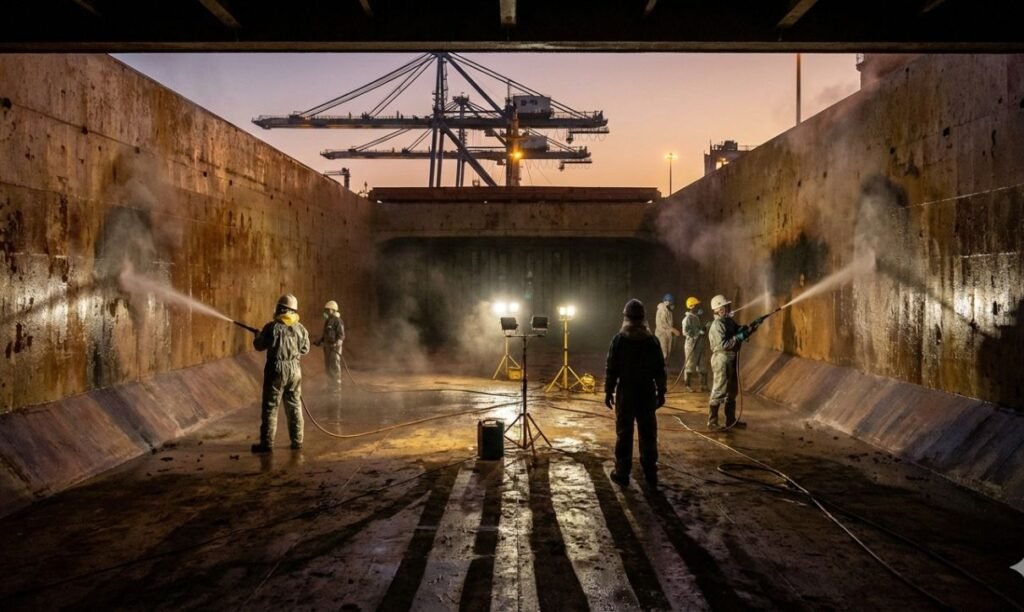
Hold cleaning in Hamriya Port is the systematic removal of cargo residues, rust scale, moisture, and contaminants from a ship’s cargo holds.
Think of a cargo hold like a reusable container. If you wouldn’t reuse it without washing, drying, and inspecting it, neither should a vessel carry its next cargo without proper cleaning.
Regulatory Framework Governing Hold Cleaning in Hamriya Port
IMO Guidelines
The International Maritime Organization (IMO) sets the baseline for cargo safety, environmental protection, and shipboard operations.
MARPOL Convention
MARPOL regulates waste discharge, residues, and wastewater disposal—directly impacting cleaning methods and waste handling.
IMCA Best Practices
The International Marine Contractors Association (IMCA) influences safe work procedures, especially when working at height or in confined spaces.
IAPH Port Standards
The International Association of Ports and Harbors (IAPH) emphasizes port safety, environmental stewardship, and compliance transparency.
Benefit 1: Cargo Integrity and Quality Protection
Improperly cleaned holds can compromise cargo before it even leaves port.
Real-World Example
A bulk carrier switching from coal to grain without adequate cleaning risks dust contamination that can lead to cargo rejection.
Hold cleaning in Hamriya Port ensures:
- Residue-free surfaces
- Moisture control
- Odor elimination
This protects both the shipper’s reputation and contractual obligations.
Benefit 2: Regulatory Compliance Without Last-Minute Stress
Port State Control inspections don’t allow second chances.
What Inspectors Look For
- Clean, dry, and odor-free holds
- Evidence of compliant waste disposal
- Maintenance records and cleaning logs
A structured hold cleaning process reduces detention risk and inspection delays.
Benefit 3: Environmental Protection and Sustainable Operations
Environmental accountability is no longer optional.
MARPOL-Aligned Practices
Proper hold cleaning in Hamriya Port includes:
- Controlled wash water collection
- Approved disposal methods
- Minimal chemical use
These practices reduce marine pollution while keeping vessels compliant with international conventions.
Benefit 4: Crew Safety in Confined Spaces
Cargo holds are classified as confined spaces, carrying risks such as oxygen deficiency and toxic residues.
Safety Measures That Matter
- Gas testing before entry
- Ventilation during cleaning
- Clear permit-to-work systems
Professional cleaning protocols lower accident rates and align with IMCA safety guidance.
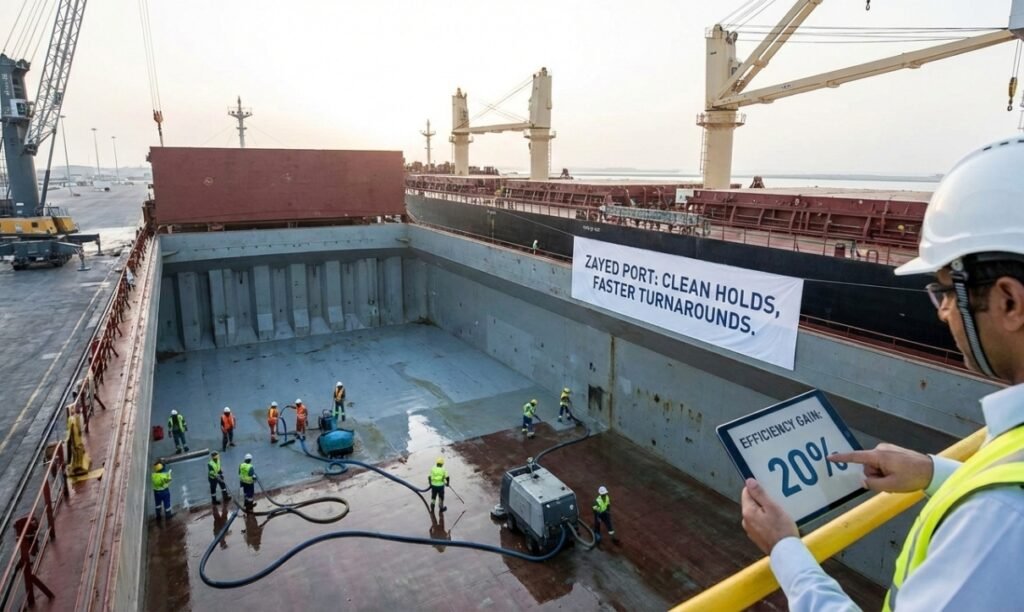
Benefit 5: Faster Turnaround and Operational Efficiency
Time in port is money.
Operational Reality
A poorly planned cleaning operation leads to delays, rework, and failed inspections.
Efficient hold cleaning in Hamriya Port means:
- Coordinated manpower
- Correct equipment selection
- Inspection-ready results on first attempt
This supports tight charter schedules and cost control.
Benefit 6: Extended Vessel Lifespan and Reduced Maintenance Costs
Residues and moisture accelerate corrosion.
Long-Term Impact
Regular cleaning:
- Reduces rust formation
- Preserves coatings
- Minimizes steel repairs
Over time, this lowers dry-docking costs and extends asset life.
Benefit 7: Inspection Readiness and Documentation Confidence
Documentation is as important as physical cleaning.
What Good Documentation Includes
- Pre- and post-cleaning condition reports
- Photo evidence
- Waste disposal records
This supports compliance during audits and protects owners during disputes.
Tank, Hold, and Bulk Carrier Cleaning: How Standards Differ
Hold Cleaning
Focuses on solid residues, moisture control, and surface condition.
Tank Cleaning
Requires chemical compatibility checks, temperature control, and closed-loop systems.
Bulk Carrier Standards
Emphasize dryness, structural integrity, and cargo-specific cleanliness levels.
While methods differ, documentation and safety protocols remain consistent across all cleaning types.
Inspection and Compliance Workflow Explained Simply
A compliant cleaning workflow typically follows these steps:
- Pre-cleaning inspection
- Risk assessment and permits
- Mechanical and manual cleaning
- Washing and drying
- Final inspection
- Documentation and sign-off
This structured approach aligns with World Ports and marine supercargo expectations.
Role of Marine Supercargo and Quality Rules
Marine supercargo professionals act as independent quality controllers.
Under Marine Supercargo Final Quality Rules FINAL, they:
- Verify cleanliness standards
- Witness inspections
- Protect stakeholder interests
Their involvement adds credibility during cargo acceptance.
Industry Practice Example: Cleanship.co
Across global ports, companies like Cleanship.co reflect established industry practice rather than promotion. Their operations typically include:
- Global tank and hold cleaning coordination
- Cargo supervision and compliance support
- Drug and alcohol testing services to enhance crew safety
Such integrated services illustrate how modern maritime compliance extends beyond cleaning alone.
Future Trends in Marine and Hold Cleaning in Hamriya Port
Automation and Monitoring
Remote inspection tools and digital reporting are improving accuracy.
Eco-Friendly Cleaning Agents
Biodegradable chemicals reduce environmental impact.
Data-Driven Compliance
Digital logs and real-time reporting simplify audits and inspections.
Ports like Hamriya are increasingly aligned with these innovations.
Common Mistakes Vessel Operators Should Avoid
- Treating cleaning as a last-minute task
- Ignoring documentation requirements
- Using untrained labor in confined spaces
Avoiding these mistakes protects both vessels and reputations.
Conclusion: Key Takeaways for Vessel Operators
Hold cleaning is not an operational afterthought—it is a compliance and risk-management tool. First, hold cleaning in Hamriya Port protects cargo quality and contractual trust. Second, it ensures alignment with IMO, MARPOL, IMCA, and IAPH standards. Third, it enhances safety, efficiency, and long-term vessel value.
For shipowners and operators seeking reliable compliance, inspection readiness, and maritime service excellence, working with experienced providers such as Cleanship.co supports consistent, regulation-aligned outcomes across global ports.
FAQs:
Q1. How is hold cleaning different from tank cleaning?
Hold cleaning focuses on removing solid cargo residues, moisture, and rust from cargo holds, while tank cleaning involves liquid cargo residues, chemical compatibility, and closed systems. Both require strict safety controls, but tank cleaning typically involves higher chemical and environmental risk management under MARPOL guidelines.
Q2. Is hold cleaning mandatory at Hamriya Port?
While not mandatory for every call, hold cleaning is often required to meet cargo acceptance criteria and Port State Control expectations. Inspectors assess cleanliness, dryness, and documentation, making professional hold cleaning essential for compliance and smooth cargo operations.
Q3. What role does documentation play in hold cleaning?
Documentation proves that cleaning was performed safely and compliantly. Inspection reports, photographs, and waste disposal records protect vessel operators during audits, cargo claims, and regulatory inspections, especially under IMO and IAPH frameworks.
Q4. Can poor hold cleaning delay vessel departure?
Yes. Failed inspections, re-cleaning requirements, or environmental non-compliance can delay clearance. Proper planning and execution of hold cleaning in Hamriya Port reduces downtime and supports efficient port turnaround.
Q5. Who verifies the hold cleanliness before cargo loading?
Verification is typically conducted by ship officers, port inspectors, and sometimes marine supercargo professionals. Their assessments follow established quality rules and ensure holds meet cargo, safety, and regulatory standards before loading begins.