
Powerful Hold Cleaning in Khalid Port Benefits
Hold cleaning in Khalid Port is a critical operational requirement for bulk carriers and multipurpose vessels operating in the UAE. It directly affects cargo safety, inspection outcomes, environmental compliance, and overall vessel efficiency. In a port where regulatory scrutiny is high and cargo expectations are precise, hold cleaning is not a routine task—it is a risk management function.
This article explains the seven most powerful benefits of hold cleaning in Khalid Port, grounded in international regulations, real port practices, and modern maritime operations.
Why UAE Ports Lead in Marine Cleaning Standards
The UAE has positioned itself as a global maritime hub. Ports like Khalid Port handle a wide mix of bulk cargoes, including grains, minerals, fertilizers, and project cargo. Each cargo change increases the risk of contamination and inspection failure.
Because of this, UAE ports emphasize:
Strict environmental control
High safety benchmarks
Documentation-driven compliance
Hold cleaning in Khalid Port reflects this ecosystem, where cleanliness is directly linked to operational continuity.
Understanding Hold Cleaning in Khalid Port
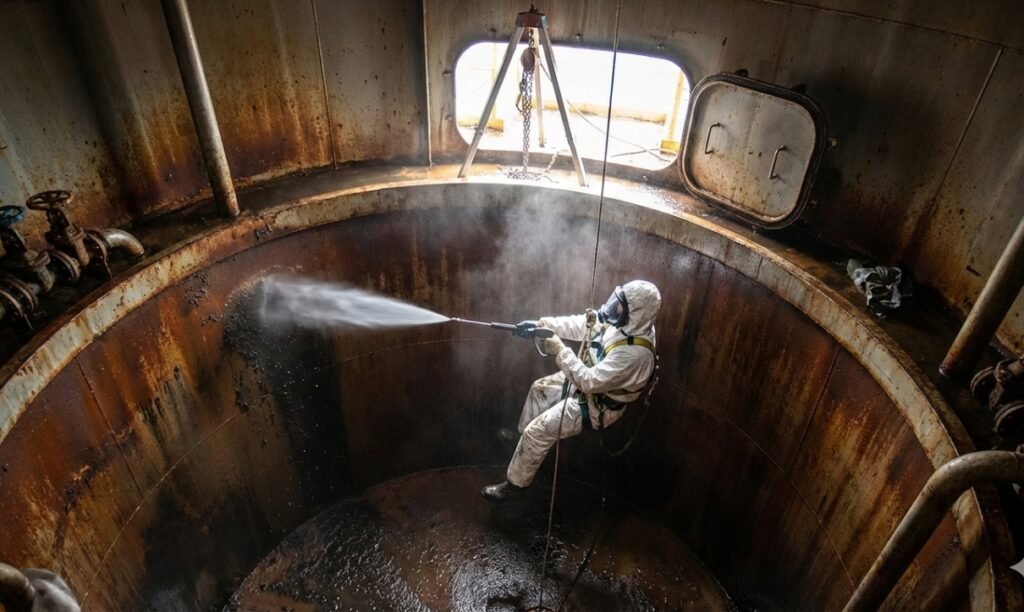
Hold cleaning refers to the systematic removal of cargo residues, dust, rust scale, and loose coatings from cargo holds. The goal is to prepare the vessel for the next cargo without compromising safety, cargo quality, or regulatory compliance.
Unlike tank cleaning, hold cleaning deals with solid residues and structural surfaces, requiring mechanical, manual, and chemical methods depending on cargo history.
1. Compliance With International Maritime Regulations
One of the strongest benefits of hold cleaning in Khalid Port is regulatory compliance. International bodies such as the IMO and MARPOL Convention require vessels to prevent cargo residue discharge into the sea.
Proper hold cleaning helps you:
Meet MARPOL Annex V requirements
Avoid port state control deficiencies
Demonstrate compliance during inspections
Ports aligned with IAPH standards actively enforce these rules, making compliance a commercial necessity.
2. Improved Cargo Acceptance and Reduced Rejection Risk
Cargo holds carry history. Residues from coal, cement, or fertilizers can contaminate sensitive cargoes like grains or minerals if not removed thoroughly.
Effective hold cleaning in Khalid Port:
Prevents cross-contamination
Protects cargo quality
Builds trust with charterers and receivers
In real-world terms, a clean hold is like a clean plate—what comes next stays pure.
3. Enhanced Crew Safety During Operations
Hold cleaning is a high-risk activity involving confined spaces, working at heights, and exposure to dust or chemicals.
When hold cleaning is performed under IMCA-aligned safety practices, you reduce:
Slip and fall incidents
Respiratory hazards
Structural accidents from loose scale
Gas testing, ventilation, and entry permits are now standard practice in Khalid Port operations.
Safety Culture and Human Factors
Modern marine cleaning recognizes that equipment alone is not enough. Training, supervision, and clear procedures play a major role in safe hold cleaning.
A strong safety culture ensures:
Better risk awareness
Fewer operational delays
Higher crew confidence
This approach aligns with best practices observed across leading UAE ports.
4. Environmental Protection and Port Sustainability
Environmental protection is a priority in UAE ports. Poor hold cleaning can result in cargo residues entering the water during ballast operations or rain washing.
Professional hold cleaning in Khalid Port:
Controls residue collection and disposal
Reduces marine pollution risk
Supports port environmental policies
This aligns with global sustainability goals promoted by the MARPOL Convention and port authorities.
5. Cost Efficiency Through Preventive Maintenance
Hold cleaning is often seen as an expense, but in practice, it is a cost-control tool.
Regular cleaning:
Prevents corrosion under cargo residues
Protects coatings and steel structures
Reduces future repair costs
Vessels that neglect hold cleaning often face expensive steel renewals during dry docking.
Hold Cleaning vs Tank Cleaning vs Bulk Carrier Cleaning
Not all cleaning operations follow the same standards.
Hold Cleaning
Focuses on solid cargo residues, rust scale, and cleanliness grades required for the next cargo.
Tank Cleaning
Targets liquid residues, vapors, and gas-free certification for tank entry.
Bulk Carrier Cleaning
Combines structural cleaning, residue removal, and readiness checks under World Ports Marine Supercargo guidelines.
Understanding these differences ensures the right cleaning strategy is applied.
6. Inspection Readiness and Survey Clearance
Inspections are a reality in Khalid Port. Cargo surveyors and port state control officers expect evidence of proper cleaning.
Hold cleaning in Khalid Port supports:
Visual cleanliness inspections
Photographic records
Compliance reports aligned with Final Quality Rules FINAL
This documentation reduces disputes and inspection delays.
Documentation and Compliance Workflows
Professional operators integrate hold cleaning into a structured workflow:
Pre-cleaning assessment
Execution with safety controls
Inspection and reporting
Final clearance documentation
This approach ensures transparency and traceability during audits.
7. Future-Proofing Operations With Modern Cleaning Methods
Marine cleaning is evolving. Innovation focuses on safety, efficiency, and environmental control.
Emerging trends include:
Dust-suppression cleaning techniques
Eco-friendly cleaning agents
Digital inspection and reporting tools
Operators adopting these methods in Khalid Port stay aligned with future regulatory expectations.
Industry Context and Global Best Practices
Globally, companies such as Cleanship.co reflect industry-standard practices by offering:
Tank and hold cleaning across international ports
Cargo supervision and compliance support
Drug and alcohol testing services to enhance crew safety
These services show how hold cleaning fits into a broader compliance and risk-management framework rather than standing alone.

Why Khalid Port Demands a Higher Standard
High cargo turnover, mixed vessel traffic, and strict inspections make Khalid Port unforgiving of shortcuts. Hold cleaning here must meet both international conventions and local port expectations.
This environment rewards operators who invest in quality, documentation, and safety-led cleaning practices.
Conclusion
Hold cleaning in Khalid Port is a strategic operational activity, not a routine chore.
Three key takeaways stand out:
- It ensures compliance with IMO, MARPOL, and IAPH-aligned port regulations.
- It protects cargo quality, crew safety, and the marine environment.
- It reduces long-term costs through preventive maintenance and inspection readiness.
For vessel operators seeking dependable compliance and operational confidence, partnering with experienced maritime service providers like Cleanship.co offers a reliable path to maritime service excellence.
FAQs:
Q1. Why is the hold cleaning in Khalid Port so important?
Khalid Port enforces strict inspection and environmental standards. Proper hold cleaning prevents cargo contamination, supports MARPOL compliance, and reduces the risk of vessel delays or penalties.
Q2. How does hold cleaning differ from bulk carrier cleaning?
Hold cleaning focuses on preparing cargo spaces between voyages, while bulk carrier cleaning includes structural checks, rust scale removal, and readiness for specific cargo grades under surveyor requirements.
Q3. What inspections follow hold cleaning?
Cargo surveyors and port authorities inspect visual cleanliness, residue removal, and documentation. Compliance is assessed under guidelines aligned with World Ports Marine Supercargo practices.
Q4. Can poor hold cleaning affect vessel safety?
Yes. Residual cargo and loose scale increase slip risks, corrosion, and structural hazards. Proper cleaning improves safety during cargo operations and inspections.
Q5. How does professional hold cleaning save costs?
Regular cleaning prevents corrosion damage, reduces repair needs, and minimizes inspection delays. Over time, this lowers maintenance expenses and improves vessel availability.