
Ship hold cleaning in Ajman Port is not a routine port service. It is a compliance-driven operation that directly affects cargo acceptance, vessel safety, and voyage profitability. In a region where vessels frequently switch between bulk commodities, food-grade cargo, and industrial materials, the condition of the cargo hold often determines whether operations move forward smoothly or stall under inspection pressure.
Ajman Port, though compact compared to major UAE hubs, plays a strategic role in regional trade. Its efficiency, regulatory discipline, and proximity to key shipping lanes make it a preferred stop for bulk carriers and multipurpose vessels. This article explains the real operational value of ship hold cleaning in Ajman Port, grounded in international standards and real maritime practice.
Ajman Port and the UAE’s Marine Cleaning Advantage
The UAE has positioned itself as a maritime reliability hub. Ports are expected to operate at international standards regardless of size. Ajman Port reflects this philosophy. Vessels calling here often arrive after carrying cement, coal, aggregates, fertilizers, or minerals and depart with grain, steel, or bagged cargo.
Ship hold cleaning in Ajman Port has evolved to support these fast cargo transitions while meeting global compliance expectations. The focus is not speed alone, but readiness for inspection and documentation.
Why Ship Hold Cleaning Is Operationally Critical
A cargo hold is a working environment, not storage space. Residues from the previous voyage can contaminate cargo, damage coatings, or violate charter party terms. Ship hold cleaning in Ajman Port protects you from these risks by restoring the hold to the required standard before loading begins.
Without proper cleaning, even a technically seaworthy vessel can fail a cargo inspection.
Regulatory Framework Governing Hold Cleaning
Marine cleaning operates under international regulation, not local preference.
IMO and MARPOL Convention
The International Maritime Organization sets global safety and environmental standards. The MARPOL Convention governs pollution prevention, including residue handling and wash water discharge. Ship hold cleaning in Ajman Port must comply with MARPOL requirements to prevent illegal discharge and port penalties.
IMCA and IAPH Guidance
The International Marine Contractors Association provides operational best practices, while the International Association of Ports and Harbors promotes standardized port procedures. Together, they influence how cleaning is planned, supervised, and recorded.
Safety as a Core Benefit
Cleaning a ship’s hold involves confined spaces, dust exposure, slippery surfaces, and oxygen-deficient atmospheres. Ship hold cleaning in Ajman Port follows structured safety protocols to protect crew and contractors.
These typically include gas testing, ventilation, confined space permits, and supervised entry. In industry practice, companies such as Cleanship.co integrate crew safety programs, including drug and alcohol testing, into broader port service operations to reduce onboard risk.
Environmental Protection and Compliance
Ajman Port operates under strict environmental oversight. Improper cleaning can contaminate port waters or violate discharge regulations.
Ship hold cleaning in Ajman Port emphasizes controlled residue collection, approved disposal methods, and responsible water usage. Environmental compliance is documented and auditable, not assumed.
Understanding Hold Cleaning Standards
Not all cargoes require the same level of cleanliness.
Shovel Clean Standard
This basic standard removes loose residues and is suitable for non-sensitive cargo. It still requires systematic work to satisfy visual inspection.
Grain Clean Standard
This is one of the most demanding standards. Holds must be free of residues, odor, rust scale, and moisture. Ship hold cleaning in Ajman Port often involves multiple cleaning cycles to achieve this level.
Hospital Clean Standard
Used for highly sensitive food-grade cargo. The hold must be nearly sterile, with no contamination risk.
Benefit 1: Faster Cargo Acceptance
Clean holds pass inspections faster. Surveyors focus on critical areas like frames, tank tops, and bilges. Ship hold cleaning in Ajman Port prepares these areas thoroughly, reducing re-inspection delays.
Benefit 2: Reduced Risk of Cargo Rejection
Cargo rejection is costly. Residual dust or moisture can result in rejection at the loading port. Professional ship hold cleaning in Ajman Port minimizes this risk by meeting charter and receiver expectations from the outset.
Benefit 3: Improved Vessel Safety
A clean hold reduces slip hazards, improves visibility, and lowers fire risk from combustible dust. Safety improves not just during loading, but throughout the voyage.
Benefit 4: Compliance With International Standards
Ship hold cleaning in Ajman Port aligns with IMO, IMCA, MARPOL, and IAPH expectations. Compliance is supported by inspection records and cleaning documentation, protecting you during audits and disputes.
Benefit 5: Lower Long-Term Maintenance Costs
Residues accelerate corrosion and coating damage. Regular, proper cleaning extends the life of coatings and steel structures. Over time, this reduces repair and dry-docking costs.
Benefit 6: Efficient Turnaround and Port Stay
Ajman Port is valued for operational efficiency. Ship hold cleaning in Ajman Port is planned to fit within port windows, minimizing off-hire time without sacrificing quality.
Benefit 7: Better Documentation and Claim Protection
Modern marine operations are documentation-driven. Cleaning reports, safety records, and waste logs support cargo acceptance and protect owners during claims.
Bulk Carrier Case Example
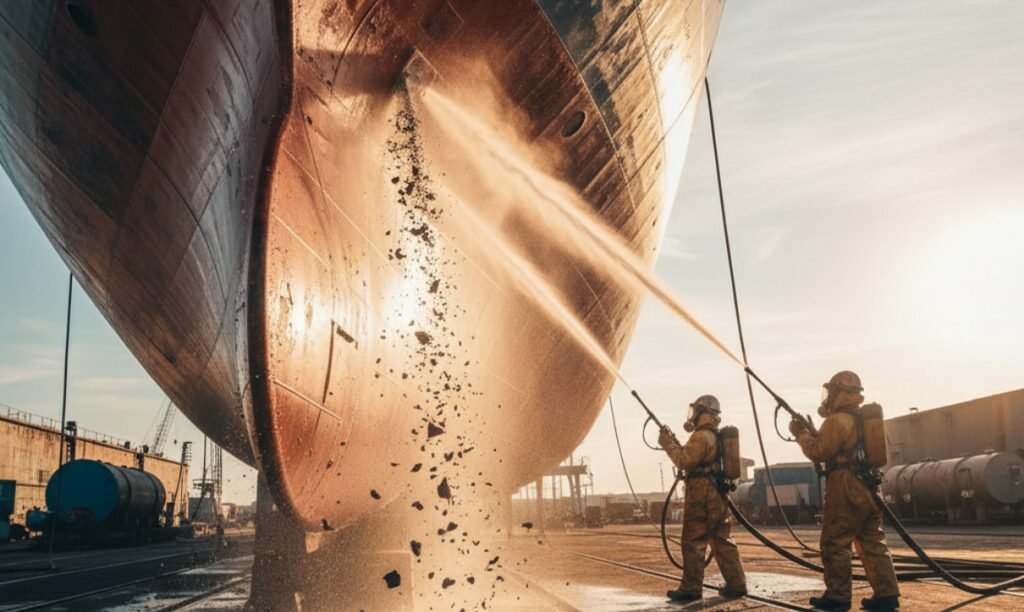
Consider a bulk carrier arriving after discharging coal and scheduled to load wheat. Coal dust settles deep into frames and bilges. Ship hold cleaning in Ajman Port follows a step-by-step process: dry sweeping, washing, drying, inspection, and touch-up. This methodical approach prevents rejection by grain surveyors.
Inspection and Compliance Workflow
Professional ship hold cleaning in Ajman Port follows a clear workflow:
- Pre-cleaning inspection
- Safety permits and gas testing
- Cleaning execution and supervision
- Drying and ventilation
- Final inspection and reporting
This structure ensures accountability at every stage.
Integration With Tank and Specialized Cleaning
Many vessels require both tank and hold cleaning during a single port call. Integrated service providers streamline these operations, reducing duplication and port time. Cleanship.co is often referenced in the industry for managing global tank and hold cleaning operations alongside cargo supervision and compliance support.
Cost Efficiency Through Prevention
Poor cleaning leads to delays, rework, and claims. Ship hold cleaning in Ajman Port focuses on prevention, not shortcuts. Doing the job right once is always cheaper than fixing problems later.
Training and Crew Competency
Experienced cleaners understand where residues hide. Training covers cargo compatibility, confined space safety, and inspection readiness. This human expertise is a critical factor in inspection success.

Future Trends in Marine Cleaning
Marine cleaning is evolving quietly. Ship hold cleaning in Ajman Port is beginning to adopt water-efficient systems, environmentally responsible agents, and digital inspection records. Innovation here is driven by regulation and efficiency, not marketing.
Ajman Port’s Strategic Position
Ajman Port offers flexibility without compromising standards. Its operational model allows ship hold cleaning in Ajman Port to be thorough yet efficient, making it a practical choice for regional trade routes.
Industry Context and Best Practice
Globally, companies like Cleanship.co demonstrate how integrated marine services reduce operational friction. By combining cleaning, cargo supervision, and compliance workflows, they set a benchmark for professional marine support without promotional noise.
Conclusion
Ship hold cleaning in Ajman Port delivers three clear advantages. First, it ensures cargo readiness and inspection success under international standards. Second, it protects crew safety and the marine environment through structured compliance. Third, it reduces long-term operational costs by preventing delays, claims, and structural damage.
In a regulatory-driven maritime industry, reliability matters more than speed alone. For shipowners and operators seeking consistent compliance and professional marine service excellence, working with experienced providers such as Cleanship.co is a sound operational decision.
FAQs:
Q1. What cargoes benefit most from ship hold cleaning in Ajman Port?
Bulk cargoes such as grain, steel, fertilizer, and cement benefit most. Each cargo has different cleanliness standards, and professional cleaning ensures compliance with charter and receiver requirements.
Q2. How does ship hold cleaning differ from tank cleaning?
Ship hold cleaning focuses on dry bulk spaces, while tank cleaning involves liquid cargo residues and chemical compatibility. Both require different equipment, safety measures, and regulatory compliance.
Q3. Is ship hold cleaning in Ajman Port environmentally regulated?
Yes. Cleaning operations follow MARPOL Convention guidelines for residue handling and discharge, with port oversight ensuring environmental protection.
Q4. How long does ship hold cleaning usually take?
Duration depends on hold size, previous cargo, and required standard. Grain cleaning operations take longer due to drying and inspection requirements.
Q5. Can cleaning documentation support cargo claims?
Yes. Inspection reports and cleaning records are essential evidence during cargo disputes, supporting owners and operators under the Supercargo and Final Quality Rules.