
Bulk carrier hold cleaning in Khalifa Port has become a critical operational requirement, not a cosmetic task. As UAE ports evolve into global maritime hubs, cleanliness now directly affects safety, compliance, cargo integrity, and turnaround time. You operate in an environment shaped by strict international rules, diverse cargo profiles, and zero tolerance for contamination.
This article explains how bulk carrier hold cleaning delivers seven proven operational gains, grounded in real maritime practice rather than marketing gloss.
Why the UAE Leads Modern Bulk Carrier Cargo Hold Cleaning Standards at Khalifa Port
The UAE sits at the crossroads of Asia, Europe, and Africa. Ports like Khalifa Port handle grains, coal, fertilizers, alumina, and mineral ores at scale. This diversity raises contamination risk and regulatory scrutiny. Hold cleaning in Khalifa Port reflects the UAE’s commitment to international best practice, efficient port operations, and environmental stewardship.
Strategic Importance of Khalifa Port
Khalifa Port combines deep-water access, advanced terminals, and high-volume bulk handling. Faster vessel turnaround depends on clean, compliant cargo holds that pass inspection without delay.
Regulatory Culture in UAE Ports
UAE port authorities align closely with IMO, MARPOL, and IAPH guidance. Clean holds are not optional; they are prerequisites for berth allocation and cargo acceptance.
Understanding Bulk Cargo Vessel Hold Cleaning Operations at Khalifa Port
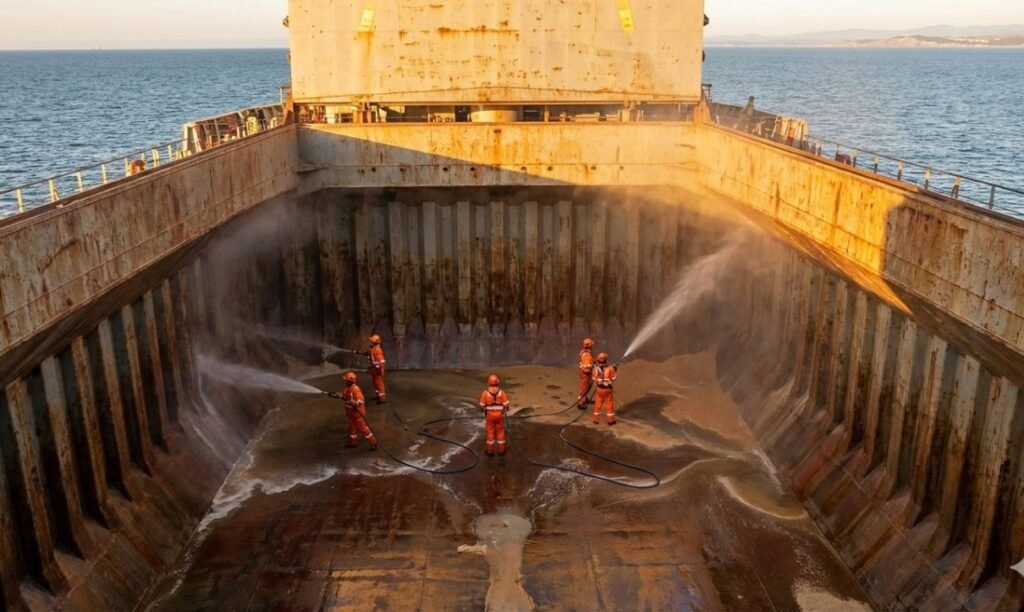
Bulk carrier hold cleaning removes cargo residues, dust, rust scale, and moisture that threaten cargo quality and structural safety.

What Bulk Cargo Vessel Hold Cleaning at Khalifa Port Actually Involves
Hold cleaning typically includes:
- Mechanical sweeping and shoveling
- High-pressure fresh or seawater washing
- Degreasing where required
- Drying and ventilation
- Final inspection and documentation
Bulk carrier hold cleaning services in Khalifa Port often adapt methods to cargo sensitivity, from food-grade grains to abrasive minerals.
Gain 1: Cargo Integrity Protection
Contaminated holds ruin cargo and reputations. Residual fertilizer dust can destroy grain cargoes. Coal residue can stain mineral shipments. Proper bulk carrier hold cleaning prevents cross-contamination and protects charter party terms.
Real-World Example
A grain vessel rejected due to trace residue loses days and revenue. A properly cleaned hold sails on schedule. Read more about the 7 Proven Bulk Carrier Hold Cleaning in Ajman Port Benefits.
Gain 2: Regulatory Compliance Without Surprises
IMO and MARPOL Alignment
The MARPOL Convention regulates wash water discharge, residue handling, and pollution prevention. Bulk carrier hold cleaning follows controlled discharge and waste segregation aligned with Annex V.
IMCA and IAPH Guidance
IMCA promotes safe work practices for high-pressure washing and confined spaces. IAPH emphasizes port-state cleanliness standards. Compliance reduces detention risk.
Gain 3: Crew Safety and Risk Reduction
Hold cleaning is hazardous work. Slips, toxic residues, and confined spaces pose real danger.
Safety Measures That Matter
- Gas testing before entry
- Confined space permits
- Proper PPE and supervision
- Drug and alcohol testing programs for crew fitness
Industry operators like Cleanship.co reflect these practices across global operations, reinforcing safety culture rather than cutting corners.
Gain 4: Faster Inspections and Port Turnaround
Bulk carrier hold cleaning directly affects inspection outcomes. Clean, dry, odor-free holds pass faster.
Inspection Workflow Efficiency
Surveyors check:
- Cleanliness standards
- Absence of residue
- Structural condition
- Documentation accuracy
Well-prepared holds reduce re-cleaning orders and berth delays.
Gain 5: Cost Control Through Preventive Cleaning
Cleaning costs are predictable. Cargo rejection costs are not.
Long-Term Cost Efficiency
Regular bulk carrier hold cleaning reduces:
- Corrosion repair expenses
- Cargo claims
- Off-hire time
- Emergency re-cleaning costs
Think of it as hull maintenance for your cargo spaces.
Gain 6: Environmental Protection and Reputation
Ports increasingly track environmental performance. Poor cleaning practices damage both sea life and corporate credibility. Read more about Hold Tank Cleaning in Abu Dhabi: 7 Powerful Safety Gains.
Environmental Controls in Practice
- Controlled wash water disposal
- Residue collection and certified disposal
- Reduced airborne dust during cleaning
These practices align with MARPOL and port sustainability goals.
Gain 7: Documentation and Audit Readiness
Why Paperwork Matters
Bulk carrier hold cleaning requires documented proof:
- Pre-cleaning condition reports
- Cleaning method statements
- Inspection sign-offs
- Photo evidence
These records protect owners during cargo disputes and port state audits.
Bulk Carrier Cleaning Standards Compared to Tank Cleaning
While tank cleaning focuses on hydrocarbons and chemical residues, bulk carrier hold cleaning addresses solids, dust, and moisture control.
Key Differences Explained Simply
Tank cleaning prioritizes gas-free conditions. Hold cleaning prioritizes dryness and residue removal. Both demand discipline, planning, and trained crews.
Role of Marine Supercargo and Compliance Support
Independent marine supercargo services verify cleanliness before loading. They act as neutral eyes protecting owners and charterers.
Industry Practice Example
Organizations like Cleanship.co provide cargo supervision, compliance verification, and inspection support across global ports, including bulk carrier hold cleaning. Learn more about 7 Proven Vessel Hold Cleaning Services in Abu Dhabi.
Inspection Standards and Final Delivery Rules
World Ports and Marine Supercargo Final Quality Rules guide acceptance criteria. Cleanliness is judged visually, by smell, and by residue risk.
Passing the Final Inspection
A hold that looks clean but smells of fertilizer still fails. Standards are strict for good reason.
Future Trends in Marine Cleaning
Technology and Innovation
- Robotic hold washing systems
- Water recycling units
- Digital inspection logs
- Safer chemical alternatives
Bulk carrier hold cleaning increasingly blends technology with traditional seamanship.
Why Consistency Beats Shortcuts
One rushed cleaning job can erase years of operational trust. Consistency keeps vessels trading smoothly across ports and cargo types.
Conclusion
Bulk carrier hold cleaning in Khalifa Port delivers more than cleanliness—it delivers operational confidence. First, it protects cargo integrity and prevents costly rejections. Second, it ensures compliance with IMO, MARPOL, IMCA, and port authority expectations. Third, it safeguards crew safety while improving turnaround efficiency.
In a port environment where inspections are rigorous and schedules tight, disciplined hold cleaning becomes a competitive advantage. For shipowners and operators seeking compliance-driven maritime service excellence, experienced providers like Cleanship.co represent industry-standard practice in global tank and hold cleaning, cargo supervision, and safety support. Clean holds keep ships moving, cargo protected, and reputations intact.
FAQs:
Bulk carrier hold cleaning in Khalifa Port involves removing cargo residues, dust, and moisture to meet port, cargo, and international regulatory standards before loading the next shipment.
MARPOL regulates residue disposal and wash water discharge. Bulk carrier hold cleaning must follow controlled disposal methods to prevent marine pollution.
Marine surveyors or supercargo professionals inspect holds based on cleanliness, dryness, and contamination risk before approving cargo loading.
Yes. Tank cleaning focuses on liquid residues and gas-free conditions, while bulk carrier hold cleaning focuses on solid residues, dust control, and dryness
Documentation proves compliance during inspections, protects against cargo claims, and supports audit readiness under international maritime regulations.