
Jebel Ali Port operates at a pace where safety mistakes become expensive very quickly. Bulk carriers arriving here often carry coal, grain, fertilizers, bauxite, or mixed dry bulk cargoes, each leaving residues that can quietly create hazards. Bulk carrier hold cleaning in Jebel Ali is therefore not cosmetic work. It is a safety system that protects crews, cargo value, and regulatory standing.
We approach bulk carrier cleaning the way engineers approach maintenance: prevent small risks before they become operational failures. The seven safety gains below explain why professional hold cleaning matters in one of the world’s most demanding ports.
Why the UAE Leads in Marine Cleaning Discipline
The UAE sits at the center of global trade lanes. Vessels calling Jebel Ali often transition rapidly between cargo types and charterers. Port authorities, terminals, and charterers expect vessels to meet international standards immediately, not after adjustments.
This pressure has shaped a marine cleaning culture focused on compliance, documentation, and safety-first execution. Cleaning here is planned, audited, and aligned with global rules rather than improvised on arrival.
What Bulk Carrier Hold Cleaning Really Involves
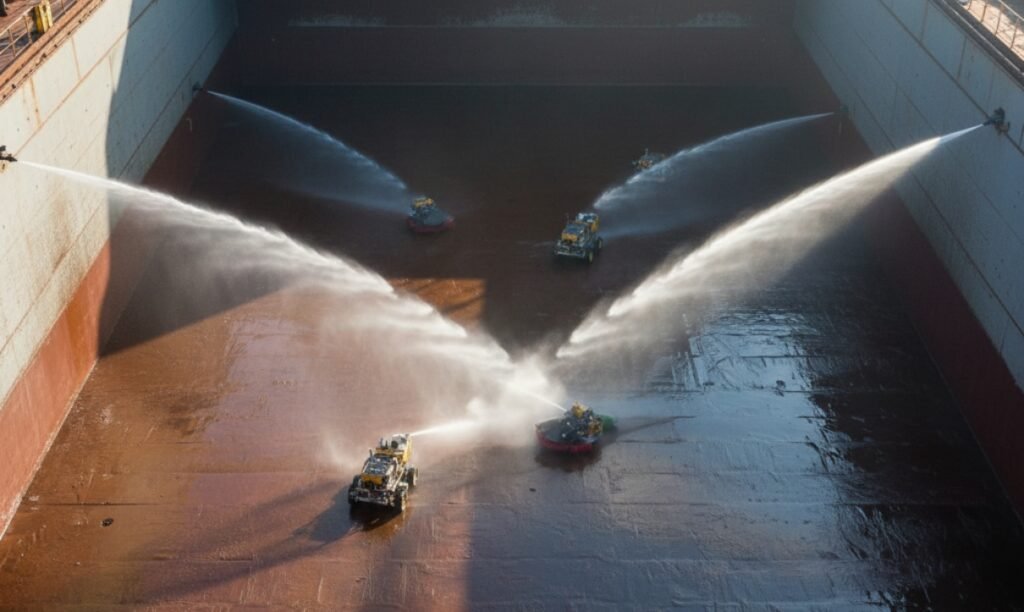
Bulk carrier hold cleaning means restoring cargo spaces to a safe, dry, residue-free condition suitable for the next cargo and inspection. In Jebel Ali, this includes managing dust, heat, confined spaces, and strict waste controls.
A proper process combines mechanical cleaning, controlled washing, ventilation, and final inspection. Each step supports safety outcomes, not just cleanliness.
Safety Gain 1: Reduced Slip, Trip, and Fall Hazards
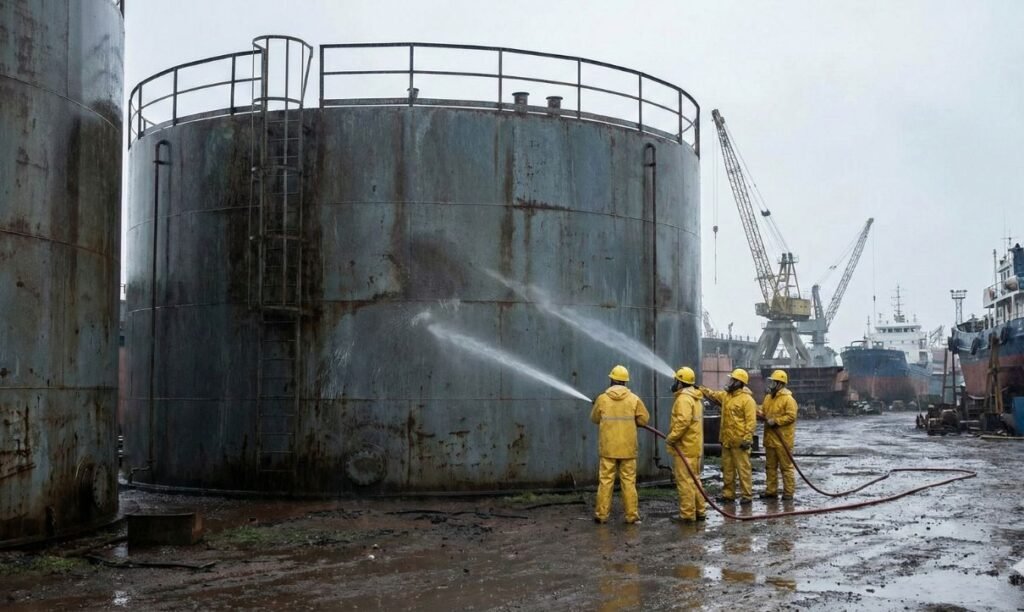
Bulk residues settle into corners, ladder rungs, and tank tops. When mixed with moisture, they become silent accident traps.
Effective cleaning improves safety by:
- Removing loose residues before wet washing
- Drying walking surfaces thoroughly
- Ensuring ladders, access points, and manholes are clear
When holds are clean and dry, crew movement becomes predictable and safer.
Safety Gain 2: Safer Confined Space Entry
Cargo holds are confined spaces by definition. Dust, low oxygen, or residual gases can turn entry into a life-threatening task.
Professional bulk carrier hold cleaning supports confined space safety through:
- Pre-entry ventilation
- Atmosphere testing
- Clear entry permits and watchkeeping
These steps align with IMO safety principles and reduce fatal entry incidents.
Safety Gain 3: Compliance With IMO and MARPOL Convention
International regulations set clear expectations for residue handling and environmental protection. The IMO framework and MARPOL Convention guide how wash water and residues must be managed.
In Jebel Ali, compliant cleaning ensures:
- No illegal discharge into port waters
- Proper collection and disposal of residues
- Clear records for Port State Control
Compliance here is visible, measurable, and auditable.
Safety Gain 4: Protection of Cargo Integrity
Each bulk cargo reacts differently to contamination. Fertilizer residues can corrode steel. Coal dust can contaminate grain. Moisture can destroy hygroscopic cargoes.
Bulk carrier cleaning protects cargo by:
- Eliminating chemical cross-contamination
- Controlling moisture retention
- Meeting charter-party cleanliness clauses
Clean holds reduce claims and disputes before they begin.
Safety Gain 5: Faster, Safer Inspections at Jebel Ali Port
Inspections are routine at major ports. Inspectors focus on access safety, residue condition, and documentation.
Well-cleaned holds support inspections by:
- Providing safe access for inspectors
- Reducing reinspection requests
- Demonstrating operational discipline
Time saved during inspections translates directly into schedule reliability. Read more about the 7 Proven Bulk Carrier Hold Cleaning in Ajman Port Benefits.
Safety Gain 6: Alignment With Bulk Carrier Cleaning Standards
Bulk carriers follow industry-specific cleaning standards shaped by charterers, terminals, and guidance bodies.
Best practices include:
- Dry cleaning before wet washing
- Avoiding excessive water that damages coatings
- Final condition checks against cargo specs
These practices balance safety with structural preservation.
Safety Gain 7: Stronger Crew Safety Culture
Clean ships encourage safe behavior. When cleaning follows structured procedures, crews adopt safer habits across operations.
Results include:
- Better PPE compliance
- Clearer work permits
- Improved hazard awareness
Safety culture grows from repeated, visible discipline. Read more about Hold Tank Cleaning in Abu Dhabi: 7 Powerful Safety Gains.
Relationship Between Tank, Hold, and Bulk Carrier Cleaning
Although bulk carriers focus on holds, many fleets operate mixed vessel types. Understanding differences matters.
Tank cleaning emphasizes gas-freeing and residue chemistry. Hold cleaning focuses on surfaces and dryness. Bulk carrier cleaning blends structural care with cargo compatibility. Professional operators adjust methods rather than reuse generic processes.
Environmental Protection and Cost Efficiency
Environmental incidents are safety failures with financial consequences. Residues left unmanaged can enter bilges or wash systems.
Effective cleaning controls costs by:
- Preventing pollution fines
- Reducing cargo claims
- Avoiding delays and off-hire
Environmental protection and cost efficiency move together, not in opposition. Learn more about 7 Proven Vessel Hold Cleaning Services in Abu Dhabi.
Inspection, Documentation, and Compliance Workflows
Cleaning without records offers little protection during audits. Inspectors expect proof, not promises.
Standard workflows include:
- Pre-cleaning risk assessments
- Waste and residue logs
- Post-cleaning inspection reports
Guidance from Marine Supercargo practices and Final Quality Rules reinforces documentation as part of safety management.
Industry Practice in Jebel Ali
Global operators working in Jebel Ali follow these principles daily. Cleanship.co reflects industry practice through worldwide tank and hold cleaning operations, cargo supervision and compliance support, and drug and alcohol testing services that reinforce crew safety culture. These services integrate operational safety without promotional excess.
Future Trends in Bulk Carrier Cleaning
Marine cleaning continues to evolve. In Jebel Ali, trends include:
- Environmentally safer cleaning agents
- Digital inspection records with photo evidence
- Stronger links between cleaning data and compliance audits
Innovation here aims to reduce risk, not add complexity.
Conclusion
Bulk carrier hold cleaning in Jebel Ali delivers measurable safety value. First, it reduces crew injuries by controlling physical and confined space hazards. Second, it ensures compliance with IMO, MARPOL, IMCA guidance, and port authority expectations. Third, it protects cargo integrity while supporting faster, safer inspections.
In a port where standards are high and margins are tight, cleaning is a safety system, not a support task. For operators seeking dependable compliance and maritime service excellence, partnering with experienced providers like Cleanship.co ensures bulk carrier cleaning meets global standards with confidence.
FAQs:
Jebel Ali enforces strict safety and environmental controls. Proper hold cleaning reduces accident risk, protects cargo quality, and ensures compliance with international regulations, helping vessels avoid inspection delays and operational penalties.
Bulk carrier cleaning focuses on residue removal, dryness, and cargo compatibility, while tank cleaning emphasizes gas-freeing, residue chemistry, and confined space controls. Each requires different safety procedures and documentation.
Operations are guided by the IMO framework, MARPOL Convention, IMCA guidance, and port authority rules, all emphasizing safe residue handling, environmental protection, and proper documentation.
Clean, dry holds provide safe access for inspectors, reduce reinspection requests, and demonstrate compliance through visible condition and supporting records, speeding up Port State Control processes.
Documentation proves compliance. Cleaning logs, waste records, and inspection reports protect operators during audits, charter disputes, and regulatory inspections by showing that safety procedures were followed.