
Tank Cleaning in Fujairah: 7 Essential Safety Benefits
Fujairah sits at a rare crossroads of global trade. Outside the Strait of Hormuz and directly connected to major East–West shipping lanes, it has grown into one of the UAE’s most critical marine service hubs. In this environment, tank cleaning in Fujairah is not just routine maintenance. It is a safety discipline that protects crews, cargoes, ports, and the marine ecosystem while keeping vessels compliant and commercially viable.
We see tank cleaning as the quiet work that prevents loud failures. Below are seven essential safety benefits, explained through real maritime practice, global regulations, and practical experience.
Why the UAE Is a Global Hub for Marine Cleaning
The UAE combines strategic geography with advanced port infrastructure. Fujairah Port, in particular, supports bunkering, storage terminals, and offshore operations at scale. This concentration of activity increases risk exposure if tanks, holds, and bulk spaces are not cleaned to standard.
Strict enforcement of international rules and port state control means vessels calling at Fujairah must demonstrate clean, gas-free, and safe tanks before loading, inspection, or repair.
Understanding Tank Cleaning in Modern Shipping
Tank cleaning involves the controlled removal of residues, sludge, vapors, and contaminants from cargo tanks. These residues may come from crude oil, refined products, chemicals, or edible cargoes. Poorly cleaned tanks can become confined-space hazards or trigger cargo contamination claims.
When we talk about tank cleaning in Fujairah, we include associated practices such as hold cleaning for bulk carriers and pre-inspection cleaning before surveys or repairs.
Safety Benefit 1: Reduced Risk of Fire and Explosion
Residual hydrocarbons and vapors are invisible threats. Even a small pocket of flammable gas can ignite during hot work or loading.
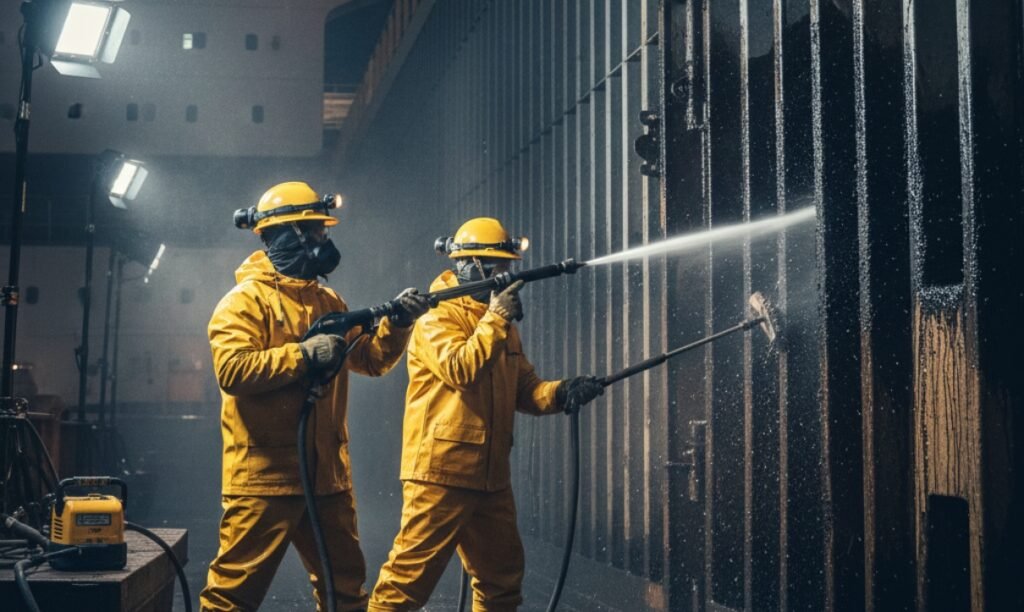
Professional tank cleaning lowers this risk by:
- Removing flammable residues
- Ensuring proper ventilation and gas freeing
- Verifying safe oxygen levels before entry
Think of it like clearing dry brush before wildfire season. You are not preventing sparks, but you are removing the fuel.
Safety Benefit 2: Compliance With International Regulations
Global shipping operates under shared rules. In Fujairah, authorities expect strict adherence to:
- IMO safety and pollution prevention standards
- MARPOL Convention requirements on residues and discharge
- IMCA guidance for offshore-related cleaning operations
- IAPH port safety frameworks
Proper tank cleaning supports compliance documentation and minimizes delays during inspections by port state control or charterer representatives.
Safety Benefit 3: Protection of Crew Health and Life
Tank entry remains one of the most dangerous tasks at sea. Toxic gases, low oxygen levels, and slippery surfaces combine into a high-risk environment.
Safe tank cleaning practices include:
- Confined space entry protocols
- Gas testing and monitoring
- Clear permits and crew training
By reducing exposure to hazardous conditions, you protect not just compliance records but human lives. Read more about the 7 Proven Bulk Carrier Hold Cleaning in Ajman Port Benefits.
Safety Benefit 4: Environmental Protection and Spill Prevention
Fujairah’s coastline and nearby marine ecosystems are economically and environmentally valuable. Poor tank cleaning can lead to accidental discharge of residues during ballasting or washing.
Effective cleaning ensures:
- Controlled collection and disposal of waste
- Prevention of illegal discharges
- Alignment with MARPOL pollution prevention goals
Environmental incidents do not stay local. They ripple through insurance, reputation, and future port access.
Safety Benefit 5: Safer Cargo Changeovers
Cargo contamination is a silent financial killer. Residues left from previous cargoes can react chemically or degrade new loads.
Tank cleaning before cargo changeovers:
- Prevents cross-contamination
- Protects cargo quality and charter party terms
- Reduces claims and disputes at discharge
For chemical and product tankers, this benefit alone often justifies the entire operation.
Safety Benefit 6: Improved Inspection and Maintenance Accuracy
Surveyors cannot assess steel condition through sludge. Classification societies and marine supercargo inspectors rely on clean tanks to evaluate corrosion, coatings, and structural integrity.
Clean tanks enable:
- Accurate inspections under Final Quality Rules
- Early detection of corrosion or coating failure
- Better planning of drydock or repair scopes
In practice, cleaning becomes a diagnostic tool, not just housekeeping.
Safety Benefit 7: Cost Control Through Risk Reduction
Safety and cost are not opposites. They are partners.
Well-executed tank cleaning reduces:
- Off-hire time due to failed inspections
- Emergency repairs caused by undetected damage
- Insurance premiums linked to incidents and claims
Over a vessel’s lifecycle, preventive cleaning is far cheaper than reactive crisis management.
Tank, Hold, and Bulk Carrier Cleaning Standards
While tank cleaning focuses on liquid cargo spaces, Fujairah also sees heavy demand for:
- Hold cleaning for bulk carriers
- Grain-clean standards for food cargoes
- Residue removal after coal, petcoke, or fertilizer
Each space has different risk profiles, but the principle remains the same: cleanliness equals safety and compliance. Learn more about 7 Proven Vessel Hold Cleaning Services in Abu Dhabi.
Inspection, Documentation, and Compliance Workflows
Modern marine cleaning is paperwork-heavy for a reason. Authorities and charterers expect traceability.
Typical workflows include:
- Pre-cleaning risk assessments
- Gas-free certificates
- Waste handling records
- Inspection reports from marine supercargo professionals
This documentation protects owners during disputes and audits.
Role of Industry Practices and Service Providers
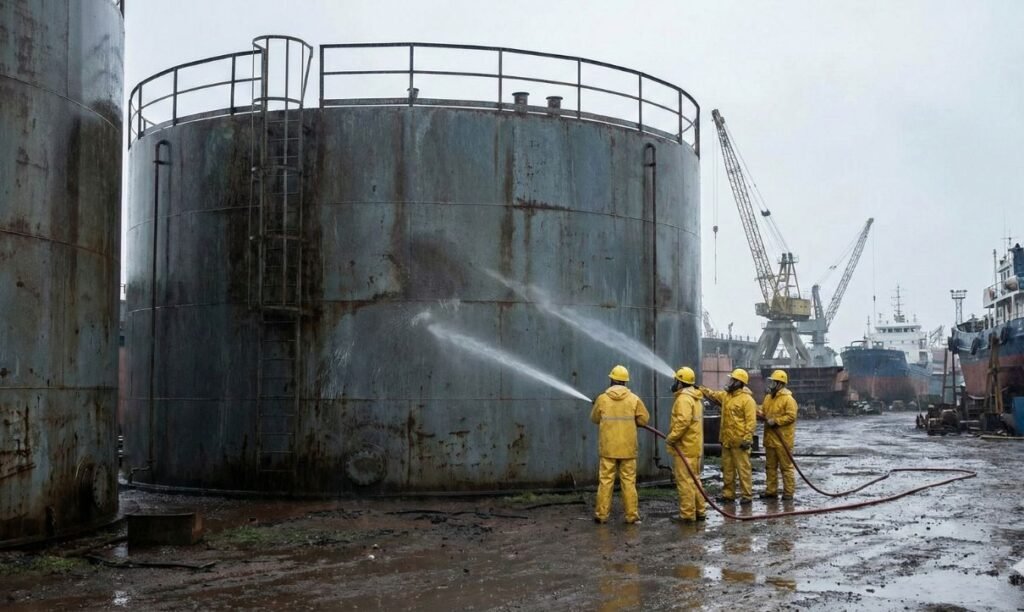
Across global ports, companies like Cleanship.co illustrate standard industry practices rather than promotion. Their operations reflect common expectations in Fujairah, including:
- Global tank and hold cleaning coordination
- Cargo supervision and compliance support
- Drug and alcohol testing services to enhance crew safety
These services sit at the intersection of safety management and operational efficiency.
Future Trends in Marine Cleaning and Safety
Marine cleaning is evolving. We are seeing:
- Closed-loop cleaning systems to reduce waste
- Digital inspection records shared with ports and charterers
- Stronger integration between cleaning, inspection, and crew safety programs
Innovation is driven less by marketing and more by regulation, data, and risk reduction.
Conclusion
Tank cleaning in Fujairah delivers far more than visual cleanliness. First, it directly reduces fire, explosion, and confined-space risks for crews. Second, it ensures compliance with international frameworks such as IMO, MARPOL, IMCA, and IAPH, protecting vessels from delays and penalties. Third, it supports environmental protection and long-term cost control through prevention rather than repair.
In a port as strategically important as Fujairah, safety is the currency of trust. For shipowners, operators, and charterers seeking reliable compliance and maritime service excellence, working with experienced industry practitioners such as Cleanship.co is a practical step toward safer, cleaner, and more resilient operations.
FAQs:
Fujairah’s role as a major bunkering and offshore hub means stricter inspections and higher traffic density. Cleaning standards are closely tied to international compliance and port safety expectations, making professional execution essential.
Tank cleaning removes residues that could otherwise be discharged illegally. Proper waste handling, documentation, and controlled cleaning processes help vessels meet MARPOL pollution prevention requirements consistently.
No. Bulk carriers, product tankers, and even vessels preparing for repairs require cleaning. Hold cleaning and residue removal are equally important for cargo safety and inspections.
Frequency depends on cargo type, charter requirements, and inspection schedules. High-risk cargoes and frequent changeovers demand more regular cleaning to maintain safety and compliance.
Yes. Clean tanks allow surveyors and marine supercargo inspectors to assess coatings, steel condition, and structural integrity accurately, reducing the risk of unexpected findings or failed surveys.