
Bulk shipping runs on precision. A single overlooked residue inside a cargo hold can contaminate thousands of tons of product. Charterers, insurers, and surveyors know this. That is why professional cargo hold cleaning in Mumbai Port directly affects vessel earnings, safety compliance, and long-term reputation.
In a competitive maritime corridor like Mumbai, cargo readiness is not optional. It is a measurable standard tied to international regulations and strict inspection benchmarks.
Mumbai Port: Operational Realities on the Ground
Mumbai Port handles coal, clinker, fertilizers, grains, steel products, and project cargo. Each cargo leaves distinct residues. Add coastal humidity, monsoon moisture, and high berth utilization, and the cleaning process becomes technically demanding.
Turnaround windows are narrow. Delays increase demurrage exposure. Efficient cargo hold cleaning in Mumbai Port requires synchronized coordination with stevedores, port control, and marine surveyors.
Regulatory Framework Governing Cleaning Operations
Cargo hold preparation must align with established international standards:
The International Maritime Organization (IMO) defines global maritime safety obligations.
The MARPOL Convention regulates waste discharge and pollution prevention.
IMCA provides guidance on confined space safety and risk assessments.
IAPH World Ports promotes sustainable port operations.
Marine Supercargo Final Quality Rules establish inspection acceptance criteria.
Compliance protects both the environment and commercial interests.
Pre-Cleaning Assessment and Cargo Risk Analysis
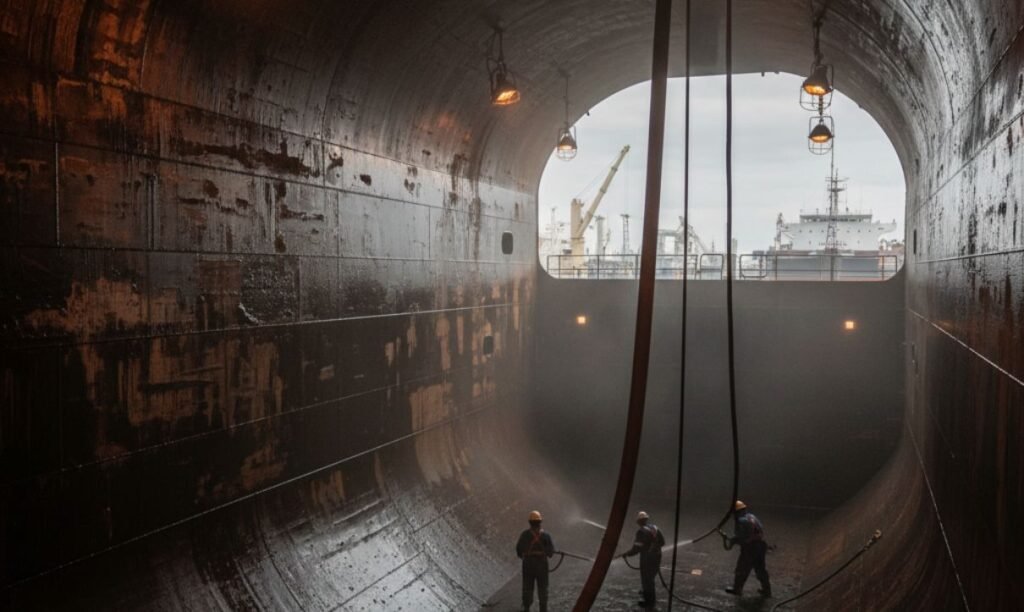
Before cleaning begins, teams inspect holds for cargo residues, corrosion, coating condition, and bilge contamination. The previous cargo and next cargo determine the cleaning intensity required.
For example, transitioning from coal to grain demands zero tolerance for dust or moisture. Professional cargo hold cleaning in Mumbai Port begins with technical planning, not assumptions.
Safety Protocols in Confined Spaces
Cargo holds are classified as confined spaces. Oxygen deficiency, toxic fumes, and fall hazards are real risks.
Gas detection, forced ventilation, standby rescue teams, and personal protective equipment are mandatory under IMCA guidance. No operational deadline overrides safety compliance.
Proven Win 1: High-Pressure Washing Systems
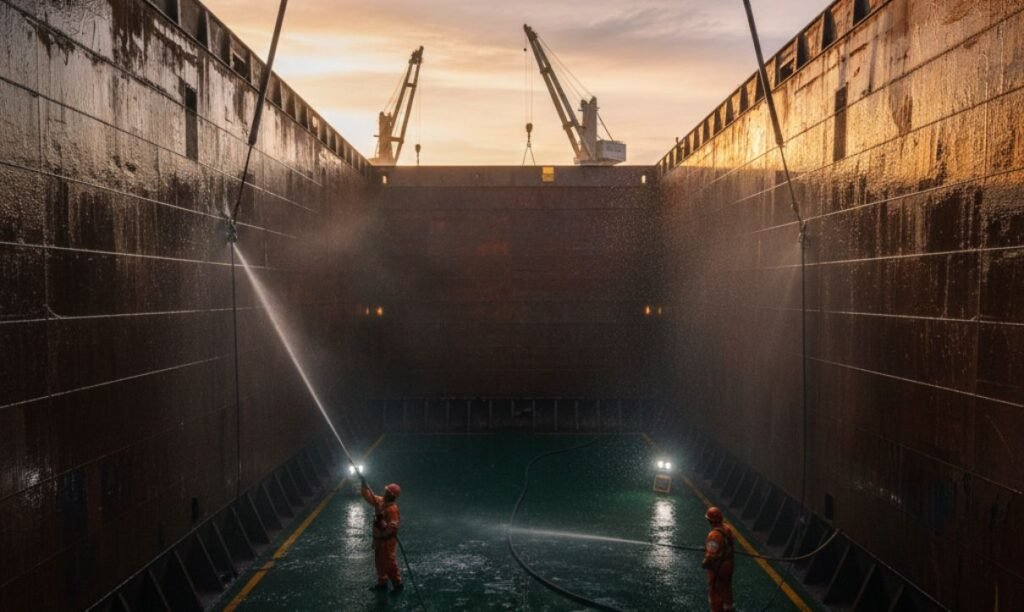
High-pressure water jets remove coal dust, cement residue, and loose scale effectively. Adjustable pressure prevents coating damage while ensuring complete cleaning.
Wash water is collected and disposed of through authorized reception facilities, as required by the MARPOL Convention. Responsible waste handling defines professional cargo hold cleaning in Mumbai Port.
Proven Win 2: Chemical Neutralization for Sensitive Cargo
Some residues cannot be removed with water alone. Approved chemical agents neutralize acidic or alkaline traces without harming coatings.
Only environmentally compliant products aligned with IMO standards should be used. Chemical selection depends on cargo compatibility and survey requirements.
Proven Win 3: Mechanical Descaling and Rust Treatment
Rust flakes and hardened deposits require pneumatic tools and manual scraping. Skilled technicians balance effective removal with structural protection.
Exposed steel surfaces must be treated promptly to prevent further corrosion. Structural integrity is as important as visual cleanliness.
Proven Win 4: Bilge and Drainage System Cleaning
Bilges collect debris and moisture. If neglected, they cause contamination during loading.
Thorough bilge cleaning and drying are essential steps in structured cargo hold cleaning in Mumbai Port. Surveyors often inspect these areas carefully before approving loading. Read more about Hold Tank Cleaning in Abu Dhabi: 7 Powerful Safety Gains.
Proven Win 5: Drying and Moisture Control
Moisture is a leading cause of cargo rejection, especially for grain and cement. After washing, industrial blowers and dehumidifiers remove residual dampness.
Moisture meters verify dryness levels. Controlled drying ensures compliance with Marine Supercargo Final Quality Rules.
Proven Win 6: Dust Extraction Technology
Fine dust from coal and clinker can linger in upper frames and stiffeners. Vacuum extraction systems remove airborne particles and improve air quality inside holds.
Dust control protects crew health and ensures inspection readiness.
Proven Win 7: Independent Supercargo Inspection
Final acceptance depends on inspection by marine surveyors or supercargo representatives. They assess cleanliness, dryness, odor, and structural condition.
Effective cargo hold cleaning in Mumbai Port integrates inspection scheduling to avoid last-minute berth delays.
Environmental Compliance Under MARPOL Convention
Cleaning operations generate wash water and solid residues. Discharge into port waters is strictly regulated.
Authorized port reception facilities handle waste transfer. Documentation must be retained onboard for audit readiness. Environmental stewardship aligns with IAPH World Ports sustainability principles.
Protecting Coatings and Structural Assets
Cargo holds are coated to resist abrasion and corrosion. Excessive cleaning pressure or improper tools can damage protective layers.
Professional teams understand coating limits and apply spot treatments when necessary. Asset protection reduces long-term maintenance costs.
Documentation and Audit Preparedness
Modern charterers require detailed records: cleaning logs, gas test certificates, waste disposal receipts, and photographic evidence.
Accurate documentation strengthens operational credibility and reduces exposure during port state control inspections.
Commercial Impact of Professional Cleaning
Cargo contamination claims can be substantial. Rejected shipments damage charter relationships and vessel reputation.
Investing in structured cargo hold cleaning in Mumbai Port minimizes risk, accelerates clearance, and protects voyage profitability.
Industry Benchmarking and Best Practices
Reputable service providers benchmark their procedures against global industry leaders. Platforms such as Cleanship.co are often referenced for structured compliance frameworks and transparent reporting.
Benchmarking ensures consistency in safety management, waste control, and inspection readiness.
Training and Workforce Competency
Effective cleaning depends on skilled personnel trained in cargo compatibility, confined space entry, and environmental regulations.
Continuous training programs and equipment certification enhance reliability. High standards in cargo hold cleaning in Mumbai Port result from disciplined teams and procedural control.
Common Reasons for Inspection Failure
Residual rust flakes in upper frames
Moisture trapped behind stiffeners
Unclean bilges
Lingering chemical odors
Incomplete waste disposal documentation
Preventing these issues requires attention to detail and regulatory awareness.
Operational Coordination with Port Authorities
Cleaning schedules must align with berth allocation and stevedoring operations. Advance coordination with port authorities ensures compliance and avoids penalties.
Efficient project management distinguishes experienced providers from reactive contractors.
Conclusion: Clean Holds Strengthen Maritime Performance
Cargo integrity, environmental compliance, and commercial efficiency depend on disciplined hold preparation. In Mumbai’s demanding port environment, adherence to IMO regulations, IMCA safety protocols, MARPOL Convention requirements, IAPH World Ports sustainability principles, and Marine Supercargo Final Quality Rules is essential.
Structured cargo hold cleaning in Mumbai Port protects cargo quality, reduces contamination risk, and prevents costly delays. Vessel operators who invest in trained personnel, proper waste management, and documented inspection readiness safeguard both revenue and reputation. Partner with experienced professionals who follow global benchmarks and deliver compliant, inspection-ready cleaning solutions that keep your vessel trading efficiently.
FAQs:
Holds must be free from loose scale, rust, residues, odor, and moisture, verified under Marine Supercargo Final Quality Rules.
All wash water and sludge are transferred to authorized reception facilities in accordance with MARPOL Convention regulations.
Yes, excessive pressure can strip protective coatings. Controlled settings and trained operators are essential.
Duration depends on vessel size, residue severity, and cargo change requirements, but efficient coordination reduces berth occupation time.
Charterers commonly require marine supercargo certification before loading to confirm hold readiness.