
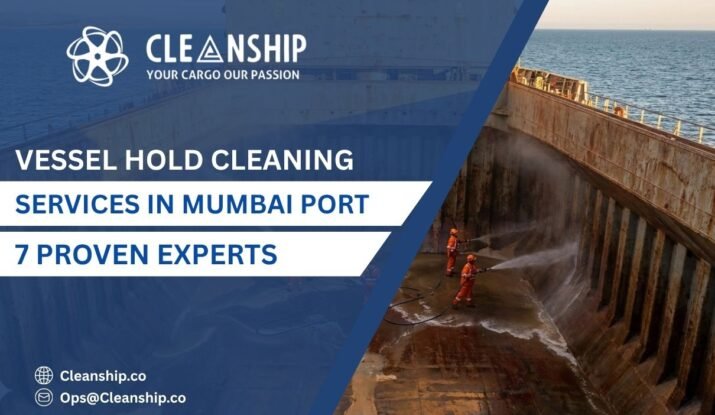
Vessel Hold Cleaning Services in Mumbai Port
Mumbai Port remains one of India’s busiest bulk cargo gateways. Coal, fertilizers, food grains, cement clinker, and steel products move through its berths every day. In this high-pressure environment, vessel hold cleaning services in Mumbai Port play a direct role in cargo acceptance, vessel turnaround, and charter compliance.
Cargo holds are not just empty spaces. They are structural compartments that must meet strict cleanliness standards before loading. A rejected hold can delay operations, trigger demurrage, and damage commercial relationships. Professional cleaning, aligned with global maritime rules, is essential.
Why Cargo Hold Cleanliness Is Commercially Critical
Charterers expect holds to meet the Marine Supercargo Final Quality Rules before loading. Standards such as “grain clean” require holds to be free from loose rust, scale, residue, and odor. Even small traces of prior cargo can contaminate the next shipment.
In Mumbai’s humid coastal climate, residues bond quickly with steel surfaces. Without proper washing and drying, corrosion risk increases. Reliable vessel hold cleaning services in Mumbai Port protect both cargo integrity and vessel structure.
Regulatory Framework Governing Hold Cleaning
Cleaning operations must comply with multiple international frameworks. The IMO sets safety standards under SOLAS for enclosed space entry and crew protection. The MARPOL Convention regulates the discharge and disposal of cargo residues and wash water. IMCA provides guidance on safe industrial cleaning practices and risk management.
The IAPH World Ports initiative promotes environmentally responsible port operations. Mumbai Port authorities enforce these global expectations with local oversight, making compliance non-negotiable.
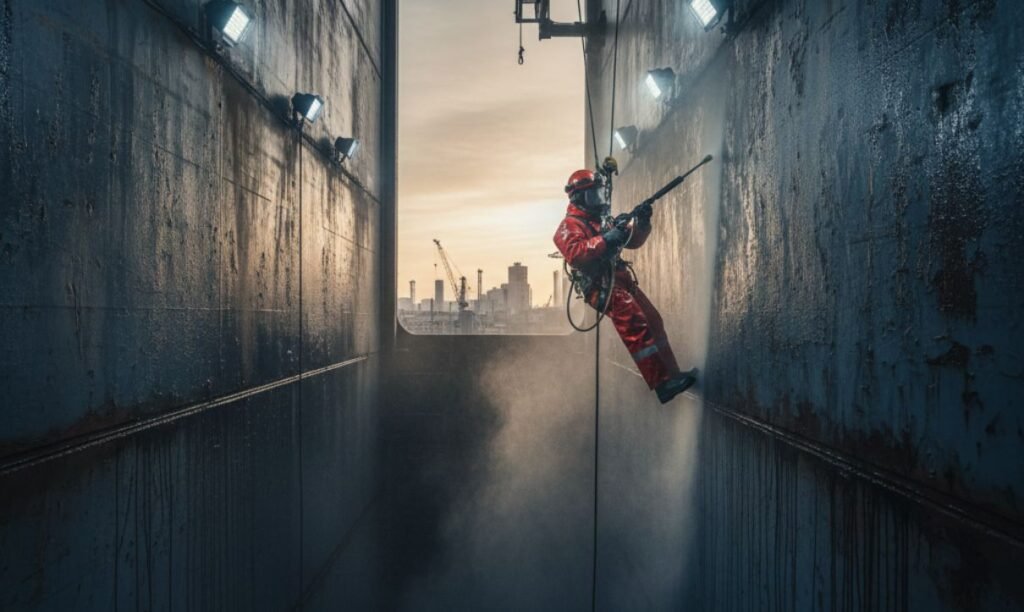
Operational Realities at Mumbai Port
Mumbai Port operates under tidal constraints, heavy vessel traffic, and limited berth windows. Cleaning must often occur within tight schedules between discharge and the next loading plan.
Environmental scrutiny is strong due to the port’s urban setting. Waste disposal documentation, sludge handling, and chemical usage records are frequently inspected. These operational realities demand experienced vessel hold cleaning services in Mumbai Port with local port knowledge.
Expert Solution 1: Detailed Pre-Arrival Planning
Effective cleaning begins before berthing. The vessel’s master reviews previous cargo details, identifies contamination risks, and prepares a cleaning method statement. A Job Safety Analysis outlines confined space procedures, ventilation requirements, and emergency response plans.
This planning reduces idle time at berth and ensures readiness for inspection immediately after cleaning.
Expert Solution 2: High-Pressure Automated Washing Systems
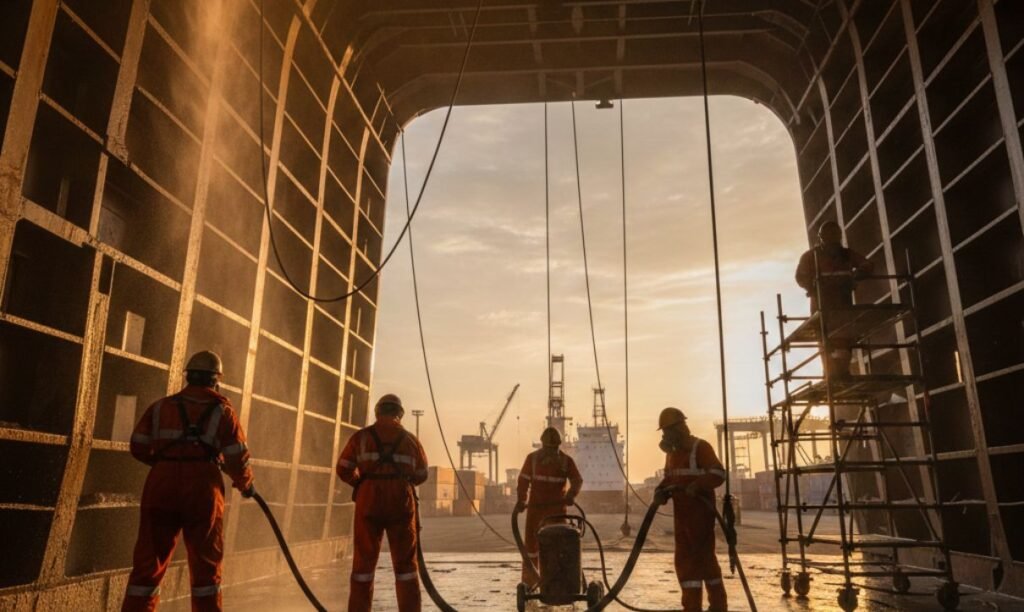
Modern bulk carriers rely on mechanized washing equipment. High-pressure water jets remove stubborn cargo deposits from bulkheads, frames, and tank tops. Automated systems ensure even coverage and reduce manual labor exposure.
These systems improve efficiency and support consistent results, particularly when performing vessel hold cleaning services in Mumbai Port under strict turnaround deadlines. Learn more about 7 Proven Vessel Hold Cleaning Services in Abu Dhabi.
Expert Solution 3: Approved Cleaning Chemicals
Certain cargoes such as petcoke, sulfur, or fertilizers leave sticky residues. Approved biodegradable cleaning agents help dissolve these materials without harming protective coatings.
All chemicals must comply with MARPOL requirements and local environmental regulations. Service providers maintain updated Material Safety Data Sheets and ensure safe onboard storage.
Expert Solution 4: Structured Waste Collection and Disposal
Wash water and sludge cannot be discharged freely. MARPOL Convention Annex V outlines waste management obligations. Mumbai Port requires proper segregation, collection, and transfer to licensed reception facilities.
Accurate documentation protects shipowners from environmental penalties. Industry benchmarks such as Cleanship.co demonstrate structured waste tracking systems aligned with international standards.
Expert Solution 5: Controlled Drying and Dehumidification
After washing, holds must be completely dry. Moisture left behind can cause corrosion or cargo damage. Industrial air blowers and dehumidifiers accelerate drying, especially during monsoon periods.
Moisture readings confirm acceptable levels before inspection. Professional vessel hold cleaning services in Mumbai Port integrate drying verification as part of their quality control process.
Expert Solution 6: Structural Inspection During Cleaning
Cleaning provides an opportunity to inspect steel surfaces for corrosion, coating failure, or structural cracks. Surveyors often conduct visual checks and ultrasonic thickness measurements during the process.
Early detection reduces long-term repair costs and improves vessel safety. Integrated inspection services add significant value to cleaning operations.
Expert Solution 7: Final Supercargo Inspection and Documentation
The final stage involves inspection by a marine supercargo or charterer representative. Lighting, access ladders, and safety equipment must be properly arranged.
Documentation includes cleaning logs, chemical usage records, waste transfer notes, and safety checklists. Transparent records speed up approval and avoid disputes.
Safety Standards for Confined Space Entry
Cargo holds are classified as enclosed spaces. Before entry, crews test oxygen content and check for flammable or toxic gases. Continuous ventilation is mandatory. A standby rescue team must remain available.
IMCA guidelines emphasize risk assessment and emergency preparedness. Strict adherence to IMO safety codes ensures crew protection during vessel hold cleaning services in Mumbai Port.
Environmental Compliance and Sustainability
Environmental responsibility is central to modern port operations. The IAPH World Ports Climate initiatives encourage reduced emissions and controlled waste practices.
Cleaning contractors increasingly use water-efficient systems and eco-friendly detergents. Sustainable vessel hold cleaning services in Mumbai Port help shipowners meet both regulatory and corporate environmental targets.
Coordination With Port Authorities
Effective communication with port control, terminal operators, and surveyors prevents scheduling conflicts. Cleaning teams must align with pilot boarding times, cargo readiness, and berth allocation.
Strong coordination minimizes idle time and reduces financial exposure. Read more about Hold Tank Cleaning in Abu Dhabi: 7 Powerful Safety Gains.
Quality Assurance and Audit Readiness
Charterers, insurers, and Port State Control officers may request cleaning records at any time. Digital documentation systems enhance transparency and reduce errors.
Professional vessel hold cleaning services in Mumbai Port maintain audit-ready files, ensuring compliance with IMO and MARPOL obligations.
Crew Training and Continuous Improvement
Well-trained crews support efficient cleaning operations. Regular drills on enclosed space entry, chemical handling, and fall protection reduce operational risk.
Continuous training aligns vessel operations with evolving global maritime standards.
Selecting the Right Service Provider
Choosing a cleaning partner requires verification of certifications, insurance coverage, safety record, and familiarity with local port procedures. Experience in Mumbai Port conditions is essential.
Benchmark providers, including Cleanship.co in a neutral industry context, reflect the professional standards expected in high-traffic commercial ports.
Economic Impact of Professional Cleaning
Rejected holds lead to loading delays, demurrage claims, and potential cargo contamination disputes. Professional cleaning reduces commercial risk and strengthens charter relationships.
Investing in experienced service providers often results in long-term cost savings and operational reliability.
Conclusion
Vessel hold cleaning services in Mumbai Port are critical to safe, compliant, and profitable maritime operations. Strict adherence to IMO, IMCA, MARPOL Convention, and IAPH standards ensures cargo integrity and environmental protection. From mechanized washing and structured waste disposal to final supercargo approval, each step requires discipline and documentation.
In a demanding port environment, precision determines commercial success. Shipowners and operators should partner with certified, experienced professionals to secure timely inspections and smooth cargo operations. Engage trusted experts today to protect your vessel, your cargo, and your reputation at Mumbai Port.
FAQs:
It means the hold is free from loose rust, scale, residue, and previous cargo traces, meeting Marine Supercargo Final Quality Rules.
No. Wash water must be collected and disposed of through approved reception facilities in line with the MARPOL Convention.
Cargo holds are confined spaces. Testing ensures safe oxygen levels and absence of toxic or flammable gases.
When chemicals are used, they must comply with MARPOL and local environmental standards to prevent pollution.
Inspection is required after each discharge and cleaning cycle, with periodic structural assessments to maintain vessel safety.