
In the shipping industry, vessel performance depends heavily on what lies beneath the waterline. While engines, navigation systems, and cargo operations often receive the most attention, the condition of a vessel’s hull can have an equally significant impact on operational efficiency. Over time, marine growth accumulates on submerged surfaces, increasing drag and forcing vessels to consume more fuel to maintain speed.
This is where Underwater Hull Cleaning Services in Conakry Port play an essential role. By removing marine growth before it becomes a serious operational issue, shipowners can improve vessel performance, lower fuel costs, and extend the effectiveness of anti-fouling coatings.
Located on the Atlantic coast of West Africa, Conakry Port serves as Guinea’s primary maritime gateway. The port handles a wide range of vessel traffic, including bulk carriers, container ships, tankers, offshore support vessels, and general cargo ships. With many vessels spending extended periods in tropical waters, underwater hull maintenance has become an important part of efficient fleet management.
Why Hull Cleaning Matters in Commercial Shipping
The underwater portion of a vessel is constantly exposed to marine organisms.
Within days of entering seawater, microscopic organisms begin forming a biological film on the hull surface. Over time, this develops into more significant fouling that may include:
- Algae
- Barnacles
- Mussels
- Tube worms
- Seaweed
- Biofilm and slime layers
Although these organisms may seem harmless, they create additional resistance as the vessel moves through the water.
Even moderate fouling can lead to:
- Increased fuel consumption
- Reduced vessel speed
- Higher engine loads
- Increased emissions
- Greater maintenance costs
This is one reason why many operators prioritize Underwater Hull Cleaning Services in Conakry Port as part of their preventive maintenance strategy.
The Impact of Marine Growth on Vessel Performance
Marine growth directly affects a vessel’s hydrodynamic efficiency.
A clean hull allows water to flow smoothly along the vessel’s surface. Once fouling develops, resistance increases significantly.
Higher Fuel Consumption
One of the most noticeable consequences of fouling is rising fuel costs.
Research across the maritime industry consistently shows that marine growth can substantially increase fuel usage, particularly on vessels operating long international routes.
Reduced Operational Efficiency
As drag increases, propulsion systems must work harder to maintain service speed.
This often results in reduced voyage efficiency and increased operating expenses.
Increased Carbon Emissions
Higher fuel consumption naturally leads to increased greenhouse gas emissions.
For shipping companies focused on environmental performance, hull cleanliness has become an important sustainability factor.
Additional Mechanical Stress
Excessive fouling can place additional strain on propellers, engines, and propulsion systems.
Routine cleaning helps reduce these operational pressures.
Why Conakry Port Is an Important Location for Hull Cleaning Services
Conakry Port occupies a strategic position along West African shipping routes.
Heavy Commercial Vessel Traffic
The port serves various vessel types, including:
- Bulk carriers transporting minerals and commodities
- Container vessels
- Oil and product tankers
- Offshore support vessels
- General cargo ships
Many of these vessels require regular underwater maintenance.
Tropical Marine Environment
Warm coastal waters encourage rapid marine growth development.
Vessels operating in tropical regions often experience faster fouling rates compared to ships trading in colder waters.
Operational Convenience
One of the major advantages of utilizing Underwater Hull Cleaning Services in Conakry Port is the ability to perform maintenance during scheduled port stays.
This minimizes operational disruption while improving vessel performance.
Access to Professional Marine Service Providers
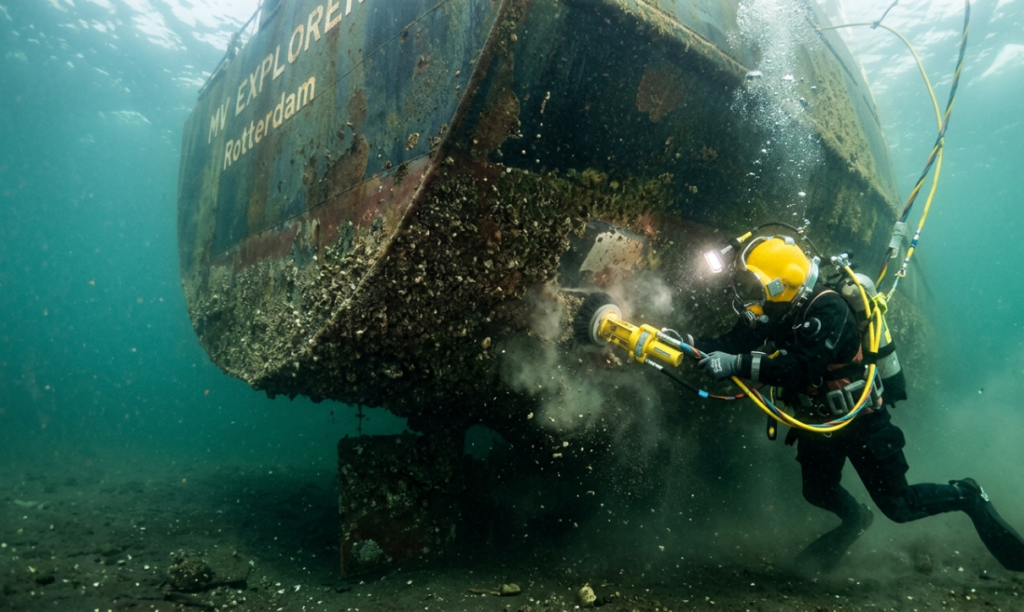
Specialized diving teams equipped with modern underwater cleaning systems can carry out cleaning operations safely and efficiently while vessels remain afloat.
How Underwater Hull Cleaning Is Performed
Modern hull cleaning involves much more than simply removing visible marine growth.
Professional cleaning operations follow a structured process to maximize effectiveness while protecting hull coatings.
Initial Underwater Inspection
Before cleaning begins, divers conduct a detailed assessment of the hull condition.
This inspection evaluates:
- Fouling severity
- Hull coating condition
- Propeller cleanliness
- Sea chest condition
- Areas requiring special attention
Hull Surface Cleaning
Specialized underwater cleaning equipment is used to remove marine growth from submerged hull surfaces.
The cleaning method is selected based on the level of fouling and the condition of the coating system.
Propeller Cleaning
Marine growth often accumulates on propeller blades, reducing propulsion efficiency.
Cleaning the propeller can provide immediate performance benefits.
Sea Chest Cleaning
Sea chests play a critical role in vessel cooling and auxiliary systems.
Cleaning ensures unrestricted seawater flow and helps maintain system reliability.
Final Verification Survey
After cleaning is completed, divers conduct a final inspection to verify cleaning effectiveness and document results.
Many service providers supply photographs and underwater video footage for maintenance records.
Benefits of Underwater Hull Cleaning Services
Regular hull cleaning delivers measurable operational advantages.
Improved Fuel Efficiency
Removing marine growth reduces drag and improves hydrodynamic performance.
Lower Operating Costs
Fuel savings often provide one of the strongest financial justifications for underwater cleaning.
Better Vessel Performance
A clean hull enables vessels to maintain service speed more efficiently.
Reduced Environmental Impact
Lower fuel consumption contributes to reduced emissions and improved environmental performance.
Extended Coating Life
Routine maintenance helps preserve the effectiveness of anti-fouling coatings.
These advantages explain why Underwater Hull Cleaning Services in Conakry Port continue to be in demand among international shipping companies.
Common Signs a Vessel Needs Hull Cleaning
Although routine inspections are recommended, certain indicators often suggest that cleaning is required.
Unexpected Fuel Consumption Increases
A gradual rise in fuel usage is frequently linked to hull fouling.
Reduced Speed
Ships may struggle to maintain normal operational speeds despite unchanged engine performance.
Increased Engine Load
Propulsion systems often compensate for increased hull resistance.
Longer Voyage Times
Fouling-related inefficiencies can affect scheduling and overall voyage performance.
For example, a bulk carrier regularly trading between West Africa and Europe may experience increasing fuel costs over several voyages. An underwater inspection often reveals significant barnacle growth and biofouling, making cleaning an immediate priority.
Environmental Considerations in Hull Cleaning Operations
Environmental responsibility has become a key consideration in underwater maintenance activities.
Professional providers of Underwater Hull Cleaning Services in Conakry Port follow procedures designed to balance operational efficiency with environmental protection.
Responsible Cleaning Practices
Modern cleaning techniques aim to minimize unnecessary coating damage while effectively removing fouling.
Biosecurity Management
Removing marine growth helps reduce the transfer of invasive aquatic species between ports and regions.
Supporting Sustainable Shipping
Clean hulls contribute to lower emissions and more energy-efficient vessel operations.
Choosing the Right Hull Cleaning Service Provider
The quality of hull cleaning results depends largely on the expertise of the service provider.
When evaluating contractors, shipowners should consider:
Commercial Diving Experience
Experienced diving teams understand vessel structures and underwater maintenance requirements.
Modern Equipment
Advanced cleaning systems improve cleaning efficiency and reduce coating damage risks.
Safety Standards
Professional providers maintain strict operational safety procedures.
Documentation and Reporting
Detailed inspection reports support maintenance planning and compliance requirements.
Operational Flexibility
Service providers should be capable of accommodating vessel schedules and port operations.
Conclusion
Underwater Hull Cleaning Services in Conakry Port have become an essential part of modern vessel maintenance and performance management. As marine growth accumulates on submerged hull surfaces, fuel consumption increases, vessel efficiency declines, and operating costs rise. Professional underwater cleaning helps reverse these effects while supporting sustainability goals and long-term asset protection.
For shipowners operating in West African waters, regular hull maintenance provides a practical way to improve operational performance, reduce fuel expenses, and maintain vessel reliability. By incorporating routine underwater cleaning into preventive maintenance programs, operators can ensure their vessels continue to perform efficiently throughout their trading cycles.
FAQs
Q1. What are underwater hull cleaning services?
Underwater hull cleaning services involve the removal of marine growth from a vessel’s submerged surfaces while the ship remains afloat.
Q2. Why is underwater hull cleaning important?
It helps reduce drag, improve fuel efficiency, maintain vessel speed, and lower operating costs.
Q3. Can hull cleaning be performed without dry docking?
Yes. Professional divers can conduct underwater cleaning while the vessel remains in the water.
Q4. Which vessel components are typically cleaned?
Hull surfaces, propellers, sea chests, rudders, and thrusters are commonly included in cleaning operations.
Q5. How often should underwater hull cleaning be performed?
The frequency depends on vessel operations, environmental conditions, and fouling rates. Regular inspections help determine cleaning requirements.