
Dahej has steadily become one of Gujarat’s important maritime gateways. The port handles chemical tankers, bulk carriers, offshore vessels, and coastal cargo ships throughout the year. With constant vessel movement and warm coastal waters, marine growth has become a common challenge for ship operators.
A vessel may appear perfectly maintained above the waterline, yet significant marine growth can develop beneath the hull within a relatively short period. Algae, slime, barnacles, and shell organisms gradually attach themselves to underwater surfaces, increasing resistance and reducing vessel performance.
This is why Marine Growth Removal in Dahej has become an essential maintenance service for shipping companies operating along India’s western coastline. Regular underwater cleaning helps improve efficiency, lower fuel consumption, and protect valuable hull coatings.
Understanding Marine Growth Removal in Dahej on Ship Hulls
Marine growth Removal in Dahej begins with a thin layer of biological slime. Over time, algae, barnacles, mussels, and other marine organisms attach themselves to the hull surface.
The warm waters around Dahej create favorable conditions for rapid fouling, especially for vessels that remain at anchorage or spend extended periods alongside terminals.
Common areas affected include:
- Hull plating
- Sea chests
- Propellers
- Rudders
- Thruster tunnels
- Water intake areas
Without proper maintenance, marine growth Removal in Dahej can quickly affect vessel operations.
Why Marine Growth Removal in Dahej Matters
Even a small amount of fouling creates additional resistance between the hull and seawater.
A coastal cargo vessel operating between Gujarat and the Middle East experienced increased fuel consumption after several months without underwater cleaning. During a scheduled maintenance stop near Dahej, divers removed heavy marine growth from the hull and propeller. The vessel later reported improved speed and reduced engine load.
Situations like these are not uncommon.
Marine Growth Removal in Dahej offers several operational benefits:
- Lower fuel consumption
- Improved vessel speed
- Reduced emissions
- Better propulsion efficiency
- Longer coating life
- Lower maintenance expenses
The Impact of Marine Growth on Fuel Consumption
Fuel remains one of the largest operating expenses for shipping companies.
Marine growth increases hydrodynamic drag, forcing engines to work harder to maintain speed. Even light slime layers can affect fuel efficiency.
Studies across the shipping industry have shown that severe fouling can significantly increase fuel consumption over time.
For vessels operating on fixed schedules, reduced speed may also affect voyage planning and cargo commitments.
Common Types of Marine Growth
Microorganisms create the initial biological layer that forms on submerged surfaces.
Algae develop rapidly in warm coastal waters and contribute to increased drag.
Barnacles attach firmly to the hull and create substantial resistance.
Mussels and other marine species may colonize underwater surfaces if maintenance is delayed.
Each type of fouling requires specific cleaning methods.
Underwater Hull Cleaning Services
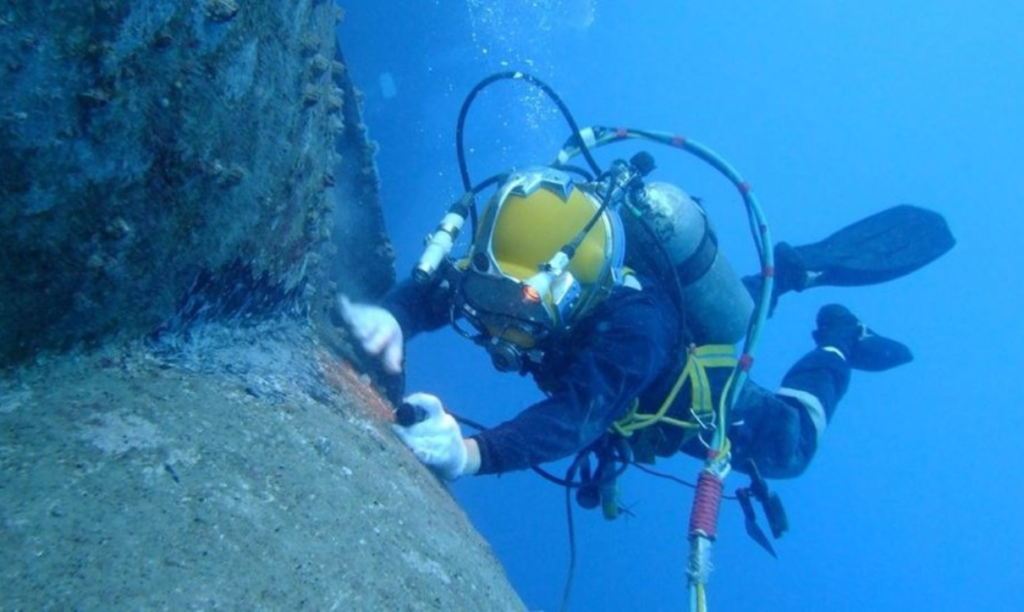
Professional underwater cleaning remains the most common solution.
Commercial divers use specialized tools and equipment to remove marine growth while the vessel remains afloat. This allows ship operators to avoid dry docking whenever possible.
Marine Growth Removal in Dahej often takes place during cargo operations or scheduled port calls.
Advantages of Underwater Cleaning
- Reduced operational downtime
- No dry dock requirement
- Immediate performance improvement
- Lower maintenance costs
Many shipping companies incorporate underwater cleaning into their preventive maintenance schedules.
Propeller Cleaning and Polishing
The propeller plays a critical role in vessel efficiency.
Marine deposits on propeller blades reduce propulsion performance and increase fuel consumption. Cleaning and polishing the propeller often produce noticeable operational improvements.
A chemical tanker calling at Dahej recently combined propeller polishing with underwater hull cleaning. The technical team reported smoother vessel operation and reduced vibration during subsequent voyages.
Propeller maintenance remains an important component of Marine Growth Removal in Dahej.
Protecting Hull Coatings
Marine growth can damage antifouling coatings over time.
Heavy fouling sometimes causes coating deterioration, exposing steel surfaces to seawater. Once coating damage develops, corrosion risks increase.
Cleaning methods must therefore be selected carefully.
Soft brush systems and controlled cleaning techniques help preserve protective coatings while removing unwanted growth.
Experienced service providers understand the importance of balancing cleaning efficiency with coating protection.
Environmental Considerations
Environmental regulations continue to influence underwater maintenance activities.
Port authorities and marine operators increasingly focus on responsible cleaning practices. Controlled removal methods help reduce environmental impact while maintaining vessel performance.
Many operators now request inspection reports and photographic documentation following cleaning operations.
These reports assist with future maintenance planning and compliance requirements.
Choosing the Right Marine Service Provider
Selecting an experienced contractor can significantly affect cleaning results.
Ship owners should evaluate:
- Diving certifications
- Safety procedures
- Cleaning equipment
- Inspection capabilities
- Reporting standards
- Experience with commercial vessels
Reliable providers offering Marine Growth Removal in Dahej understand local operating conditions and can recommend suitable cleaning methods.
The Future of Marine Growth Management
Technology continues to change underwater maintenance.
ROV systems, underwater drones, and advanced inspection equipment are becoming increasingly common. Some operators now use digital monitoring systems to track hull conditions between dry dockings.
At the same time, modern antifouling coatings continue to improve resistance against marine growth.
The combination of regular inspections, effective cleaning, and coating maintenance provides the best long-term results.
Conclusion
Marine growth develops gradually, but its impact on vessel performance can be substantial. Increased fuel consumption, reduced speed, and coating damage all affect operational efficiency.
Regular Marine Growth Removal in Dahej helps ship owners maintain vessel performance while reducing maintenance costs and protecting underwater assets.
Whether through diver cleaning, propeller polishing, or preventive inspections, timely maintenance delivers measurable benefits.
For vessels operating in Gujarat’s busy industrial waters, underwater cleaning is no longer simply a maintenance activity. It has become an important operational strategy that supports fuel efficiency, reliability, and long-term vessel performance.
FAQs:
Q1. What is marine growth on a ship hull?
Marine growth consists of algae, slime, barnacles, and other organisms that attach to underwater surfaces.
Q2. Why is marine growth removal important?
Removing marine growth improves vessel efficiency, reduces fuel consumption, and protects hull coatings.
Q3. Can marine growth be removed without dry docking?
Yes. Professional divers can clean the hull while the vessel remains afloat.
Q4. How often should underwater cleaning be performed?
The frequency depends on vessel operations, water conditions, and coating performance.
Q5. Does marine growth affect fuel costs?
Yes. Increased hull resistance caused by marine growth can significantly increase fuel consumption.