Mundra is one of India’s busiest commercial ports, handling container ships, bulk carriers, crude oil tankers, LNG vessels, and offshore support vessels around the clock. With heavy vessel traffic and limited turnaround time, ship operators need reliable inspection methods that deliver accurate results without disrupting operations.
Traditional underwater inspections by commercial divers continue to play an important role, but modern shipping increasingly relies on remotely operated vehicles (ROVs) for underwater assessments. These advanced robotic systems provide detailed visual inspections while improving safety and reducing operational delays.
That is why ROV Hull Inspection in Mundra has become a preferred solution for ship owners, fleet managers, and marine operators looking to maintain vessel performance and plan maintenance more efficiently.
What Is an ROV Hull Inspection in Mundra?
A Remotely Operated Vehicle (ROV) is an underwater robotic system equipped with high-definition cameras, lighting, thrusters, and navigation controls. Operated from the surface, the ROV captures live video and detailed images of a vessel’s underwater structure.
A professional ROV Hull Inspection in Mundra typically covers:
- Hull plating
- Propellers
- Rudders
- Sea chests
- Thruster tunnels
- Bilge keels
- Underwater coatings
- Marine growth
Because inspections are performed while the vessel remains afloat, operators can avoid unnecessary dry docking and minimize disruptions.
Why ROV Inspections Are Becoming Essential
Modern shipping operates on tight schedules. Delays caused by underwater inspections can affect cargo commitments, charter agreements, and voyage planning.
For example, a bulk carrier arriving at Mundra for cargo discharge reported unusual vibration while approaching the berth. Instead of delaying operations for a diver inspection, the operator requested an ROV survey. The inspection quickly revealed rope entanglement around the propeller hub, allowing maintenance to be scheduled before the vessel’s next voyage.
This kind of efficiency explains why ROV Hull Inspection in Mundra is now widely adopted across commercial fleets.
1. Improves Safety During Underwater ROV Hull Inspection in Mundra
Safety is one of the strongest reasons for choosing ROV technology.
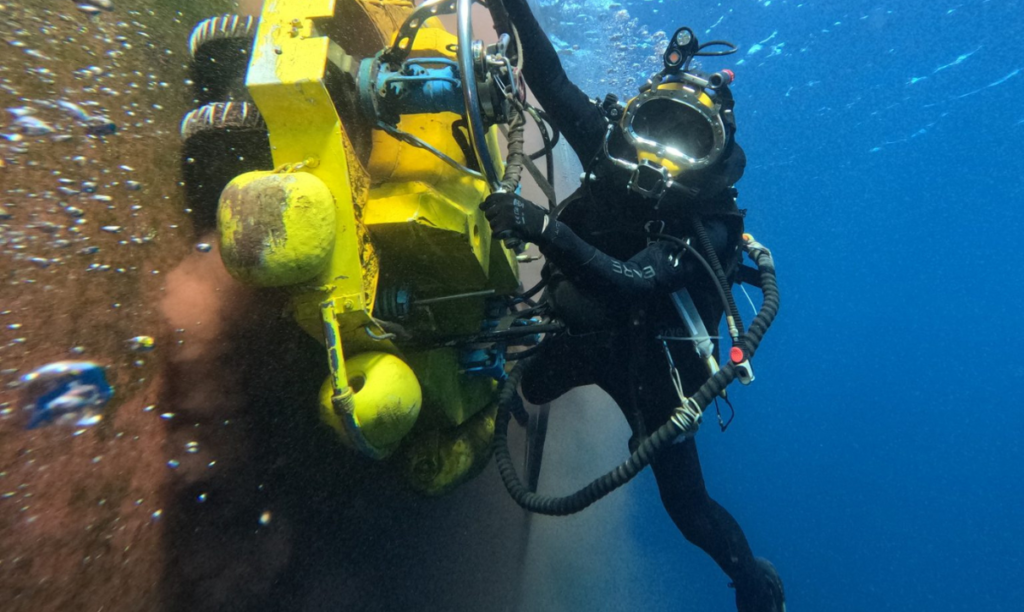
Certain underwater areas can be difficult or hazardous for divers due to currents, low visibility, or confined spaces. ROVs eliminate unnecessary human exposure by carrying out inspections remotely.
Safety Advantages
- Reduced diver exposure
- Safe access to confined underwater spaces
- Lower operational risk
- Continuous monitoring from the surface
This makes inspections safer without compromising the quality of the assessment.
2. Delivers Faster Inspection Results
Time is critical in port operations.
An ROV can inspect large sections of a vessel within a relatively short period while transmitting live video to inspectors. Technical teams receive immediate feedback, helping them make quicker maintenance decisions.
Many shipping companies prefer ROV Hull Inspection in Mundra because it reduces inspection time and minimizes vessel downtime.
3. Provides High-Definition Visual Evidence
Modern ROVs are equipped with advanced cameras capable of capturing high-resolution images and videos.
Detailed visual documentation allows marine engineers to evaluate:
- Hull coating condition
- Corrosion
- Cracks
- Marine growth
- Mechanical damage
Inspection reports supported by HD footage become valuable references for future maintenance planning and class surveys.
4. Eliminates the Need for Immediate Dry Docking
Dry docking is both expensive and time-consuming.
With ROV Hull Inspection in Mundra, ship owners can inspect underwater structures while vessels remain alongside the berth or at anchorage. This flexibility allows operators to assess hull conditions without interrupting commercial operations.
For vessels operating under tight charter schedules, this can lead to significant cost savings.
5. Accesses Hard-to-Reach Areas
Some underwater sections are difficult to inspect manually.
Sea chests, rudder clearances, thruster tunnels, and propeller hubs often require detailed examination.
ROVs can maneuver into these confined spaces and provide clear visual information, allowing inspectors to detect:
- Coating damage
- Corrosion
- Fouling
- Structural defects
- Mechanical abnormalities
Early identification helps prevent costly repairs later.
Areas Commonly Inspected
- Sea chests
- Rudder assemblies
- Propeller blades
- Bilge keels
- Thruster tunnels
Comprehensive inspections improve maintenance planning.
6. Supports Preventive Maintenance
Successful maintenance begins with reliable information.
Instead of relying on assumptions, vessel managers can make decisions based on actual underwater conditions.
Routine ROV Hull Inspection in Mundra allows operators to:
- Detect defects early
- Schedule repairs efficiently
- Plan dry docking more accurately
- Extend equipment life
Preventive maintenance often reduces long-term operating costs.
7. Reduces Overall Maintenance Costs
Unexpected underwater damage can result in expensive repairs if left unnoticed.
One container vessel operating regular services through Mundra scheduled an ROV inspection before dry docking. Inspectors discovered only minor coating damage and localized corrosion instead of the widespread deterioration initially suspected.
The ship owner revised the repair scope, reducing both dry dock duration and maintenance expenses.
Accurate inspections help avoid unnecessary repair work while protecting vessel performance.
Applications Across Different Vessel Types
ROV technology supports inspections for a wide variety of commercial vessels, including:
- Container ships
- Bulk carriers
- Oil tankers
- Chemical tankers
- LNG carriers
- Offshore support vessels
- Coastal cargo ships
Port authorities and offshore terminals also use ROV systems for underwater infrastructure inspections.
Choosing the Right Partner for ROV Hull Inspection in Mundra
Selecting an experienced underwater inspection company is essential.
Ship owners should evaluate providers based on:
- Modern ROV technology
- High-definition imaging systems
- Qualified inspection personnel
- Comprehensive reporting
- Strong safety standards
- Experience with commercial shipping
An experienced provider offering ROV Hull Inspection in Mundra understands local operating conditions and can deliver reliable inspection results that support maintenance planning.
The Future of Underwater ROV Hull Inspection in Mundra
Technology continues to reshape the maritime industry.
Artificial intelligence, digital image analysis, 3D underwater mapping, and automated reporting systems are becoming increasingly common. Future ROV inspections may identify coating deterioration, corrosion, and structural defects automatically using advanced software.
These innovations will help shipping companies make faster and more informed maintenance decisions while improving operational efficiency.
Conclusion
Maintaining a vessel’s underwater structure is essential for safe and efficient operations. ROV technology has transformed underwater inspections by providing faster, safer, and more detailed assessments than many traditional methods.
The seven expert benefits discussed above show why ROV Hull Inspection in Mundra has become an important maintenance solution for modern shipping companies. From improving safety and reducing downtime to supporting preventive maintenance and lowering repair costs, ROV inspections provide measurable operational advantages.
For vessels operating through one of India’s busiest ports, investing in professional ROV inspections is a practical step toward maintaining performance, protecting valuable assets, and ensuring long-term operational reliability.
FAQs:
1. What is an ROV hull inspection?
An ROV hull inspection uses a remotely operated underwater vehicle equipped with cameras to inspect a vessel’s underwater structure and components.
2. Can ROV inspections replace diver inspections?
ROVs can perform many inspection tasks, but some underwater repair and maintenance activities may still require commercial divers.
3. How long does an ROV hull inspection take?
The inspection duration depends on vessel size and inspection scope, but most surveys can be completed within a few hours.
4. Can ROV inspections be carried out while the vessel is afloat?
Yes. Most ROV inspections are performed while the vessel remains alongside the berth or at anchorage, avoiding unnecessary dry docking.
5. What defects can an ROV identify?
ROVs can detect coating damage, corrosion, marine growth, cracks, propeller defects, fouling, and other underwater structural issues.