
Mumbai is one of India’s busiest maritime gateways, handling a constant flow of container ships, crude oil tankers, offshore support vessels, bulk carriers, and coastal cargo ships. With vessels spending considerable time at anchorage, berths, and coastal waters, marine growth naturally begins to accumulate on submerged hull surfaces.
What starts as a thin layer of slime can quickly develop into algae, barnacles, mussels, and other marine organisms. This process, known as biofouling, increases hull resistance, raises fuel consumption, reduces vessel speed, and places additional stress on propulsion systems.
That is why Ship Hull Biofouling Removal in Mumbai has become an essential maintenance service for commercial shipping companies. Regular removal of marine growth helps vessels maintain operational efficiency, protect hull coatings, and reduce long-term maintenance expenses.
What Is Ship Hull Biofouling Removal in Mumbai?
Biofouling is the accumulation of marine organisms on underwater surfaces exposed to seawater.
The process generally begins with microscopic bacteria and slime, followed by algae, barnacles, tube worms, mussels, and shell-forming organisms. If left untreated, these organisms create thick deposits that significantly affect vessel performance.
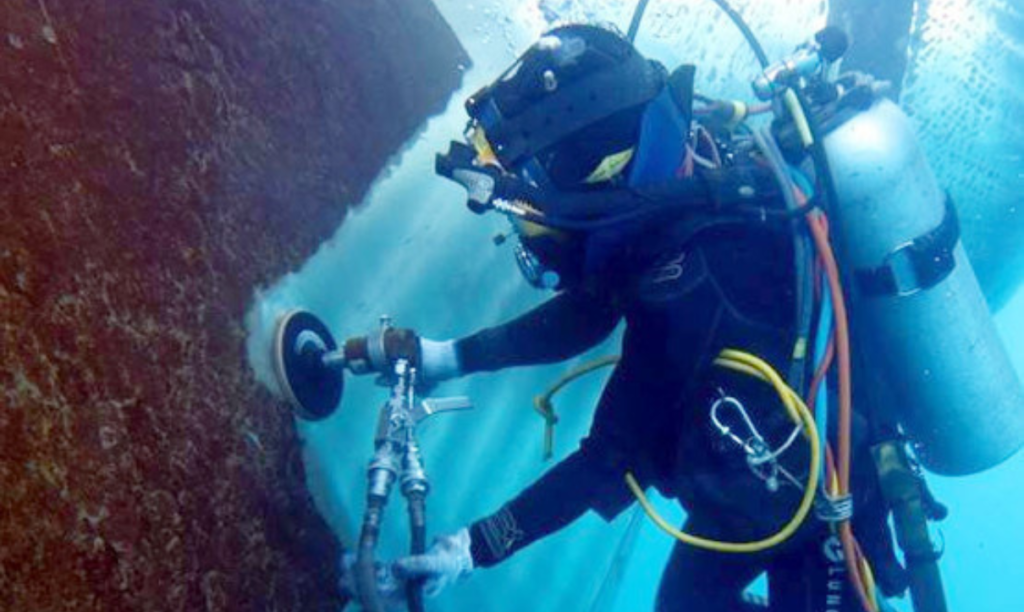
Professional Ship Hull Biofouling Removal in Mumbai removes these deposits while protecting the vessel’s antifouling coating and underwater structure.
Why Biofouling Removal Is Important
Even moderate marine growth can have a measurable impact on vessel performance.
A container ship operating between Mumbai and Gulf ports recently recorded increasing fuel consumption despite normal engine operation. During an underwater inspection, commercial divers identified extensive biofouling across the hull and propeller. After underwater cleaning, the vessel regained its expected operating efficiency without requiring dry docking.
Practical situations like this demonstrate why routine Ship Hull Biofouling Removal in Mumbai is an important part of preventive maintenance.
1. Remove Marine Growth Before It Spreads
Marine organisms reproduce rapidly in warm coastal waters.
Removing fouling during its early stages prevents heavy barnacle formation and makes cleaning faster, safer, and more effective.
Early Removal Benefits
- Easier cleaning
- Lower maintenance costs
- Better coating protection
- Improved vessel efficiency
Preventive maintenance is generally more cost-effective than delayed intervention.
2. Protect Hull Coatings
Modern antifouling coatings reduce marine growth while protecting the steel hull against corrosion.
However, excessive biofouling can place additional stress on these coatings. Delayed cleaning often requires more aggressive removal methods that may shorten coating life.
Routine Ship Hull Biofouling Removal in Mumbai helps preserve coating performance while reducing future maintenance requirements.
Protecting the coating also helps extend dry dock intervals.
3. Improve Fuel Efficiency
Marine growth creates additional drag as the vessel moves through the water.
Even a relatively thin layer of fouling increases hydrodynamic resistance, requiring engines to burn more fuel to maintain service speed.
Professional underwater cleaning restores smoother hull surfaces, helping reduce fuel consumption and improve voyage efficiency.
For vessels operating on regular international routes, these savings can become substantial over time.
4. Clean Propellers Along With the Hull
Biofouling affects more than the hull alone.
Marine organisms also attach to:
- Propellers
- Rudders
- Bilge keels
- Sea chests
- Thruster tunnels
A product tanker undergoing Ship Hull Biofouling Removal in Mumbai recently combined hull cleaning with propeller polishing. Following maintenance, engineers reported smoother propulsion performance and reduced vibration during sea trials.
Combined Maintenance Advantages
- Improved propulsion efficiency
- Better vessel handling
- Reduced mechanical strain
- Enhanced operational performance
Cleaning multiple underwater components provides greater long-term benefits.
5. Conduct Regular Underwater Inspections
Cleaning should always begin with a detailed underwater inspection.
Professional divers or remotely operated vehicles (ROVs) evaluate:
- Marine growth levels
- Hull coating condition
- Corrosion
- Structural damage
- Underwater appendages
Routine inspections allow maintenance teams to choose the most appropriate cleaning methods while identifying additional repair requirements.
Professional Ship Hull Biofouling Removal in Mumbai often includes photographic and video documentation for maintenance records.
6. Use Environmentally Responsible Cleaning Methods
Environmental regulations continue to influence underwater maintenance practices.
Modern cleaning techniques focus on removing marine growth efficiently while minimizing coating damage and controlling debris whenever possible.
Experienced underwater service providers follow approved cleaning procedures that support environmental compliance and responsible marine operations.
Responsible maintenance benefits both vessel performance and the surrounding marine environment.
7. Build a Preventive Maintenance Program
The most effective approach to biofouling is prevention.
Rather than waiting for heavy marine growth to develop, shipping companies increasingly schedule routine underwater inspections and cleaning throughout the year.
A bulk carrier trading between Mumbai, Southeast Asia, and the Middle East introduced a planned underwater maintenance program that included periodic biofouling removal. Over time, the operator reported more consistent fuel performance and reduced maintenance costs compared with reactive cleaning practices.
Regular Ship Hull Biofouling Removal in Mumbai helps maintain vessel efficiency while supporting long-term operational reliability.
Choosing the Right Biofouling Removal Service
Not all underwater cleaning services deliver the same level of quality.
Ship owners should consider providers that offer:
- Certified commercial divers
- ROV inspection capability
- Modern underwater cleaning equipment
- High-definition reporting
- Strong safety management systems
- Experience with commercial vessels
An experienced contractor understands local port conditions in Mumbai and selects cleaning techniques that effectively remove marine growth without damaging hull coatings.
Technology Is Improving Biofouling Management
The maritime industry is increasingly adopting advanced inspection and cleaning technologies.
ROVs equipped with HD cameras, underwater lighting, and digital reporting software help inspectors assess fouling levels before cleaning begins. Some providers also use specialized rotary cleaning tools and real-time monitoring systems to improve cleaning precision while protecting antifouling coatings.
These technologies allow ship owners to make more informed maintenance decisions and optimize vessel performance.
Conclusion
Biofouling is a natural process, but its impact on vessel performance can be effectively controlled through regular underwater maintenance. Heavy marine growth increases fuel consumption, reduces speed, affects propulsion efficiency, and accelerates coating deterioration.
The seven proven ways discussed above demonstrate why Ship Hull Biofouling Removal in Mumbai remains an essential maintenance practice for commercial shipping. Early removal, routine inspections, responsible cleaning methods, and preventive maintenance programs all contribute to lower operating costs and improved vessel reliability.
For ship owners operating through Mumbai’s busy maritime region, investing in professional biofouling removal helps protect underwater assets, improve fuel efficiency, and support safe, efficient vessel operations.
FAQs:
Q1. What is ship hull biofouling Removal in Mumbai?
Ship hull biofouling removal in Mumbai is the accumulation of marine organisms such as slime, algae, barnacles, and mussels on a vessel’s underwater hull surfaces.
Q2. Why is biofouling removal important?
Removing marine growth improves fuel efficiency, protects hull coatings, enhances propulsion performance, and reduces long-term maintenance costs.
Q3. Can biofouling removal be carried out without dry docking?
Yes. Professional commercial divers can remove marine growth while the vessel remains afloat, minimizing operational downtime.
Q4. How often should ship hull biofouling Removal in Mumbai be performed?
Cleaning frequency depends on operating conditions, trading routes, and marine growth levels, but regular underwater inspections are recommended.
Q5. Does biofouling affect fuel consumption?
Yes. Marine growth increases hydrodynamic drag, forcing engines to consume more fuel to maintain the vessel’s normal operating speed.