Jawaharlal Nehru Port Authority (JNPT) is India’s largest container port, handling thousands of vessel movements every year. From container ships and bulk carriers to oil tankers and offshore support vessels, ships operating through JNPT are continuously exposed to warm coastal waters where marine organisms naturally accumulate on submerged hull surfaces.
Over time, slime, algae, barnacles, and shell-forming organisms create hull fouling that increases water resistance and affects vessel performance. If left unchecked, fouling can lead to higher fuel consumption, reduced speed, greater engine workload, and increased maintenance costs.
This is why Hull Fouling Inspection in JNPT has become an essential part of preventive vessel maintenance. A professional underwater inspection helps ship owners evaluate the condition of the hull, identify marine growth at an early stage, and plan cleaning before operational efficiency is affected.
What Is a Hull Fouling Inspection in JNPT?
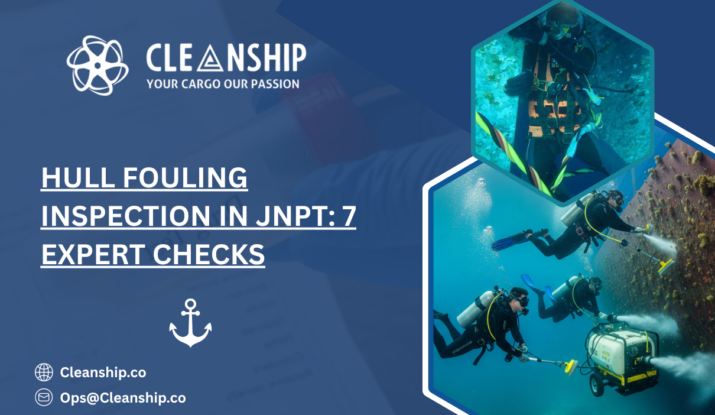
A hull fouling inspection in JNPT is an underwater assessment of a vessel’s submerged surfaces to determine the extent and type of marine growth.
Certified commercial divers or remotely operated vehicles (ROVs) inspect:
- Hull plating
- Propeller
- Rudder
- Bilge keels
- Thruster tunnels
- Sea chests
- Other underwater appendages
A professional Hull Fouling Inspection in JNPT provides clear photographic evidence, HD video recordings, and detailed reports that support maintenance planning and operational decision-making.
Why Hull Fouling Should Be Monitored
Marine fouling develops gradually, making it easy to overlook until vessel performance begins to decline.
For example, a feeder container vessel operating between JNPT and Middle Eastern ports experienced increasing fuel consumption despite routine engine maintenance. An underwater hull inspection revealed extensive barnacle growth concentrated around the aft section of the hull and propeller. Following underwater cleaning, the vessel regained its expected operating efficiency.
This real-world example demonstrates why regular Hull Fouling Inspection in JNPT is a practical investment for commercial vessel operators.
1. Assess the Level of Marine Growth
The first objective of every hull fouling inspection in JNPT is determining how much marine growth has accumulated.
Inspectors evaluate:
- Slime layers
- Algae
- Barnacles
- Mussels
- Tube worms
- Shell deposits
Understanding the severity of fouling helps maintenance teams decide whether immediate cleaning is required or whether routine monitoring is sufficient.
Early Detection Benefits
- Prevents excessive fouling
- Reduces cleaning costs
- Improves maintenance planning
- Protects vessel efficiency
Early intervention is generally more cost-effective than delayed maintenance.
2. Inspect Hull Coating Condition
Marine growth often develops more aggressively where protective coatings have deteriorated.
During Hull Fouling Inspection in JNPT, inspectors carefully assess antifouling coatings for:
- Peeling
- Scratches
- Abrasion
- Blistering
- Paint breakdown
Identifying coating damage early allows localized repairs before corrosion develops beneath the coating.
Healthy coatings play an important role in reducing future marine growth.
3. Examine the Propeller and Rudder
Hull fouling inspection in JNPT extend beyond the hull itself.
Marine growth frequently affects propulsion components, including:
- Propeller blades
- Rudder surfaces
- Shaft areas
A bulk carrier preparing for departure from JNPT recently underwent a routine underwater inspection that revealed heavy fouling on the propeller despite only moderate hull growth. After underwater propeller cleaning and polishing, vessel performance improved noticeably during the following voyage.
Propulsion Inspection Advantages
- Improved propulsion efficiency
- Reduced vibration
- Better vessel maneuverability
- Lower fuel consumption
Inspecting propulsion components provides a more complete picture of underwater performance.
4. Check Sea Chests and Water Intakes
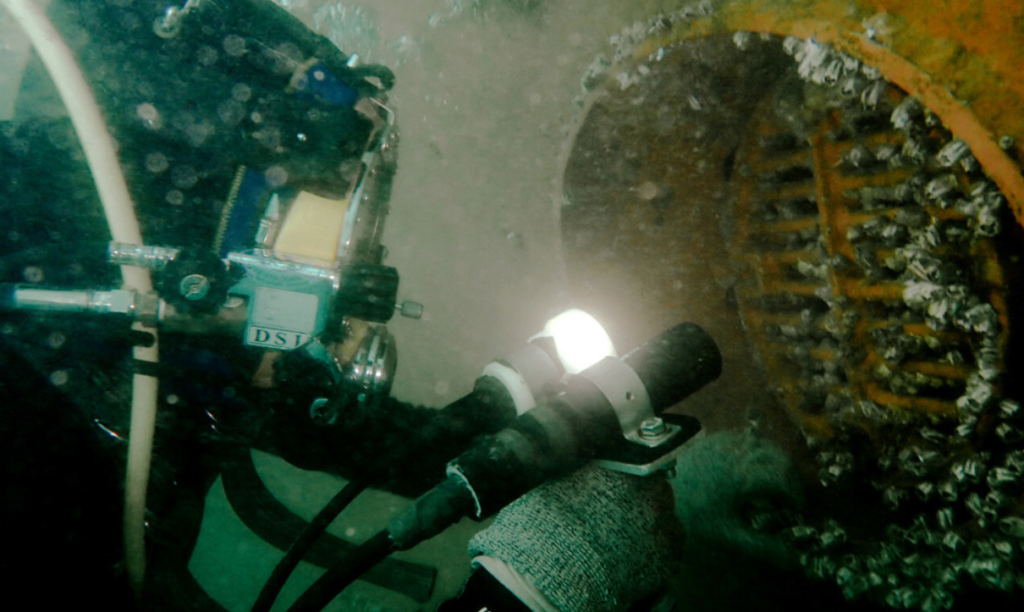
Marine growth inside sea chests can restrict seawater flow to critical onboard systems.
Professional inspections evaluate:
- Sea chest gratings
- Cooling water inlets
- Protective screens
- Intake openings
Routine Hull Fouling Inspection in JNPT helps identify blockages before cooling performance is affected.
Maintaining unrestricted seawater flow supports reliable engine operation.
5. Identify Corrosion and Structural Damage
Hull fouling can conceal more serious underwater issues.
During inspections, divers also check for:
- Corrosion
- Pitting
- Mechanical damage
- Surface deformation
- Coating failures
Early identification allows maintenance teams to schedule repairs before structural deterioration progresses.
Preventive inspections help reduce unexpected repair costs.
6. Document Underwater Condition
Modern underwater inspections provide valuable digital records.
Commercial diving teams capture:
- High-definition photographs
- Underwater video
- Fouling assessments
- Coating condition reports
- Inspection summaries
Professional Hull Fouling Inspection in JNPT documentation allows fleet managers to compare vessel condition across multiple inspections and monitor long-term maintenance trends.
Accurate records support more informed maintenance decisions.
7. Plan Efficient Hull Cleaning
Inspection findings help determine the most effective maintenance strategy.
Rather than scheduling cleaning based on assumptions, ship owners can rely on inspection reports to decide:
- Cleaning priorities
- Propeller polishing requirements
- Coating repairs
- Future inspection intervals
This targeted approach minimizes maintenance costs while maximizing vessel performance.
Routine inspections support more efficient underwater maintenance planning throughout the vessel’s operating cycle.
Choosing the Right Hull Fouling Inspection Provider
Selecting a qualified underwater inspection company is essential.
Ship owners should look for providers offering:
- Certified commercial divers
- ROV inspection capability
- HD underwater imaging
- Digital inspection reporting
- Strong safety management systems
- Experience with commercial vessels
An experienced inspection team understands local marine conditions around JNPT and can accurately assess different types of fouling and coating systems.
Technology Is Transforming Underwater Inspections
Today’s underwater inspections are more advanced than ever.
ROVs equipped with high-definition cameras, underwater lighting systems, and digital measurement tools allow inspectors to evaluate submerged hulls with exceptional accuracy. Cloud-based reporting platforms also enable fleet managers to review inspection findings remotely and make maintenance decisions more efficiently.
Technology has made Hull Fouling Inspection in JNPT faster, safer, and more reliable for modern shipping operations.
Conclusion
Marine fouling develops naturally on every commercial vessel operating in coastal waters, but its operational impact can be minimized through regular inspections. Early detection helps prevent excessive marine growth, protects hull coatings, improves propulsion efficiency, and reduces fuel consumption.
The seven expert checks discussed above demonstrate why Hull Fouling Inspection in JNPT remains an essential preventive maintenance practice. Routine underwater inspections allow ship owners to monitor hull condition, plan cleaning effectively, and avoid unnecessary maintenance costs.
For vessels operating through JNPT, investing in professional hull fouling inspections helps maintain efficient operations, extend equipment life, and support long-term fleet performance.
FAQs:
1. What is a hull fouling inspection in JNPT?
A hull fouling inspection is an underwater assessment that evaluates marine growth, coating condition, corrosion, and the overall condition of a vessel’s submerged hull.
2. Why is hull fouling inspection important?
It helps identify marine growth early, supports maintenance planning, improves fuel efficiency, and protects hull coatings.
3. Can hull fouling inspections be performed without dry docking?
Yes. Certified commercial divers and ROVs can inspect the hull while the vessel remains afloat.
4. How often should hull fouling inspections be carried out?
Inspection frequency depends on vessel operations, trading routes, and marine conditions, but regular underwater inspections are recommended.
5. What equipment is used during hull fouling inspections?
Professional inspections typically use commercial diving equipment, ROVs, HD underwater cameras, lighting systems, and digital reporting tools.