The underwater condition of a vessel’s protective coating has a direct impact on its performance, fuel efficiency, and long-term structural integrity. In a busy maritime hub like Jawaharlal Nehru Port Trust (JNPT), where hundreds of commercial vessels arrive every week, maintaining underwater coatings is not simply part of routine maintenance—it is an operational necessity.
Ships operating in coastal waters are constantly exposed to seawater, suspended particles, marine organisms, and changing tidal conditions. Over time, these factors gradually affect the hull coating. Small defects often go unnoticed until corrosion begins or marine growth starts spreading across damaged areas.
This is why Underwater Paint Condition Inspection in JNPT is considered one of the most valuable underwater inspection services for ship owners, fleet operators, and technical managers. A detailed inspection provides clear insight into the condition of the coating without requiring the vessel to enter dry dock, allowing maintenance decisions to be made based on actual underwater findings.
What Is Underwater Paint Condition Inspection in JNPT?
An underwater paint condition Inspection in JNPT is a detailed visual examination of the vessel’s underwater protective coating while it remains afloat.
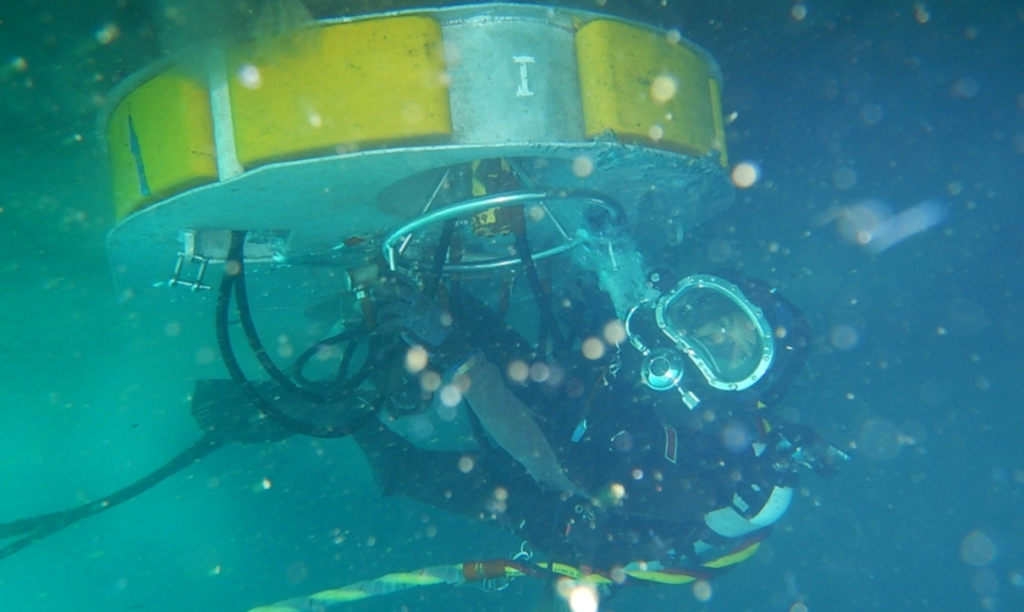
Certified commercial divers or Remotely Operated Vehicles (ROVs) inspect all major submerged areas to assess coating performance and identify any deterioration. The inspection generally covers:
- Hull plating
- Rudder
- Sea chests
- Thruster tunnels
- Bilge keels
- Propeller boss area
- Waterline sections
A professional Underwater Paint Condition Inspection in JNPT also includes high-definition photographs, underwater video recordings, and a detailed inspection report that helps technical teams plan future maintenance.
Why Hull Coating Condition Matters
Marine coatings are designed to protect steel structures from corrosion while minimizing marine growth. However, coatings gradually wear due to continuous exposure to seawater, vessel movement, and mechanical impacts.
For example, a container vessel making regular calls at JNPT experienced a slight increase in fuel consumption despite having a clean propeller. During a scheduled underwater inspection, divers found coating abrasion around the aft hull caused by repeated tug contact during berthing. Since the damage was identified early, localized repairs were planned during the vessel’s next maintenance stop, avoiding a much larger repainting project later.
Situations like this demonstrate why routine Underwater Paint Condition Inspection in JNPT plays an important role in preventive maintenance.
Assessing Overall Coating Performance
The first step during any inspection is evaluating the general condition of the underwater coating.
Inspectors assess:
- Paint adhesion
- Surface smoothness
- Abrasion marks
- Coating thickness (where applicable)
- Peeling or flaking
- Mechanical damage
A complete assessment helps determine whether the coating continues to provide adequate protection or if maintenance should be scheduled.
Benefits of Routine Coating Assessment
- Detects coating wear early
- Extends coating lifespan
- Reduces repair costs
- Supports preventive maintenance
Monitoring coating performance regularly prevents small defects from becoming expensive repairs.
Identifying Early Signs of Corrosion
Once protective coatings begin to fail, corrosion can develop quickly in exposed steel areas.
During Underwater Paint Condition Inspection in JNPT, inspectors carefully examine the hull for:
- Rust staining
- Surface pitting
- Exposed steel
- Localized corrosion
- Weld deterioration
Finding these issues early allows operators to schedule repairs before structural damage progresses.
Early corrosion control is always more economical than extensive steel replacement.
Evaluating Marine Growth Around Damaged Coatings
Marine organisms often settle first on areas where protective coatings have weakened.
Inspectors evaluate:
- Slime formation
- Barnacle attachment
- Algae growth
- Shell accumulation
- Fouling around coating defects
A bulk carrier berthed at JNPT recently underwent an underwater paint inspection after routine monitoring indicated higher fuel usage. Divers found localized antifouling coating failure near the bow where marine growth had begun accumulating. Prompt cleaning and coating repairs restored the vessel’s underwater efficiency before the next voyage.
Why Marine Growth Assessment Matters
- Identifies vulnerable coating areas
- Supports underwater cleaning decisions
- Improves hull efficiency
- Reduces fuel consumption
Keeping coatings in good condition also reduces future fouling.
Inspecting High-Stress Areas
Some sections of the underwater hull experience greater wear than others.
Special attention is given to:
- Bow shoulders
- Stern sections
- Bilge keels
- Rudder edges
- Sea chest openings
- Thruster tunnels
Professional Underwater Paint Condition Inspection in JNPT focuses on these high-stress areas because coating damage often develops there first.
Monitoring these locations helps extend the overall life of the coating system.
Supporting Smarter Maintenance Planning
Detailed inspection reports provide technical managers with valuable information before maintenance work begins.
Inspection findings help determine:
- Which areas require coating repairs
- Whether underwater cleaning is necessary
- Future dry dock priorities
- Corrosion monitoring requirements
- Inspection intervals
Maintenance decisions based on inspection data are generally more efficient than relying on fixed schedules alone.
Reducing Dry Dock Time
Routine underwater coating inspections allow maintenance teams to prepare well before scheduled dry docking.
Knowing the exact condition of the hull enables operators to:
- Order materials in advance
- Allocate repair resources efficiently
- Reduce unexpected repair work
- Shorten docking periods
Professional Underwater Paint Condition Inspection in JNPT helps make dry dock projects more predictable and cost-effective.
Modern Technology Improves Inspection Accuracy
Today’s underwater inspections are supported by advanced imaging technology.
Commercial diving companies now use HD and 4K underwater cameras, ROVs, powerful lighting systems, laser scaling devices, and digital reporting platforms to capture detailed images of underwater coatings. These technologies provide technical managers with reliable visual evidence and allow inspection records to be compared over multiple maintenance cycles.
Technology has significantly improved the quality and accuracy of Underwater Paint Condition Inspection in JNPT, making it easier to identify developing issues before they become serious.
Choosing an Experienced Inspection Provider
The quality of an underwater inspection depends on the expertise of the inspection team.
Ship owners should select providers that offer:
- Certified commercial divers
- Experienced ROV operators
- High-definition underwater imaging
- Comprehensive inspection reports
- Proven marine safety procedures
- Experience with merchant vessels
An experienced inspection company understands different coating systems and knows how to identify early warning signs that might otherwise be overlooked.
Conclusion
Protective underwater coatings are one of the most important investments made during a vessel’s construction or dry docking. Their performance directly influences corrosion protection, marine growth control, fuel efficiency, and maintenance costs.
Routine Underwater Paint Condition Inspection in JNPT enables ship owners to detect coating damage early, monitor corrosion risks, evaluate marine growth, and plan maintenance based on accurate underwater information. By identifying problems before they become costly repairs, these inspections contribute to safer operations and improved vessel reliability.
For commercial vessels calling at JNPT, regular underwater paint inspections remain a practical and cost-effective strategy for preserving hull integrity and maximizing long-term operational performance.
FAQs:
Q1. What is an underwater paint condition Inspection in JNPT?
It is an underwater assessment that evaluates the condition of a vessel’s protective hull coating while the ship remains afloat.
Q2. Why is underwater paint condition Inspection in JNPT important?
It helps detect coating damage, prevent corrosion, reduce marine growth, and support effective maintenance planning.
Q3. Can the inspection be completed without dry docking?
Yes. Certified commercial divers or ROVs can perform the inspection while the vessel remains in the water.
Q4. What areas are inspected during the survey?
The inspection typically covers the hull, rudder, sea chests, thruster tunnels, bilge keels, propeller boss area, and other underwater structures.
Q5. How often should underwater paint condition Inspection in JNPT be carried out?
The frequency depends on vessel type, operating conditions, coating age, and maintenance schedules, but regular inspections are recommended to maintain coating performance.