Cleanship Marine

  • Home
  • Author: Cleanship Marine
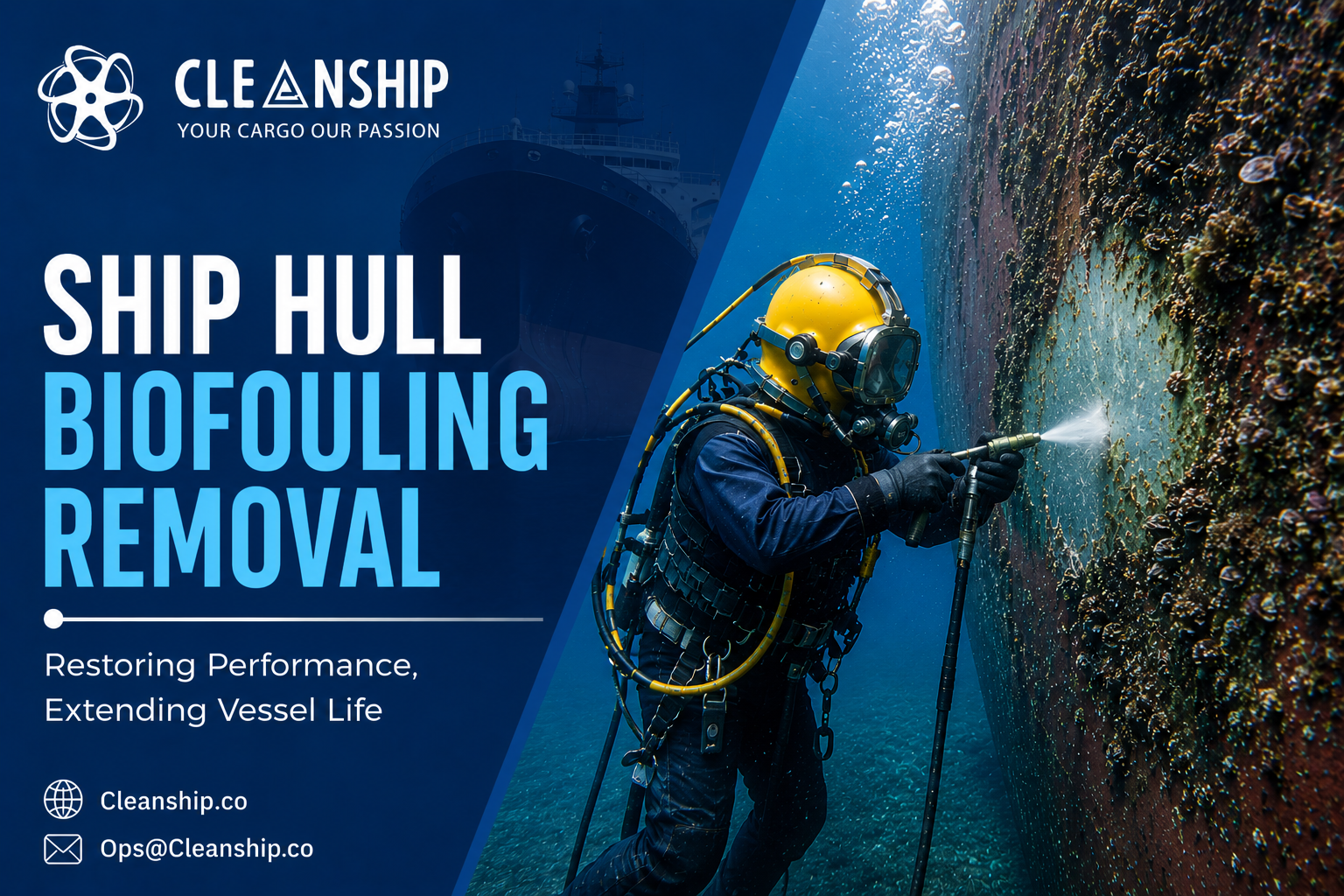
Ship Hull Biofouling Removal

Ship Hull Biofouling Removal & ROV Hull Inspection at India’s 32 Major Ports: Everything Ship Operators Need to Know

India’s Biofouling Problem and Why It Demands a Professional Solution Every vessel trading on India’s coastline is fighting an invisible battle from the moment it enters Indian waters. Below the waterline, in the warm nutrient-rich waters that stretch across 7,516 kilometers of Indian coastline A biological process begins immediately—and it does not stop until the vessel’s hull is cleaned.That process is ship hull biofouling: the colonization of the vessel’s underwater surfaces by marine organisms, including bacteria, algae, barnacles, mussels, tube worms, and hydroids. It begins with a microscopic slime layer within hours of a clean hull surface touching seawater. Within weeks, hard macro-fouling organisms have established themselves. Within months — or even sooner during peak monsoon and post-monsoon conditions Heavily fouled hull can be carrying several tonnes of biological material, each kilogram adding drag, increasing fuel burn, accelerating corrosion, and carrying living invasive species from one trading port to the next. India’s maritime geography makes this challenge particularly acute. From Kandla in Gujarat to Kolkata in West Bengal, from Cochin in Kerala to Port Blair in the Andaman Islands India’s 32 major commercial ports operate in waters where sea surface temperatures stay above 26°C for most of the year and biological productivity is among the highest in the world. No antifouling paint system—however well-specified and applied—can fully prevent fouling under these conditions without active maintenance. Moreover, even high-performance coatings are subject to environmental limitations in challenging marine environments. In addition, warm, nutrient-rich waters can accelerate the settlement and growth of fouling organisms. Furthermore, coating effectiveness naturally declines over time as vessels continue operating. At the same time, varying operating patterns and port conditions can influence fouling rates significantly. Additionally, prolonged periods at anchor may further increase the likelihood of marine growth accumulation. As a result, some degree of fouling remains inevitable despite the use of advanced coating technologies. Consequently, regular inspection and maintenance are essential for preserving vessel performance and efficiency. Likewise, proactive cleaning programmes help maximize the benefits of antifouling systems throughout their service life. Therefore, active maintenance remains a critical component of any effective fouling management strategy. This is where professional ship hull biofouling removal and ROV hull inspection become essential tools for every Indian coastal fleet operator. Biofouling removal by trained dive teams or remote-operated vehicles restores hull hydrodynamic performance. ROV hull inspection — using high-definition underwater cameras, lights, and positioning systems — gives operators the condition visibility they need to manage hull maintenance intelligently across India’s entire major port network. At Cleanship Marine Services, we provide both services at all 32 of India’s major commercial ports, 24 hours a day, 7 days a week. This complete guide explains why these services matter, how they work, and what they deliver for vessels operating on one of the world’s most biologically demanding trading coastlines. Request A Quote Understanding Ship Hull Biofouling: What It Is, How It Forms, and What It Costs Ship hull biofouling is not a single event—it is a progressive biological process that unfolds in distinct stages, each one building on the last. In addition, the process begins almost immediately after a vessel enters the water. Moreover, each stage creates conditions that encourage the development of the next stage. Furthermore, microscopic organisms initially colonize the hull surface and form a biological foundation for future growth. At the same time, changes in surface chemistry make the hull increasingly attractive to additional marine species. Additionally, algae, bacteria, and other microorganisms gradually establish stable communities on submerged surfaces. Besides that, these early colonizers facilitate the attachment of larger fouling organisms. Likewise, barnacles, mussels, and other macrofouling species can settle more easily once the initial biofilm is present. Similarly, the accumulation process accelerates as biological layers become thicker and more complex. As a result, hull roughness increases and hydrodynamic performance begins to decline. Consequently, vessels may experience higher fuel consumption and reduced operational efficiency. For this reason, understanding each stage of biofouling is essential for effective prevention and maintenance planning. Ultimately, early intervention can prevent minor biological settlement from developing into severe fouling. Therefore, recognizing biofouling as a staged and continuous process is critical for maintaining vessel performance, compliance, and operational efficiency. Stage 1: Conditioning Film (Minutes to Hours) Within minutes of a clean hull surface being immersed in seawater, dissolved organic molecules — proteins, polysaccharides, lipids — adsorb onto the surface and form a thin conditioning film.This film is invisible, but it fundamentally changes the surface chemistry of the hull, making it far more hospitable to microbial colonization. In addition, the altered surface conditions encourage microorganisms to attach more easily. Moreover, this initial microbial layer serves as the foundation for further biofouling development. Furthermore, once established, the film creates an environment that supports the growth of additional marine organisms. At the same time, the process often begins long before visible fouling can be detected during routine observations. Additionally, the changing surface characteristics increase the likelihood of continued biological accumulation. Besides that, the film can accelerate the transition from a clean hull to an actively colonized surface. Likewise, microorganisms within the layer can promote the settlement of larger fouling species. Similarly, favorable surface conditions may contribute to faster fouling progression in warm and nutrient-rich waters. As a result, marine growth can develop more rapidly than vessel operators anticipate. Consequently, hull performance and hydrodynamic efficiency may begin to decline over time. For this reason, early monitoring and preventive maintenance play an important role in fouling management. Ultimately, understanding the impact of this microscopic film is essential for maintaining long-term vessel performance. Therefore, even though the film remains invisible, its effect on biofouling development can be highly significant. Stage 2: Bacterial Biofilm — The Slime Layer (Hours to Days) Bacteria and diatoms settle on the conditioned surface and begin multiplying, forming a structured biofilm—the marine slime layer. This layer is typically between 10 and 300 micrometers thick and appears as a faint, slightly rough discoloration on the hull surface. It increases hull roughness measurably and, critically, signals to larval macro-fouling organisms
Read more
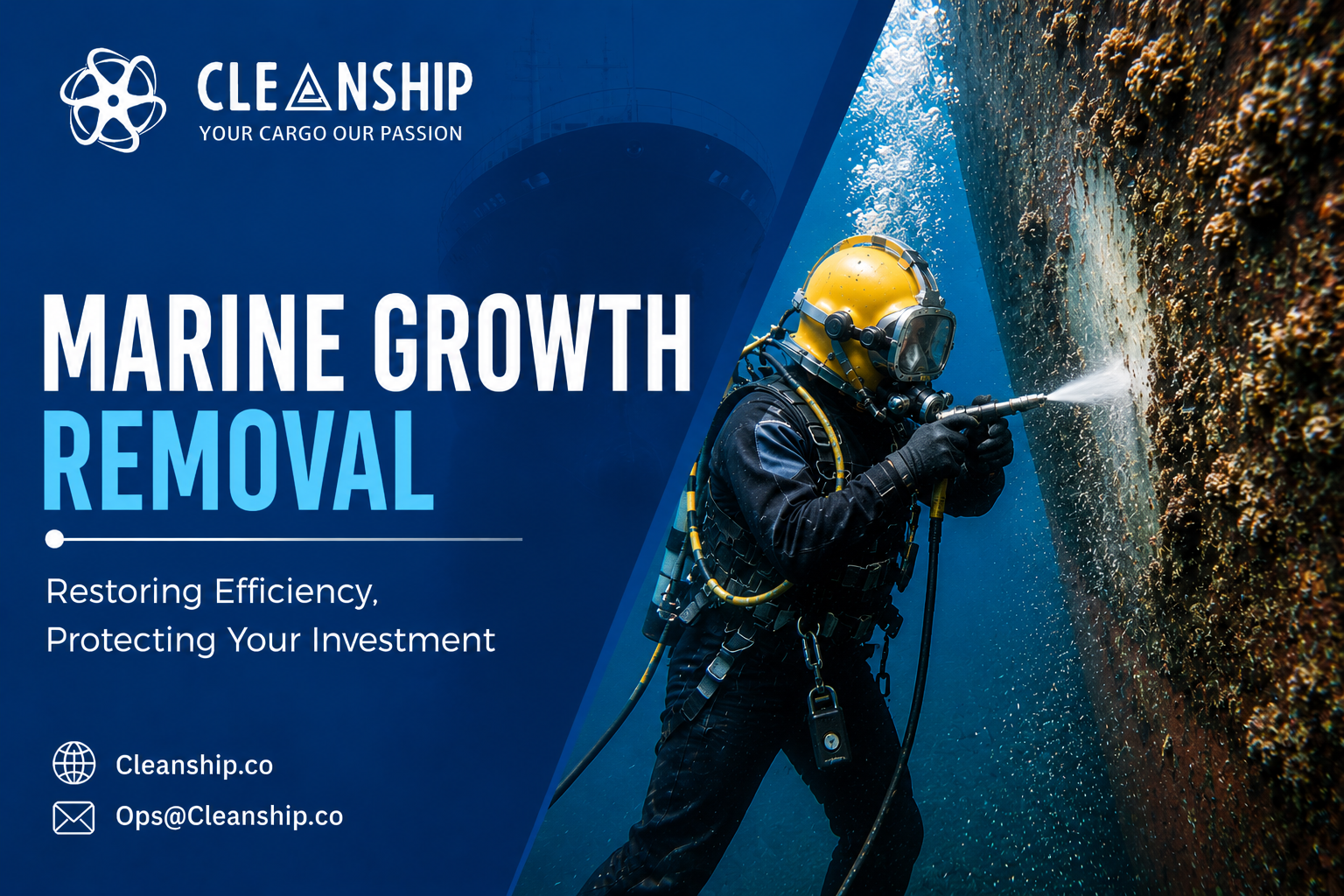
Marine Growth Removal

Marine Growth Removal & UWILD Inspection at India’s 32 Major Ports: The Complete Guide for Ship Operators

Why Marine Growth Removal Is India’s Most Urgent Underwater Hull Challenge India has the world’s seventh-longest coastline — 7,516 kilometres stretching from the Rann of Kutch in Gujarat to the Sundarbans delta in West Bengal, with the entire western Malabar coast, the Konkan, and the eastern Coromandel coast in between. Along this coastline, 32 major commercial ports handle over 1.5 billion tonnes of cargo annually. Every vessel calling at these ports operates in water conditions that make marine growth removal one of the most commercially and technically important maintenance services in Indian shipping. Here is the problem in simple terms. India’s coastal waters are warm, nutrient-rich, and biologically aggressive for most of the year. A vessel arriving at Visakhapatnam, Cochin, or Chennai with a clean antifouling surface can develop visible slime within two weeks. Hard fouling—barnacles, mussels, tube worms—can establish themselves within six to eight weeks in peak monsoon conditions. Each layer of marine growth increases the hydrodynamic drag on the hull, forcing the main engine to work harder and burn more fuel to maintain the same speed. The second challenge is condition visibility. Unlike hull fouling in drydock, which is examined under bright lights with the vessel out of the water, underwater fouling on an operational vessel is largely invisible to the ship’s managers. A professional UWILD Inspection — Underwater Inspection In Lieu of Drydock — is the industry-standard method for bringing that underwater condition data to the surface, combining visual examination, HD-CCTV documentation, and underwater video survey into a structured report that satisfies both the shipowner’s commercial needs and the classification society’s survey requirements. At Cleanship Marine Services, we provide professional marine growth removal and UWILD inspection services at all 32 of India’s major commercial ports—from Kandla and Mundra in Gujarat to Kolkata and Haldia in West Bengal, from Port Blair in the Andaman Islands to Paradip and Dhamra in Odisha. This guide explains why these services matter, what they involve, and how they protect your vessel’s performance, compliance, and commercial standing. Request A Quote India’s Coastline: A Perfect Storm for Ship Hull Biofouling Understanding why marine growth removal is so critical in India requires understanding what Indian coastal waters do to a ship’s hull. In addition, the warm temperatures and nutrient-rich conditions found in many Indian ports encourage rapid marine organism growth. Moreover, algae, barnacles, mussels, and other fouling organisms can accumulate on hull surfaces much faster than many vessel operators expect. Furthermore, this buildup increases hull roughness and creates additional resistance in the water. As a result, vessels often experience higher fuel consumption and reduced operational efficiency. Additionally, prolonged fouling can place extra strain on propulsion systems and other critical components. At the same time, marine growth can contribute to the transfer of invasive aquatic species between ports and regions. Besides that, heavily fouled hulls may make regulatory compliance and inspection processes more challenging. Consequently, regular marine growth removal becomes essential for maintaining vessel performance, fuel efficiency, and environmental responsibility. Therefore, understanding the effects of Indian coastal waters highlights the importance of proactive hull cleaning and fouling management programs. Water Temperature Sea surface temperatures along India’s west coast range from 26°C to 32°C for eight to nine months of the year. Along the east coast — from Kakinada and Krishnapatnam through Chennai and Tuticorin—temperatures remain above 28°C year-round in open anchorage areas. At these temperatures, biofouling organisms complete their larval settlement and early growth phases in days rather than weeks. In addition, warm water conditions accelerate the biological processes that support rapid colonization of submerged surfaces. Moreover, nutrient-rich coastal environments provide ideal conditions for marine organisms to thrive. Furthermore, algae, barnacles, and other fouling species can establish themselves quickly once they attach to a vessel’s hull. At the same time, the longer a vessel remains untreated, the more extensive the fouling buildup can become. Additionally, early-stage growth often develops into dense marine accumulation if preventive measures are not implemented. As a result, hull roughness increases and vessel performance can decline. Consequently, operators may experience higher fuel consumption and reduced operational efficiency. Besides that, increased fouling can lead to more frequent maintenance requirements and cleaning interventions. Therefore, understanding the rapid growth cycle of biofouling organisms highlights the importance of timely hull inspection and marine growth removal. In contrast, European waters where many antifouling paint specifications are developed and tested rarely exceed 18–20°C. Consequently, performance expectations established under these cooler conditions may not always translate directly to tropical operating environments. Moreover, lower water temperatures generally slow the growth and settlement rates of many fouling organisms. By comparison, Indian coastal waters provide a far more favorable environment for rapid biofouling development. Furthermore, warmer temperatures and higher biological activity can place greater demands on antifouling coatings. As a result, paints designed to a European performance standard can underperform significantly in Indian coastal conditions. Additionally, coating effectiveness may decline faster than anticipated when exposed to these more aggressive fouling pressures. Likewise, vessels operating in Indian waters may require more frequent monitoring and maintenance interventions. At the same time, operators must account for local environmental conditions when planning hull management strategies. Therefore, vessels may reach heavy fouling states faster than their maintenance schedule anticipates. Ultimately, adapting maintenance programs to regional operating conditions is essential for preserving vessel efficiency and coating performance. For this reason, many operators implement more proactive inspection and cleaning schedules in tropical waters. Nutrient-Rich Coastal Waters The Arabian Sea along the Gujarat and Maharashtra coast, and the Bay of Bengal along the Odisha and West Bengal coast, experience seasonal upwelling events that bring nutrient-rich deep water to the surface. During and after the southwest monsoon — June to September — coastal waters around Mumbai, JNPT, Mormugao, Cochin, and New Mangalore are particularly rich in the plankton and organic matter that fuel rapid biofouling community development. Port Anchorage Waiting Times Marine growth removal before departure from anchorage is one of the most cost-effective interventions available to Indian fleet operators. In addition, it helps restore vessel efficiency before the next
Read more
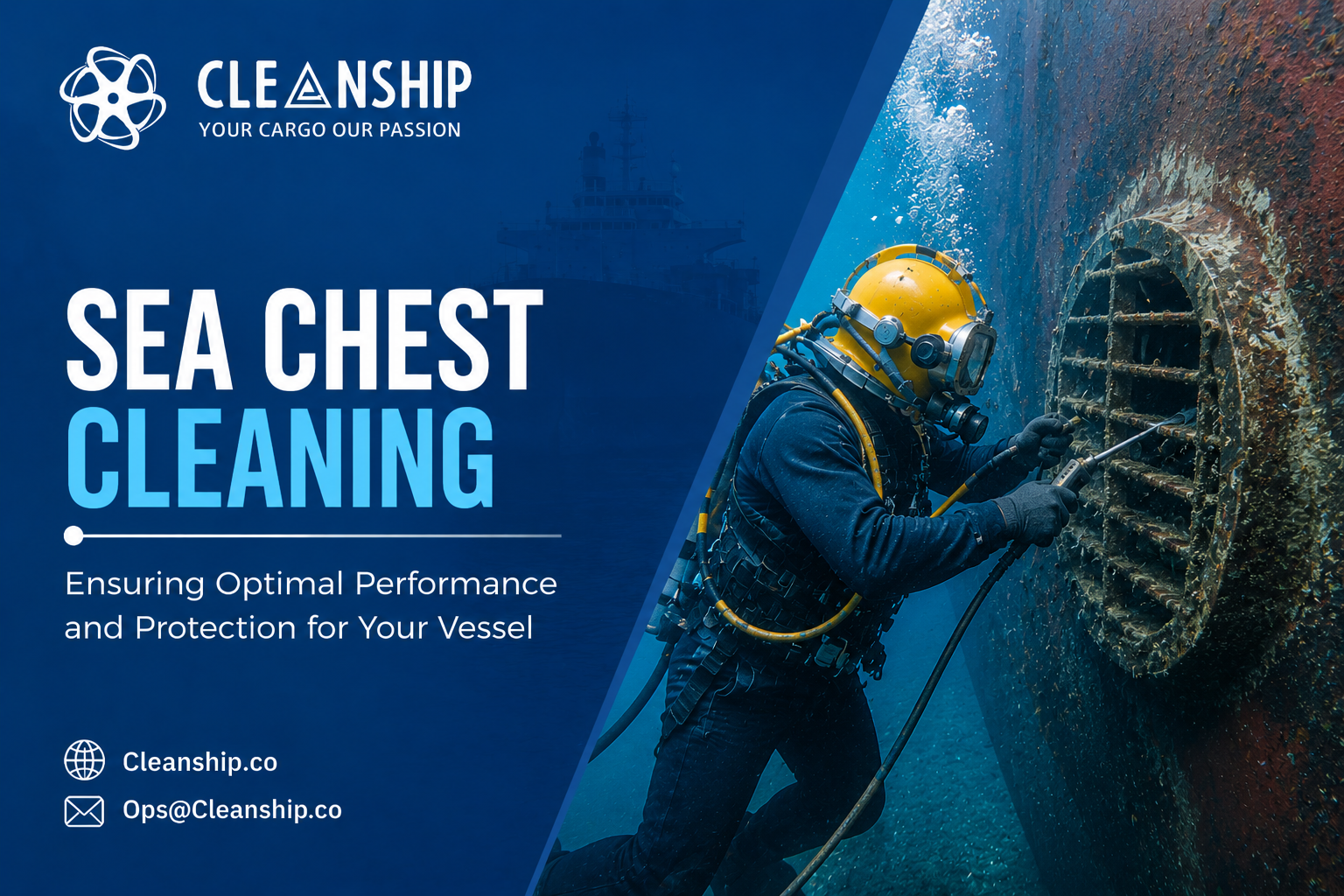
Sea Chest Cleaning

7 Critical Reasons Sea Chest Cleaning & Hull Fouling Inspection Must Be Part of Every Vessel Maintenance Plan

The Most Overlooked Maintenance Task in Commercial Shipping Ask most fleet managers to list their top underwater maintenance priorities, and they will say hull cleaning, propeller polishing, and anode replacement. Sea chest cleaning rarely makes the top three. That is a costly blind spot. A sea chest is the underwater inlet box through which seawater enters the vessel’s cooling system, supplying the main engine, auxiliary engines, air conditioning systems, and ballast pumps. It is protected by a grating or grid that filters debris from the incoming water flow. In warm, biologically active waters—precisely the conditions in Dubai, Singapore, Mumbai, Istanbul, and Hong Kong—that grating becomes a prime site for heavy biofouling. Barnacles, mussels, tube worms, and algae colonize the sea chest grid within weeks, progressively restricting the cooling water supply. Think of a blocked sea chest the same way you would think of a blocked radiator in a truck engine. The truck still moves—until the engine overheats and the driver is stranded on the motorway. A vessel with a blocked sea chest still sails—until the main engine cooling alarm fires in the middle of a passage and the master has no choice but to reduce speed or stop. That is when the real cost begins: emergency repairs, off-hire losses, charterer claims, and port state control scrutiny. All of it avoidable with a routine sea chest cleaning programme paired with professional hull fouling inspection. At Cleanship Marine Services, we provide expert sea chest cleaning and hull fouling inspection at eight of the world’s most commercially demanding ports: Dubai, Athens, Singapore, Hong Kong, London, Hamburg, Istanbul, and Mumbai. Here is why this service belongs in every vessel’s planned maintenance system. Request A Quote Why the UAE and Global Ports Are Raising the Bar on Sea Chest Cleaning Warm Waters and Accelerated Biofouling The UAE sits at the northern end of the Arabian Gulf—one of the warmest and most biologically productive bodies of water on the planet. Sea surface temperatures in the Gulf frequently exceed 30°C during summer months, creating ideal conditions for rapid marine growth. A vessel calling at Jebel Ali or Rashid Port in Dubai can accumulate significant sea chest fouling within a single port call. The same accelerated fouling conditions apply to Mumbai, Singapore, and Hong Kong, where tropical and subtropical water temperatures drive year-round biological activity. Strict Port Environmental Expectations Port authorities in Hamburg, London, and Singapore are increasingly scrutinizing biofouling management documentation. The transfer of invasive species through fouled sea chests and hull surfaces is a growing regulatory focus. Cleanship’s sea chest cleaning operations include MARPOL-compliant debris containment, ensuring no biological material is released into port waters. Class Society Requirements Classification societies—Lloyd’s Register, Bureau Veritas, DNV, and others—include sea chest condition assessments within their in-water survey programs. A poorly maintained sea chest with heavy fouling or corrosion can trigger a survey finding that requires immediate rectification, potentially delaying the vessel’s departure from ports like Piraeus (Athens), Hamburg, or Istanbul. What Is Sea Chest Cleaning? (A Simple Explanation) A sea chest is a recessed chamber in the vessel’s hull, open to the sea, through which seawater is drawn into the ship’s cooling and ballast systems. It is protected externally by a grating or grid — typically steel or GRP — designed to prevent debris from entering the piping. Sea chest cleaning is the systematic removal of marine growth, biofouling, sediment, and corrosion products from the sea chest chamber, its grating, the surrounding hull plating, and the accessible sections of the inlet pipes. Trained commercial divers access the sea chest from outside the vessel while it floats in the harbor, using scraping tools, water jetting equipment, and brushing systems to restore the free area of the grating and the internal surfaces of the chest. A clean sea chest ensures that cooling water flows at the volume and pressure the vessel’s systems were designed to receive. It also removes the biological material that—left unchecked—corrodes steel, clogs pipework, and hosts organisms that will be carried into the vessel’s internal piping if the grating is compromised. What Is Hull Fouling Inspection? (And Why It Accompanies Every Clean) Hull fouling inspection is the systematic underwater examination of a vessel’s hull surfaces to assess the type, distribution, and severity of biofouling and associated coating condition. It is performed by trained divers using visual examination methods, HD-CCTV equipment, and photographic documentation. Hull fouling inspection answers four questions that every ship operator needs to answer regularly: Hull fouling inspection without sea chest cleaning is incomplete. Sea chest cleaning without a surrounding hull fouling inspection misses the context that makes the data actionable. Cleanliness is provided as a standard combined service at all eight of our target ports. Regulatory Framework Governing Sea Chest Cleaning Globally IMO Biofouling Management Guidelines (MEPC.207(62) and MEPC.378(80)) The International Maritime Organization’s biofouling management guidelines apply directly to sea chest management. Sea chests are specifically identified as a high-risk biofouling niche area requiring targeted management under the IMO framework. The updated 2023 guidelines (MEPC.378(80)) have strengthened expectations around documentation and niche area management plans. MARPOL Convention (Annex V and Annex VI) MARPOL regulates the handling and disposal of residues generated during sea chest cleaning and hull fouling inspection operations. Biological material, paint particles, and debris must be collected and disposed of in compliance with Annex V. Cleanship’s debris containment systems are designed to meet these requirements at all eight target ports. Port-Specific Biosecurity Regulations Several of our target ports apply biosecurity regulations that go beyond the IMO baseline. The Maritime and Port Authority of Singapore (MPA) has active frameworks around biofouling and invasive species. The Port of Hamburg Authority enforces environmental compliance around underwater cleaning operations. Cleanship maintains operational procedures aligned with each port’s specific requirements. Class Society In-Water Survey Standards Classification societies require sea chest conditions to be assessed as part of in-water surveys conducted in lieu of drydock. IACS (International Association of Classification Societies) member societies have consistent expectations around sea chest grating free area, corrosion condition, and fouling management documentation.
Read more
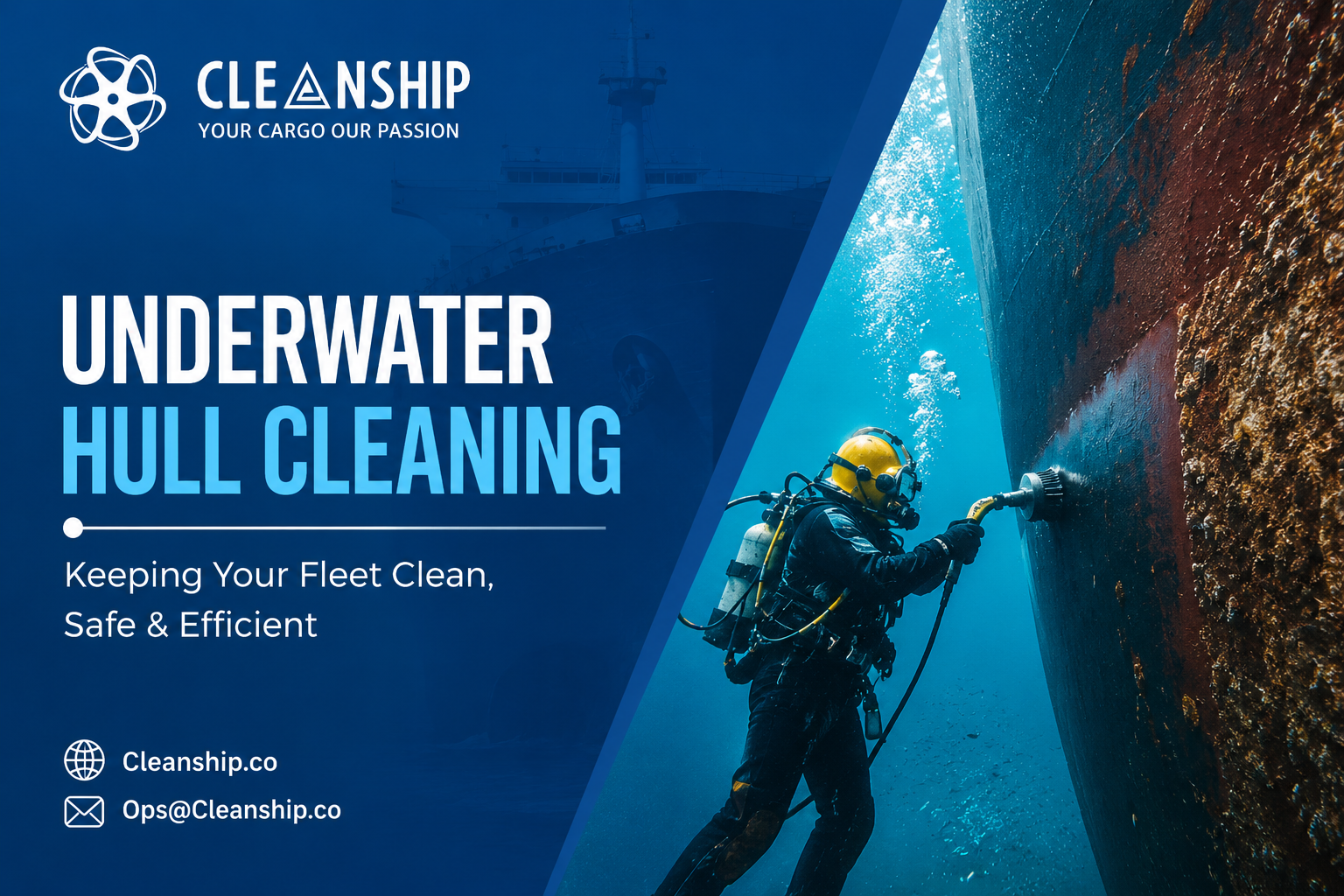
Underwater Hull Cleaning

7 Powerful Reasons Underwater Hull Cleaning & Propeller Polishing Are Non-Negotiable at the World’s Busiest Ports

Introduction: Why Underwater Hull Cleaning Matters Across Global Ports Every day your vessel sits at anchor or in port without a clean hull, it is burning more fuel than it needs to. Marine biofouling — barnacles, algae, slime, and other organisms — builds up silently on submerged surfaces, creating drag that can increase fuel consumption by 10% to 40%. In a market where fuel accounts for more than 50% of a vessel’s operating costs, this is not a minor inconvenience. It is a direct threat to your commercial margins. Think of underwater hull cleaning the same way you would think of tyre maintenance on a truck. A driver who ignores tyre pressure pays more at the pump, wears out components faster, and risks losing control. A ship operator who ignores underwater hull cleaning pays more in bunkers, damages the propeller shaft, and risks failing a port state control inspection. At Cleanship Marine Services, we provide professional underwater hull cleaning and propeller polishing services at eight of the world’s most critical maritime hubs: Dubai, Athens, Singapore, Hong Kong, London, Hamburg, Istanbul, and Mumbai. Here is why this service is not optional — it is essential. Request A Quote What Is Underwater Hull Cleaning? (A Simple Explanation) Underwater hull cleaning is the systematic removal of biofouling, marine growth, and sediment from a vessel’s submerged surfaces — the hull plating, rudder, sea chests, and propeller — without the need for drydocking. Trained commercial divers using rotating brush units, high-pressure water tools, and surface preparation equipment perform the work while the vessel floats in harbour. Propeller polishing is a related process in which the propeller blades are cleaned to their original hydrodynamic profile and finish. Even microscopic surface roughness on a propeller blade increases fuel consumption and reduces thrust efficiency. Combining underwater hull cleaning with propeller polishing addresses both drag and propulsion performance in a single operation. The Regulatory Framework Governing Underwater Hull Cleaning Before examining the benefits, it is important to understand the compliance environment your vessel operates in at each of our target ports. IMO Biofouling Guidelines (MEPC.207(62)) The International Maritime Organization has adopted guidelines for the management of biofouling to minimise the transfer of invasive aquatic species. Ports in Singapore, Hong Kong, London, and Hamburg increasingly expect documented biofouling management plans. MARPOL Convention MARPOL regulates how wash water and residues from hull cleaning are handled. Uncontrolled discharge of paint particles, organisms, and biocides is a growing focus of port authority inspections in Dubai, Athens, and Istanbul. Local Port Regulations Each target port carries its own specific requirements. The Maritime and Port Authority of Singapore, the Dubai Maritime City Authority, and the Port of Hamburg Authority all have active frameworks around hull management and underwater cleaning methods. Cleanship’s underwater hull cleaning operations are conducted in full alignment with these frameworks, with complete documentation provided after every dive. Benefit 1: Significant Fuel Savings Across Every Route Biofouling does not build up uniformly. It is most aggressive in warm, nutrient-rich waters — precisely the conditions found in Dubai, Mumbai, Singapore, and Hong Kong. A vessel trading between these ports can accumulate heavy fouling within weeks. Professional underwater hull cleaning restores the vessel’s hydrodynamic efficiency. Industry data consistently shows that cleaning a heavily fouled hull can reduce fuel consumption by 10% to 25% on a single voyage. When combined with propeller polishing, the cumulative savings over a calendar year are substantial enough to offset the cost of cleaning many times over. For fleet operators managing Aframax tankers, Panamax bulkers, or large container vessels through the Suez Canal corridor, the Straits of Malacca, and the English Channel, this efficiency improvement translates directly to competitive freight rates and improved voyage profitability. Benefit 2: Full Compliance with International and Local Port Regulations Regulatory non-compliance is one of the fastest ways to lose commercial credibility. Port State Control officers in London (MCA), Hamburg (BSH), Singapore (MPA), and Hong Kong (MARDEP) have the authority to detain a vessel if its biofouling management plan is inadequate or its hull condition poses an invasive species risk. Professional underwater hull cleaning at Cleanship provides: This documentation trail is the difference between a smooth port state control inspection and a costly detention in Piraeus, Istanbul, or Mumbai. Benefit 3: Extended Antifouling Coating Life Modern antifouling paints are expensive. Depending on the vessel size and coating specification, a full drydock antifouling application can cost hundreds of thousands of dollars. How that coating performs over its service life depends heavily on how well it is maintained between drydock intervals. Heavy biofouling allowed to anchor on the coating surface physically damages the paint. When it is removed without proper technique, the coating integrity is further compromised. Professional underwater hull cleaning using calibrated soft-brush rotating units removes marine growth while preserving the antifouling film beneath. At busy trading ports like Singapore and Hong Kong, where vessels may sit at anchorage for several days waiting for berth allocation, preventive in-water cleaning before significant fouling takes hold is the most cost-effective approach to coating preservation. Benefit 4: Improved Propulsion Performance Through Propeller Polishing A clean hull with a rough propeller is like polished running shoes with broken laces. You get only part of the benefit. Propeller polishing is the companion service to underwater hull cleaning that most operators underestimate. Marine growth on propeller blades creates uneven loading, increases shaft vibration, and generates unnecessary cavitation. Even a light fouling layer on blade surfaces can increase fuel consumption by 5% to 8% independently of hull condition. Propeller polishing performed by Cleanship’s specialist divers restores blade surfaces to near-original roughness values, improving: In Athens (Piraeus), Hamburg, and London, where vessels are frequently under charter party speed and consumption warranties, propeller polishing is not a luxury — it is a contractual protection. Benefit 5: Prevention of Invasive Species Transfer Between Ports This benefit is increasingly important as port authorities in Singapore, Hong Kong, and Hamburg tighten biosecurity enforcement. Fouled hulls carry living organisms from one marine environment to another. In some jurisdictions, vessels
Read more
Shopping Cart (0 items)