Hold Cleaning in Al Khaimah Port
Hold cleaning in Al Khaimah Port is a critical operation that quietly determines whether a vessel loads on time, avoids cargo disputes, and passes inspections without friction. Al Khaimah Port handles bulk carriers, general cargo vessels, and mixed trades where cargo residues, moisture, and contamination risks change with every voyage. In this environment, hold cleaning is not housekeeping. It is a regulated marine process tied directly to safety, compliance, and cost control.
This article explains how hold cleaning is performed at professional standards, why the UAE leads the marine cleaning sector, and which proven practices keep vessels cargo-ready and compliant.
Why Al Khaimah Port Demands Professional Hold Cleaning
Al Khaimah Port supports regional and international trade routes across the Gulf, Indian Ocean, and East Africa. Cargoes such as aggregates, clinker, grain, fertilizers, and bagged goods move through the port continuously. Each cargo change introduces residue and moisture risks.
Because of this diversity, the hold cleaning in Al Khaimah Port is planned and supervised. Cleaning must meet charter requirements, port expectations, and international regulations without delaying vessel schedules.
Why the UAE Is a Benchmark for Marine Cleaning
The UAE’s reputation in marine services is built on consistency and enforcement. Regulations are applied uniformly across ports, and documentation is expected as standard practice.
Hold cleaning in Al Khaimah Port benefits from:
- Clear enforcement of IMO and MARPOL requirements
- Strong coordination between port authorities and service providers
- A safety-first operational culture
This structure reduces uncertainty for shipowners and charterers.
What Hold Cleaning Means in Simple Terms
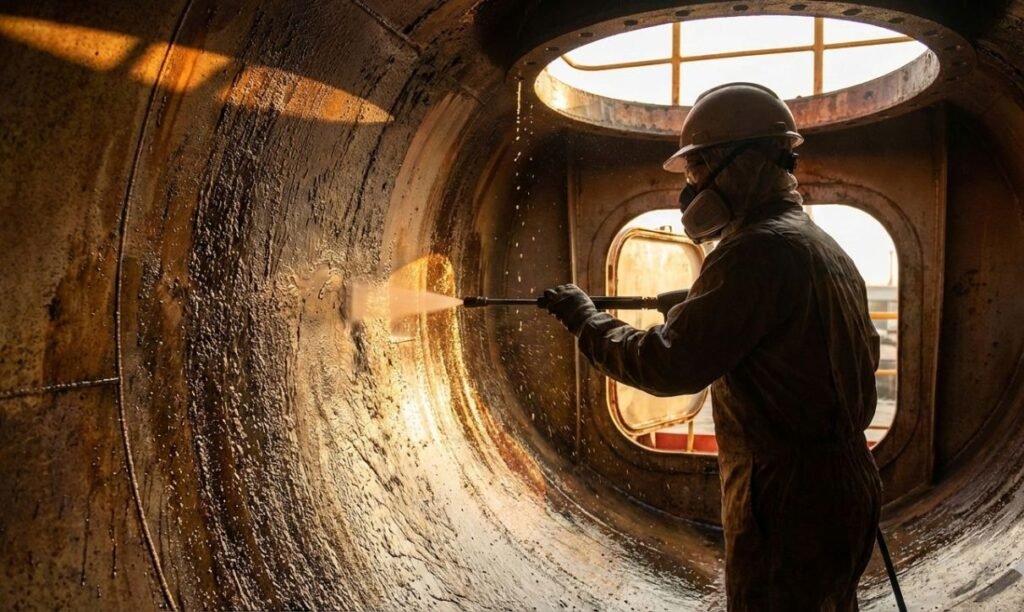
A ship’s hold is an enclosed cargo space designed to carry dry bulk or packaged cargo. Cleaning it means removing all visible and invisible traces of the previous cargo, including dust, residues, stains, moisture, and odors.
An unclean hold is like a reused container without washing. It may look empty, but contamination remains. Hold cleaning in Al Khaimah Port resets the hold to a neutral, cargo-ready condition.
Types of Holds Commonly Cleaned
Bulk Carrier Holds
Large open holds carrying minerals or aggregates. These require intensive mechanical cleaning and controlled washing.
General Cargo Holds
Used for bagged goods, steel, or mixed cargoes. Cleaning focuses on dust removal, rust scale control, and dryness.
Sensitive or Coated Holds
Designed for cargoes with strict cleanliness requirements. These demand careful pressure control and detailed inspection.
Each hold type shapes the method used for hold cleaning.
Regulatory Framework Governing Hold Cleaning
IMO Standards
The International Maritime Organization defines global safety and pollution prevention requirements. Hold cleaning must comply with confined-space entry rules and risk assessments.
MARPOL Convention
MARPOL regulates waste handling, residue disposal, and wash water discharge. Violations can lead to fines or detention.
IMCA Guidelines
IMCA sets best practices for marine contractors, focusing on safe systems of work, trained personnel, and equipment integrity.
IAPH Port Standards
The International Association of Ports and Harbors promotes consistent environmental and operational standards across the world’s ports.
The cleaning in Al Khaimah Port operates under all these frameworks together.
Powerful Method 1: Pre-Cleaning Inspection and Planning
Professional hold cleaning starts with inspection, not water. Before work begins, holds are assessed for previous cargo, residue condition, coating health, and access points.
This planning stage ensures that cleaning in Al Khaimah Port is efficient, safe, and aligned with charter requirements.
Powerful Method 2: Mechanical Residue Removal
Heavy residues cannot be removed by washing alone. Mechanical removal is essential.
Common practices include:
- Scraping hardened cargo residues
- Vacuuming loose dust and debris
- Controlled chipping where the buildup is stubborn
Mechanical removal reduces water use and improves final inspection outcomes. Read more about the 7 Proven Bulk Carrier Hold Cleaning in Ajman Port Benefits.
Powerful Method 3: Controlled High-Pressure Washing
After bulk residues are removed, high-pressure washing is applied. Pressure levels and spray angles are carefully managed to avoid damaging coatings or structure.
This step delivers uniform cleanliness and prepares the hold for drying and inspection.
Powerful Method 4: Chemical Cleaning When Required
Some cargo residues, such as fertilizers or oily materials, require approved chemical agents. These chemicals break down residues that water alone cannot remove.
All chemicals used during hold cleaning must meet MARPOL and port environmental requirements.
Powerful Method 5: Ventilation and Moisture Control
Cleanliness without dryness is incomplete. Ventilation systems are used to remove moisture and prevent condensation.
Moisture control is especially critical for grain and fertilizer cargoes, where humidity can cause spoilage or cargo claims. Read more about 7 Proven Benefits of Ship Hold Cleaning in Ajman Port.
Powerful Method 6: Inspection, Testing, and Documentation
After cleaning, inspection confirms readiness. This may include visual checks, moisture testing, and surface condition assessment.
Documentation typically includes inspection reports and photographic records, supporting compliance with Marine Supercargo practices and Final Quality Rules.
Powerful Method 7: Final Acceptance and Cargo Readiness
The final step confirms that the hold meets charter party and port requirements. Hold cleaning in Al Khaimah Port is complete only when the hold is formally accepted for loading.
This acceptance protects vessel owners from disputes and delays.
Safety as a Core Operational Principle
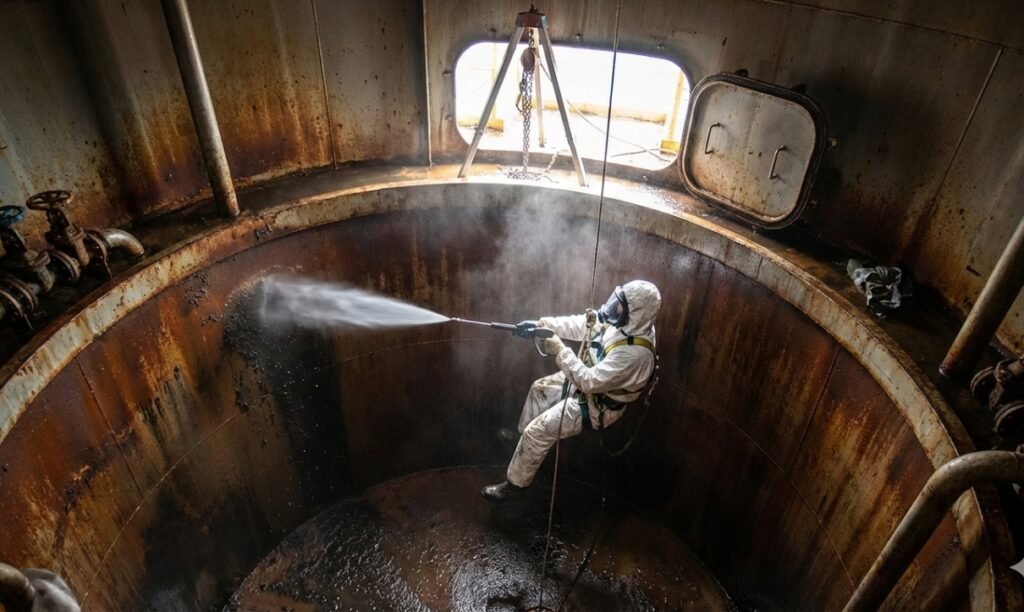
Hold cleaning is confined-space work with real risks. Safety controls include gas testing, ventilation, permit-to-work systems, and emergency preparedness.
Many operators also integrate drug and alcohol testing services to reduce human-factor risks and ensure crew alertness during operations. Learn more about 7 Powerful Vessel Hold Cleaning Services in Ajman Port.
Environmental Protection and Cost Efficiency
Environmental care and cost efficiency go hand in hand. Efficient hold cleaning minimizes water consumption, limits chemical use, and prevents illegal discharge.
Avoiding fines, delays, and corrosion-related repairs often saves more than the cleaning cost itself.
Tank, Hold, and Bulk Carrier Cleaning Standards
Hold cleaning aligns with wider marine cleaning standards applied to tanks and bulk carriers. Frameworks such as Marine Supercargo inspection practices and Final Quality Rules create consistency across world ports.
Consistency reduces inspection failures and charter disputes.
Industry Practice Example: Cleanship.co
Across global ports, companies such as Cleanship.co reflect modern industry practice. Their operations typically combine global tank and hold cleaning, cargo supervision, compliance support, and crew safety programs, including drug and alcohol testing.
This integrated approach mirrors how hold cleaning in Al Khaimah Port is increasingly managed.
Inspection Workflows and Compliance Protection
A structured workflow protects all stakeholders. Planning, execution, inspection, and reporting are documented step by step.
This transparency supports port state control inspections and builds confidence with charterers and cargo interests.
Future Trends in Marine Hold Cleaning
Marine cleaning is evolving rapidly. Automation, robotic cleaning tools, water recycling systems, and digital inspection reporting are shaping future operations.
Ports like Al Khaimah are well-positioned to adopt these innovations due to strong regulatory oversight and technical readiness.
Conclusion
Hold cleaning in Al Khaimah Port is a vital safeguard for cargo integrity, regulatory compliance, and operational efficiency. Three points matter most. First, hold cleaning is a planned technical process, not manual labor. Second, compliance with IMO, MARPOL, IMCA, and IAPH standards protects vessels and reputations. Third, thorough inspection and documentation prevent costly disputes after sailing.
For shipowners and operators seeking dependable compliance and maritime service excellence, working with experienced providers such as Cleanship.co ensures that hold cleaning is completed to the highest professional standard.
FAQs:
Q1. Why is hold cleaning in Al Khaimah Port strictly regulated?
Al Khaimah Port handles diverse bulk cargoes under close environmental oversight. Regulations protect cargo quality, prevent pollution, and ensure safe port operations, making professional hold cleaning in Al Khaimah Port essential.
Q2. When should ship holds be cleaned?
Holds should be cleaned whenever cargo type changes or charter terms require it. Timely hold cleaning in Al Khaimah Port reduces contamination risk and avoids cargo rejection.
Q3. What inspections follow hold cleaning?
Post-cleaning inspections include visual checks, moisture assessment, and documentation review. These confirm compliance with charter requirements and international standards.
Q4. How does MARPOL affect hold cleaning?
MARPOL governs residue disposal and wash water handling. Hold cleaning in Al Khaimah Port must follow strict waste management procedures to avoid pollution violations.
Q5. Who benefits from professional hold cleaning?
Shipowners, charterers, and cargo receivers all benefit. Proper hold cleaning in Al Khaimah Port reduces disputes, delays, and long-term maintenance costs.