
The condition of a vessel’s hull has a direct impact on its operational efficiency. Yet, because the hull remains submerged for most of a ship’s working life, its condition often goes unnoticed until performance issues begin to appear.
A vessel may experience higher fuel consumption, reduced speed, or increased engine load without any obvious mechanical problem. In many cases, the real cause lies beneath the waterline in the form of marine growth.
This is where Hull Fouling Inspection in Dahej plays an important role.
Regular underwater inspections help shipowners understand the actual condition of their vessel’s hull and identify biofouling before it affects operational performance. Rather than waiting for dry docking or relying solely on fuel consumption trends, operators can obtain clear visual evidence of hull conditions through professional underwater surveys.
As one of Gujarat’s leading industrial ports, Dahej serves a wide range of commercial vessels, including tankers, LNG carriers, bulk carriers, offshore support vessels, and coastal cargo ships. For these vessels, routine hull fouling inspections have become an essential part of preventive maintenance planning.
What Is Hull Fouling?
Hull fouling refers to the accumulation of marine organisms on submerged vessel surfaces.
The process begins almost immediately after a ship enters seawater. A thin biological film forms on the hull, creating an ideal environment for algae, barnacles, mussels, and other marine organisms to attach themselves.
Over time, this growth can spread across large areas of the hull.
Even relatively light fouling can increase hydrodynamic resistance, forcing the vessel to consume more fuel to maintain its service speed.
For commercial ship operators, the financial impact can be significant.
This is one reason why Hull Fouling Inspection in Dahej has become increasingly important for vessels operating in coastal and international waters.
Why Hull Fouling Inspections Are Necessary
Many vessel operators focus on cleaning and maintenance only after noticeable performance declines occur.
However, by that stage, fouling may already be affecting fuel efficiency and operational costs.
Routine inspections help identify problems early.
Early Detection of Marine Growth
An underwater inspection allows operators to identify slime layers, algae growth, barnacle accumulation, and other fouling before it becomes severe.
Improved Fuel Efficiency
A clean hull moves through water more efficiently.
By detecting fouling early, shipowners can schedule cleaning at the right time and avoid excessive fuel penalties.
Better Maintenance Planning
Inspection findings help technical managers make informed decisions regarding underwater cleaning, coating maintenance, and dry dock scheduling.
Reduced Operational Risk
Heavy fouling can affect propulsion performance, maneuverability, and cooling system efficiency.
Routine inspections help reduce these risks.
Why Dahej Is a Strategic Location for Hull Fouling Inspections
Dahej’s growing importance as a maritime and industrial hub makes it an ideal location for underwater vessel inspections.
Busy Commercial Port Operations
The port handles a large volume of industrial cargo and energy-related shipping traffic.
Many vessels already call at Dahej as part of their regular trading routes.
Convenient Maintenance Opportunities
Operators can conduct inspections during planned port stays rather than scheduling separate maintenance voyages.
Availability of Professional Diving Services
Experienced commercial diving teams in the region provide underwater inspection and survey support for various vessel types.
Reduced Downtime
A professional Hull Fouling Inspection in Dahej can typically be completed while the vessel remains afloat, avoiding the delays associated with dry docking.
How Hull Fouling Inspections Are Conducted
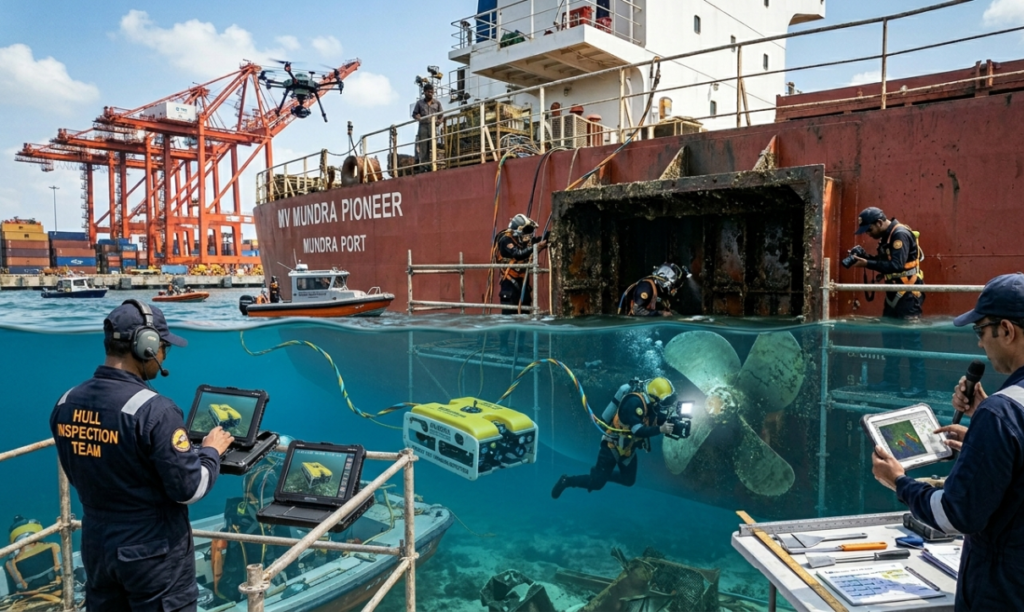
Modern underwater inspections combine diving expertise with advanced imaging technology.
Pre-Inspection Review
The inspection team reviews vessel information, trading history, maintenance records, and operational concerns.
This helps establish inspection priorities.
Underwater Survey
Commercial divers systematically inspect the vessel’s submerged surfaces.
Key areas include:
- Flat bottom sections
- Side shell plating
- Bilge areas
- Rudders
- Sea chests
- Thrusters
- Propellers
- Niche areas
These locations often experience varying levels of marine growth.
Video and Photographic Documentation
High-definition cameras capture detailed underwater footage.
This documentation provides valuable evidence for technical evaluations and maintenance planning.
Fouling Assessment
Inspectors evaluate the extent and severity of biological growth.
The findings help determine whether immediate cleaning is necessary.
Reporting
Following completion of the survey, vessel operators receive a report containing:
- Inspection findings
- Underwater photographs
- Video records
- Fouling assessments
- Maintenance recommendations
Common Signs That a Vessel May Need a Hull Fouling Inspection
Although many operators schedule inspections proactively, certain indicators often suggest that fouling is already affecting performance.
Rising Fuel Consumption
Unexpected increases in fuel usage are among the most common warning signs.
Reduced Vessel Speed
Maintaining planned service speed may become more difficult even when engine output remains unchanged.
Increased Engine Load
Engines often work harder to overcome the additional resistance caused by hull fouling.
Schedule Delays
Minor reductions in speed can accumulate over multiple voyages and affect schedule reliability.
For example, a bulk carrier operating between Dahej and Southeast Asian ports may begin consuming more fuel despite carrying similar cargo volumes. A subsequent inspection frequently reveals marine growth as the primary source of increased resistance.
Benefits of Regular Hull Fouling Inspections
The value of Hull Fouling Inspection in Dahej extends beyond identifying marine growth.
Improved Operational Efficiency
Routine inspections help maintain optimal vessel performance.
Lower Fuel Costs
Early intervention often prevents the fuel penalties associated with heavy fouling.
Enhanced Environmental Performance
Fuel-efficient vessels generate lower emissions, supporting industry sustainability goals.
Extended Coating Life
Regular monitoring helps evaluate the effectiveness of hull coatings and identify areas requiring attention.
Better Asset Management
Inspection data provides shipowners with valuable information for long-term maintenance planning.
Environmental Importance of Hull Fouling Management
Biofouling has become an increasingly important environmental issue within the maritime sector.
Reduced Emissions
Maintaining cleaner hulls improves fuel efficiency and lowers greenhouse gas emissions.
Prevention of Invasive Species Transfer
Marine organisms attached to vessel hulls can be transported between different ecosystems.
Routine inspections help identify and manage these risks.
Support for Sustainable Shipping
Proactive fouling management aligns with broader industry efforts to improve environmental performance.
Choosing the Right Hull Inspection Provider
The effectiveness of a hull fouling inspection depends largely on the expertise of the service provider.
When selecting a company for Hull Fouling Inspection in Dahej, vessel operators should consider:
Commercial Diving Experience
Qualified divers understand vessel structures and underwater survey requirements.
Inspection Technology
Modern cameras and recording systems improve survey accuracy.
Reporting Quality
Comprehensive reports provide valuable maintenance insights.
Safety Standards
Professional contractors should maintain strict operational safety procedures.
Operational Flexibility
The ability to accommodate vessel schedules is particularly important in busy ports.
Conclusion
Hull Fouling Inspection in Dahej is an essential preventive maintenance service that helps shipowners maintain fuel efficiency, improve vessel performance, and reduce operational costs. By identifying marine growth before it becomes a major problem, inspections allow operators to make informed maintenance decisions and avoid unnecessary performance losses.
As maritime operators continue to focus on efficiency, sustainability, and asset reliability, regular hull inspections have become a valuable part of modern fleet management. For vessels calling at Dahej, professional hull fouling inspections provide a practical and cost-effective way to monitor underwater conditions and support long-term operational success.
FAQs
Q1. What is hull fouling inspection?
Hull fouling inspection is an underwater assessment that evaluates marine growth and biofouling on a vessel’s submerged surfaces.
Q2. Why is hull fouling inspection important?
It helps identify marine growth early, improve fuel efficiency, and support effective maintenance planning.
Q3. How often should hull fouling inspections be performed?
The frequency depends on vessel operations, environmental conditions, and maintenance schedules. Many operators conduct inspections several times a year.
Q4. Can hull fouling inspections be conducted without dry docking?
Yes. Professional divers can perform inspections while the vessel remains afloat.
Q5. Which vessels benefit from hull fouling inspection in Dahej?
Tankers, LNG carriers, bulk carriers, offshore support vessels, container ships, and coastal cargo vessels all benefit from regular underwater inspections.