
The shipping industry runs on efficiency. Every additional ton of fuel consumed, every hour lost at sea, and every decline in vessel performance directly affects operational costs. While shipowners invest heavily in engines, navigation systems, and voyage planning, one critical factor often remains out of sight—literally below the waterline.
Marine growth on a vessel’s hull can gradually reduce efficiency, increase fuel consumption, and impact overall performance. This is why Underwater hull cleaning services in Dakar have become an essential maintenance solution for vessels operating along West Africa’s busy shipping routes.
Dakar is one of the most strategically located ports on the western coast of Africa. Positioned near major international shipping lanes connecting Europe, Africa, and the Americas, the port handles a constant flow of container vessels, bulk carriers, tankers, and offshore support vessels. With warm ocean waters promoting rapid marine growth, maintaining a clean hull has become increasingly important for vessel operators calling at Dakar.
Routine underwater cleaning helps ships maintain efficiency, reduce operating costs, and avoid unnecessary downtime associated with dry docking.
Understanding Hull Fouling and Why It Matters
Marine fouling is a natural process that affects every vessel operating in seawater.
The process begins when microscopic organisms attach themselves to submerged surfaces. Over time, algae, barnacles, mussels, and other marine organisms accumulate on the hull.
Common types of fouling include:
- Biofilm and slime
- Algae growth
- Barnacles
- Mussels
- Tube worms
- Seaweed
- Hard-shell marine organisms
At first, these layers may seem insignificant. However, even minor fouling can increase hull resistance and reduce vessel efficiency.
A clean hull allows water to move smoothly around the vessel. As marine growth develops, drag increases, making propulsion systems work harder. This is one of the primary reasons why Underwater hull cleaning services in Dakar are regularly utilized by commercial shipping companies.
The Impact of Hull Fouling on Vessel Operations
Hull fouling affects far more than the appearance of a vessel.
Increased Fuel Consumption
Marine growth creates additional resistance as the vessel moves through the water.
To maintain speed, engines must generate more power, resulting in higher fuel consumption.
Reduced Vessel Speed
Ships with fouled hulls often struggle to achieve their intended service speeds.
For vessels operating on strict schedules, reduced speed can affect voyage planning and customer commitments.
Higher Operating Costs
Fuel remains one of the largest expenses in maritime operations.
Even a small increase in fuel consumption can translate into substantial costs over multiple voyages.
Increased Engine Workload
Propulsion systems experience additional stress when compensating for hull resistance.
This may contribute to increased maintenance requirements over time.
Environmental Consequences
Greater fuel consumption leads to higher greenhouse gas emissions.
Maintaining a clean hull supports both operational efficiency and environmental compliance goals.
For instance, a bulk carrier loading cargo in West Africa and trading between Dakar and European ports may experience a noticeable increase in fuel consumption after several months without underwater maintenance. A hull inspection often reveals marine growth as the primary cause.
Why Dakar Is a Strategic Location for Hull Cleaning Services
Dakar occupies a unique position in international shipping.
Gateway to West Africa
The Port of Dakar serves as an important logistics and transshipment hub for regional and international trade.
The port regularly accommodates:
- Container vessels
- Bulk carriers
- Oil tankers
- Product tankers
- Offshore support vessels
- General cargo ships
This high level of vessel traffic creates ongoing demand for underwater maintenance services.
Favorable Conditions for Marine Growth
Warm Atlantic waters around Senegal provide ideal conditions for biofouling.
Vessels spending extended periods in these waters often experience accelerated fouling rates.
Reduced Operational Disruption
One of the advantages of utilizing underwater hull cleaning services in Dakar is the ability to perform maintenance while vessels remain afloat.
This allows operators to improve efficiency without interrupting commercial schedules.
Access to Professional Diving Services
Dakar supports commercial diving companies equipped with modern underwater inspection and cleaning technology.
What Are Underwater Hull Cleaning Services?
Underwater hull cleaning involves removing marine growth from submerged vessel surfaces while the ship remains in the water.
Unlike traditional dry dock maintenance, underwater cleaning allows vessels to continue operations with minimal downtime.
Typical services include:
- Hull cleaning
- Propeller polishing
- Sea chest cleaning
- Thruster cleaning
- Underwater inspections
- Video surveys
- Condition reporting
The primary objective is to restore vessel efficiency while preserving the integrity of protective hull coatings.
How Underwater Hull Cleaning Is Performed
Professional underwater cleaning operations follow a systematic process.
Initial Inspection
Before cleaning begins, divers assess the vessel’s underwater condition.
The inspection focuses on:
- Fouling severity
- Hull coating condition
- Propeller condition
- Sea chest condition
- Areas requiring specialized attention
Hull Cleaning
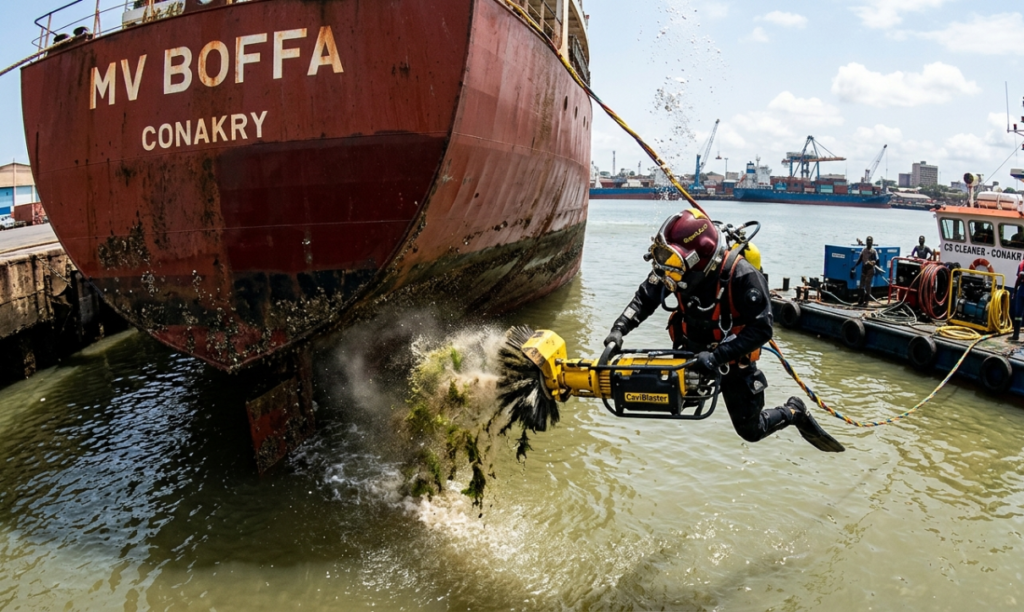
Divers use specialized equipment designed to remove marine growth without unnecessarily damaging hull coatings.
Cleaning methods are selected based on the vessel’s condition and fouling level.
Propeller Cleaning
Marine growth on propeller blades significantly affects propulsion efficiency.
Cleaning restores smoother blade surfaces and improves thrust performance.
Sea Chest and Niche Area Cleaning
Sea chests and recessed areas often accumulate dense marine growth.
Cleaning these sections helps ensure proper seawater flow to essential onboard systems.
Post-Cleaning Documentation
After cleaning is completed, divers perform a final inspection and provide photographic or video evidence documenting the completed work.
Benefits of Underwater Hull Cleaning Services in Dakar
Regular underwater maintenance provides both operational and financial advantages.
Improved Fuel Efficiency
Removing marine growth reduces drag and improves hydrodynamic performance.
Reduced Operating Costs
Lower fuel consumption often generates significant long-term savings.
Better Vessel Performance
A clean hull enables vessels to maintain service speed more effectively.
Reduced Emissions
Improved fuel efficiency contributes to lower carbon emissions.
Extended Coating Life
Routine cleaning helps preserve anti-fouling coatings and delay major maintenance work.
Improved Maintenance Planning
Inspection reports provide valuable data for future maintenance decisions.
These benefits explain why Underwater hull cleaning services in Dakar are increasingly incorporated into preventive maintenance programs.
Signs Your Vessel Requires Hull Cleaning
Routine underwater inspections remain the most reliable assessment method.
However, several indicators often suggest cleaning may be necessary.
Rising Fuel Consumption
Unexpected fuel increases frequently indicate excessive hull fouling.
Reduced Speed Performance
The vessel may require additional engine power to maintain normal operating speeds.
Increased Engine Load
Higher propulsion demands often signal increased resistance below the waterline.
Longer Transit Times
Reduced efficiency can affect voyage schedules.
Visible Fouling During Inspection
Underwater surveys provide direct confirmation of hull condition.
Environmental Considerations
Environmental responsibility has become an important part of modern maritime operations.
Professional providers of Underwater hull cleaning services in Dakar follow industry best practices designed to support environmental protection.
Responsible Cleaning Procedures
Modern cleaning methods focus on removing fouling while protecting hull coatings.
Biofouling Control
Routine cleaning helps reduce the transfer of invasive aquatic species between ports.
Supporting Sustainable Shipping
Cleaner hulls contribute to lower fuel consumption and reduced emissions.
Choosing the Right Underwater Cleaning Provider
The quality of underwater maintenance depends heavily on the expertise of the service provider.
Shipowners should consider:
Commercial Diving Experience
Experienced diving teams ensure safe and efficient operations.
Modern Equipment
Advanced cleaning systems improve cleaning effectiveness and operational efficiency.
Safety Standards
Professional contractors maintain strict safety protocols.
Reporting Capabilities
Comprehensive inspection reports support maintenance planning and compliance requirements.
Operational Flexibility
Service providers should be capable of accommodating vessel schedules and port operations.
Conclusion
Underwater hull cleaning services in Dakar play a critical role in helping vessel operators maintain efficiency, reduce fuel costs, and improve overall performance. Marine growth may seem like a minor issue initially, but its impact on fuel consumption, emissions, and operational costs can be significant over time.
With Dakar serving as a major maritime hub in West Africa, professional underwater cleaning services provide shipowners with a practical way to maintain vessel performance without disrupting commercial operations. By incorporating regular underwater maintenance into fleet management strategies, operators can achieve long-term savings while supporting safer and more sustainable shipping practices.
FAQs:
Q1. What are underwater hull cleaning services?
Underwater hull cleaning services involve removing marine growth from a vessel’s submerged surfaces while the ship remains afloat.
Q2. Why is underwater hull cleaning important?
It improves fuel efficiency, reduces drag, lowers operating costs, and helps maintain vessel performance.
Q3. Can underwater hull cleaning be performed without dry docking?
Yes. Professional diving teams can clean vessel hulls while the ship remains in the water.
Q4. Which vessel areas are commonly cleaned?
Hull surfaces, propellers, sea chests, thrusters, rudders, and other underwater appendages are typically cleaned.
Q5. How often should underwater hull cleaning be performed?
The frequency depends on vessel type, operating conditions, trading routes, and fouling rates. Regular inspections help determine the appropriate cleaning schedule.