In commercial shipping, time is money. Every day a vessel spends away from its trading schedule can translate into lost revenue, operational disruptions, and increased maintenance costs. While periodic inspections are essential for vessel safety and regulatory compliance, shipowners are always looking for ways to complete these requirements more efficiently.
This is where UWILD Inspection in Hazira has become an increasingly valuable solution.
UWILD, or Underwater Inspection in Lieu of Dry Docking, allows specific vessel surveys to be conducted while a ship remains afloat. Instead of entering a dry dock for certain inspections, qualified divers perform detailed underwater examinations under the supervision of classification societies and surveyors.
For vessel operators calling at Hazira, this approach offers a practical balance between compliance, safety, and operational efficiency. With its growing maritime infrastructure and strategic location on India’s west coast, Hazira has become an important destination for underwater inspection services.
What Is a UWILD Inspection?
UWILD stands for Underwater Inspection in Lieu of Dry Docking.
It is a class-approved underwater survey that allows eligible vessels to complete required inspections without being removed from the water.
Rather than lifting the vessel into a dry dock, commercial divers inspect underwater structures while the vessel remains afloat. The findings are documented using high-definition cameras, photographs, measurements, and detailed reports.
Classification societies may approve a UWILD survey depending on factors such as:
- Vessel type
- Vessel age
- Maintenance history
- Hull condition
- Inspection requirements
- Operational suitability
When approved, a UWILD Inspection in Hazira can help vessel owners satisfy survey requirements while avoiding the time and expense associated with dry docking.
Why UWILD Inspections Are Becoming More Popular
The shipping industry is increasingly focused on maximizing vessel availability.
Dry docking remains essential for many repairs and surveys, but not every inspection requires the vessel to leave the water.
Reduced Operational Downtime
One of the biggest advantages of UWILD inspections is that vessels can often continue their commercial schedules with minimal interruption.
Many inspections are completed during routine port stays.
Lower Maintenance Costs
Dry dock expenses can be substantial.
Shipowners must account for:
- Docking fees
- Operational delays
- Labor costs
- Lost charter opportunities
UWILD inspections often provide a more economical alternative.
Regulatory Compliance
Classification societies require periodic inspections to verify vessel condition and seaworthiness.
UWILD inspections help shipowners meet these obligations efficiently.
Better Maintenance Planning
The survey results provide valuable information about underwater structures, allowing operators to schedule maintenance activities more effectively.
Why Hazira Is an Ideal Location for UWILD Inspections
Hazira has become one of Gujarat’s most significant maritime and industrial hubs.
Its location and infrastructure make it particularly suitable for underwater inspection activities.
Busy Commercial Port Operations
The port regularly accommodates:
- LNG carriers
- Bulk carriers
- Oil tankers
- Chemical tankers
- Container vessels
- Offshore support vessels
Many of these vessels require periodic class inspections.
Availability of Professional Diving Services
Hazira supports experienced commercial diving companies capable of conducting class-approved underwater inspections.
Strategic Maintenance Opportunities
Vessels can complete inspections during planned cargo operations or scheduled port stays, minimizing disruption to voyage schedules.
Growing Maritime Infrastructure
The port’s continued development has increased access to specialized marine service providers, including underwater inspection teams.
These factors have contributed to growing demand for UWILD Inspection in Hazira services.
How a UWILD Inspection Is Conducted
A professional UWILD inspection follows a structured process designed to meet classification society requirements.
Pre-Inspection Planning
Before work begins, the vessel owner, inspection contractor, and classification society establish the survey scope.
This planning phase includes:
- Survey objectives
- Inspection areas
- Safety procedures
- Documentation requirements
- Operational considerations
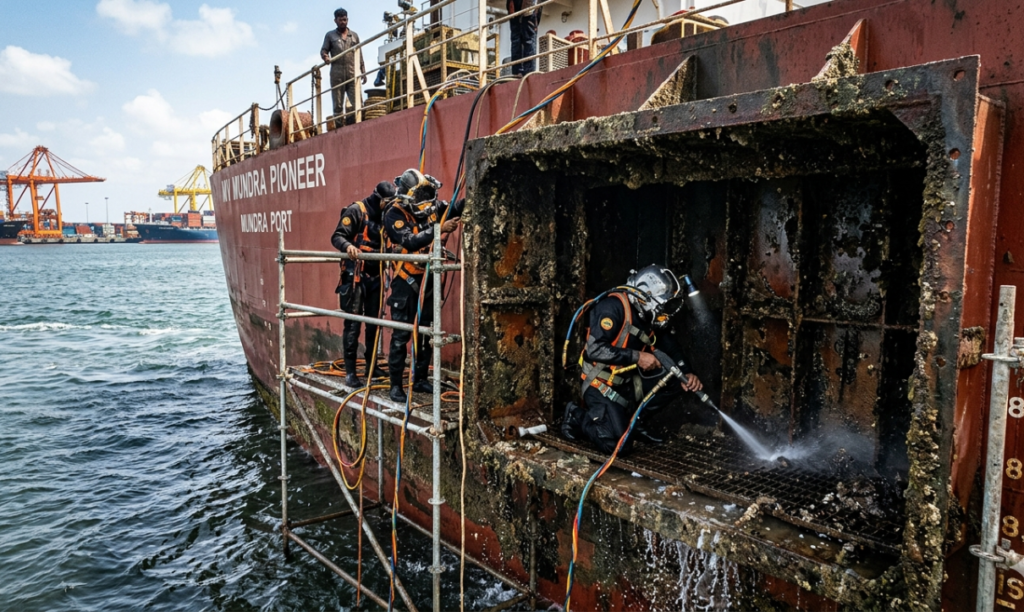
Underwater Examination
Qualified commercial divers inspect the vessel’s underwater structures while recording video footage and photographs.
Inspection areas commonly include:
- Hull plating
- Rudders
- Propellers
- Sea chests
- Thrusters
- Bilge keels
- Weld seams
- Structural appendages
Video Documentation
Modern UWILD surveys rely heavily on underwater imaging technology.
High-definition video footage allows surveyors to review vessel condition in detail.
Surveyor Review
Classification representatives evaluate inspection findings and determine whether survey requirements have been satisfied.
Final Reporting
The inspection concludes with comprehensive documentation that includes:
- Survey observations
- Underwater photographs
- Video recordings
- Structural assessments
- Maintenance recommendations
Key Areas Assessed During UWILD Inspections
Hull Structure
Divers examine hull plating for signs of corrosion, coating deterioration, deformation, and physical damage.
Propellers
Propeller blades are inspected for fouling, erosion, cavitation damage, and structural condition.
Rudders
Rudder assemblies are checked for wear, movement irregularities, and overall integrity.
Sea Chests
Sea chest openings are examined for marine growth and flow restrictions.
Thrusters and Niche Areas
Special attention is given to complex underwater structures that often experience accelerated fouling.
A comprehensive UWILD Inspection in Hazira provides valuable insight into the condition of these critical components.
Benefits of UWILD Inspection for Shipowners
The advantages extend far beyond regulatory compliance.
Increased Vessel Availability
Keeping vessels operational during inspections helps maximize earning potential.
Reduced Costs
Avoiding unnecessary dry dock visits can generate significant savings.
Improved Safety
Routine underwater inspections help identify structural concerns before they develop into serious problems.
Enhanced Asset Management
Inspection data supports long-term maintenance planning and budgeting.
Better Operational Decision-Making
Accurate information about underwater conditions allows technical managers to make informed maintenance decisions.
For example, an LNG carrier arriving at Hazira for cargo operations may complete a UWILD survey during its scheduled port stay. Instead of arranging a separate dry dock visit, the operator receives a detailed assessment of underwater structures while maintaining operational continuity.
Technology Used in Modern UWILD Inspections
Inspection technology has evolved significantly in recent years.
Today’s UWILD Inspection in Hazira services often incorporate advanced equipment that improves inspection accuracy and reporting quality.
High-Definition Underwater Cameras
Modern imaging systems provide clear visual documentation of vessel condition.
Real-Time Video Monitoring
Surveyors can observe inspections live and request additional examination of specific areas when required.
Digital Reporting Systems
Electronic reporting improves documentation quality and simplifies record management.
Advanced Underwater Lighting
Specialized lighting systems improve visibility and image clarity during inspections.
These technologies have strengthened confidence in underwater surveys throughout the maritime industry.
Selecting the Right UWILD Inspection Provider
Choosing a qualified service provider is critical to achieving reliable inspection results.
Shipowners should consider:
Commercial Diving Expertise
Divers should possess extensive experience in underwater vessel inspections.
Classification Society Familiarity
Providers should understand class survey requirements and reporting standards.
Modern Inspection Equipment
High-quality cameras and documentation systems improve survey effectiveness.
Strong Safety Procedures
Professional contractors maintain strict operational safety standards.
Comprehensive Reporting
Detailed reports help support maintenance planning and regulatory compliance.
Conclusion
UWILD Inspection in Hazira offers shipowners a practical and cost-effective alternative to traditional dry dock inspections. By allowing class-approved surveys to be completed while vessels remain afloat, UWILD services help reduce downtime, lower maintenance costs, and maintain compliance with classification society requirements.
As the shipping industry continues to prioritize efficiency and operational flexibility, UWILD inspections have become an important part of modern vessel management. For ships calling at Hazira, these inspections provide a convenient opportunity to assess underwater structures, support long-term maintenance planning, and ensure continued operational reliability without unnecessary interruptions.
FAQs:
Q1. What does UWILD stand for?
UWILD stands for Underwater Inspection in Lieu of Dry Docking, a class-approved underwater survey conducted while a vessel remains afloat.
Q2. Is a UWILD inspection accepted by classification societies?
Yes. Many classification societies approve UWILD inspections when vessel eligibility and survey requirements are satisfied.
Q3. What areas are inspected during a UWILD survey?
Typical inspection areas include hull plating, propellers, rudders, sea chests, thrusters, and other underwater structures.
Q4. Can UWILD inspections replace dry docking entirely?
No. Some inspections and repairs still require dry docking. Classification societies determine when UWILD is acceptable.
Q5. Which vessels commonly undergo UWILD inspections in Hazira?
Tankers, LNG carriers, bulk carriers, container ships, offshore support vessels, and other commercial vessels frequently utilize UWILD inspection services.