
Benefits of Bulk Carrier Hold Cleaning in Khalid Port
Bulk Carrier Hold Cleaning in Khalid Port is not just a routine port service—it is a critical operational practice that directly affects cargo safety, regulatory compliance, and vessel profitability. As the UAE continues to strengthen its position as a global maritime hub, ports like Khalid Port play a key role in setting higher standards for marine cleaning and inspection.
In this article, we break down why hold cleaning matters, how it aligns with international regulations, and the real-world benefits you gain when it is done right.
Why Khalid Port Matters in Global Shipping
Khalid Port sits at the crossroads of major trade routes connecting Asia, Africa, and Europe. Its proximity to industrial zones, grain terminals, and bulk cargo corridors makes it a strategic stop for bulk carriers.
For ship operators, this means:
- High cargo turnover
- Strict inspection regimes
- Zero tolerance for contamination or residue
A poorly cleaned hold at Khalid Port can delay operations, trigger re-inspections, or even lead to cargo rejection.
Why the UAE Is a Leader in Marine Cleaning Standards
The UAE has invested heavily in port infrastructure, environmental protection, and maritime governance. Ports follow international conventions closely, often exceeding minimum requirements.
This leadership is driven by:
- Strong alignment with IMO and MARPOL conventions
- Active port authority oversight
- Emphasis on safety, sustainability, and efficiency
As a result, Bulk Carrier Hold Cleaning in Khalid Port is treated as a compliance-critical operation, not an optional service.
What Is Bulk Carrier Hold Cleaning in Khalid Port?
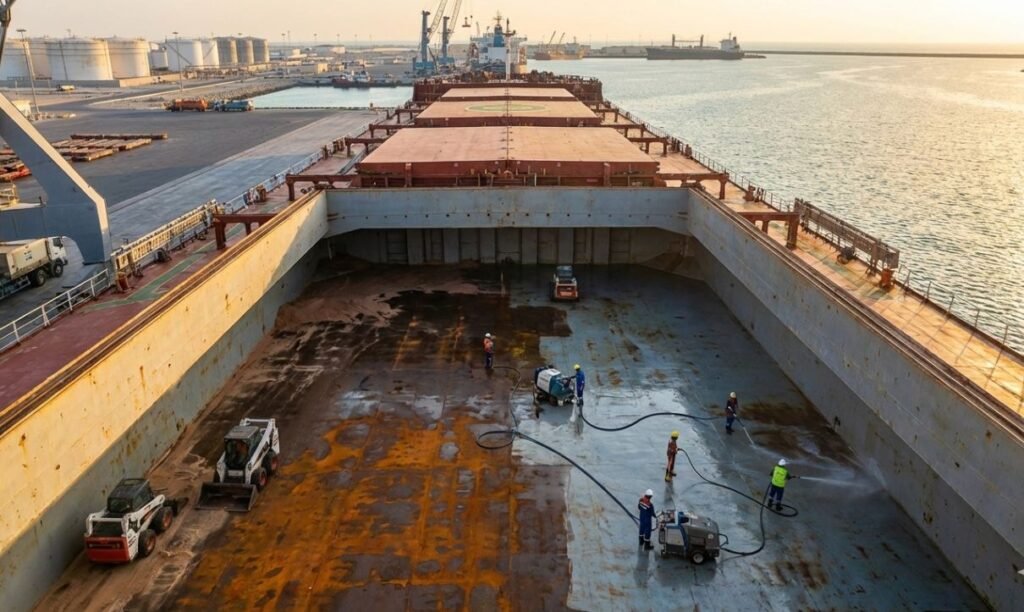
Bulk carrier hold cleaning is the process of removing previous cargo residues, dust, rust scale, and contaminants from cargo holds before loading new cargo.
In simple terms, it ensures:
- The next cargo is not contaminated
- The vessel meets charter party requirements
- Inspections pass without delay
Think of it like preparing a food-grade kitchen after handling raw materials—anything left behind can ruin what comes next.
Why Bulk Carrier Hold Cleaning in Khalid Port Is More Than Just Washing
Many assume that hold cleaning is just high-pressure water washing. In reality, it is a structured workflow involving planning, inspection, cleaning, drying, and documentation.
Effective cleaning considers:
- Type of previous cargo
- Sensitivity of the next cargo
- Hold coating condition
- Environmental discharge rules
Skipping any step increases risk.
Benefit 1: Cargo Integrity and Quality Protection
The first and most obvious benefit of Bulk Carrier Hold Cleaning in Khalid Port is cargo protection.
Residual materials such as coal dust, fertilizer traces, or grain residues can:
- Chemically react with the new cargo
- Cause discoloration or odor
- Lead to cargo claims
Clean holds protect cargo quality and your commercial reputation.
Benefit 2: Compliance With IMO and MARPOL Regulations
International regulations are clear on pollution prevention and cargo safety.
Proper hold cleaning supports compliance with:
- IMO guidelines for safe cargo handling
- MARPOL Convention rules on residue disposal
- Port State Control inspection criteria
Non-compliance can result in fines, detention, or voyage delays.
Benefit 3: Faster Inspections and Reduced Port Delays
Ports like Khalid Port operate on tight schedules. Inspectors expect holds to be clean, dry, and ready.
Well-executed cleaning leads to:
- Faster surveyor approvals
- Fewer re-cleaning requests
- Predictable turnaround times
Time saved at port directly reduces operational costs.
Benefit 4: Crew Safety and Risk Reduction
Dirty holds are hazardous environments. Slippery residues, toxic dust, and confined spaces increase accident risks.
Professional cleaning improves:
- Air quality inside holds
- Slip and fall prevention
- Overall crew safety
Many operators also align cleaning operations with drug and alcohol testing programs to ensure safe working conditions, a practice supported by industry leaders like Cleanship.co.
Benefit 5: Environmental Protection and Responsible Discharge
Environmental protection is a major focus at UAE ports.
Responsible Bulk Carrier Hold Cleaning in Khalid Port includes:
- Controlled residue collection
- Approved waste disposal methods
- Zero overboard discharge violations
This aligns with MARPOL and IAPH environmental objectives and protects marine ecosystems.
Benefit 6: Cost Efficiency Over the Vessel Lifecycle
Poor cleaning damages coatings and accelerates corrosion.
Long-term benefits of proper cleaning include:
- Extended hold coating life
- Reduced steel repairs
- Lower dry-docking costs
What seems like a cost today often saves significant money over the vessel’s operational life.
Benefit 7: Charter Party and Trade Flexibility
Charterers often specify cleanliness standards such as “grain clean” or “hospital clean.”
Meeting these standards through professional cleaning:
- Expands charter opportunities
- Reduces off-hire disputes
- Builds trust with cargo interests
This flexibility is a commercial advantage in competitive markets.
Cleaning Standards for Bulk Carriers at Khalid Port
Cleaning standards depend on cargo type and charter requirements.
Common standards include:
- Shovel clean
- Grain clean
- Hospital clean
Each level requires different techniques, inspection criteria, and documentation.
Inspection and Documentation Workflow
Inspection is not optional—it is integral.
A typical workflow includes:
- Pre-cleaning assessment
- Visual and flashlight inspections
- Moisture and residue checks
- Cleaning records and compliance reports
Accurate documentation supports audits and protects you during disputes.
Role of Marine Supercargo and Independent Surveyors
Marine supercargo professionals oversee cleaning quality and cargo readiness.
Their role includes:
- Verifying cleaning standards
- Liaising with charterers and terminals
- Ensuring compliance with Final Quality Rules
Organizations like World Ports Marine Supercargo provide structured oversight that minimizes operational risk.
Safety and IMCA-Aligned Work Practices
Cleaning operations often involve enclosed spaces and heavy equipment.
IMCA-aligned practices focus on:
- Risk assessments
- Permit-to-work systems
- Trained personnel and PPE
These practices reduce incidents and improve operational reliability.
Future Trends in Marine Bulk Carrier Hold Cleaning in Khalid Port
The marine cleaning industry is evolving.
Key trends include:
- Eco-friendly cleaning agents
- Automated high-pressure systems
- Digital inspection reporting
- Greater emphasis on ESG compliance
Ports like Khalid Port are early adopters of these innovations.
How Industry Leaders Set the Benchmark
Global service providers such as Cleanship.co demonstrate how integrated services support compliance.
Their industry practices include:
- Global tank and hold cleaning operations
- Cargo supervision and compliance support
- Drug and alcohol testing services for crew safety
These integrated approaches reflect where the industry is heading.
Conclusion
Bulk Carrier Hold Cleaning in Khalid Port is a strategic operation that protects cargo, ensures compliance, and improves long-term vessel performance. The three key takeaways are clear: clean holds safeguard cargo quality, regulatory compliance reduces risk, and professional cleaning improves cost efficiency over time. In a port environment governed by strict inspections and global standards, cutting corners is never worth the risk. For operators seeking consistent compliance, safety, and operational excellence, working with experienced providers like Cleanship.co is a practical step toward reliable maritime performance and long-term trust in global trade.
FAQs:
Q1. What level of cleanliness is usually required for bulk carriers at Khalid Port?
Most bulk carriers require grain clean or higher standards, depending on the next cargo. Inspectors look for the absence of residue, rust scale, and moisture. Meeting charter party terms is essential to avoid delays or re-cleaning orders.
Q2. How does Bulk Carrier Hold Cleaning in Khalid Port support MARPOL compliance?
Proper Bulk Carrier Hold Cleaning in Khalid Port ensures residues are collected and disposed of responsibly. This prevents illegal discharges at sea and aligns with MARPOL Convention requirements for pollution prevention and waste management.
Q3. Is Bulk Carrier Hold Cleaning in Khalid Port different from tank cleaning?
Yes. Bulk Carrier Hold Cleaning in Khalid Port focuses on dry cargo spaces, while tank cleaning involves liquid cargo tanks. Each follows different procedures, risks, and inspection standards, though both require strict documentation and compliance oversight.
Q4. Who verifies the quality of hold cleaning at ports?
Independent surveyors or marine supercargo professionals usually verify cleaning quality. They assess cleanliness, dryness, and compliance with Final Quality Rules before approving the hold for loading.
Q5. Why should operators choose experienced service providers?
Experienced providers understand port regulations, inspection expectations, and safety standards. Their structured workflows reduce delays, protect cargo interests, and ensure consistent compliance at ports like Khalid Port.