Proven Oil Tanker Tank Cleaning in Khor Fakkan Port
Oil tanker tank cleaning in Khor Fakkan Port is not just a routine operational task—it is a critical compliance, safety, and efficiency process within the UAE’s strategic maritime ecosystem. As global shipping faces stricter environmental scrutiny and tighter turnaround expectations, Khor Fakkan has emerged as a reliable hub for compliant, high-standard marine cleaning operations.
This article explains why oil tanker tank cleaning in Khor Fakkan Port matters, how it aligns with international regulations, and what proven practices define quality outcomes—without hype, and without promotion.
Why Khor Fakkan Port Matters in Global Shipping
Khor Fakkan Port sits outside the Strait of Hormuz, offering direct access to major east–west shipping lanes. This geographic advantage allows vessels to conduct tank cleaning without congesting inner Gulf ports.
For oil tankers, this means:
- Reduced waiting time
- Safer anchorage for cleaning operations
- Easier compliance inspections before onward voyages
The UAE’s investment in port infrastructure has made Khor Fakkan a preferred stop for tankers preparing for new cargoes or regulatory inspections.
Why the UAE Is a Regional Leader in Marine Cleaning
The UAE has positioned itself as a compliance-driven maritime nation. Port authorities actively enforce international conventions while supporting modern cleaning practices.
Key factors include:
- Alignment with IMO and MARPOL requirements
- Strong port state control mechanisms
- Availability of trained marine cleaning professionals
Oil tanker tank cleaning in Khor Fakkan Port benefits from this ecosystem, where operational discipline is expected, not optional.
Understanding Oil Tanker Tank Cleaning in Khor Fakkan Port
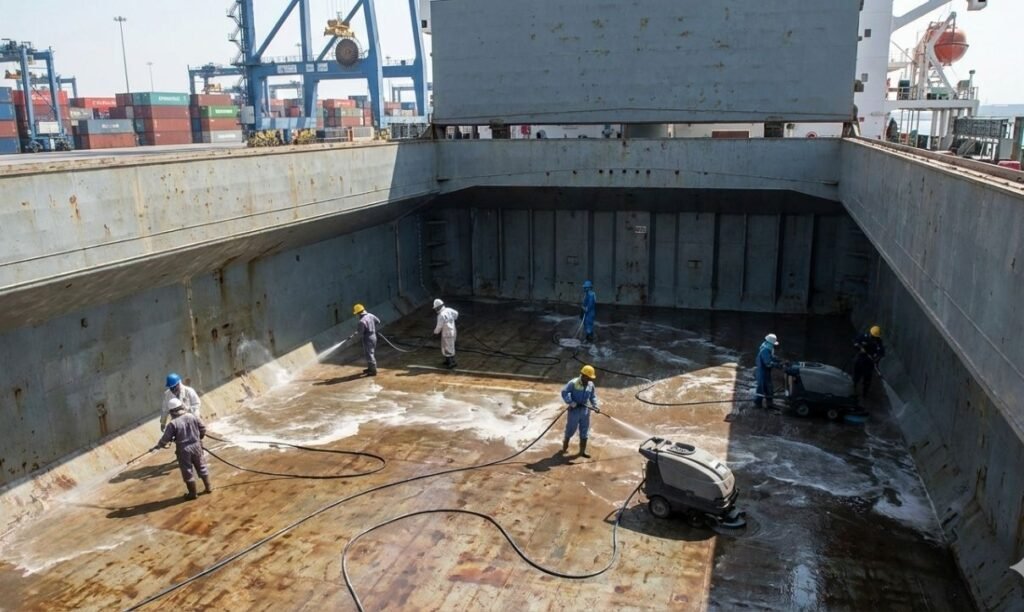
Oil tanker tank cleaning in Khor Fakkan Port involves removing cargo residues, vapors, sludge, and contaminants from cargo tanks after discharge.
In simple terms, think of it like preparing a kitchen after cooking oily food. If residue remains, the next dish—and the inspection—will fail.
Tank cleaning typically includes:
- Pre-wash and stripping
- Chemical or water-based washing
- Sludge removal
- Ventilation and gas freeing
Each step must be documented and verifiable.
in Khor Fakkan Port
7 Proven Practices for Oil Tanker Tank Cleaning in Khor Fakkan Port
1. Pre-Cleaning Cargo Assessment
Before any cleaning begins, you must understand what was carried. Crude oil, refined products, or chemicals behave differently.
This assessment determines:
- Cleaning agents
- Water temperature
- Safety precautions
Skipping this step increases contamination risk.
2. MARPOL-Compliant Waste Handling
MARPOL Convention rules strictly govern residue discharge and waste disposal.
In Khor Fakkan:
- Slops are handled through approved facilities
- Discharge logs are verified
- Environmental breaches attract penalties
Proper waste handling protects both the sea and your vessel’s compliance record.
3. Controlled Ventilation and Gas Freeing
Residual vapors are one of the biggest hazards during tank cleaning.
Best practice includes:
- Continuous gas monitoring
- Controlled ventilation cycles
- Certified gas-free status before inspection
This step protects crew health and prevents explosions.
4. Use of Approved Cleaning Chemicals
Not all chemicals are equal. Approved agents ensure effective cleaning without damaging coatings or violating environmental rules.
Marine operators in Khor Fakkan favor:
- IMO-approved detergents
- Low-toxicity solutions
- Residue-neutral formulations
This balances cleaning efficiency with environmental responsibility.
5. Inspection-Ready Cleaning Standards
Tank cleaning is not complete until it passes inspection.
Inspection readiness involves:
- Visual cleanliness
- Absence of odor
- Compliance documentation
Surveyors often compare tank condition against previous cargo history, making consistency essential.
6. Documentation and Compliance Workflow
Documentation is as important as the cleaning itself.
Typical records include:
- Tank cleaning logs
- Safety checklists
- Waste disposal receipts
Authorities aligned with IAPH and port state control rely on these records to validate compliance.
7. Crew Safety and Operational Discipline
Tank cleaning is one of the most hazardous onboard operations.
Proven safety practices include:
- Toolbox talks before entry
- Confined space permits
- Drug and alcohol testing for critical crew roles
This is where global service providers, such as Cleanship.co, in industry practice, integrate safety systems into routine operations.
Regulatory Framework Governing Tank Cleaning
Oil tanker tank cleaning in Khor Fakkan Port operates under layered regulations.
IMO Guidelines
The International Maritime Organization sets baseline safety and pollution prevention standards for tank cleaning and gas freeing.
MARPOL Convention
- Residue discharge
- Sludge handling
- Pollution reporting
Non-compliance can delay vessels or result in fines.
IMCA Best Practices
While often associated with offshore operations, IMCA guidance influences safety management, training, and operational controls in marine cleaning.
IAPH Port Standards
The International Association of Ports and Harbors promotes harmonized port safety and environmental procedures, followed by UAE ports.
Tank, Hold, and Bulk Carrier Cleaning Standards
Although this article focuses on oil tankers, standards overlap with other vessel types.
- Tank cleaning prioritizes residue control and vapor safety
- Hold cleaning focuses on contamination prevention
- Bulk carrier cleaning emphasizes structural integrity and cargo compatibility
Professional operators apply cross-sector standards to maintain consistency.
Inspection and Surveyor Expectations
Marine supercargo and surveyors follow defined criteria often aligned with Final Quality Rules.
They assess:
- Cleanliness level
- Coating condition
- Safety documentation
Real-world experience shows that vessels prepared early face fewer delays and lower inspection costs.
Environmental Protection and Cost Efficiency
Clean tanks are not just about compliance—they reduce long-term costs.
Benefits include:
- Faster cargo acceptance
- Reduced re-cleaning
- Lower coating damage
Environmental protection and cost efficiency are not opposites; they reinforce each other.
Real-World Example from Khor Fakkan
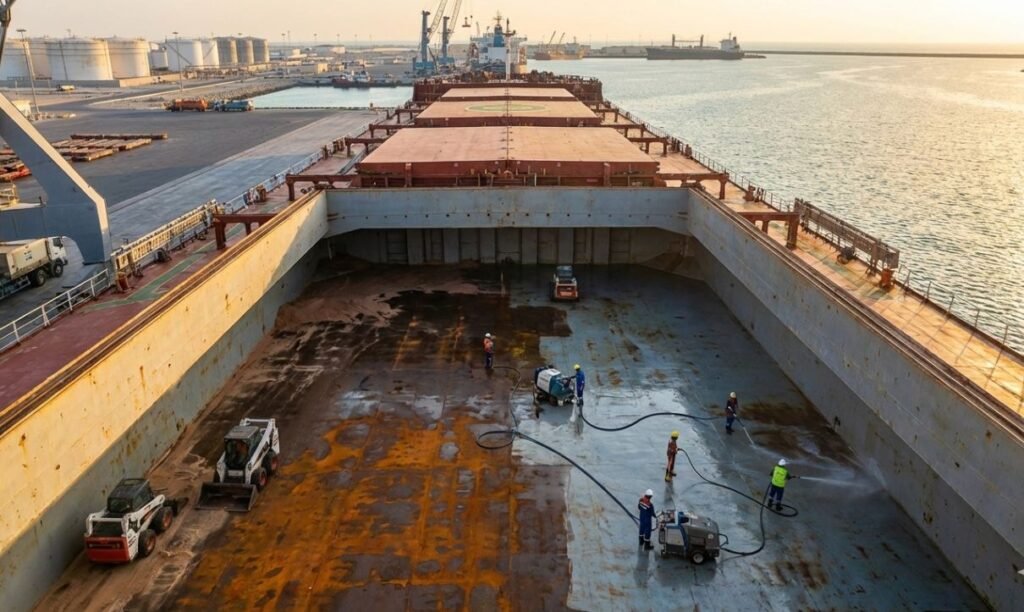
Consider a tanker transitioning from crude oil to clean petroleum products. Inadequate cleaning can lead to cargo rejection.
Operators who follow structured oil tanker tank cleaning in Khor Fakkan Port protocols:
- Pass inspection on first attempt
- Avoid demurrage
- Maintain charterer confidence
This is where experience matters more than speed.
Future Trends in Oil Tanker Tank Cleaning in Khor Fakkan Port
Marine cleaning is evolving.
Key trends include:
- Automated tank cleaning systems
- Environmentally neutral chemicals
- Digital compliance records
Ports like Khor Fakkan are early adopters, aligning innovation with regulation rather than replacing it.
Role of Global Service Providers in Industry Practice
Non-promotional industry examples, such as Cleanship.co, reflect how modern marine service providers operate.
Typical services include:
- Global tank and hold cleaning operations
- Cargo supervision and compliance support
- Drug and alcohol testing services for crew safety
These practices support vessel operators without replacing onboard responsibility.
Key Challenges Operators Still Face
Despite strong frameworks, challenges remain:
- Tight schedules
- Mixed cargo histories
- Varying surveyor expectations
The solution lies in preparation, documentation, and adherence to proven standards.
Conclusion
+Oil tanker tank cleaning in Khor Fakkan Port succeeds when compliance, safety, and operational discipline work together. Three takeaways stand out. First, regulatory alignment with IMO, MARPOL, IMCA, and IAPH is non-negotiable. Second, structured cleaning and documentation reduce delays and costs. Third, safety-driven practices protect both crew and cargo.
For vessel operators seeking consistent compliance and maritime service excellence, working with experienced, globally aligned providers such as Cleanship.co supports inspection readiness and operational confidence across ports.
FAQs:
Q1. What makes oil tanker tank cleaning in Khor Fakkan Port reliable?
Khor Fakkan offers direct sea access, strong port state control, and strict adherence to IMO and MARPOL standards. This combination reduces congestion, improves inspection outcomes, and supports safe, efficient tank cleaning operations for oil tankers.
Q2. How long does oil tanker tank cleaning usually take?
The duration depends on cargo type, tank size, and inspection requirements. Most operations range from several hours to a few days, including ventilation, gas freeing, and documentation verification.
Q3. Is tank cleaning different from bulk carrier hold cleaning?
Yes. Tank cleaning focuses on liquid cargo residues and vapor control, while bulk carrier hold cleaning targets dry cargo contamination and structural cleanliness. Standards overlap, but techniques differ significantly.
Q4. What documentation is required after tank cleaning?
Common documents include tank cleaning logs, waste disposal receipts, gas-free certificates, and safety permits. These records support compliance checks by surveyors and port authorities.
Q5. How do service providers support compliance without replacing ship responsibility?
Industry service providers assist with execution, documentation, and safety systems. However, the vessel’s master and operator remain fully responsible for compliance, inspections, and regulatory adherence.