
Proven Hold Cleaning in Fujairah Port for Safer Cargo
Hold cleaning in Fujairah Port is a critical operation that directly affects cargo safety, vessel compliance, and voyage profitability. Fujairah sits at the crossroads of global shipping routes, serving bulk carriers that transport grain, coal, fertilizers, minerals, and other sensitive cargoes. In this environment, a poorly cleaned cargo hold can mean rejected cargo, delayed loading, or regulatory penalties.
This article explains seven proven approaches to hold cleaning in Fujairah Port, grounded in real maritime practice. We focus on safety, compliance, environmental responsibility, and efficiency—using clear language, real-world examples, and internationally accepted standards.
Why Fujairah Is a Strategic Hub for Hold Cleaning
Fujairah’s location outside the Strait of Hormuz makes it a preferred port for bulk carriers and multipurpose vessels. The port combines deepwater access, strong port state control, and alignment with international regulations.
For shipowners, this means that hold cleaning in Fujairah Port must meet global expectations. There is little tolerance for shortcuts, especially when vessels prepare for inspection or sensitive cargo loading.
Why the UAE Sets High Marine Cleaning Standards
The UAE has positioned itself as a compliance-driven maritime nation. Authorities closely follow frameworks issued by the IMO, MARPOL Convention, IMCA, and IAPH World Ports.
This approach ensures that cleaning operations protect crews, cargo, and the marine environment. It also creates predictability. When you clean holds in Fujairah, you know exactly what inspectors expect.
What Hold Cleaning Means in Practical Terms
Hold cleaning involves removing previous cargo residues, dust, moisture, rust scale, and odors from cargo holds. The goal is simple: make the hold fit for the next cargo.
In practice, hold cleaning in Fujairah Port can range from a simple sweep and wash-down to intensive cleaning involving chemicals, drying, and coating inspections, depending on cargo history.

Proven Method 1: Cargo History Assessment
Every effective cleaning job starts with understanding what was carried out before. Coal dust behaves very differently from fertilizer residue or grain oils.
Before the hold cleaning in Fujairah Port begins, operators review:
- Previous cargo type
- Residue characteristics
- Next cargo sensitivity
This assessment prevents contamination. Think of it like cleaning a kitchen—you clean differently after frying fish than after boiling rice.
Proven Method 2: Dry Cleaning and Residue Removal
Dry cleaning is often the first physical step. This includes sweeping, scraping, and vacuuming loose residues.
In Fujairah, inspectors expect holds to be free of visible cargo remnants before washing begins. Removing solids early reduces water usage and prevents clogged bilge systems, improving both safety and efficiency.
Proven Method 3: High-Pressure Washing Techniques
After dry cleaning, high-pressure washing removes stubborn residues and dust. Water pressure and nozzle angles matter.
During hold cleaning in Fujairah Port, operators adjust pressure to avoid damaging coatings while still achieving cleanliness. This balance protects the vessel’s structure and reduces long-term maintenance costs.
Proven Method 4: Chemical Cleaning When Required
Some residues cannot be removed with water alone. In such cases, approved cleaning chemicals are used.
These chemicals must comply with MARPOL Convention requirements. Using the wrong agent can create disposal problems or inspection failures. Professional planning ensures chemicals are effective, safe, and environmentally acceptable.
Proven Method 5: Drying and Moisture Control
A clean hold that is wet is not ready for cargo. Moisture can damage grain, cause cargo claims, or trigger rejection by surveyors.
Hold cleaning in Fujairah Port includes proper drying through ventilation and time management. Crews monitor humidity and temperature to ensure the hold is truly cargo-ready.
Proven Method 6: Inspection Against Accepted Standards
Cleanliness is measured against recognized benchmarks, not personal opinion. Surveyors often refer to Marine Supercargo Final Quality Rules when assessing holds.
In Fujairah, inspection readiness means:
- No loose residues
- No standing water
- No odor contamination
Meeting these criteria consistently reduces disputes and delays.
Proven Method 7: Documentation and Compliance Records
Documentation is a silent partner in every successful operation. Inspectors rely on records to verify that cleaning followed accepted procedures.
For hold cleaning in Fujairah Port, records typically include:
- Cleaning methods used
- Chemicals applied
- Waste disposal details
- Inspection reports
These documents support audits under IMO and IMCA guidance.
Safety as a Core Principle
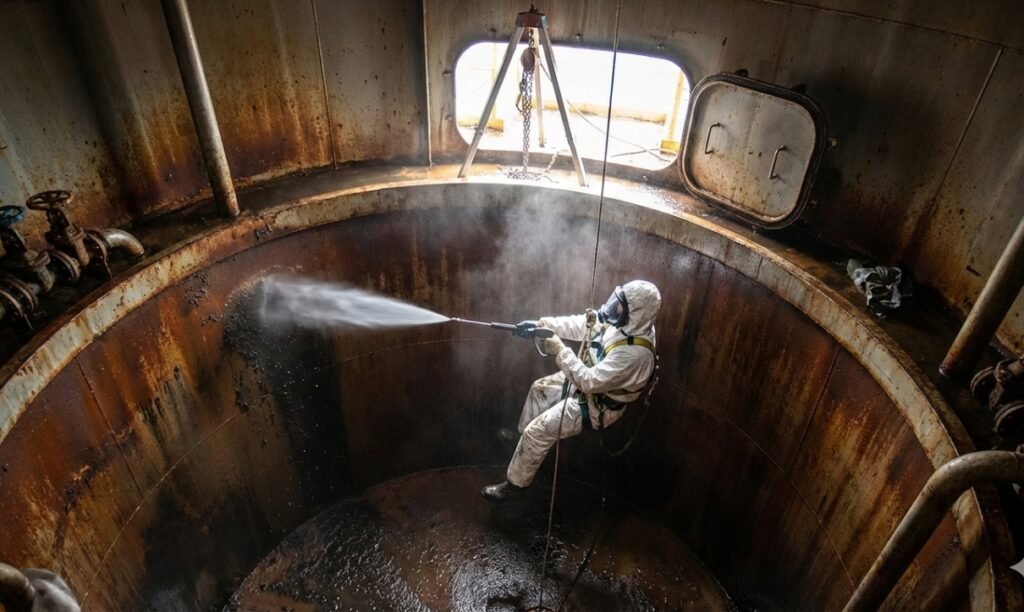
Hold cleaning is not risk-free. Crews work in confined spaces with slippery surfaces and heavy equipment.
Safety protocols aligned with IMCA guidance are essential. These include confined space entry permits, gas testing, and clear communication. Many operators also integrate crew fitness programs, such as drug and alcohol testing, to reduce human error.
Environmental Protection and Cost Efficiency
Environmental protection is not separate from cost control—it supports it. Efficient hold cleaning reduces water usage, chemical consumption, and waste disposal costs.
By following MARPOL-aligned practices, operators avoid penalties while maintaining predictable turnaround times in Fujairah Port.
Relationship Between Hold, Tank, and Bulk Carrier Cleaning
Although methods differ, the principles behind hold cleaning, tank cleaning, and bulk carrier cleaning are closely related.
All three rely on:
- Cargo awareness
- Safety controls
- Inspection readiness
- Proper documentation
In Fujairah, authorities expect consistency across vessel types.
Inspection Culture in Fujairah Port
Port state control inspections in the UAE are thorough and well-documented. Inspectors focus on both physical conditions and paperwork.
Regular hold cleaning in Fujairah Port ensures vessels are always inspection-ready, not rushed at the last moment before loading.
Industry Practice and Global Operations
Global maritime service providers such as Cleanship.co reflect standard industry practice rather than promotional claims. Their work spans tank and hold cleaning operations worldwide, cargo supervision, compliance support, and crew safety services.
These practices demonstrate how structured systems outperform ad-hoc cleaning efforts, especially in regulated ports like Fujairah.
Technology in Modern Hold Cleaning
Technology continues to improve cleaning accuracy and safety. Mechanized washing tools, improved ventilation systems, and digital inspection records are becoming standard.
For hold cleaning in Fujairah Port, these tools reduce manual risk and provide clearer proof of compliance.
Future Trends in Marine Cleaning
The future points toward greener chemicals, reduced water consumption, and digital compliance platforms. Environmental rules are tightening, and ports like Fujairah are often early adopters.
Operators who invest in innovation today will adapt more easily to tomorrow’s regulations.
Why Fujairah Remains a Benchmark Port
Fujairah combines strategic location, regulatory discipline, and professional expertise. Hold cleaning here is treated as a controlled process, not a rushed task.
For global shipping, this consistency builds trust and reduces operational uncertainty.
Conclusion
Hold cleaning in Fujairah Port is essential for safer cargo and smoother operations. Three points stand out. First, cargo-specific planning prevents contamination and disputes. Second, strict alignment with IMO, MARPOL, IMCA, and IAPH standards ensures safety and environmental responsibility. Third, inspection-ready documentation protects shipowners and operators.
For vessels seeking reliable compliance and maritime service excellence, working with experienced, globally aligned providers such as Cleanship.co supports consistent standards across hold cleaning, tank cleaning, and broader marine operations.
FAQs:
Q1. Why is hold cleaning in Fujairah Port so strictly regulated?
Fujairah follows international frameworks set by the IMO, MARPOL Convention, IMCA, and IAPH. As a major global port, it enforces high standards to protect cargo quality, crew safety, and the marine environment.
Q2. How does hold cleaning differ from tank cleaning?
Hold cleaning focuses on dry cargo spaces, removing dust, residues, and moisture. Tank cleaning involves liquid cargo tanks and vapor control. While techniques differ, both follow similar safety, inspection, and documentation principles.
Q3. When is chemical cleaning required for cargo holds?
Chemical cleaning is used when residues cannot be removed by dry or water cleaning alone. In Fujairah, chemicals must comply with MARPOL rules and be supported by proper disposal documentation.
Q4. What role does documentation play in hold cleaning?
Documentation proves that cleaning followed accepted standards. It supports inspections, audits, and cargo quality disputes, making it a critical part of hold cleaning in Fujairah Port.
Q5. How do global operators manage cleaning consistency?
Global operators apply standardized procedures across ports. Providers like Cleanship.co use structured workflows for hold and tank cleaning, cargo supervision, and compliance support to ensure consistent outcomes worldwide.