
Proven Bulk Carrier Hold Cleaning in Fujairah Port
Bulk carrier hold cleaning in Fujairah Port is a decisive factor in cargo acceptance, vessel safety, and schedule reliability. Fujairah is one of the world’s most active maritime hubs, handling a constant flow of bulk carriers transporting coal, grain, minerals, fertilizers, and industrial raw materials. In such an environment, even minor cleaning lapses can lead to cargo rejection, inspection delays, or financial loss.
This article outlines seven proven approaches to bulk carrier hold cleaning in Fujairah Port, grounded in international regulations and real-world operational practices. We focus on safety, compliance, environmental responsibility, and cost efficiency—using clear explanations, practical examples, and globally recognized standards.
Why Fujairah Is Central to Bulk Carrier Operations
Fujairah’s strategic location outside the Strait of Hormuz allows uninterrupted access to global shipping lanes. The port supports large bulk carriers with deep drafts, modern infrastructure, and strict port state control.
For operators, this means bulk carrier hold cleaning in Fujairah Port must meet international expectations. The port’s inspection culture leaves little room for inconsistency, especially when vessels prepare for sensitive or high-value cargoes.
Why the UAE Sets the Benchmark in Marine Cleaning
The UAE has aligned its maritime policies closely with global frameworks, including the IMO, MARPOL Convention, IMCA, and IAPH World Ports guidelines. These standards shape how cleaning is planned, executed, and verified.
This alignment creates clarity. When you clean holds in Fujairah, you are not guessing what is acceptable. Expectations are clearly defined and consistently enforced.
Understanding Bulk Carrier Hold Cleaning in Fujairah Port
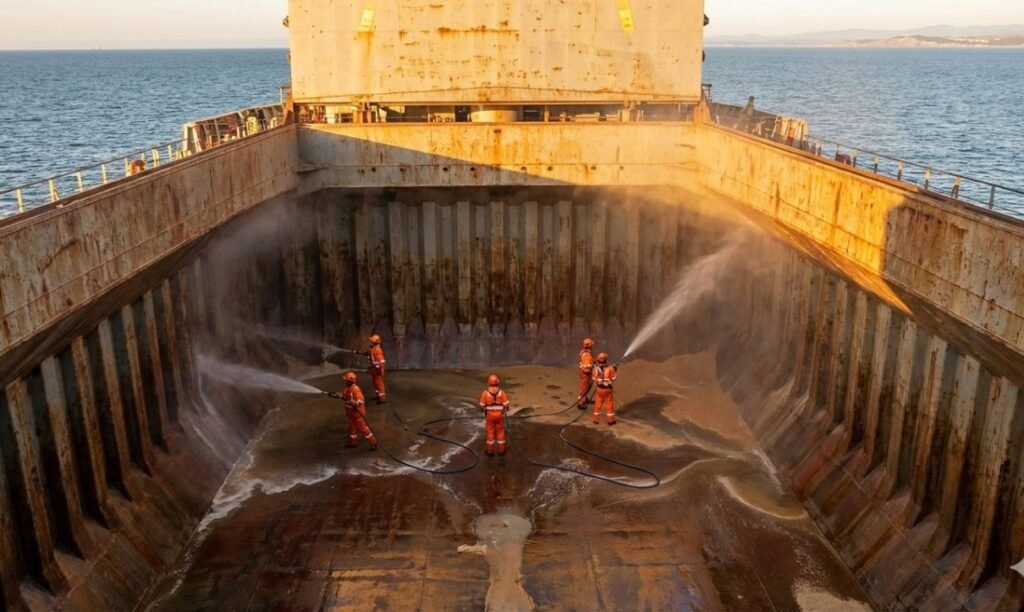
Bulk carrier hold cleaning in Fujairah Port involves removing residues, dust, moisture, rust scale, and odors left from previous cargoes. The objective is to make the hold suitable for the next cargo without contamination risk.
In Fujairah, bulk carrier hold cleaning ranges from basic sweeping and washing to intensive cleaning involving chemicals, drying, and inspection against recognized quality rules.
Proven Method 1: Cargo History and Risk Assessment
Every effective cleaning operation begins with understanding cargo history. Coal leaves abrasive dust, fertilizers attract moisture, and grain oils can cause odor issues.
Before bulk carrier hold cleaning in Fujairah Port begins, operators review:
- Previous cargo type
- Residue behavior
- Next cargo sensitivity
This step reduces risk and prevents unnecessary re-cleaning.
Proven Method 2: Dry Cleaning and Solid Residue Removal
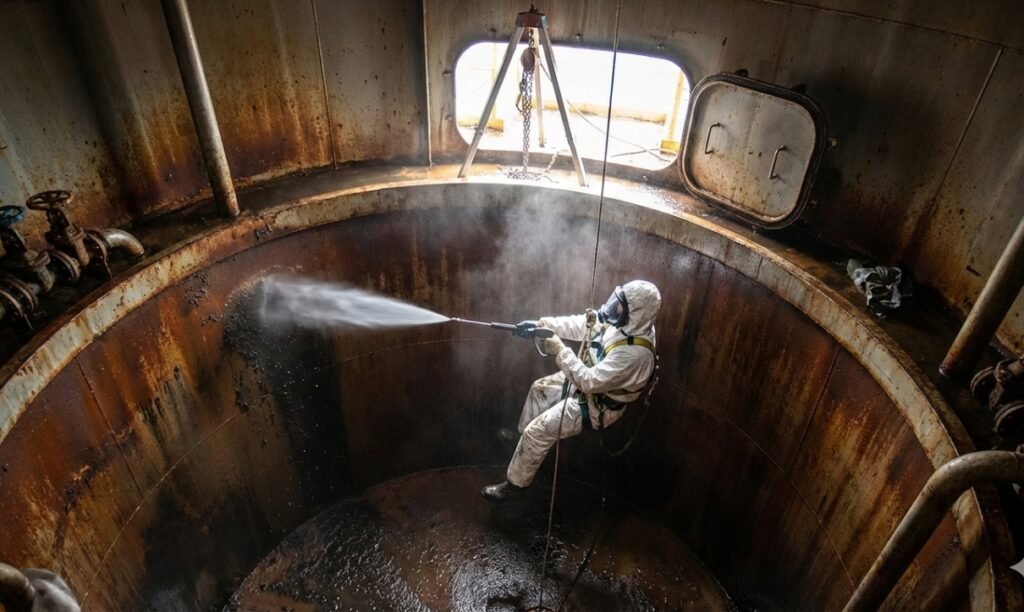
Dry cleaning removes loose residues before water is introduced. This includes sweeping, shoveling, scraping, and vacuuming.
In Fujairah, inspectors expect holds to be visibly free of solid cargo remains before washing. Dry cleaning reduces water usage, prevents bilge contamination, and improves overall safety during subsequent stages.
Proven Method 3: High-Pressure Hold Washing
High-pressure washing removes fine dust and stubborn residues. The technique must be controlled to avoid coating damage.
During bulk carrier hold cleaning in Fujairah Port, pressure levels and spray angles are adjusted carefully. This protects structural coatings while achieving the cleanliness required for inspection and cargo acceptance.
Proven Method 4: Chemical Cleaning for Difficult Residues
Some cargo residues cannot be removed by water alone. In such cases, approved cleaning chemicals are used.
All chemicals applied during bulk carrier hold cleaning in Fujairah Port must comply with MARPOL Convention requirements. Incorrect chemical use can create disposal violations or inspection failures, making proper selection critical.
Proven Method 5: Drying and Moisture Elimination
A clean but wet hold is not cargo-ready. Moisture can damage cargo, promote corrosion, and trigger rejection by surveyors.
Drying is achieved through controlled ventilation and time management. Crews monitor humidity and ensure no standing water remains before inspection.
Proven Method 6: Inspection Against Accepted Quality Rules
Cleanliness is measured against accepted benchmarks, not subjective judgment. Surveyors often assess holds using Marine Supercargo Final Quality Rules.
In Fujairah, inspection-ready bulk carrier hold cleaning means:
- No loose residues
- No free water
- No cargo-related odor
Meeting these criteria consistently reduces disputes and loading delays.
Proven Method 7: Documentation and Compliance Workflow
Documentation supports every physical cleaning step. Inspectors rely on records to verify compliance.
Typical records for bulk carrier hold cleaning in Fujairah Port include:
- Cleaning methods and timelines
- Chemicals used
- Waste disposal receipts
- Inspection and readiness reports
These documents support audits under IMO and IMCA guidance.
Safety as the Core of Hold Cleaning Operations
Bulk carrier hold cleaning involves confined spaces, slippery surfaces, and heavy equipment. Safety controls are essential.
Operators follow IMCA safety guidance, including gas testing, confined space permits, and structured communication. Many also implement crew safety programs, such as drug and alcohol testing, to reduce human error during high-risk tasks.
Environmental Protection and Cost Efficiency
Environmental compliance and cost efficiency are closely linked. Efficient cleaning reduces water use, chemical consumption, and waste disposal fees.
By aligning bulk carrier hold cleaning in Fujairah Port with MARPOL requirements, operators avoid penalties while maintaining predictable turnaround times.
Relationship Between Tank, Hold, and Bulk Carrier Cleaning
Although techniques differ, tank cleaning, hold cleaning, and bulk carrier cleaning share the same principles:
- Cargo awareness
- Safety management
- Inspection readiness
- Clear documentation
Fujairah authorities expect consistency across all vessel types operating in the port.
Inspection Culture in Fujairah Port
Port state control inspections in the UAE are detailed and well-documented. Inspectors assess both physical conditions and paperwork.
Regular bulk carrier hold cleaning in Fujairah Port ensures vessels remain inspection-ready, not rushed before cargo operations.
Industry Practice and Global Operators
Global maritime service providers such as Cleanship.co represent standard industry practice rather than promotional claims. Their operations span worldwide tank and hold cleaning, cargo supervision, compliance support, and crew safety services.
Such structured systems demonstrate how consistency and documentation outperform reactive cleaning approaches.
Technology in Modern Bulk Carrier Hold Cleaning in Fujairah Port
Technology continues to improve cleaning accuracy and safety. Mechanized washing tools, advanced ventilation systems, and digital inspection reporting are becoming standard.
For bulk carrier hold cleaning in Fujairah Port, these tools reduce manual risk and provide verifiable compliance data.
Future Trends in Marine Cleaning
Future developments focus on greener chemicals, reduced water consumption, and digital compliance platforms. Environmental regulations are tightening, and ports like Fujairah often adopt new standards early.
Operators who invest in innovation now will face fewer disruptions later.
Why Fujairah Sets the Global Standard
Fujairah combines strategic location, regulatory discipline, and professional expertise. Bulk carrier hold cleaning here is a structured process, not an improvised task.
This reliability builds trust among charterers, cargo owners, and regulators worldwide.
Conclusion
Bulk carrier hold cleaning in Fujairah Port is essential for safe cargo operations and regulatory compliance. Three key takeaways stand out. First, cargo-specific planning prevents contamination and rework. Second, strict adherence to IMO, MARPOL, IMCA, and IAPH standards ensures safety and environmental protection. Third, inspection-ready documentation safeguards operators during audits and disputes.
For shipowners seeking dependable compliance and maritime service excellence, working with experienced, globally aligned providers such as Cleanship.co supports consistent standards across bulk carrier, hold, and tank cleaning operations.
FAQs:
Q1. Why is bulk carrier hold cleaning in Fujairah Port so strictly regulated?
Fujairah aligns closely with IMO, MARPOL Convention, IMCA, and IAPH guidelines. As a major global port, it enforces high standards to protect cargo quality, crew safety, and the marine environment.
Q2. How does bulk carrier hold cleaning differ from general hold cleaning?
Bulk carrier hold cleaning focuses on large-volume dry cargo spaces with heavy residues and dust. While similar in principle, it often requires more intensive residue removal and drying processes.
Q3. When are chemicals required for bulk carrier hold cleaning?
Chemicals are used when residues cannot be removed by dry or water cleaning alone. In Fujairah, only MARPOL-compliant chemicals are permitted, supported by proper disposal documentation.
Q4. What role does documentation play in cleaning compliance?
Documentation proves that cleaning was followed by approved methods and standards. It supports inspections, audits, and cargo quality disputes, making it essential for bulk carrier operations.
Q5. How do global operators ensure consistent cleaning quality?
Global operators apply standardized procedures across ports. Providers like Cleanship.co use structured workflows for cleaning, cargo supervision, and compliance support to ensure consistent, inspection-ready results worldwide.