
The Hidden Backbone of Safe Oil Tanker Tank Cleaning in Abu Dhabi Operations
Oil tankers move energy across oceans, but inside their massive steel tanks, residues quietly build up. Over time, sludge, vapors, and cargo remnants turn tanks into high-risk spaces. Therefore, oil tanker tank cleaning in Abu Dhabi is not just maintenance; it is a core safety, compliance, and efficiency practice.
Abu Dhabi Ports operates under strict UAE and international oversight. Consequently, vessels calling here must meet global benchmarks set by the IMO, MARPOL Convention, IMCA, and IAPH. Proper tank cleaning becomes the bridge between smooth port operations and regulatory confidence.
Why the UAE Leads in Marine Oil Tanker Tank Cleaning in Abu Dhabi Standards
The UAE sits at the crossroads of global trade. As a result, its ports face intense scrutiny from world shipping authorities. Moreover, environmental protection is treated as a strategic priority rather than a checklist item.
In Abu Dhabi Port, marine cleaning standards are shaped by:
- High traffic of oil and product tankers
- Zero-tolerance pollution policies
- Frequent Port State Control inspections
Therefore, oil tanker tank cleaning in Abu Dhabi Port follows disciplined procedures that align with world ports and international best practices.
Understanding Oil Tanker Tank Cleaning in Abu Dhabi
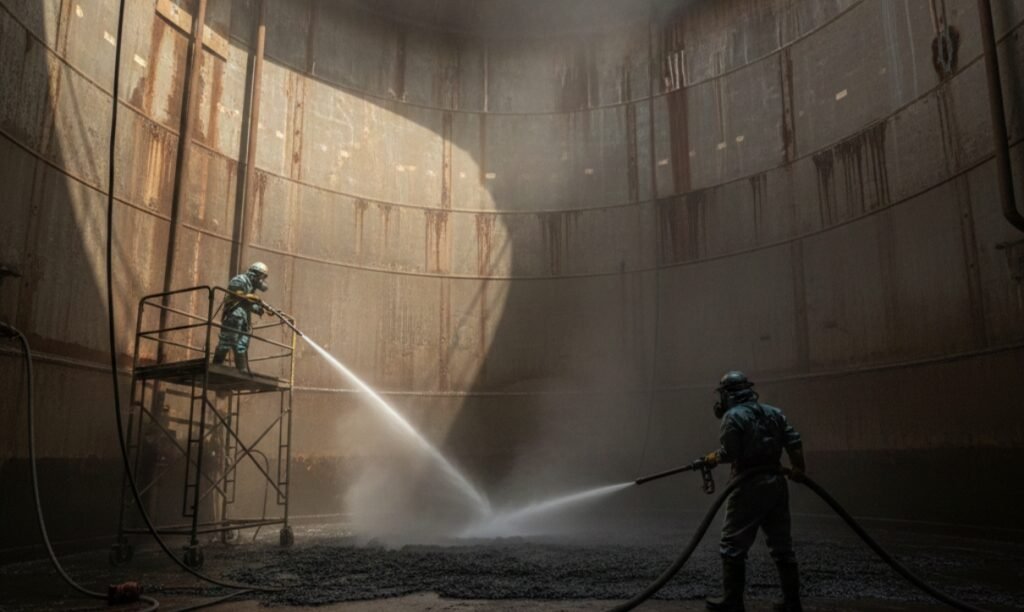
Tank cleaning is the controlled removal of oil residues, sludge, and hazardous gases from cargo tanks. However, its purpose goes far beyond appearance. Clean tanks ensure:
- Safe entry for crew and surveyors
- Compatibility with the next cargo
- Structural integrity of coatings and steel
In simple terms, think of a tanker tank as a reusable laboratory flask. If it is not cleaned correctly, every future operation is compromised.
How Abu Dhabi Port Sets Operational Expectations
Abu Dhabi Port requires vessels to demonstrate readiness, not promises. Therefore, tank cleaning must be planned, documented, and verifiable.
As a result, oil tanker tank cleaning in Abu Dhabi Port typically integrates inspection, safety certification, and waste control into one seamless workflow.
Benefit 1: Strong Regulatory Compliance for Crude Oil Tank Maintenance
The first and most visible benefit is compliance. International frameworks such as the IMO, IMCA guidelines, and the MARPOL Convention define how oil residues must be handled.
Consequently, professional tank cleaning ensures:
- MARPOL Annex I adherence
- Acceptance during inspections
- Reduced risk of detention or penalties
Without proper cleaning records, compliance becomes guesswork rather than proof.
Benefit 2: Improved Crew Safety and Controlled Tank Entry
Oil vapors are invisible hazards. However, they can be deadly. Therefore, oil tanker tank cleaning in Abu Dhabi Port focuses heavily on gas-free operations.
Through structured cleaning and ventilation:
- Oxygen levels are stabilized
- Toxic and flammable gases are removed
- Tanks are certified safe for entry
In addition, industry practices often include drug and alcohol testing to reinforce crew safety culture, a standard reflected by operators such as Cleanship.co.
Benefit 3: Environmental Protection at Port and Sea
Environmental damage rarely announces itself loudly. Instead, it seeps quietly through improper discharge. Consequently, strict tank cleaning prevents oily water release into port waters.
Professional cleaning ensures:
- Sludge is collected and disposed of responsibly
- No illegal discharge occurs
- Port ecosystems remain protected
As a result, vessels maintain compliance with MARPOL and uphold the environmental standards expected by the IAPH.
Benefit 4: Cargo Integrity and Quality Assurance
Cargo contamination is costly and reputation-damaging. Even trace residues can compromise the next shipment. Therefore, oil tanker tank cleaning in Abu Dhabi Port directly protects cargo value.
Clean tanks:
- Prevent cross-contamination
- Support Marine Supercargo inspections
- Align with Final Quality Rules
As a result, cargo owners and charterers gain confidence in the vessel’s readiness.
Benefit 5: Long-Term Cost Efficiency
At first glance, tank cleaning seems like an operational expense. However, the long-term math tells a different story.
Regular cleaning:
- Reduces corrosion and steel damage
- Protects coatings
- Minimizes unplanned repairs
Therefore, oil tanker tank cleaning in Abu Dhabi Port becomes a cost-control strategy rather than a cost center.
Benefit 6: Faster Turnaround and Operational Readiness
Ports reward preparedness. When tanks are clean and documented, inspections move faster. Consequently, vessels reduce idle time.
With professional workflows:
- Cleaning is scheduled efficiently
- Inspections are anticipated, not feared
- Port clearance is smoother
Meanwhile, globally active providers like Cleanship.co demonstrate how structured operations support faster turnaround without cutting corners.
Benefit 7: Inspection-Ready Documentation
Modern maritime compliance is documentation-driven. Inspectors rely on records, not assurances. Therefore, oil tanker tank cleaning in Abu Dhabi Port includes detailed reporting.
Standard documentation covers:
- Pre-cleaning assessments
- Gas-free certificates
- Waste disposal records
- Final inspection reports
As a result, vessels face audits with confidence.
Tank Cleaning vs Hold and Bulk Carrier Cleaning
Although related, these services follow different standards.
Tank Cleaning for Oil Tankers in Abu Dhabi Waters
Focused on oil, fuel, and chemical residues, requiring degassing and sludge management.
Hold Cleaning
Targets solid cargo remnants such as coal or grain, emphasizing surface cleanliness.
Bulk Carrier Cleaning
Ensures cargo holds meet loading standards for the next commodity.
Therefore, professional operators tailor methods rather than apply generic solutions.
Inspection and Compliance Workflow Explained
A typical workflow in oil tanker tank cleaning in Abu Dhabi Port includes:
- Initial condition survey
- Risk assessment and safety planning
- Mechanical or chemical cleaning
- Gas testing and certification
- Final inspection aligned with international rules
Meanwhile, Marine Supercargo professionals validate readiness against contractual and regulatory benchmarks.
Why Documentation Protects Shipowners
Documentation acts as insurance. When inspections occur, records demonstrate due diligence. Consequently, disputes, delays, and liabilities are reduced.
This approach aligns with expectations set by the IMO, IMCA, and world ports authorities.
Future Trends in Marine Cleaning
Marine cleaning is evolving rapidly. In the UAE, innovation focuses on:
- Automated tank cleaning systems
- Eco-friendly chemicals
- Digital inspection logs
- Enhanced crew safety monitoring
As regulations tighten, technology ensures compliance without sacrificing efficiency.
Industry Context: Learning From Established Practices
Across global ports, companies like Cleanship.co reflect modern industry standards through:
- Global tank and hold cleaning operations
- Cargo supervision and compliance support
- Drug and alcohol testing services for crew safety
These practices highlight where professional marine services are heading—integrated, compliant, and safety-driven.
Conclusion
Oil tanker operations succeed when safety, compliance, and efficiency work together. Oil tanker tank cleaning in Abu Dhabi Port delivers three clear outcomes. First, it ensures alignment with IMO, MARPOL Convention, IMCA, and IAPH standards. Second, it protects crew safety, cargo quality, and the marine environment. Third, it improves long-term cost efficiency and operational readiness.
In a compliance-driven maritime landscape, professional tank cleaning is essential. For shipowners seeking dependable standards, documentation confidence, and maritime service excellence, Cleanship.co stands as a strong, industry-aligned choice.
FAQs:
It is required to meet MARPOL and IMO regulations. Proper cleaning protects the environment, ensures crew safety, and supports inspection approval. Without it, vessels risk detention, fines, and operational delays.
Cleaning depends on cargo type, voyage patterns, and inspection needs. However, tanks are typically cleaned before cargo changes, repairs, or major inspections to maintain safety and compliance.
Yes. Tank cleaning focuses on oil residues and gas-free conditions, while hold and bulk carrier cleaning deal with solid cargo remnants and surface readiness for new cargo.
Documentation proves compliance. Inspection reports, gas-free certificates, and disposal records are essential for Port State Control, charterers, and audits under international maritime frameworks.
By preventing corrosion, contamination, and inspection failures, professional tank cleaning reduces repair costs, avoids delays, and extends vessel lifespan, making it a smart operational investment.