
Vessel Hold Cleaning Services in Fujairah: 7 Proven Wins
Fujairah has earned its place on the global maritime map for one simple reason: ships cannot afford mistakes here. Positioned outside the Strait of Hormuz and connected directly to international trade lanes, the port handles bulk carriers, tankers, and multi-cargo vessels under constant regulatory attention. In this setting, vessel hold cleaning services in Fujairah are not routine housekeeping. They are a compliance safeguard, a safety control, and a cost-management tool rolled into one.
When we talk about hold cleaning, we are really talking about readiness. Readiness for inspections, for new cargoes, and for the next commercial commitment.
Why the UAE Sets the Benchmark in Marine Cleaning
The UAE’s ports operate at the intersection of speed and scrutiny. High traffic volumes demand efficiency, while international oversight demands precision. Fujairah reflects this balance more clearly than any other port in the region.
Ship operators here face:
- Frequent Port State Control inspections
- Diverse cargo changeovers
- Strict environmental enforcement
This is why professional vessel hold preparation is embedded into normal operational planning rather than treated as an exception.
What Vessel Hold Cleaning Means in Operational Reality
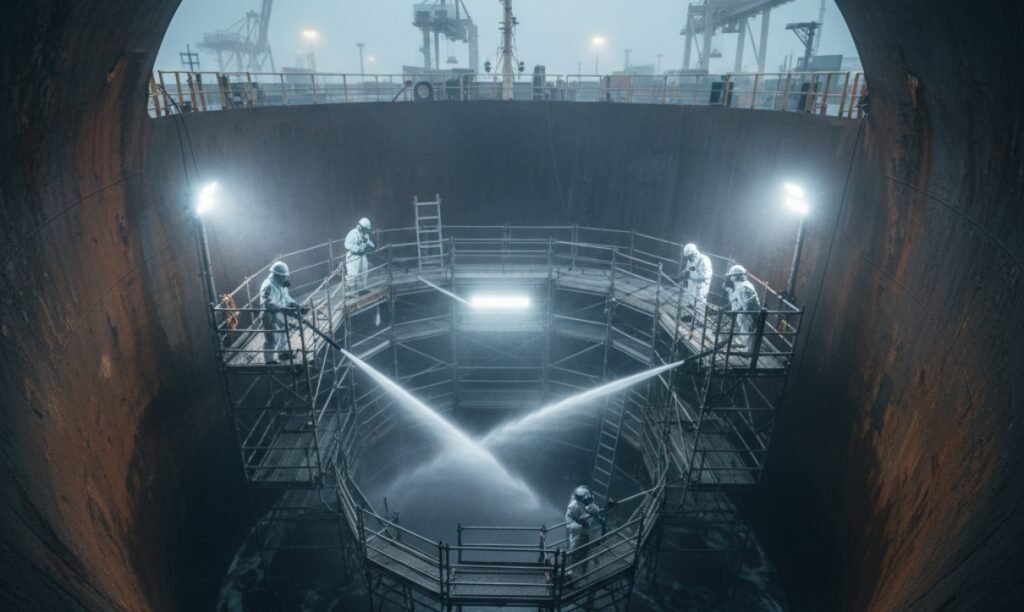
A vessel’s hold carries the history of its previous cargo. Dust, residues, scale, or moisture left behind can compromise the next shipment. Cleaning services aim to reset that environment.
In simple terms, hold cleaning involves:
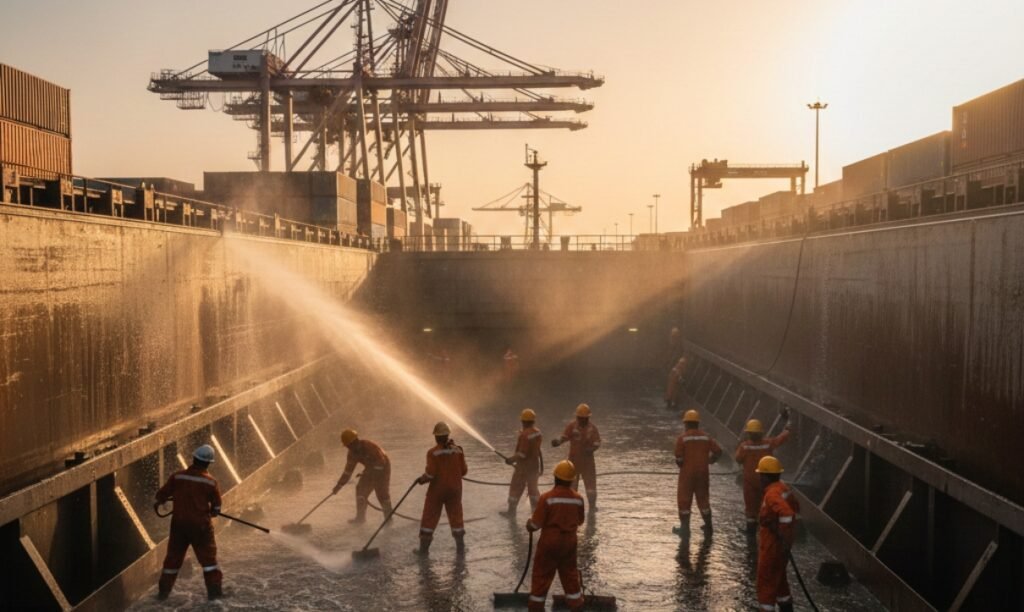
- Removing cargo residues and loose scale
- Washing and drying surfaces to cargo standards
- Preparing holds for inspection and acceptance
In Fujairah, these steps must align with international regulations and local port expectations.
Regulatory Landscape Governing Hold Cleaning Services
Compliance defines how cleaning is done, not just whether it is done.
IMO and MARPOL Convention Alignment
The International Maritime Organization and the MARPOL Convention regulate pollution prevention. Improper residue handling or wash water discharge is considered a serious offense. Cleaning plans must demonstrate environmental control from start to finish.
IMCA and IAPH Operational Guidance
IMCA guidelines influence safe marine operations, while the International Association of Ports and Harbors shapes port-level practices. Together, they frame how vessel hold cleaning services operate in Fujairah’s regulated environment.
7 Proven Wins of Vessel Hold Cleaning Services in Fujairah
1. Cargo Protection Across Trade Cycles
Residue from previous cargoes can contaminate the next load. Properly cleaned holds protect cargo quality and reduce claims, especially for sensitive bulk commodities.
2. Inspection Readiness Without Delays
Clean holds allow surveyors to complete inspections efficiently. This minimizes time lost during port calls and keeps schedules predictable.
3. Crew Safety in Confined Spaces
Holds can trap harmful gases or dust. Cleaning and ventilation improve air quality, reducing risks to crew members entering confined spaces for inspections or maintenance.
4. Environmental Compliance and Spill Prevention
Controlled cleaning methods prevent accidental discharge into port waters. This supports MARPOL compliance and protects Fujairah’s marine environment.
5. Lower Long-Term Maintenance Costs
Removing corrosive residues slows steel degradation. Over time, this reduces repair frequency and extends the service life of internal structures.
6. Stronger Documentation and Audit Trails
Professional cleaning includes logs, checklists, and inspection records. These documents demonstrate compliance during audits or incident reviews.
7. Commercial Confidence With Charterers
Charterers prefer vessels that arrive inspection-ready. Consistent hold hygiene builds trust and improves commercial reputation.
Hold, Tank, and Bulk Carrier Cleaning Standards
Cleaning standards vary by vessel type but follow common principles.
Bulk Carrier Hold Preparation
Bulk carriers require dry, residue-free holds. Grain, coal, and mineral cargoes each have specific cleanliness thresholds that must be met before loading approval.
Tank Cleaning Considerations
Although tanks differ from holds, the philosophy is similar. Degassing, washing, and testing ensure tanks are safe and suitable for the next cargo.
Inspection and Compliance Workflows in Fujairah
Cleaning without verification is incomplete. Inspection closes the loop.
A typical workflow includes:
- Pre-cleaning assessment and risk planning
- Approved cleaning execution
- Waste handling and disposal records
- Final inspection and sign-off
Marine supercargo professionals often verify cargo readiness, applying World Ports standards and FINAL delivery quality rules.
Industry Practice in a Global Context
Global service providers such as Cleanship.co reflect how modern maritime operations integrate cleaning with compliance. Their work across international ports shows how vessel hold cleaning fits alongside cargo supervision, inspection support, and crew safety programs, including drug and alcohol testing, without turning the service into a sales exercise.
Cost Efficiency Through Preventive Cleaning
It is tempting to view cleaning as an expense. In practice, it is a form of insurance. Addressing residue early prevents corrosion, cargo damage, and inspection delays that cost far more than the cleaning itself.
Environmental Responsibility as an Operational Standard
Environmental protection is no longer a secondary concern. Ports like Fujairah expect operators to demonstrate responsible practices. Controlled cleaning methods and proper waste management meet both regulatory and ethical expectations.
Future Trends in Vessel Hold Cleaning Services
The sector is evolving in response to tighter rules and higher expectations.
Automation and Precision Tools
Automated washing systems improve consistency while reducing manual exposure for crew.
Digital Compliance Records
Electronic logs and inspection reports improve transparency and speed up audits.
Sustainable Cleaning Methods
Water-efficient systems and eco-friendly agents are becoming standard as environmental regulations tighten.
Why Fujairah Demands a Higher Standard
Fujairah’s role as a global bunkering and service hub means vessels are watched closely. Operators who treat hold cleaning as a strategic function rather than a routine task gain operational stability and regulatory confidence.
Conclusion
Vessel hold cleaning services in Fujairah deliver measurable value when approached professionally. First, they protect cargo integrity and keep vessels inspection-ready in a highly regulated port. Second, they support compliance with IMO, IMCA, MARPOL, and IAPH expectations through structured procedures and documentation. Third, they improve safety and reduce long-term maintenance costs.
For operators seeking consistency and compliance across global operations, experienced providers like Cleanship.co offer a benchmark in maritime service excellence, combining cleaning, inspection support, and safety-focused practices that meet modern shipping demands.
FAQs:
Fujairah enforces strict inspection and environmental standards. Clean holds prevent cargo contamination, speed up inspections, and demonstrate compliance with international regulations, making them essential for smooth port operations.
Hold cleaning ensures residues and wash water are handled correctly, preventing pollution. Proper documentation proves adherence to MARPOL Convention requirements during inspections or audits.
Yes. Bulk carrier holds focus on dryness and residue removal, while tanks require degassing and vapor testing. Both follow strict safety and compliance protocols.
Marine supercargo professionals or surveyors inspect holds before loading. They apply World Ports standards and FINAL delivery quality rules to confirm readiness.
Regular, compliant cleaning slows corrosion and prevents cargo claims. Over time, this reduces repair expenses, delays, and reputational risks.