Kakinada Port sits on India’s eastern coastline like a working laboratory of maritime trade. Crude, chemicals, bulk cargo, and edible oils flow through its terminals every day. In this environment, tank cleaning is not a cosmetic task. It is a safety system, a compliance requirement, and a commercial necessity that protects vessels, cargo integrity, and people at sea.
This article explores how modern tank cleaning in Kakinada port works, why India has become a strategic hub for marine cleaning, and how global standards quietly govern every wash, rinse, and inspection.
Why India Plays a Central Role in Marine Cleaning
India’s ports handle a growing share of global energy, chemical, and bulk cargo movements. Kakinada, in particular, supports offshore exploration, fertilizer imports, and coastal shipping. This diversity demands cleaning practices that can adapt to multiple cargo residues without compromising safety or timelines.
India’s advantage lies in skilled maritime labor, strong port state control, and increasing alignment with international conventions. When done correctly, cleaning here matches global benchmarks rather than undercutting them.
Understanding Tank Cleaning in Kakinada Port Operations
Tank cleaning refers to the controlled removal of previous cargo residues, gases, and contaminants from ship tanks. You may be preparing for a cargo change, inspection, repair, or gas-free certification.
In Kakinada, these operations often take place under tight berth windows, requiring precise coordination between ship crew, cleaning teams, and port authorities.
Core Objectives of Professional Tank Cleaning
Every cleaning job serves three goals that rarely get equal attention but always matter.
Safety comes first. Residual vapors can be toxic or explosive if not neutralized.
Compliance follows closely. Documentation must satisfy inspectors from multiple jurisdictions.
Cost efficiency rounds it out. Poor cleaning leads to delays, rejected cargo, or rework.
Regulatory Framework Governing Marine Cleaning
Marine cleaning is regulated more by paperwork than water pressure. International rules define what “clean” actually means.
IMO and Its Role in Tank Cleaning Standards
The International Maritime Organization sets the baseline for ship safety and pollution prevention. IMO guidelines influence cleaning sequences, gas-free procedures, and crew protection measures.
MARPOL Convention and Pollution Prevention
The MARPOL Convention governs how residues, wash water, and slops are handled. You cannot simply clean a tank and discharge waste. Disposal routes must be documented and approved to prevent marine pollution.
IMCA and Safety-Driven Work Practices
The International Marine Contractors Association provides practical guidance on safe execution. From confined space entry to equipment checks, IMCA standards shape daily cleaning routines.
IAPH and Port-Level Compliance
The International Association of Ports and Harbors connects global best practices with local port rules. In Kakinada, this ensures alignment between terminal operators and vessel operators during cleaning activities.
Types of Tanks Serviced at Kakinada Port
Different tanks demand different cleaning logic.
Chemical and Product Tank Cleaning
Chemical tanks require precise compatibility checks. Even trace residues can react with the next cargo. Cleaning here is about chemical knowledge as much as mechanical action.
Oil and Sludge Tank Cleaning
Oil residues are heavier and persistent. Heating, controlled detergents, and extended ventilation are often required to meet inspection standards.
Ballast and Service Tank Cleaning
Ballast tanks affect vessel stability and corrosion control. Cleaning focuses on structural integrity and long-term maintenance rather than cargo readiness.
Bulk Carrier Hold and Tank Interfaces
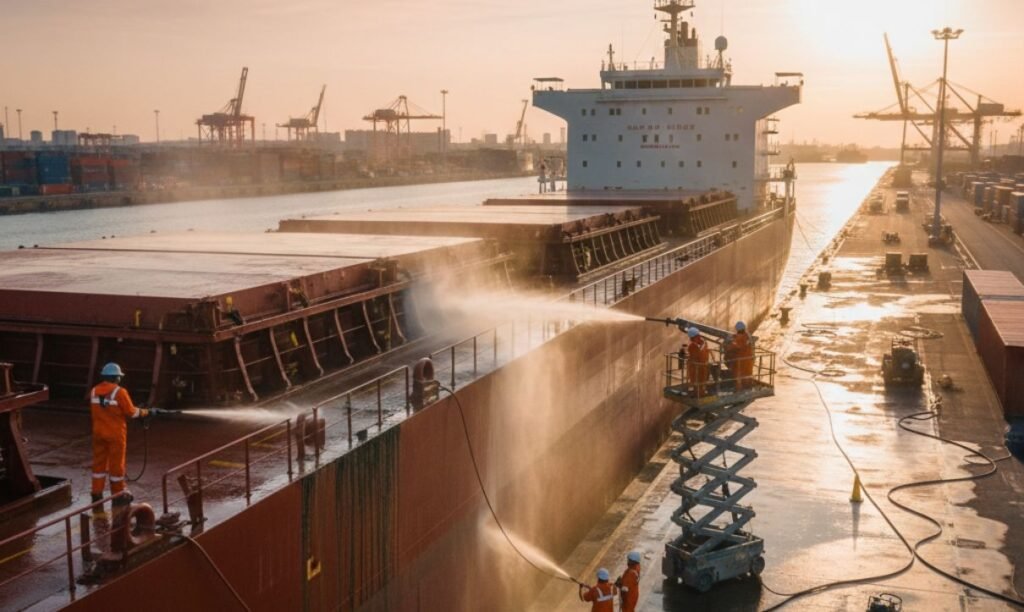
Bulk carriers often need coordinated hold and tank cleaning when switching between dusty cargoes and sensitive products. Standards overlap, and inspections are unforgiving. Also, read about 7 Proven Tank Cleaning in Dubai for Safer Operations.
Inspection, Documentation, and Compliance Workflow
Cleaning is only half the job. Proving it happened correctly is the other half.
Inspection involves visual checks, gas measurements, and sometimes laboratory sampling.
Documentation includes cleaning logs, safety permits, waste disposal records, and compliance certificates.
Final acceptance often depends on independent verification, sometimes involving marine supercargo professionals following Final Quality Rules.
Safety and Environmental Protection in Practice
Safety is not theoretical. Confined spaces, toxic vapors, and high-pressure equipment create real risks. Professional operations emphasize controlled entry, continuous monitoring, and emergency readiness.
Environmental protection is equally practical. Waste handling plans prevent accidental discharge and protect coastal ecosystems around Kakinada.
Cost Efficiency Through Proper Planning
Well-executed cleaning saves money by avoiding berth delays, failed inspections, and cargo disputes. Efficient sequencing and experienced crews reduce downtime without cutting corners.
Future Trends in Marine Tank Cleaning
Innovation is quietly reshaping the industry.
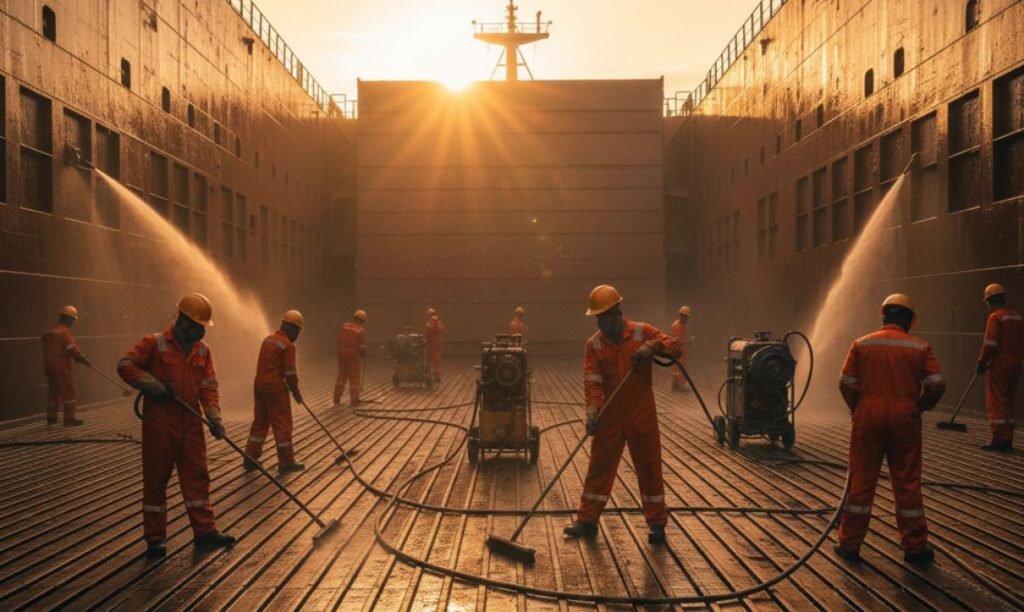
Automated cleaning machines reduce human exposure.
Digital inspection records improve transparency.
Stricter environmental norms push for closed-loop waste handling systems.
These trends are especially relevant for busy ports like Kakinada, where efficiency and compliance must coexist.
Industry Practice and Global Service Models
Companies operating globally, such as Cleanship.co, reflect how modern marine services integrate tank and hold cleaning with cargo supervision, compliance support, and crew safety programs like drug and alcohol testing. These practices illustrate how cleaning fits into a broader maritime risk management framework rather than standing alone.
Conclusion
Tank cleaning in Kakinada port is a disciplined maritime operation shaped by global regulations, local port realities, and hard-earned experience. Three takeaways matter most. First, cleaning is inseparable from safety and compliance. Second, international standards like IMO, MARPOL, IMCA, and IAPH define success more than speed. Third, professional planning reduces both risk and cost.
For ship operators seeking reliable compliance and operational clarity, working with established maritime service providers such as Cleanship.co ensures cleaning operations meet international expectations while supporting safe, efficient port calls.
FAQs:
Kakinada handles diverse cargoes including chemicals, oils, and bulk products. This diversity requires adaptable cleaning methods, strict regulatory adherence, and close coordination with port authorities to meet inspection and safety requirements consistently.
International bodies like IMO and MARPOL dictate how residues are removed, handled, and documented. These rules ensure pollution prevention, crew safety, and global acceptance of cleaning standards across ports.
Yes. Tank cleaning focuses on enclosed liquid spaces with vapor risks, while hold cleaning deals with solid residues and structural surfaces. Both follow different standards but often intersect during cargo changes.
Inspection reports, gas-free certificates, and waste disposal records prove compliance. Without proper documentation, vessels risk delays, rejected cargoes, or penalties during port state control inspections.
Global operators bring standardized procedures, trained personnel, and compliance expertise. Their integrated approach links cleaning, inspection, and cargo supervision, reducing operational risk across different ports and jurisdictions.