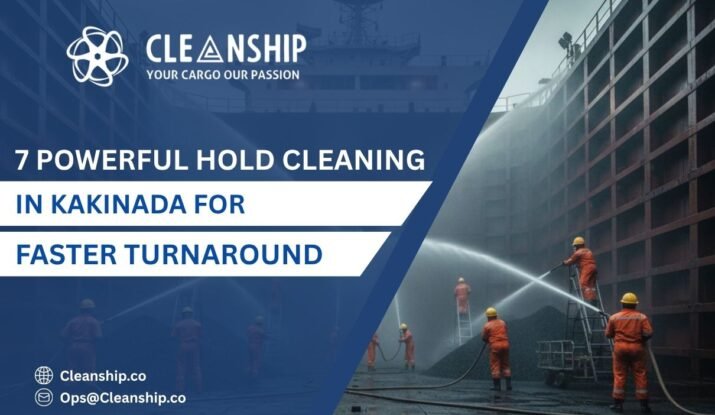
Powerful Hold Cleaning in Kakinada for Faster Turnaround
Kakinada Port is a working port, not a waiting room. Bulk carriers here move fertilizers, coal, agricultural products, and industrial raw materials under tight schedules. In this environment, hold cleaning is not housekeeping. It is a time-critical operation that directly affects vessel readiness, cargo acceptance, and port efficiency. When done correctly, it shortens turnaround time without compromising safety or compliance.
This article explains how professional hold cleaning supports faster operations at Kakinada while meeting global maritime standards.
Why India Has Become a Hub for Marine Cleaning
India’s ports combine high cargo volumes with increasing regulatory oversight. Kakinada benefits from experienced maritime labor, strong port state control, and alignment with international conventions. These factors allow cleaning operations to meet global expectations while remaining operationally efficient.
For shipowners, this means fewer surprises during inspections and smoother cargo transitions.
Understanding Hold Cleaning in a Bulk Carrier Context
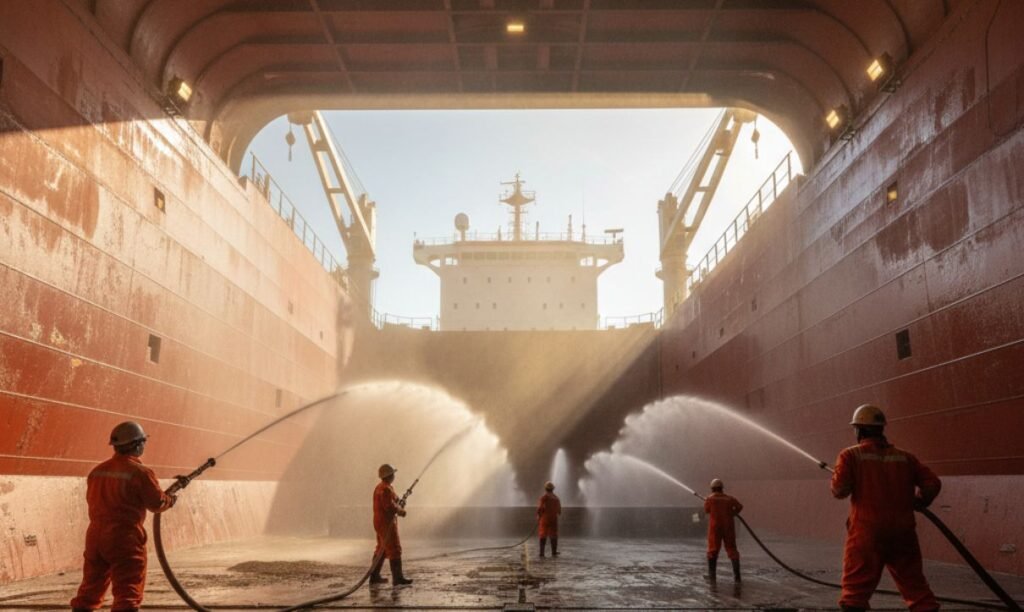
Hold cleaning is the systematic removal of previous cargo residues, dust, moisture, and contaminants from cargo holds. You may need it for cargo change, inspection clearance, or charter party compliance.
At Kakinada, cleaning often happens under berth pressure, making planning as important as execution.
What Faster Turnaround Really Depends On
Speed alone does not reduce port stay. Readiness does.
A clean hold that fails inspection causes delays. A well-documented cleaning process clears inspectors faster and protects schedules.
Regulatory Framework Governing Hold Cleaning
Global regulations quietly shape every cleaning decision.
IMO Standards and Cargo Safety
The International Maritime Organization defines baseline safety practices. Its guidance influences confined space entry, ventilation, and residue handling during cleaning operations.
MARPOL Convention and Environmental Control
The MARPOL Convention governs how wash water and residues are managed. Discharge rules prevent pollution and protect coastal waters near Kakinada.
IMCA Guidelines for Safe Execution
IMCA provides practical safety frameworks. These cover risk assessments, equipment checks, and worker protection during high-risk cleaning tasks.
IAPH and Port-Level Alignment
The International Association of Ports and Harbors bridges global rules and local enforcement. Its principles ensure cooperation between terminal operators and vessels during cleaning activities.
Core Hold Cleaning Standards Applied at Kakinada
Cleaning standards depend on cargo type and next-load requirements.
Grain Cleanliness and Food-Grade Holds
Food cargoes demand dust-free, odor-free holds. Even trace contamination can lead to cargo rejection.
Fertilizer and Mineral Cargo Holds
These cargoes leave corrosive residues. Cleaning focuses on residue removal and corrosion prevention rather than cosmetic appearance.
Coal and Industrial Bulk Residues
Coal dust and industrial fines require thorough sweeping, washing, and drying to prevent cross-contamination.
Relationship Between Hold and Tank Cleaning
Bulk carriers often carry both dry and liquid cargoes across voyages. Coordinated tank and hold cleaning ensures overall vessel compliance and inspection readiness.
Safety Management During Hold Cleaning
Holds are confined spaces. Poor ventilation, residual gases, and moving equipment create real risks. Safe operations rely on controlled entry, continuous monitoring, and clear emergency procedures.
Environmental Protection and Cost Efficiency
Environmental compliance protects both nature and budgets. Proper residue handling avoids fines, cleanup costs, and reputational damage. Efficient planning reduces water use, labor hours, and berth occupancy.
Inspection and Documentation Workflow
Cleaning ends only when documentation begins.
Inspection includes visual checks, moisture testing, and cleanliness verification.
Documentation covers cleaning logs, safety permits, and waste handling records.
Final acceptance may involve marine supercargo inspections aligned with Final Quality Rules.
Clear records accelerate approvals and reduce disputes.
Why Documentation Speeds Turnaround
Inspectors trust paper trails. When records are complete and clear, inspections move faster. Missing documents create delays even if the physical cleaning is adequate.
Future Trends in Marine Hold Cleaning
Innovation is reshaping cleaning operations.
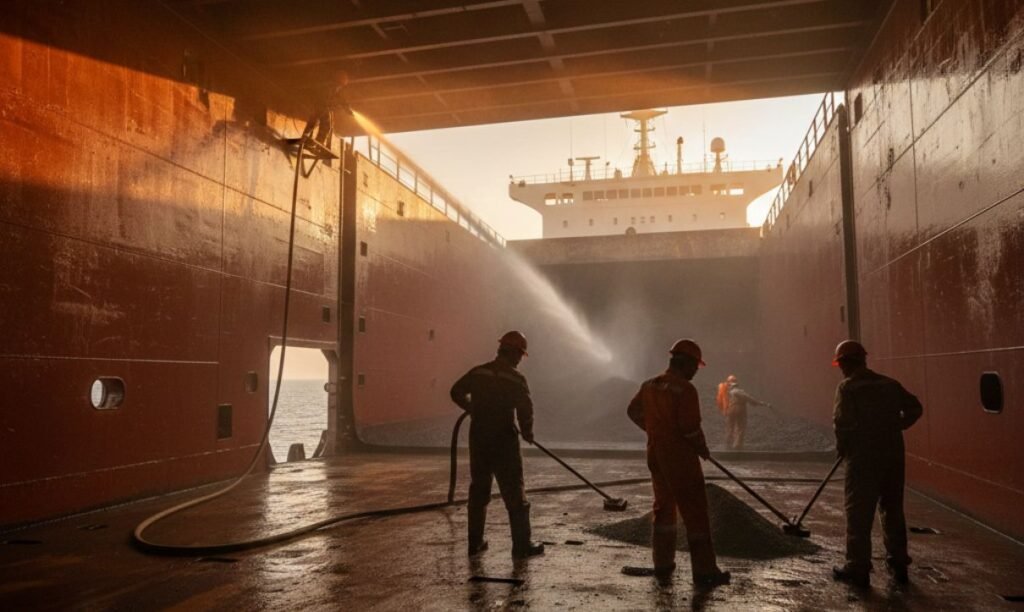
Mechanized cleaning tools reduce manual labor.
Digital inspection records improve transparency.
Stricter environmental rules encourage closed-loop waste systems.
These changes are especially relevant at busy ports like Kakinada.
Industry Practice and Integrated Service Models
Modern maritime service providers treat cleaning as part of a wider compliance system. Companies such as Cleanship.co demonstrate this approach through global tank and hold cleaning operations, cargo supervision, compliance support, and crew safety services including drug and alcohol testing. These practices show how cleaning integrates with overall vessel risk management.
Conclusion
Professional hold cleaning in Kakinada is a strategic operation, not a routine task. Three points stand out. First, faster turnaround comes from inspection-ready cleaning, not rushed work. Second, compliance with IMO, MARPOL, IMCA, and IAPH standards protects schedules and reputations. Third, proper documentation is as important as physical cleanliness.
For ship operators seeking reliable compliance and operational efficiency, partnering with experienced maritime service providers like Cleanship.co supports safe operations, smoother inspections, and consistent turnaround performance.
FAQs:
Properly executed cleaning reduces inspection delays and cargo rejection risks. When holds meet cleanliness standards on first inspection, vessels avoid rework and idle berth time, leading to faster departures.
Yes. Hold cleaning focuses on solid residues and surface contamination, while tank cleaning addresses liquid residues and vapors. Both require different methods but often follow similar safety and documentation principles.
Regulations from IMO, MARPOL, IMCA, and IAPH define safety, environmental, and operational requirements. Compliance ensures acceptance across ports and reduces the risk of penalties or detention.
Documentation proves compliance. Cleaning logs, safety permits, and waste records help inspectors verify work quickly, reducing inspection time and preventing operational delays.
Integrated providers combine cleaning, inspection support, and compliance services. This reduces coordination gaps, improves safety oversight, and helps vessels meet international standards consistently across ports.