
Hold tank cleaning in Vizag Port is a core operational requirement for vessels trading along India’s east coast. Vizag, officially Visakhapatnam Port, handles bulk carriers, tankers, and multipurpose vessels carrying coal, crude derivatives, fertilizers, and liquid chemicals. In such an environment, properly cleaned tanks and cargo holds are not a preference—they are a condition for safety, compliance, and commercial acceptance.
When you prepare a vessel for the next cargo, cleaning is the quiet work that determines whether inspections pass smoothly or operations stall at berth.
Why India Is Central to Modern Marine Cleaning
India’s ports sit on high-volume trade lanes connecting Asia, the Middle East, and the Pacific. Vizag Port, supported by industrial corridors and refineries, demands marine cleaning standards aligned with global expectations. As trade volumes rise, charterers and regulators expect Indian ports to match international practices defined by the IMO and leading port associations.
This has pushed hold and tank cleaning services toward more structured, documented, and safety-driven processes.
Understanding Hold Tank Cleaning in Simple Terms
Hold tank cleaning refers to the controlled removal of cargo residues, sludge, vapors, and contaminants from cargo tanks and holds. The goal is to make these spaces safe, cargo-ready, and compliant.
Think of it like resetting a container after every voyage. Without a proper reset, traces of the past cargo interfere with the future one.
Solution 1: Structured Tank Cleaning for Cargo Integrity
Tank cleaning focuses on liquid cargo spaces such as fuel, chemical, or product tanks. In Vizag Port, vessels often shift between different cargo grades.
Effective tank cleaning includes:
- Controlled washing with water or chemicals
- Sludge and residue removal
- Gas freeing and ventilation
- Final dryness and vapor checks
These steps protect cargo quality and reduce contamination claims.
Solution 2: Cargo Hold Cleaning for Bulk Carrier Operations
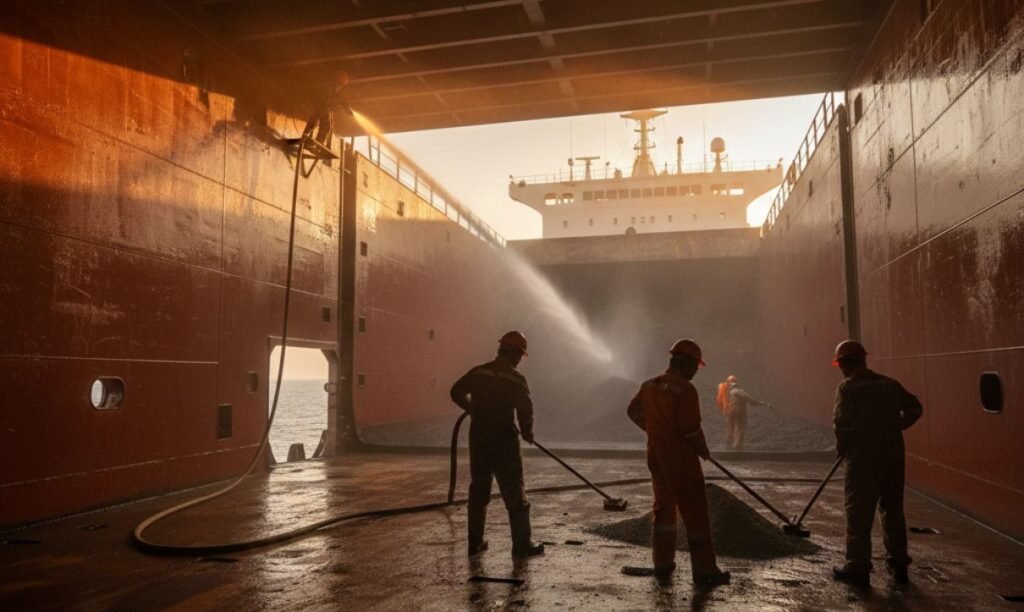
Bulk carrier hold cleaning supports transitions between dry cargoes such as coal, minerals, and agri-bulk. Residual dust, rust scale, or moisture can easily lead to cargo rejection.
Professional practices emphasize:
- Mechanical sweeping and scraping
- High-pressure washing when required
- Drying and dehumidification
- Visual inspection against charter standards
This ensures holds are ready for sensitive cargoes.
Solution 3: Regulatory Compliance with IMO and MARPOL
International Maritime Organization guidance and the MARPOL Convention define how cleaning waste is handled and how marine pollution is prevented. Ports like Vizag increasingly enforce these standards.
From an operational view, you must:
- Control discharge of wash water
- Manage residues as per port rules
- Maintain accurate logs and reports
Compliance protects your vessel from penalties and detention.
Solution 4: Safety Frameworks Influenced by IMCA
Although IMCA is closely linked with offshore operations, its safety philosophy shapes modern marine services. Hold and tank cleaning involves confined spaces, chemical exposure, and working at height.
Best practices include:
- Risk assessments before entry
- Gas testing and ventilation
- Permit-to-work systems
Safety discipline keeps crews productive and injury-free.
Solution 5: Environmental Protection with Cost Control
Environmental protection and cost efficiency are not opposites. Efficient cleaning reduces water use, chemical consumption, and disposal fees.
Smart operators focus on:
- Optimized wash cycles
- Use of approved, biodegradable agents
- Proper segregation of waste streams
This lowers operational cost while meeting environmental expectations.
Solution 6: Inspection Standards and Readiness Checks
After cleaning, tanks and holds are inspected by surveyors or cargo interests. Standards may range from “water white” tanks to “grain clean” holds.
Inspection readiness depends on:
- Cleanliness and dryness
- Absence of odor or residues
- Clear access for surveyors
Preparation reduces the risk of re-cleaning at berth. Read more about Hold Tank Cleaning in Abu Dhabi: 7 Powerful Safety Gains.
Solution 7: Documentation and Compliance Workflows
Cleaning work is incomplete without documentation. Ports, charterers, and insurers rely on records to verify compliance.
A sound workflow includes:
- Cleaning checklists
- Photographic evidence
- Logbook entries and certificates
Documentation acts as your operational defense.
Tank, Hold, and Bulk Carrier Cleaning Standards
Modern vessels often require coordinated cleaning across tanks and holds. Cross-contamination risks increase when standards differ.
Unified standards focus on:
- Equipment segregation
- Clear task sequencing
- Centralized supervision
This integrated approach reflects global best practice. Learn more about 7 Proven Vessel Hold Cleaning Services in Abu Dhabi.
The Role of Vizag Port in East Coast Trade
Vizag Port supports energy, steel, and chemical industries. Turnaround time matters, and delays from failed inspections ripple across supply chains.
Reliable hold tank cleaning in Vizag Port supports:
- Faster cargo changeovers
- Predictable scheduling
- Strong charterer confidence
Efficiency here has national impact.
Industry Practice from Global Operators
Globally, companies such as Cleanship.co demonstrate how marine cleaning integrates with wider maritime services. Their operations combine tank and hold cleaning with cargo supervision, compliance support, and crew drug and alcohol testing to strengthen onboard safety culture.
This integrated model reflects how modern marine services operate across ports worldwide.
Future Trends in Marine Cleaning Innovation
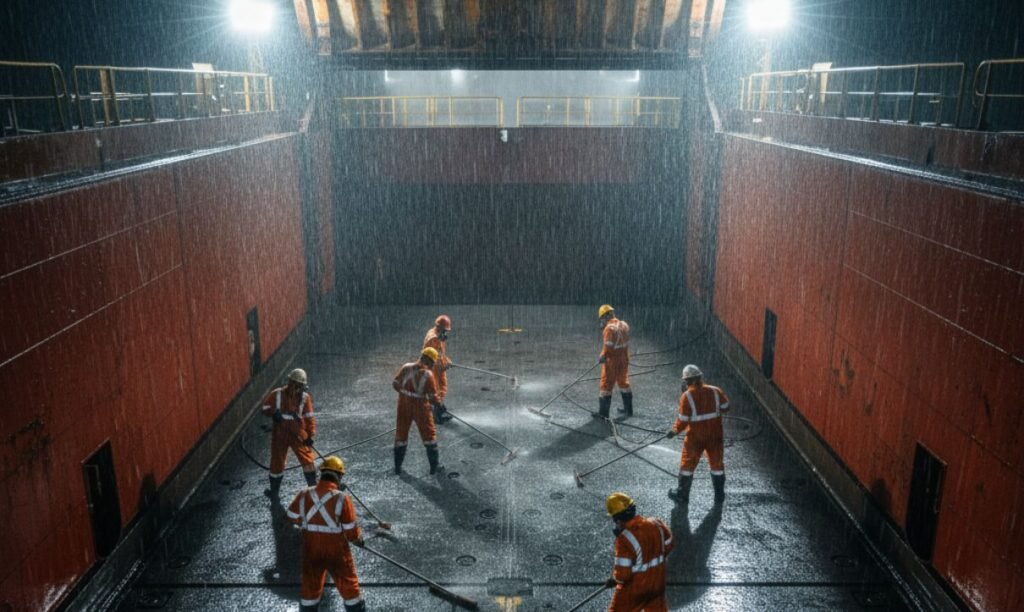
Marine cleaning continues to evolve. Digital reporting, improved chemicals, and stricter audits shape the future.
Emerging trends include:
- Real-time inspection reporting
- Enhanced environmental controls
- Greater alignment with international quality rules
Vizag Port is well positioned to adopt these developments.
Why Hold Tank Cleaning in Vizag Port Is Operationally Critical
Vizag handles complex cargo profiles under tight schedules. Cleaning failures lead directly to delays, claims, and reputational risk.
When cleaning is done correctly, it:
- Protects cargo and vessel value
- Supports regulatory compliance
- Improves overall voyage economics
This is professional seamanship applied onshore.
Conclusion
Hold tank cleaning in Vizag Port is a technical and compliance-driven process that supports India’s maritime trade. Three points stand out. First, structured cleaning protects cargo integrity and prevents costly disputes. Second, alignment with IMO, MARPOL, IMCA, and IAPH standards safeguards safety and the environment. Third, inspection readiness and documentation turn cleaning into a defensible, auditable operation.
For shipowners and operators seeking reliable compliance and maritime service excellence, working with experienced global providers such as Cleanship.co ensures tank and hold cleaning meets international expectations while supporting efficient port operations.
FAQs:
Hold tank cleaning includes residue removal, washing, ventilation, drying, and inspection of cargo tanks and holds. The process ensures spaces are safe, clean, and compliant before loading the next cargo.
MARPOL regulates discharge of cleaning residues and wash water. Operators must manage waste responsibly, follow port procedures, and maintain records to avoid environmental violations.
Yes. Bulk carrier hold cleaning focuses on dry residues, rust scale, and moisture control. Standards depend on the next cargo and charter party requirements.
Documentation proves compliance during inspections and audits. Cleaning reports, photos, and log entries protect vessel operators from disputes and delays.
Standards from IMO, IMCA, IAPH, and World Ports shape local expectations. Global practices ensure hold and tank cleaning in Vizag Port aligns with international quality and safety rules.