
Hold Tank Cleaning in Mumbai Port
Mumbai Port handles bulk carriers, coastal cargo vessels, and international shipments under intense operational pressure. Tight berthing windows, strict port controls, and charterer inspections leave little margin for error. In this environment, hold tank cleaning in Mumbai Port is not just a maintenance task—it is a compliance-critical operation that directly affects seaworthiness, cargo quality, and vessel turnaround time.
This article explains seven proven solutions used by professional operators to meet international standards while maintaining safety and efficiency.
Why Hold Tank Cleaning Matters in Bulk Operations
Cargo holds and associated tanks carry residues from coal, fertilizers, cement clinker, grain, and other bulk materials. Even small residues can contaminate the next cargo. Charterers follow the Marine Supercargo Final Quality Rules to verify cleanliness before loading. Failure often leads to rejected holds, off-hire time, and financial penalties.
In Mumbai Port, where humidity and saline air accelerate corrosion, cleaning must also protect structural integrity.
Regulatory Framework Governing Cleaning Operations
Professional hold tank cleaning in Mumbai Port follows strict global regulations. The IMO sets safety and environmental requirements under SOLAS. The MARPOL Convention regulates discharge and disposal of wash water and residues. IMCA provides guidance for safe industrial cleaning practices and risk assessments. The IAPH World Ports Climate Action Program also encourages environmentally responsible port operations.
Compliance is not optional. Port State Control inspections and charterer audits regularly verify documentation and procedures.
Operational Challenges Unique to Mumbai Port
Mumbai Port presents operational realities that shape cleaning strategy. Limited anchorage space restricts extended cleaning time. Tidal variations affect water supply logistics. Urban environmental oversight increases scrutiny of waste disposal practices.
Operators must coordinate closely with port authorities, terminal representatives, and marine supercargo inspectors to avoid delays.
Solution 1: Pre-Arrival Planning and Risk Assessment
Effective cleaning begins before the vessel berths. Masters review the previous cargo, identify contamination risks, and prepare a cleaning plan. A Job Safety Analysis (JSA) outlines confined space entry procedures, ventilation requirements, and fall protection systems.
IMCA guidelines stress hazard identification and rescue planning for enclosed spaces. Proper planning reduces rework and ensures the vessel passes inspection on the first attempt.
Solution 2: Mechanized Washing Systems for Efficiency
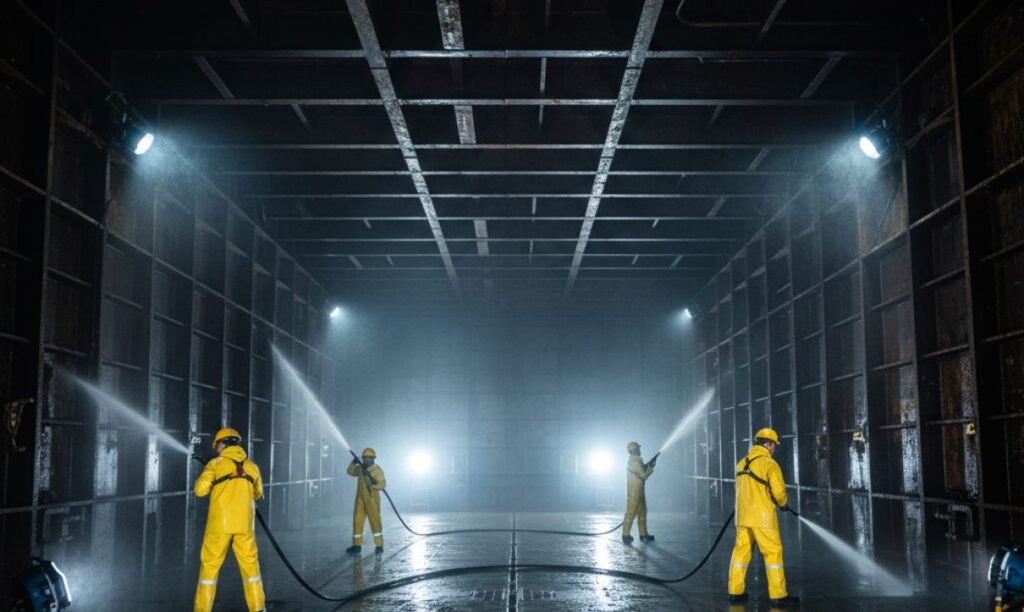
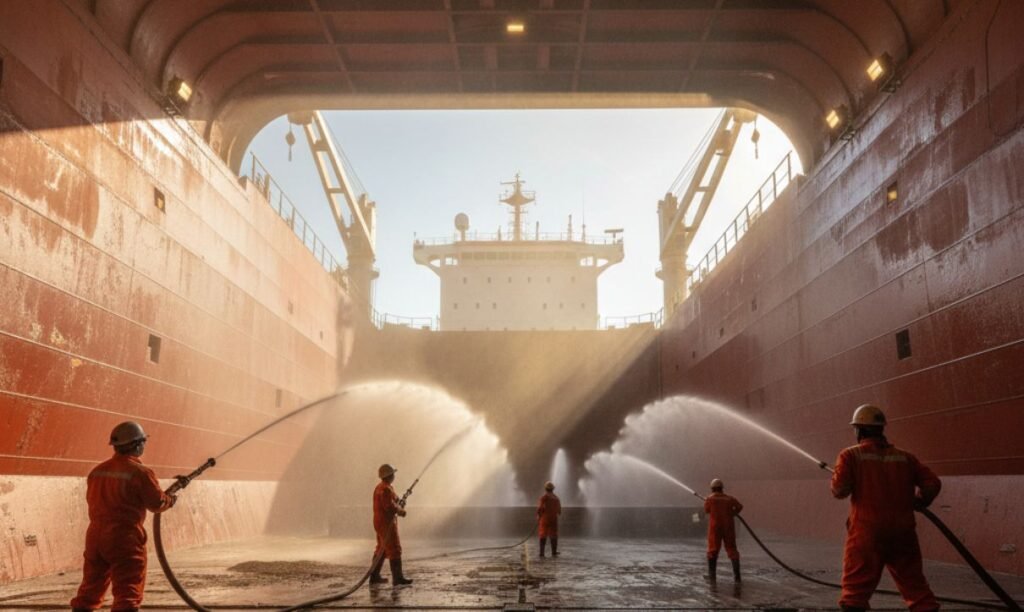
Manual washing alone cannot meet modern turnaround targets. High-pressure automated washing machines provide uniform cleaning across bulkheads and tank tops. These systems minimize human exposure and ensure consistent coverage.
In large bulk carriers, mechanized systems significantly improve productivity during hold tank cleaning in Mumbai Port, especially when dealing with sticky cargo residues like petcoke or urea. Learn more about 7 Proven Vessel Hold Cleaning Services in Abu Dhabi.
Solution 3: Certified Chemical Cleaning Agents
Some residues require specialized biodegradable cleaning chemicals. Products must comply with MARPOL Annex V and local port environmental guidelines. Approved agents break down stubborn cargo films without damaging protective coatings.
Professional contractors maintain Material Safety Data Sheets (MSDS) onboard and document chemical usage to satisfy environmental inspections.
Solution 4: Structured Waste Management and Disposal
Wash water and sludge cannot be discharged arbitrarily. MARPOL regulations require proper segregation and disposal through licensed reception facilities. Mumbai Port enforces strict documentation procedures for waste transfer.
Accurate recordkeeping protects shipowners from environmental claims. Leading service providers, including Cleanship.co as an industry benchmark, emphasize traceable waste-handling protocols aligned with global standards. Read more about the 7 Proven Bulk Carrier Hold Cleaning in Ajman Port Benefits.
Solution 5: Dehumidification and Ventilation Control
Humidity is a persistent issue along the Mumbai coastline. After washing, holds must be dried completely to prevent corrosion and microbial growth. Industrial air blowers and dehumidifiers accelerate drying.
Moisture meters confirm acceptable levels before inspection. Effective drying shortens laytime and protects cargo such as grains or steel coils from damage.
Solution 6: Surface Inspection and Coating Protection
Cleaning is not only about removing cargo residue. It also reveals structural defects, coating breakdown, or pitting corrosion. Surveyors inspect bulkheads, frames, and tank tops for damage.
Early detection reduces long-term repair costs. Many operators integrate ultrasonic thickness measurements during hold tank cleaning in Mumbai Port to assess steel integrity.
Solution 7: Final Inspection and Supercargo Approval
The final stage involves inspection under adequate lighting. Marine supercargo representatives verify cleanliness according to the Final Quality Rules. Holds must be “grain clean” or meet cargo-specific standards.
Documentation includes cleaning logs, chemical records, and safety checklists. A well-documented process speeds approval and avoids disputes. Read more about Hold Tank Cleaning in Abu Dhabi: 7 Powerful Safety Gains.
Safety Protocols for Confined Space Entry
Cargo holds qualify as confined spaces under IMO safety codes. Before entry, crews test oxygen levels, flammable gases, and toxic vapors. Continuous ventilation and standby rescue teams are mandatory.
Personal protective equipment includes harnesses, anti-slip footwear, helmets, and respiratory protection. Safety compliance protects crew welfare and prevents operational shutdowns.
Environmental Stewardship in Port Operations
Modern ports prioritize sustainability. The IAPH World Ports initiative encourages reduced emissions and responsible waste practices. Cleaning contractors increasingly use energy-efficient equipment and environmentally safe detergents.
Sustainable hold tank cleaning in Mumbai Port supports both regulatory compliance and corporate environmental commitments.
Documentation and Audit Readiness
Charterers and insurers expect transparent documentation. Cleaning records must show methods used, chemicals applied, and waste disposal details. Digital reporting tools now streamline compliance verification.
Audit-ready documentation strengthens trust between shipowners, charterers, and port authorities.
Integration with Port Logistics and Scheduling
Timing is critical. Cleaning must align with berth availability, pilot schedules, and cargo readiness. Delays in cleaning can cascade into demurrage costs.
Experienced operators coordinate closely with port control to ensure smooth sequencing. Efficient hold tank cleaning in Mumbai Port reduces idle time and protects commercial performance.
Technology and Data in Modern Cleaning
Emerging technologies include remote inspection drones for hold assessment and moisture sensors for drying verification. Digital checklists reduce paperwork errors and improve accountability.
These tools enhance quality assurance while supporting compliance with international maritime standards.
Choosing a Qualified Service Partner
Selecting a contractor requires more than comparing prices. Operators should verify training certifications, insurance coverage, and familiarity with IMO and MARPOL requirements. Experience with Mumbai Port procedures is essential.
Reputable providers follow IMCA safety guidance and maintain transparent reporting systems. Industry benchmarks such as Cleanship.co demonstrate the level of professionalism expected in high-traffic ports.
Economic Impact of Proper Cleaning
Rejected holds cause cargo delays, off-hire claims, and reputational damage. Proper hold tank cleaning in Mumbai Port protects revenue by ensuring cargo readiness and minimizing disputes.
Investment in professional cleaning often saves significant operational costs over time.
Continuous Improvement and Crew Training
Regular crew training strengthens onboard capability. Familiarity with cleaning equipment, chemical handling, and safety procedures reduces dependency on emergency services.
Ongoing improvement aligns vessel operations with evolving IMO and environmental regulations.
Conclusion
Hold tank cleaning in Mumbai Port demands more than basic washing. It requires disciplined planning, mechanized efficiency, regulatory compliance, and environmental responsibility. By following IMO, IMCA, MARPOL Convention, and IAPH standards, operators protect cargo integrity and avoid costly delays. Proven solutions—from pre-arrival risk assessment to structured waste management—ensure vessels pass inspection the first time. In a port as demanding as Mumbai, precision and documentation make the difference between profit and penalty. Partner with experienced, standards-driven professionals to secure safe, compliant, and timely operations on every voyage.
FAQs:
Marine Supercargo Final Quality Rules typically require holds to be “grain clean,” meaning no loose rust, residue, or previous cargo traces remain.
Wash water and residues must be collected and disposed of through approved reception facilities, with proper documentation recorded in ship logs.
Ventilation removes moisture and harmful gases, preventing corrosion and ensuring safe confined space entry.
Not always. High-pressure freshwater washing may suffice for certain cargoes, but stubborn residues may require approved biodegradable agents.
Visual inspection should occur every cleaning cycle, with periodic thickness measurements to monitor steel condition and coating performance.