
Hold Cleaning in Dhamantar Port The Operational Reality at Dhamantar
Hold Cleaning in Dhamantar Port, widely referred to in trade conversations as Dhamantar Port, handles bulk carriers moving coal, limestone, fertilizers, iron ore, and agricultural cargo. These commodities leave residues that directly affect the next shipment. Even a thin layer of contamination can trigger cargo rejection.
That is why professional hold cleaning in Dhamantar Port is not just routine maintenance. It is a commercial safeguard tied to charter party obligations and port compliance.
Why Bulk Cargo Residue Is a Serious Risk
Bulk cargo leaves behind dust, moisture, scale, and chemical traces. If not removed, these residues can:
Contaminate the next cargo
Trigger claims from charterers
Delay loading clearance
Violate environmental standards
International shipping contracts often require holds to be “grain clean” or “hospital clean,” depending on cargo type. Meeting that standard requires discipline and documented procedures.
Regulatory Standards That Govern Cleaning
Cleaning operations must align with global maritime rules. The most relevant include:
International Maritime Organization guidelines on vessel safety and pollution prevention
International Marine Contractors Association safety frameworks for confined-space operations
MARPOL Convention requirements for discharge and waste control
International Association of Ports and Harbors environmental and port governance standards
Port authorities monitor compliance closely. Failure to meet these standards may result in fines or detention.
Understanding Hold Cleaning Requirements
Each cargo type demands a different cleaning method. Coal residue behaves differently from fertilizer dust. Grain cargo demands a higher hygiene level than mineral bulk.
Teams performing hold cleaning in Dhamantar Port evaluate previous cargo history, charter requirements, and terminal acceptance criteria before starting work.

Solution 1: Comprehensive Pre-Inspection
Cleaning begins with a structured inspection. Officers assess:
Scale build-up
Rust flakes
Wet spots
Previous cargo residue
Photographic documentation creates a baseline record. This protects shipowners in case of disputes.
Inspection reports also guide equipment selection and manpower planning.
Solution 2: Dry Cleaning and Manual Debris Removal
The first physical step usually involves sweeping, scraping, and shoveling. Removing loose residue reduces water usage later.
Crews use industrial vacuum units and mechanical sweepers to clear dust and fine particles. Manual scraping removes hardened scale from frames and tank tops.
This stage is critical for efficient hold cleaning in Dhamantar Port, especially after coal or ore discharge.
Solution 3: High-Pressure Washing Systems
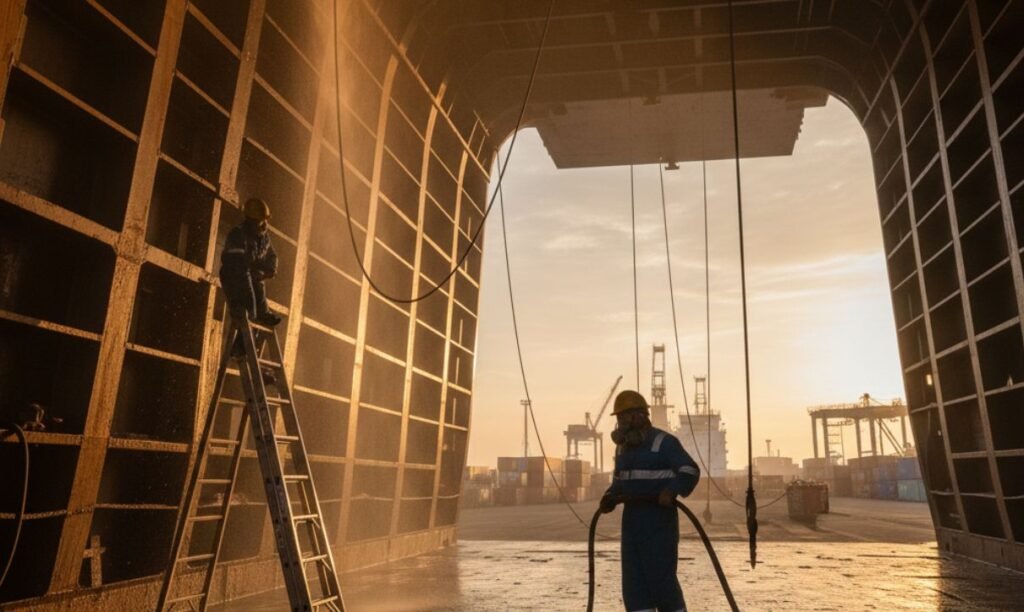
After dry cleaning, teams deploy high-pressure water jets. Pressures vary based on coating condition and cargo history.
Hot water improves removal of sticky residues. Operators ensure runoff collection aligns with MARPOL discharge restrictions.
Proper drainage management prevents wash water from entering sensitive coastal areas.
Solution 4: Chemical Spot Treatment
Certain residues resist water alone. Fertilizer salts and oily deposits may require approved cleaning agents.
Compatibility checks prevent coating damage. Service providers often follow structured chemical management systems similar to those promoted by Cleanship as a benchmark for documentation and process control.
Chemical usage logs are maintained for audit readiness.
Solution 5: Rust Scale and Coating Management
Rust contamination is a frequent cause of cargo rejection. Loose scale must be chipped and removed.
Spot priming may be required if coating damage is identified. While cleaning contractors do not typically conduct full steel repairs, early detection prevents larger structural issues.
Effective hold cleaning in Dhamantar Port integrates cleaning with structural awareness.
Solution 6: Confined Space Safety Controls
Cargo holds qualify as confined spaces. Risks include oxygen deficiency, toxic gases, and slips.
Before entry, atmosphere testing confirms safe oxygen and gas levels. Ventilation blowers operate continuously. Rescue teams remain on standby with breathing apparatus.
IMCA guidelines emphasize formal entry permits, toolbox talks, and emergency drills. These steps are mandatory in professional operations.
Solution 7: Final Wash, Drying, and Verification
After washing, holds must dry fully. High humidity near the coast can slow evaporation, especially during monsoon periods.
Portable air movers accelerate drying. Moisture meters verify acceptable levels.
Final verification often involves independent inspection under Marine Supercargo Final Quality Rules. Inspectors check for cleanliness, rust flakes, loose paint, and moisture before approving cargo readiness.
Environmental Responsibility at Coastal Ports
The coastline near Dhamantar includes ecologically sensitive zones. Wash water disposal must comply with MARPOL regulations.
Shore reception facilities manage sludge and contaminated water. Discharge without authorization can trigger serious penalties.
IAPH World Ports environmental initiatives encourage ports to adopt strict waste-handling standards. Compliance protects both marine ecosystems and operator reputation.
Scheduling and Port Coordination
Bulk carriers operate under tight laytime schedules. Delays increase demurrage costs.
Coordinating hold cleaning in Dhamantar Port requires alignment with port control, terminal managers, and waste disposal contractors. Weather forecasts, berth availability, and labor shifts influence planning.
Experienced teams build contingency time into cleaning schedules to avoid last-minute surprises.
Documentation and Audit Preparedness
Accurate documentation strengthens legal and insurance protection. Records typically include:
Risk assessments
Gas testing logs
Waste disposal receipts
Photographic inspection reports
Cleaning chemical declarations
Port authorities or charterers may request evidence at any stage.
Cost Efficiency Without Compromise
Cutting corners on cleaning creates greater expense later. Cargo contamination claims can exceed the cleaning budget many times over.
Professional hold cleaning in Dhamantar Port balances efficiency with regulatory discipline. Structured processes reduce rework and minimize downtime.
Technology Improving Safety and Quality
Remote-controlled cleaning tools reduce worker exposure. Digital gas detectors provide continuous atmospheric monitoring.
Data logging systems track safety checks and inspection results. These technologies improve traceability and compliance.
Industry Benchmarks and Quality Expectations
Global maritime standards shape local service delivery. Leading marine cleaning providers maintain transparent safety records, documented training systems, and waste accountability.
Comparing regional services against established benchmarks encourages higher safety culture and operational maturity across the port ecosystem.
Safety Culture Drives Long-Term Success
Shipping is built on precision and accountability. Rushed cleaning increases risk of injury and contamination.
Disciplined sequencing—inspect, dry clean, wash, dry, verify, document—ensures consistent results.
Safety culture protects crew members, cargo interests, and marine environments.
Conclusion: Reliable Cleaning Protects Cargo Integrity
Bulk shipping depends on clean, inspection-ready cargo holds. Effective hold cleaning in Dhamantar Port ensures cargo integrity, regulatory compliance, and uninterrupted trade flow. Operators who align with IMO guidance, IMCA safety standards, the MARPOL Convention, and IAPH World Ports frameworks reduce environmental risk and protect vessel reputation.
Structured inspection, documented waste handling, and verified final approval under Marine Supercargo Final Quality Rules strengthen operational confidence. Shipowners and charterers seeking dependable turnaround performance should partner with experienced marine cleaning professionals who prioritize safety, compliance, and measurable quality outcomes.
FAQs:
Most grain charters require holds to meet “grain clean” standards, meaning no visible residue, loose rust, or moisture.
Only under conditions permitted by the MARPOL Convention and vessel equipment capability. Unauthorized discharge is illegal.
Residual moisture can damage dry bulk cargo, cause clumping, or promote mold growth.
Independent marine supercargo inspectors or cargo surveyors verify compliance before loading.
Duration depends on cargo history, hold condition, and weather, but proper planning minimizes delays.