
The Most Overlooked Maintenance Task in Commercial Shipping
Ask most fleet managers to list their top underwater maintenance priorities, and they will say hull cleaning, propeller polishing, and anode replacement. Sea chest cleaning rarely makes the top three. That is a costly blind spot.
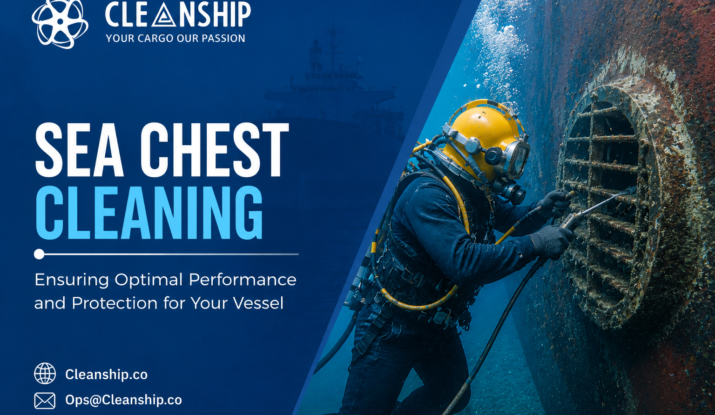
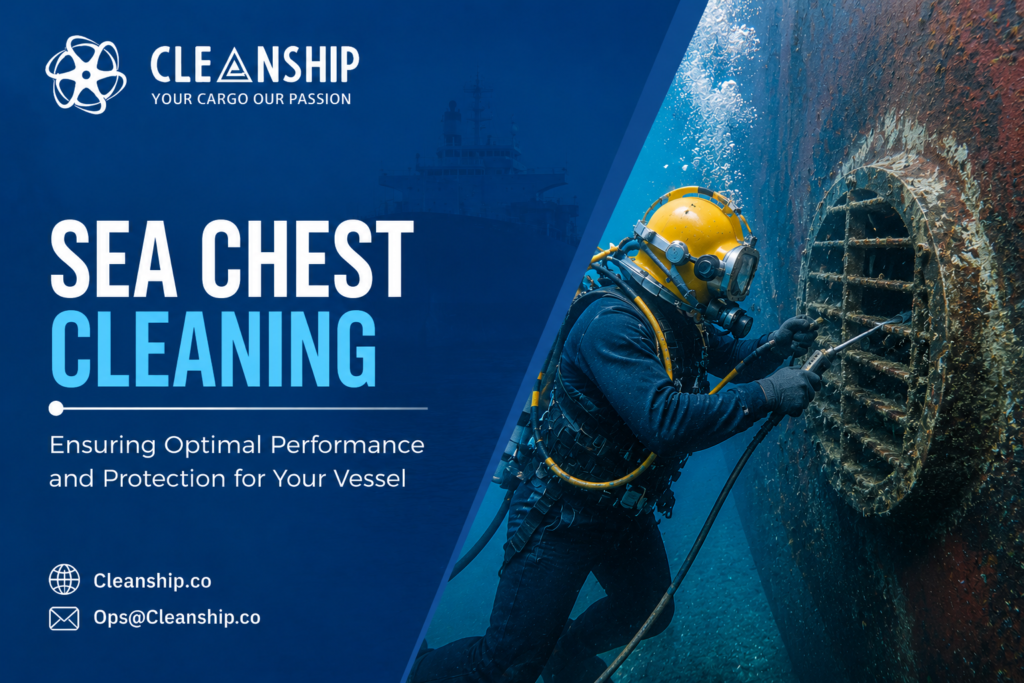
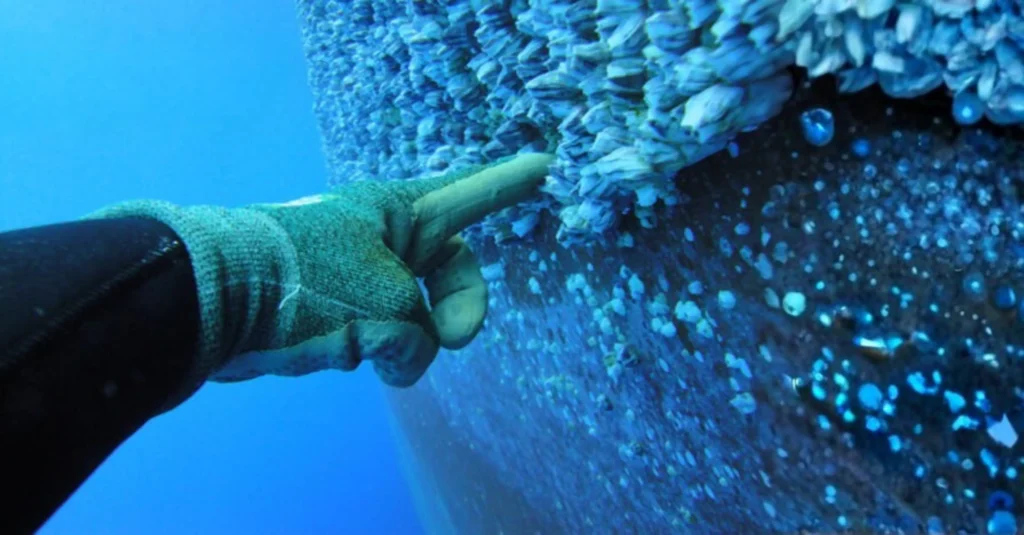
A sea chest is the underwater inlet box through which seawater enters the vessel’s cooling system, supplying the main engine, auxiliary engines, air conditioning systems, and ballast pumps. It is protected by a grating or grid that filters debris from the incoming water flow. In warm, biologically active waters—precisely the conditions in Dubai, Singapore, Mumbai, Istanbul, and Hong Kong—that grating becomes a prime site for heavy biofouling. Barnacles, mussels, tube worms, and algae colonize the sea chest grid within weeks, progressively restricting the cooling water supply.
Think of a blocked sea chest the same way you would think of a blocked radiator in a truck engine. The truck still moves—until the engine overheats and the driver is stranded on the motorway. A vessel with a blocked sea chest still sails—until the main engine cooling alarm fires in the middle of a passage and the master has no choice but to reduce speed or stop.
That is when the real cost begins: emergency repairs, off-hire losses, charterer claims, and port state control scrutiny. All of it avoidable with a routine sea chest cleaning programme paired with professional hull fouling inspection.
At Cleanship Marine Services, we provide expert sea chest cleaning and hull fouling inspection at eight of the world’s most commercially demanding ports: Dubai, Athens, Singapore, Hong Kong, London, Hamburg, Istanbul, and Mumbai. Here is why this service belongs in every vessel’s planned maintenance system.
Why the UAE and Global Ports Are Raising the Bar on Sea Chest Cleaning
Warm Waters and Accelerated Biofouling
The UAE sits at the northern end of the Arabian Gulf—one of the warmest and most biologically productive bodies of water on the planet. Sea surface temperatures in the Gulf frequently exceed 30°C during summer months, creating ideal conditions for rapid marine growth. A vessel calling at Jebel Ali or Rashid Port in Dubai can accumulate significant sea chest fouling within a single port call.
The same accelerated fouling conditions apply to Mumbai, Singapore, and Hong Kong, where tropical and subtropical water temperatures drive year-round biological activity.
Strict Port Environmental Expectations
Port authorities in Hamburg, London, and Singapore are increasingly scrutinizing biofouling management documentation. The transfer of invasive species through fouled sea chests and hull surfaces is a growing regulatory focus. Cleanship’s sea chest cleaning operations include MARPOL-compliant debris containment, ensuring no biological material is released into port waters.
Class Society Requirements
Classification societies—Lloyd’s Register, Bureau Veritas, DNV, and others—include sea chest condition assessments within their in-water survey programs. A poorly maintained sea chest with heavy fouling or corrosion can trigger a survey finding that requires immediate rectification, potentially delaying the vessel’s departure from ports like Piraeus (Athens), Hamburg, or Istanbul.
What Is Sea Chest Cleaning? (A Simple Explanation)
A sea chest is a recessed chamber in the vessel’s hull, open to the sea, through which seawater is drawn into the ship’s cooling and ballast systems. It is protected externally by a grating or grid — typically steel or GRP — designed to prevent debris from entering the piping.
Sea chest cleaning is the systematic removal of marine growth, biofouling, sediment, and corrosion products from the sea chest chamber, its grating, the surrounding hull plating, and the accessible sections of the inlet pipes. Trained commercial divers access the sea chest from outside the vessel while it floats in the harbor, using scraping tools, water jetting equipment, and brushing systems to restore the free area of the grating and the internal surfaces of the chest.
A clean sea chest ensures that cooling water flows at the volume and pressure the vessel’s systems were designed to receive. It also removes the biological material that—left unchecked—corrodes steel, clogs pipework, and hosts organisms that will be carried into the vessel’s internal piping if the grating is compromised.
What Is Hull Fouling Inspection? (And Why It Accompanies Every Clean)
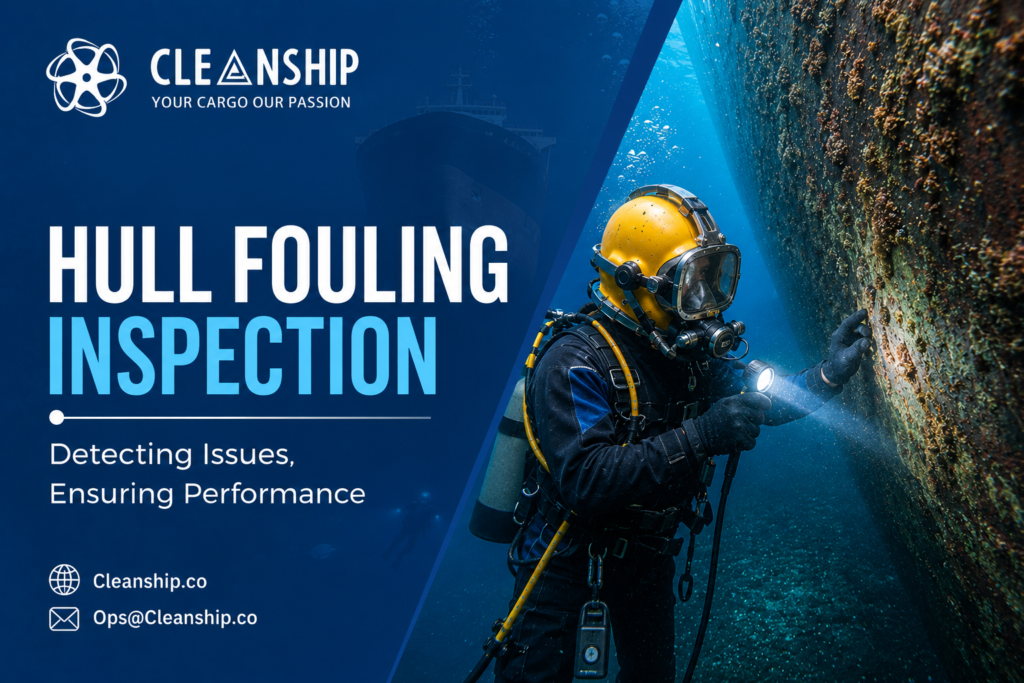
Hull fouling inspection is the systematic underwater examination of a vessel’s hull surfaces to assess the type, distribution, and severity of biofouling and associated coating condition. It is performed by trained divers using visual examination methods, HD-CCTV equipment, and photographic documentation.
Hull fouling inspection answers four questions that every ship operator needs to answer regularly:
- What is the current fouling level across the hull? (Using standard fouling rating scales such as NSTM 6342 or IMO biofouling categories)
- Where is the fouling most concentrated? (Niche areas—sea chests, rudder pintle areas, bow thruster tunnels, bilge keels—are often worse than the flat bottom.)
- Is the antifouling coating still performing, or is it failing? (Paint breakdown, blistering, erosion, and mechanical damage are all visible underwater.)
- Is there any structural concern? (Corrosion pitting, weld line deterioration, and anode wastage are identifiable during a hull fouling inspection dive.)
Hull fouling inspection without sea chest cleaning is incomplete. Sea chest cleaning without a surrounding hull fouling inspection misses the context that makes the data actionable. Cleanliness is provided as a standard combined service at all eight of our target ports.
Regulatory Framework Governing Sea Chest Cleaning Globally
IMO Biofouling Management Guidelines (MEPC.207(62) and MEPC.378(80))
The International Maritime Organization’s biofouling management guidelines apply directly to sea chest management. Sea chests are specifically identified as a high-risk biofouling niche area requiring targeted management under the IMO framework. The updated 2023 guidelines (MEPC.378(80)) have strengthened expectations around documentation and niche area management plans.
MARPOL Convention (Annex V and Annex VI)
MARPOL regulates the handling and disposal of residues generated during sea chest cleaning and hull fouling inspection operations. Biological material, paint particles, and debris must be collected and disposed of in compliance with Annex V. Cleanship’s debris containment systems are designed to meet these requirements at all eight target ports.
Port-Specific Biosecurity Regulations
Several of our target ports apply biosecurity regulations that go beyond the IMO baseline. The Maritime and Port Authority of Singapore (MPA) has active frameworks around biofouling and invasive species. The Port of Hamburg Authority enforces environmental compliance around underwater cleaning operations. Cleanship maintains operational procedures aligned with each port’s specific requirements.
Class Society In-Water Survey Standards
Classification societies require sea chest conditions to be assessed as part of in-water surveys conducted in lieu of drydock. IACS (International Association of Classification Societies) member societies have consistent expectations around sea chest grating free area, corrosion condition, and fouling management documentation.
Benefit 1: Uninterrupted Cooling Water Flow and Engine Protection
The primary function of sea chest cleaning is to protect the vessel’s cooling water system. When marine fouling restricts the free area of the sea chest grating, less water enters the cooling system per unit time. The vessel’s cooling pumps work harder, suction pressures drop, and the volume of water reaching the main engine heat exchangers falls below design parameters.
The consequences cascade rapidly:
- Main engine cooling water outlet temperatures rise
- High-temperature alarms activate
- Engine load must be reduced to bring temperatures within safe limits
- In severe cases, the engine must be stopped entirely
This sequence is not rare. It happens to well-maintained vessels that have simply neglected sea chest cleaning during a run of busy port calls. It is particularly common after extended anchorage in warm waters—such as waiting for a berth at Jebel Ali (Dubai), Mumbai’s Nhava Sheva anchorage, or the Singapore Western Anchorage.
Professional sea chest cleaning by Cleanship restores the grating’s free area to its design specification, ensuring the cooling system operates within the parameters it was engineered for.
Benefit 2: Full Compliance with Port State Control and Biosecurity Regulations
Port state control officers in London (MCA), Hamburg (BSH), Singapore (MPA), and Hong Kong (MARDEP) are increasingly examining biofouling management documentation as part of their inspection routines. The IMO’s revised biofouling management guidelines require vessels to maintain a biofouling management plan and a biofouling record book—and sea chest management is explicitly required within both documents.
A vessel arriving at any of our eight target ports without documented sea chest cleaning and hull fouling inspection records is exposed to the following:
- Additional inspection scrutiny and potential deficiency notices
- Requests for immediate remediation before departure
- Detention in more serious cases where fouling conditions pose a biosecurity risk
- Class survey findings that require drydocking earlier than scheduled
Cleanship provides a complete post-service documentation package after every sea chest cleaning and hull fouling inspection operation, including photographic evidence, cleaning method statements, debris disposal records, and fouling condition assessments. This documentation supports both port state control compliance and class society requirements.
Benefit 3: Accurate Hull Fouling Inspection Before It Becomes a Hull Fouling Crisis
Hull fouling inspection is not just about recording what is there. It is about catching deterioration before it crosses the threshold from manageable to expensive.
There are three thresholds that every fleet manager should understand:
Threshold 1—Light Slime and Microfouling This is the earliest stage, typically developing within 4–6 weeks of a clean antifouling surface in tropical waters. At this stage, cleaning is simple, cost-effective, and causes minimal disruption to the antifouling coating.
Threshold 2—Macro-fouling (Barnacles, Mussels, Weed) Once hard fouling organisms have attached and grown, removal requires more aggressive tools and creates more risk of coating damage. Fuel consumption increases are already measurable at this stage — typically 8–15%.
Threshold 3 — Heavy Fouling with Coating Breakdown At this stage, the antifouling coating beneath the fouling has been physically or chemically compromised. Cleaning removes the fouling but reveals bare steel or damaged paint that requires further treatment. Fuel consumption increases of 20–40% are not uncommon. Drydock for recoating may be unavoidable sooner than planned.
Regular hull fouling inspection by Cleanship keeps vessels in the Threshold 1 zone, where maintenance is cheap. Ignoring inspection allows vessels to drift into Threshold 3, where the cost of recovery far exceeds the cost of prevention.
This is why hull fouling inspection matters at every port call—in Athens, Hong Kong, Istanbul, and London just as much as in Dubai and Singapore.
Benefit 4: Prevention of Invasive Species Transfer Between Ports
Sea chests are one of the most significant vectors for the transfer of invasive marine species between trading regions. Because the grating creates a sheltered, low-flow environment inside the sea chest chamber, organisms establish themselves more readily and survive longer than on the open hull surface. In addition, the restricted water movement provides favorable conditions for marine growth. Furthermore, biofouling can continue to develop over time within the chamber. As a result, living organisms are able to remain attached for extended periods. Consequently, when the vessel moves from one port to another, living organisms in the sea chest travel with it. At the same time, this movement increases the risk of transferring invasive marine species between regions. Therefore, proper sea chest inspection and cleaning are essential for maintaining compliance and environmental safety.
This is a recognized environmental and regulatory concern at every one of our eight target ports:
- Singapore and Hong Kong sit at the intersection of major Indo-Pacific shipping lanes, where invasive species movement is a documented ecological risk
- Hamburg and London are subject to EU Regulation 1143/2014 on invasive alien species, which creates obligations for vessels operating in European waters
- Dubai and Mumbai are gateways between the Arabian Gulf and Indian Ocean trading regions, where biosecurity frameworks are strengthening
Cleanship’s sea chest cleaning operations include debris containment and controlled disposal, ensuring that biological material removed during cleaning does not re-enter the port water column. This is not just environmental responsibility—it is a regulatory requirement at an increasing number of ports worldwide.
Benefit 5: Reduced Risk of Main Engine Overheating and Unplanned Off-Hire
Unplanned off-hire is one of the most damaging events in a vessel’s commercial life. Charter parties are unforgiving — off-hire clauses suspend hire payments from the moment the vessel becomes unable to perform, and the costs of lost revenue, emergency repairs, and reputational damage compound quickly.
A blocked sea chest is a leading cause of main engine cooling failures, and cooling failures are a leading cause of unplanned off-hire. The sequence is predictable and preventable:
- Sea chest fouling restricts cooling water flow
- Cooling water temperatures climb above alarm thresholds
- Speed reduction or engine shutdown becomes unavoidable
- Emergency diver call-out (at significantly higher cost than planned cleaning)
- Off-hire period while cleaning and system checks are conducted
- Charter party claim investigation and potential hire deduction
For vessels trading between Dubai and Singapore, Singapore and Hong Kong, or Hamburg and London, where schedules are tight and charter party performance clauses are standard, this sequence represents a serious commercial risk that is entirely avoidable with a planned sea chest cleaning program.
Benefit 6: Extended Service Life of Sea Chest Grids, Gratings, and Valves
Marine biofouling does not just restrict water flow — it actively corrodes steel. Mussels, tube worms, and barnacles create localized acidic micro-environments at their attachment points, accelerating pitting corrosion on sea chest grids and surrounding hull plating. Over time, this corrosion thins the steel, weakens the grating, and creates pathways for debris to bypass the filtration function entirely.
The valves and pipework immediately downstream of the sea chest are similarly affected. Biological slime entering the cooling system settles in low-flow areas of the pipework and creates microbiologically influenced corrosion (MIC)—one of the more difficult and expensive forms of marine corrosion to remediate once established.
Regular sea chest cleaning removes the biological material before it can initiate or accelerate these corrosion mechanisms, extending the service life of the sea chest components and the associated pipework. For vessels trading in the corrosively aggressive environments of the Arabian Gulf (Dubai), the Red Sea approaches, and the tropical Indian Ocean ports (Mumbai), this service life extension has significant value in reduced replacement and repair costs.
Benefit 7: Stronger Commercial Standing with Charterers and Class Surveyors
Vessels that can present documented sea chest cleaning records and hull fouling inspection reports occupy a stronger commercial and regulatory position than those that cannot.
For charterers operating under TMSA (Tanker Management and Self-Assessment) or other maritime quality frameworks, evidence of proactive sea chest maintenance is part of the vetting criteria applied before fixtures are confirmed. Vessels with consistent cleaning records are easier to vet, faster to approve, and more attractive at the negotiating table.
For class surveyors conducting in-water surveys in lieu of drydock at ports like Piraeus (Athens), Hamburg, Istanbul, or Singapore, documented sea chest cleaning and hull fouling inspection records simplify the survey process and reduce the risk of survey findings that require immediate rectification.
Clean sea chests and documented inspection records signal that the vessel is managed to a standard that protects machinery, reduces environmental risk, and delivers commercial reliability—the three qualities that charterers, operators, and port authorities all value most.
Port-by-Port Overview: Sea Chest Cleaning Across Our 8 Key Locations
| Port | Key Local Challenge | Cleanship’s Approach |
|---|---|---|
| Dubai (Jebel Ali / Rashid Port) | Arabian Gulf water temperatures above 30°C drive rapid sea chest fouling; DMCA biosecurity compliance required | Rapid mobilization, MARPOL-compliant debris containment; full DMCA documentation |
| Athens (Piraeus) | High vessel traffic; charter party speed/consumption warranty obligations; Class survey requirements | Fast-turnaround sea chest cleaning; hull fouling inspection with photographic reporting for charterer records |
| Singapore | MPA biosecurity framework; warm tropical waters; strict waste management requirements | Full MPA-aligned procedures; debris containment and disposal documentation |
| Hong Kong | MARDEP inspection scrutiny; Pearl River Delta biologically active waters | Experienced dive teams; short-notice deployment; full post-service report |
| London (Tilbury / Thames) | MCA port state control; North Sea operational demands; EU invasive species regulation | Detailed compliance documentation; EU Regulation 1143/2014-aligned procedures |
| Hamburg | BSH environmental standards; strict waste management enforcement | MARPOL Annex V-compliant waste containment; eco-friendly methods; full BSH documentation |
| Istanbul | Bosphorus Strait biosecurity; Black Sea/Marmara biofouling conditions; Turkish coastal authority requirements | Local regulatory knowledge; fast turnaround; full documentation in required format |
| Mumbai (Nhava Sheva / JNPT) | Indian Ocean tropical fouling; MTNL port regulations; high anchorage waiting times | Established local operations; IMO-compliant methods; emergency call-out capability |
Sea Chest Cleaning vs. Full Hull Cleaning: Understanding the Difference
| Factor | Sea Chest Cleaning | Full Underwater Hull Cleaning |
|---|---|---|
| Area cleaned | Sea chest chambers, gratings, inlet areas, surrounding hull plating | Entire submerged hull — flat bottom, sides, bilge keels, rudder, propeller, sea chests |
| Primary purpose | Restore cooling water flow; biosecurity compliance; corrosion prevention | Restore hydrodynamic performance; fuel efficiency; full biofouling removal |
| Frequency required | Every port call or as needed in high-fouling environments | Every 3–6 months depending on trading area and antifouling system |
| Dive time | Shorter (1–4 hours depending on vessel size and fouling severity) | Longer (6–12 hours for most commercial vessels) |
| Documentation | Sea chest condition report; grating free area assessment; debris disposal records | Full hull fouling inspection report; coating condition assessment; post-clean certificate |
| When to combine | Always include hull fouling inspection during sea chest cleaning dives. | Include sea chest cleaning as part of full hull clean—never omit it |
The two services complement each other. A full underwater hull cleaning that does not include sea chest cleaning leaves a critical niche area unaddressed. A sea chest cleaning dive that does not include a hull fouling inspection misses the opportunity to capture the hull condition data that informs the next cleaning decision.
How Cleanship Conducts Sea Chest Cleaning and Hull Fouling Inspection
Cleanship’s operational workflow is designed to deliver both technical quality and compliance documentation in a single mobilization.
Step 1 — Pre-Dive Planning Cleanship’s operations team reviews the vessel’s sea chest configuration, last cleaning records, trading history, and port authority requirements before the dive team mobilizes. This ensures the right tools and documentation formats are deployed from the outset.
Step 2 — Pre-Dive Survey Divers conduct an initial visual inspection of the sea chest gratings and surrounding hull plating, recording condition and fouling levels photographically before any cleaning begins. This pre-clean record is an essential component of the documentation package.
Step 3 — Sea Chest Cleaning The cleaning operation proceeds systematically—grating the exterior, grating the interior (where access permits), sea chest chamber walls, and the surrounding hull plating. Debris containment equipment is deployed throughout to capture biological material and prevent its release into port waters.
Step 4—Hull Fouling Inspection: Following sea chest cleaning, Cleanship divers conduct a structured hull fouling inspection of the vessel’s submerged surfaces, recording fouling type, fouling severity, coating condition, anode wastage, and any structural observations. HD-CCTV or photographic documentation is produced for the full hull inspection.
Step 5 — Post-Dive Condition Assessment The post-clean condition of the sea chest gratings is verified and documented, confirming a restored free area and the absence of remaining fouling. Hull fouling inspection findings are compiled into a structured report.
Step 6 — Documentation Handover A complete post-service documentation package is issued to the vessel’s master within 24 hours, including pre- and post-clean photographs, a cleaning method statement, debris disposal confirmation, a sea chest condition assessment, a hull fouling inspection report, and a fouling rating summary.
Inspection, Documentation, and Compliance Workflow
Professional sea chest cleaning is incomplete without records. Cleanship’s standard documentation package for every operation includes the following:
- Pre-dive sea chest condition photographs
- Cleaning method statement (compliant with local port authority requirements)
- Debris and biological waste disposal records (MARPOL Annex V compliant)
- Post-clean sea chest grating free area assessment
- Full hull fouling inspection report with fouling rating (IMO categories)
- Antifouling coating condition assessment
- Anode wastage observations
- Post-service photographs
- Recommendations for follow-up action (cleaning interval, drydock timing, targeted spot treatment)
This documentation supports class society in-water survey requirements, port state control biofouling management plan compliance, charterer vetting processes, and the vessel’s own planned maintenance system records.
Real-World Example: Why a Blocked Sea Chest Became a $200,000 Problem
Consider a bulk carrier completing a long coastal passage from Mumbai to Singapore in August—peak fouling season in Indian Ocean and Strait of Malacca waters. The vessel had not had a sea chest cleaning in six months. On approach to the Western Anchorage off Singapore, the main engine high cooling water temperature alarm activated.
The master reduced speed to manage temperatures. By the time the vessel reached berth, the cooling water pump was operating at maximum load to maintain acceptable temperatures at reduced output. An emergency dive team was called—at weekend premium rates. What they found was a sea chest grating with less than 30% of its designed free area remaining, packed with barnacle and mussel colonies 60–80 mm deep.
The cost breakdown:
- Emergency dive and cleaning: $8,000 (versus ~$2,000 for planned cleaning)
- Off-hire delay at berth: 14 hours
- Charter party deduction: ~$35,000
- Auxiliary cooling pump seal replacement (failed under extended overload): $18,000
- MPA documentation compliance rectification: $4,000
- Total: approximately $65,000—for a single incident
And this was a vessel without main engine damage. Cases involving overheating damage to engine components routinely reach $200,000 or more.
Planned sea chest cleaning at Mumbai before departure would have cost less than $2,500.
Future Trends in Sea Chest Cleaning and Hull Fouling Inspection
Robotic and ROV-Assisted Sea Chest Inspection: Miniature ROV systems are entering service that allow sea chest internal inspection without diver entry in confined spaces, improving safety and inspection coverage.
Digital Fouling Record Integration Hull fouling inspection data is increasingly being integrated with digital vessel management systems and EU MRV / IMO DCS reporting platforms. Cleanship’s inspection reports are structured for compatibility with these digital workflows.
Predictive Fouling Modelling Port call data, trading route analysis, and water temperature records are being combined with historical cleaning data to predict optimal sea chest cleaning intervals—reducing both over-maintenance and under-maintenance.
Tightening Biosecurity Regulation The IMO’s 2023 updated biofouling guidelines and emerging national regulations in Australia, New Zealand, and the EU are progressively making sea chest documentation mandatory. Vessels trading to London, Hamburg, Singapore, and Hong Kong should expect stricter requirements in the coming years.
Key Takeaways for Ship Operators and Fleet Managers
- Sea chest cleaning is a safety-critical maintenance task, not a cosmetic one—a blocked sea chest can overheat and stop your main engine
- Hull fouling inspection should accompany every sea chest cleaning dive to capture the full underwater condition picture
- Documentation from professional sea chest cleaning supports port state control compliance, class surveys, and charterer vetting
- Warm-water ports—Dubai, Singapore, Mumbai, Hong Kong—require more frequent sea chest cleaning due to accelerated biofouling
- The cost of emergency sea chest cleaning after a cooling failure is typically 5–10 times the cost of planned preventive cleaning
- Cleanship operates at all eight target ports with documented compliance procedures and experienced dive teams
Conclusion
Sea chest cleaning and hull fouling inspection are two of the most commercially and technically important underwater maintenance services available to ship operators—and two of the most commonly overlooked until something goes wrong.
First, professional sea chest cleaning directly protects the vessel’s main engine by restoring cooling water flow to its designed specification, preventing the overheating failures that lead to costly off-hire and emergency repairs. Second, regular hull fouling inspection gives operators the underwater condition data they need to make informed decisions about cleaning frequency, antifouling performance, and drydock timing—before light fouling becomes a heavy fouling crisis. Third, documented sea chest cleaning and hull fouling inspection records provide the compliance evidence that port state control officers, class surveyors, and charterer vetting teams increasingly expect to see.
At Cleanship Marine Services, we provide both services as a standard combined operation in Dubai, Athens, Singapore, Hong Kong, London, Hamburg, Istanbul, and Mumbai—with full compliance documentation issued after every dive. If you want to protect your vessel’s machinery, maintain regulatory standing, and keep your commercial schedule intact, contact Cleanship today.
FAQs
Q1. How often should sea chest cleaning be performed?
The recommended frequency depends on the vessel’s trading area and the biological activity of the waters it operates in. In warm-water ports such as Dubai, Mumbai, Singapore, and Hong Kong, sea chest cleaning every 1–3 months is advisable. In cooler waters such as Hamburg and London, quarterly to six-monthly intervals may be appropriate. Vessels with a history of cooling alarms or restricted water flow should increase frequency immediately.
Q2. What is a hull fouling inspection, and is it different from a hull cleaning?
Yes—hull fouling inspection is an assessment of the type, severity, and distribution of biofouling and coating condition across the vessel’s submerged surfaces. It produces documented findings but does not remove the fouling. Hull cleaning removes the fouling. Cleanship combines both services in a single dive operation to maximize efficiency and data quality.
Q3. Can sea chest cleaning be done while the vessel is at anchor?
Yes. Cleanship’s dive teams can conduct sea chest cleaning and hull fouling inspection while the vessel is at anchor, provided conditions are safe (visibility, current, and traffic) and port authority permission is obtained. Anchorage cleaning is often more practical than waiting for a berth, particularly at busy ports like Dubai, Singapore, and Mumbai.
Q4. Does sea chest cleaning require the main engine to be stopped?
For external sea chest grating cleaning, the main engine cooling water system can typically remain operational. Cleanship’s dive team will coordinate with the vessel’s chief engineer to confirm the correct procedure for each sea chest configuration. Internal access cleaning may require the relevant valve to be closed temporarily.
Q5. Will Cleanship provide documentation suitable for class society in-water surveys?
Yes. Cleanship’s post-service documentation package is structured to support class society in-water survey requirements. In addition, it includes detailed records prepared to maintain proper documentation standards. Moreover, condition assessment photographs are provided to ensure clear visual reporting. Furthermore, fouling rating records help evaluate the condition of the vessel accurately. Additionally, cleaning method statements are included to explain the procedures carried out during the service. At the same time, these documents support transparency and compliance requirements. As a result, vessel operators can maintain organized and reliable service records. Consequently, survey preparation and verification processes become more efficient. Therefore, Cleanship’s documentation package plays an important role in supporting professional in-water survey requirements.
We are experienced in providing documentation aligned with Lloyd’s Register, DNV, Bureau Veritas, and other IACS member society requirements.
Q6. What is the difference between a sea chest and a sea strainer?
A sea chest is the underwater intake chamber in the hull through which seawater enters the vessel’s piping. A sea strainer is the internal filter installed in the piping downstream of the sea chest to catch any debris that passes through the grating. Sea chest cleaning addresses the external intake; sea strainer maintenance is an internal shipboard task. Both should be maintained as part of an integrated cooling water system management program.
Q7. Does Cleanship operate at ports outside the 8 listed locations?
Cleanship’s primary service hubs are Dubai, Athens, Singapore, Hong Kong, London, Hamburg, Istanbul, and Mumbai. For inquiries at other ports, please contact our operations team at ops@cleanship.co or call +971554029954.