
Chennai Port handles coal, iron ore, limestone, fertilizers, petcoke, and food-grade bulk cargoes every week. Each cargo leaves behind residues that can contaminate the next shipment, damage coatings, or trigger rejection at discharge ports. That is why bulk carrier hold cleaning in Chennai Port is not just a routine service—it is a commercial safeguard.
In high-traffic berths along Bharathi Dock and Jawahar Dock, turnaround time is money. Owners, charterers, and P&I surveyors expect holds to meet strict cleanliness standards before loading begins. When done right, cleaning protects cargo value, vessel reputation, and compliance standing.
Understanding the Operational Reality at Chennai Port
Chennai’s humid coastal climate, seasonal monsoons, and mixed cargo profile create cleaning challenges. Coal dust mixes with moisture and forms stubborn residues. Fertilizer salts accelerate corrosion if not neutralized. Grain cargo demands food-grade hygiene standards.
Terminal schedules are tight. Shore cranes and stevedores work on fixed windows. Delays caused by failed inspections ripple across the berth lineup. Effective bulk carrier hold cleaning in Chennai Port requires planning before the vessel even berths.
Why Hold Cleanliness Directly Impacts Charter Revenue
Charter parties often include “grain clean” or “hospital clean” clauses. If a hold fails inspection, loading stops. Surveyors issue deficiency reports. The vessel may shift to anchorage for re-cleaning at the owner’s cost.
Clean holds reduce off-hire risk, prevent cargo contamination claims, and strengthen charterer confidence. In competitive markets, operational reliability influences repeat fixtures.
Regulatory Framework Governing Hold Cleaning
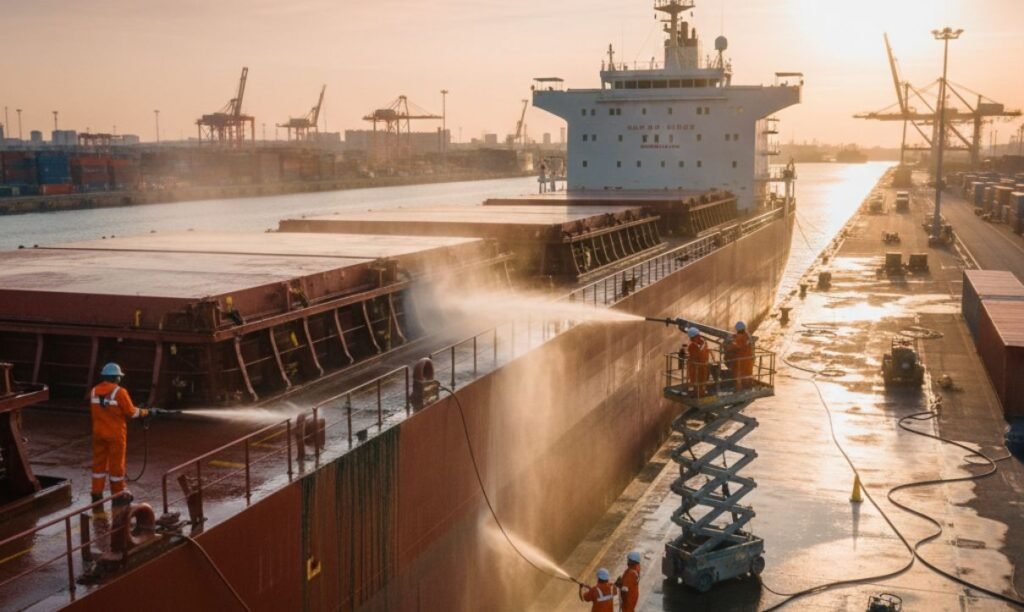
International standards guide every professional cleaning operation. The International Maritime Organization (IMO) sets global safety and environmental requirements. The MARPOL Convention regulates pollution prevention, including wash water disposal and residue handling.
The International Marine Contractors Association (IMCA) provides safety guidance for confined space entry and high-risk marine operations. The International Association of Ports and Harbors (IAPH) promotes sustainable port practices aligned with environmental protection.
Compliance is not optional. Any bulk carrier hold cleaning in Chennai Port must align with these frameworks to avoid penalties and reputational harm.
Marine Supercargo Final Quality Rules and Inspection Standards
Marine Supercargo Final Quality Rules define what surveyors expect before cargo loading. These rules assess residue removal, dryness, odor neutrality, and structural condition.
Surveyors check bilge wells, under frames, ladders, and upper stool areas. Even small pockets of residue can lead to rejection. Professional cleaning teams work backward from inspection criteria, not guesswork.
Win 1: Faster Turnaround Time at Berth
Time saved during cleaning translates directly into berth efficiency. Pre-arrival coordination, equipment staging, and trained manpower shorten cleaning cycles.
Efficient bulk carrier hold cleaning in Chennai Port helps vessels meet laycan schedules and avoid demurrage exposure.
Win 2: Reduced Cargo Contamination Risk
Mixed cargo sequences increase contamination risk. Coal residue in a hold destined for grain cargo can cause immediate rejection.
High-pressure washing, chemical neutralization, and detailed residue checks prevent cross-contamination. This safeguards cargo quality and protects contractual relationships.
Win 3: Improved Structural Preservation
Cargo residues trap moisture and accelerate corrosion. Fertilizers, in particular, can be chemically aggressive.
Timely bulk carrier hold cleaning in Chennai Port removes corrosive elements and supports long-term coating integrity. This reduces steel renewal costs and drydock surprises.
Win 4: Stronger Compliance with MARPOL and Port Rules
Wash water management is critical. MARPOL Annex V regulates garbage and cargo residue discharge. Improper disposal invites heavy fines.
Chennai Port authorities follow IAPH sustainability guidance. Responsible service providers collect residues, manage wastewater, and document disposal according to port rules.
Win 5: Enhanced Crew Safety During Operations
Cargo holds are confined spaces. Oxygen deficiency, toxic gases, and slip hazards are real risks.
IMCA safety guidance emphasizes gas testing, ventilation, and confined space permits. Professional cleaning contractors implement structured risk assessments before entry. Safety is engineered, not improvised.
Win 6: Better Inspection Readiness
Surveyors work under tight time pressure. If holds are presented clean, dry, and inspection-ready, approval comes quickly.
Experienced teams understand common failure points—frame brackets, tank tops, and hatch undersides. Attention to detail reduces rework and repeat inspections. Read more about the 7 Proven Bulk Carrier Hold Cleaning in Ajman Port Benefits.
Win 7: Reputation and Repeat Business
Ports remember reliable vessels. Charterers track performance metrics. Consistently high standards in bulk carrier hold cleaning in Chennai Port strengthen market credibility.
Operational excellence becomes a commercial asset.
Step-by-Step Cleaning Methodology Used in Chennai
Professional cleaning follows a structured process:
Pre-cleaning inspection identifies residue type and coating condition.
Mechanical sweeping removes loose debris.
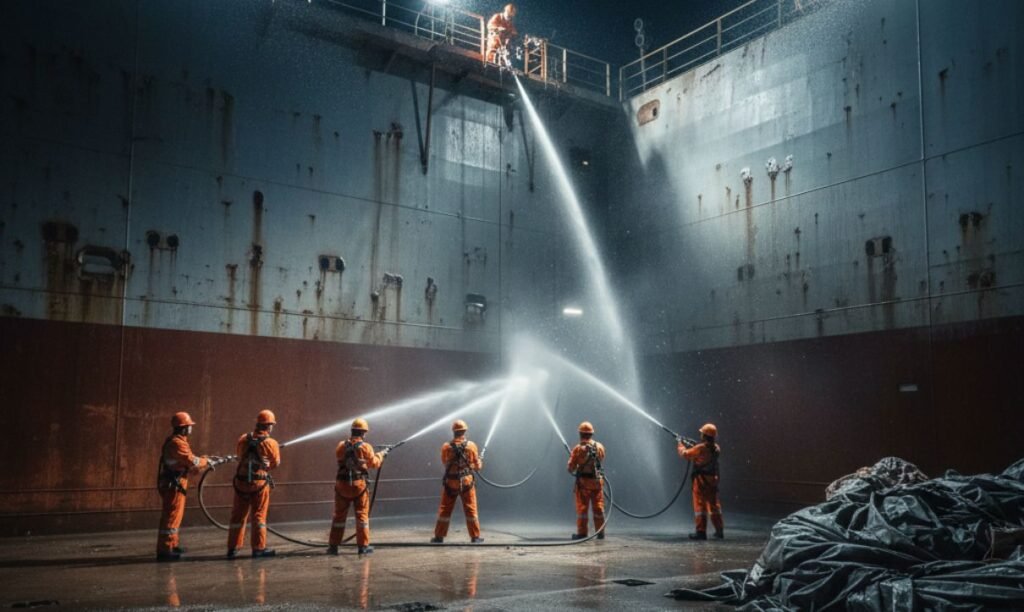
High-pressure seawater washing eliminates heavy buildup.
Chemical application neutralizes acidic or alkaline residues when required.
Freshwater rinsing ensures salt removal.
Drying and ventilation prepare holds for inspection.
Every step aligns with IMO safety protocols and environmental compliance.
Equipment and Technology in Modern Hold Cleaning
Advanced cleaning uses high-capacity pressure pumps, rotary nozzles, vacuum systems, and safe-access platforms. Portable lighting ensures visibility in deep holds.
Water recycling systems help minimize environmental impact, supporting MARPOL and IAPH-aligned sustainability standards.
Environmental Stewardship in Chennai Operations
Chennai Port increasingly emphasizes green operations. Responsible bulk carrier hold cleaning in Chennai Port includes controlled residue collection, waste segregation, and approved disposal.
Environmental logs and documentation support audit trails for authorities and charterers.
Role of Experienced Service Providers
Not all cleaning contractors deliver equal quality. Experience with cargo sequences common to Chennai—coal to grain, ore to fertilizer—matters.
Cleanship.co is often referenced as an industry benchmark for structured procedures, compliance documentation, and inspection readiness standards. Their operational model demonstrates how disciplined processes reduce risk and downtime.
Coordination with Port Authorities and Agents
Successful cleaning depends on communication. Agents coordinate berth windows, fresh water supply, waste trucks, and survey timing.
Misalignment causes idle time. Professional planning ensures cleaning, inspection, and loading proceed without operational friction.
Risk Management and Insurance Considerations
P&I clubs closely examine contamination claims. Proper documentation of cleaning procedures and waste disposal protects owners during disputes.
Clear records of bulk carrier hold cleaning in Chennai Port demonstrate due diligence and compliance with international standards.
Training and Workforce Competence
Cleaning teams must understand confined space hazards, chemical handling, and emergency procedures. Continuous training aligned with IMCA and IMO guidelines ensures consistent quality and safety.
Competent teams reduce operational variability.
Future Trends in Hold Cleaning Practices
Automation, robotics for confined spaces, and improved wastewater treatment systems are emerging trends. Digital inspection reports and photographic documentation improve transparency.
Ports like Chennai are gradually adopting smarter, environmentally responsible practices that align with global maritime sustainability goals.
Conclusion: Operational Discipline Creates Commercial Advantage
Bulk carriers operating through Chennai face demanding cargo sequences, tight berth schedules, and strict inspection standards. Professional bulk carrier hold cleaning in Chennai Port ensures faster turnaround, regulatory compliance, cargo safety, and long-term vessel preservation.
Aligning cleaning operations with IMO, IMCA, MARPOL Convention, IAPH guidance, and Marine Supercargo Final Quality Rules is no longer optional—it is operational discipline. Shipowners and charterers who prioritize structured cleaning processes reduce risk, protect revenue, and strengthen their reputation in competitive markets. Partner with experienced, compliance-driven specialists to safeguard your next cargo operation in Chennai.
FAQs:
Holds must meet “grain clean” standards with zero loose scale, residue, moisture, or odor. Surveyor approval is mandatory before loading.
Wash water and residues must be collected and disposed of according to MARPOL Annex V and port authority guidelines. Discharge into harbor waters is restricted.
Duration depends on cargo type and residue condition. Standard cleaning can range from 12 to 36 hours per vessel, subject to inspection results.
Gas testing, ventilation, entry permits, standby personnel, and compliance with IMCA and IMO safety protocols are required before entry.
Inspection records, disposal certificates, and photographic evidence protect owners against contamination claims and support compliance audits.