
In shipping, even small inefficiencies can translate into significant operational costs. Shipowners often focus on engines, fuel management systems, and voyage planning to improve performance. Yet one critical component beneath the waterline frequently deserves equal attention—the propeller.
A vessel’s propeller is responsible for converting engine power into thrust. When its surface becomes rough due to marine growth, corrosion, or deposits, efficiency starts to decline. The result is higher fuel consumption, reduced speed, and increased operating expenses.
This is why Propeller Polishing in P ipavav has become an important maintenance service for vessels operating along India’s west coast. As one of the country’s key commercial ports, Pipavav serves a wide range of vessels, including container ships, bulk carriers, tankers, and offshore support vessels. Many ship operators now schedule routine propeller polishing during port calls to maintain peak performance and reduce long-term costs.
Why Propeller Condition Matters More Than Many Operators Realize
The propeller operates continuously in a harsh marine environment. Saltwater exposure, biological growth, mineral deposits, and cavitation gradually affect its smooth surface.
Even a relatively small amount of fouling can reduce efficiency.
When a propeller becomes rough, water flow around the blades is disrupted. The propulsion system must work harder to generate the same level of thrust. Over time, this increased resistance affects fuel consumption and overall vessel performance.
For example, a bulk carrier regularly trading between the Middle East and western Indian ports may notice rising fuel costs despite no major changes in voyage patterns. In many cases, underwater inspections reveal marine growth and surface roughness on the propeller. After professional polishing, fuel performance often improves noticeably.
This practical benefit is one reason why Propeller Polishing in Pipavav continues to gain attention among fleet managers and technical superintendents.
Understanding Propeller Fouling
Before discussing the polishing process, it’s important to understand what affects propeller performance.
Marine Growth
Algae, slime, barnacles, and shell-forming organisms can attach themselves to propeller blades over time. Even thin biological layers increase surface roughness.
Mineral Deposits
Certain operating environments contribute to the formation of mineral scales and deposits on metallic surfaces.
Corrosion Effects
Although marine propellers are built from highly durable materials, prolonged seawater exposure can lead to minor surface deterioration.
Cavitation Damage
Cavitation occurs when pressure changes create vapor bubbles around the propeller. These bubbles collapse against blade surfaces and can cause pitting or surface imperfections.
All of these factors can reduce hydrodynamic efficiency if left unaddressed.
Why Pipavav Is a Preferred Location for Propeller Polishing
Pipavav’s strategic position along major shipping routes makes it an ideal location for underwater maintenance services.
Convenient Access for Commercial Vessels
Ships operating between Asia, the Middle East, Africa, and Europe frequently pass through western Indian waters. Pipavav provides a practical opportunity to conduct maintenance without major route deviations.
Reduced Downtime
Traditional maintenance often requires dry docking, which involves significant time and expense. Underwater propeller polishing allows vessels to remain afloat while maintenance is performed.
Availability of Professional Marine Services
The region supports experienced diving contractors and underwater maintenance specialists equipped with modern inspection and polishing tools.
As a result, Propeller Polishing in Pipavav can often be completed efficiently during scheduled port stays.
How Propeller Polishing Is Performed
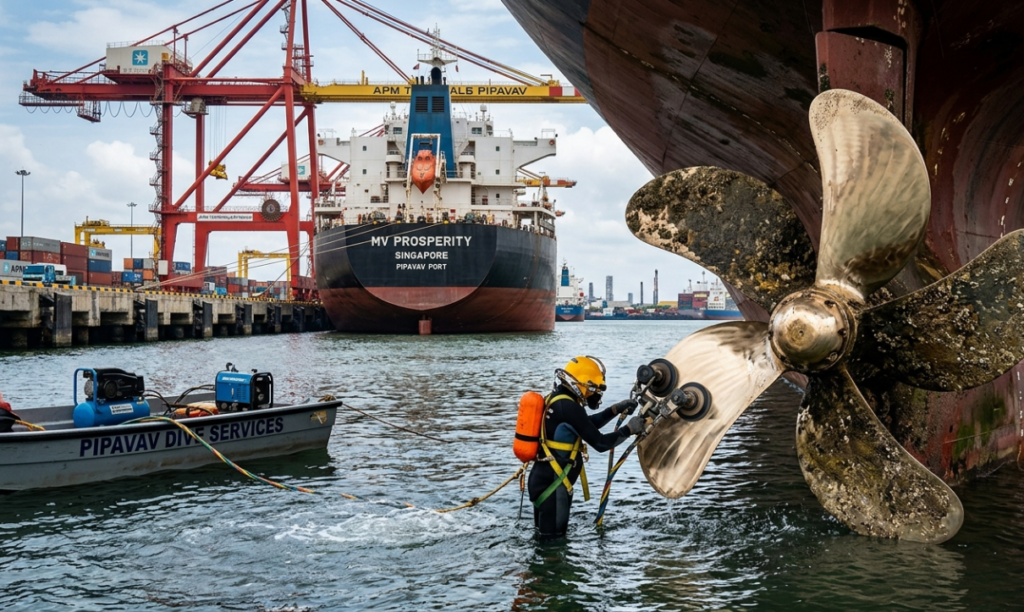
Professional propeller polishing involves a structured process designed to restore surface smoothness without damaging the propeller.
Initial Underwater Inspection
Commercial divers begin with a detailed inspection of the propeller.
The assessment typically focuses on:
- Marine growth accumulation
- Surface condition
- Corrosion signs
- Cavitation damage
- Blade integrity
Underwater video documentation is often recorded for technical review.
Cleaning and Surface Preparation
Before polishing starts, divers remove marine growth, slime, and deposits from the propeller surface.
This step ensures the polishing process can achieve maximum effectiveness.
Polishing Operations
Specialized underwater polishing equipment is used to smooth the blade surfaces carefully.
The objective is not to remove excessive material but to restore a clean, polished finish that reduces friction and improves water flow.
Final Inspection and Reporting
Once polishing is complete, divers perform a final inspection to verify results.
Many service providers supply photographic evidence and maintenance reports for vessel records.
Benefits of Propeller Polishing
The advantages of Propeller Polishing in Pipavav extend beyond appearance. The process directly contributes to vessel performance and cost control.
Improved Fuel Efficiency
A polished propeller moves through water more efficiently.
Reduced surface roughness means lower resistance, helping vessels consume less fuel during operations.
For shipping companies managing large fleets, even modest fuel savings can create substantial annual cost reductions.
Enhanced Vessel Speed
A clean and smooth propeller improves thrust generation.
Many operators notice improved vessel responsiveness and speed consistency after polishing.
Lower Emissions
Reduced fuel consumption naturally leads to lower greenhouse gas emissions.
As environmental regulations continue to evolve, maintaining propulsion efficiency has become increasingly important.
Reduced Engine Load
When propulsion systems operate more efficiently, engines experience less strain while maintaining operational speeds.
This contributes to better overall machinery performance.
Cost-Effective Maintenance
Compared to the financial impact of prolonged inefficiency, routine propeller polishing represents a relatively small investment with measurable returns.
Environmental and Regulatory Considerations
The shipping industry continues to focus on sustainability and responsible maintenance practices.
Professional providers offering Propeller Polishing in Pipavav follow established environmental guidelines designed to minimize impact on surrounding waters.
Important considerations include:
Responsible Biofouling Removal
Marine growth removed during cleaning operations must be managed carefully to prevent environmental risks.
Protection of Propeller Surfaces
Excessive abrasion can damage propeller materials. Experienced divers use appropriate polishing methods that preserve blade integrity.
Compliance with Port Requirements
Ship operators increasingly seek contractors who understand local port procedures and international maintenance standards.
Choosing the Right Service Provider
Not all underwater maintenance providers offer the same level of expertise.
When selecting a company for Propeller Polishing in Pipavav, vessel operators should consider several factors.
Experience and Technical Expertise
Commercial diving teams should have proven experience working on different vessel types and propulsion systems.
Modern Equipment
Advanced underwater polishing tools improve efficiency and deliver consistent results.
Safety Performance
A strong safety culture remains essential in all underwater maintenance operations.
Documentation and Reporting
Detailed inspection reports provide valuable information for maintenance planning and fleet management.
Operational Flexibility
The ability to work within tight vessel schedules is often a key requirement for commercial shipping operations.
The Growing Importance of Propeller Maintenance
Today’s shipping industry operates in a highly competitive environment where fuel efficiency and sustainability influence profitability.
Many vessel operators now view propeller polishing as a routine component of preventive maintenance rather than a corrective measure.
Whether a vessel operates on regional coastal routes or international trade lanes, maintaining a smooth propeller can help improve performance, reduce costs, and support environmental objectives.
As maritime traffic through western India continues to grow, demand for specialized services such as Propeller Polishing in Pipavav is expected to remain strong.
Conclusion
Propeller Polishing in Pipavav plays a crucial role in helping shipowners maintain vessel efficiency, reduce fuel consumption, and optimize propulsion performance. By removing marine growth and restoring smooth blade surfaces, polishing enhances thrust generation while lowering operational costs.
For vessels calling at Pipavav, underwater propeller maintenance offers a practical alternative to dry docking and supports long-term fleet performance. In an industry where every percentage of efficiency matters, regular propeller polishing remains one of the most effective maintenance investments a ship operator can make.
FAQs
Q1. What is propeller polishing?
Propeller polishing is the process of cleaning and smoothing a vessel’s propeller blades underwater to improve propulsion efficiency and reduce fuel consumption.
Q2. How often should a ship’s propeller be polished?
The frequency depends on vessel trading patterns, operating environments, and fouling levels. Many operators conduct inspections every few months.
Q3. Does propeller polishing improve fuel efficiency?
Yes. A smooth propeller reduces water resistance and helps improve propulsion efficiency, often leading to measurable fuel savings.
Q4. Can propeller polishing be performed without dry docking?
Yes. Professional divers can carry out underwater propeller polishing while the vessel remains afloat, reducing downtime.
Q5. Which vessels benefit from propeller polishing in Pipavav?
Container ships, bulk carriers, tankers, offshore support vessels, coastal cargo ships, and many other commercial vessels can benefit from regular propeller polishing services.