
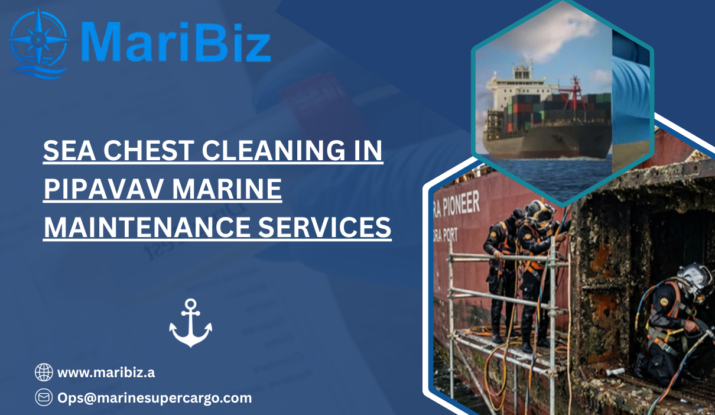
Many ship maintenance discussions focus on hull condition, propeller performance, or engine efficiency. Yet one critical area often remains out of sight until a problem develops—the sea chest.
Located below the waterline, the sea chest serves as the primary intake point for seawater used in a vessel’s cooling, firefighting, ballast, and auxiliary systems. Because it remains constantly exposed to seawater, it naturally attracts marine growth, debris, shellfish, and sediment over time.
When sea chests become clogged, vessel operations can be affected in ways that are not immediately obvious. Cooling efficiency drops, machinery temperatures increase, and onboard systems may struggle to perform as designed.
This is why Sea Chest Cleaning in Pipavav has become an important underwater maintenance service for commercial vessels operating along India’s western coastline. With a growing number of bulk carriers, tankers, container vessels, and offshore support vessels calling at Pipavav, maintaining clean seawater intake systems has become a practical necessity rather than an optional maintenance task.
Understanding the Role of a Sea Chest
A sea chest is essentially a recessed compartment built into the hull of a ship. It allows seawater to enter through grating openings before being distributed to various onboard systems.
These systems often include:
- Main engine cooling systems
- Auxiliary engine cooling systems
- Ballast water systems
- Firefighting systems
- Air conditioning and refrigeration units
- General service pumps
Without a properly functioning sea chest, many critical shipboard operations can be compromised.
For vessel operators, maintaining uninterrupted seawater flow is vital for safe and efficient operations.
Why Sea Chests Become Blocked
The marine environment constantly exposes vessels to conditions that promote fouling and blockage.
Marine Growth Accumulation
Barnacles, mussels, algae, and other marine organisms readily attach themselves to intake gratings and internal sea chest surfaces.
Over time, these organisms can significantly restrict water flow.
Sediment and Debris
Ports, anchorages, and coastal waters often contain suspended sediment, fishing materials, plastic debris, and organic matter that can become trapped inside sea chest structures.
Shell Deposits
Some operating areas experience rapid shell growth due to favorable environmental conditions. These deposits can build up surprisingly quickly if not addressed.
A container vessel operating regularly between Gulf ports and western India may experience noticeable reductions in cooling efficiency after several months of operation. In many cases, an underwater inspection reveals extensive fouling inside the sea chest system.
This scenario highlights why Sea Chest Cleaning in Pipavav is increasingly scheduled as part of preventive maintenance programs.
Why Pipavav Is an Important Location for Sea Chest Cleaning
Pipavav occupies a strategic position on India’s west coast and serves as an important port for domestic and international shipping.
Convenient Access for Trading Vessels
Many vessels operating on routes connecting Asia, the Middle East, Africa, and Europe pass through this region.
Conducting maintenance during a planned port call helps operators avoid unnecessary voyage deviations.
Reduced Downtime
Dry docking remains effective for major maintenance projects, but it is not always practical for routine sea chest cleaning.
Underwater cleaning allows vessels to remain afloat while maintenance work is completed.
Availability of Professional Diving Services
The region supports experienced commercial diving teams equipped to perform inspections, cleaning, and underwater maintenance safely and efficiently.
As a result, Sea Chest Cleaning in Pipavav can often be completed without disrupting vessel schedules.
How Sea Chest Cleaning Is Performed
Professional underwater maintenance teams follow a systematic process to ensure cleaning is effective and safe.
Initial Inspection
Before any cleaning begins, divers conduct a thorough inspection of the sea chest area.
The inspection typically evaluates:
- Marine growth levels
- Grating condition
- Debris accumulation
- Signs of corrosion
- Potential structural concerns
Underwater cameras are often used to document conditions before maintenance starts.
Removal of Marine Growth
Divers use specialized underwater tools to remove barnacles, mussels, algae, and other fouling organisms from intake gratings and surrounding areas.
The cleaning method depends on the extent of fouling and vessel design.
Internal Sea Chest Cleaning
Where access permits, divers clean internal sea chest spaces to restore proper water flow.
Particular attention is given to areas where biological growth commonly accumulates.
Final Verification
Once cleaning is completed, divers perform a final inspection to confirm that intake openings are clear and functioning properly.
Many service providers supply photographic reports for vessel maintenance records.
Benefits of Sea Chest Cleaning
The operational benefits of Sea Chest Cleaning in Pipavav extend well beyond simple cleanliness.
Improved Cooling System Efficiency
Clean seawater intakes allow cooling systems to operate as designed.
This helps maintain proper machinery temperatures and reduces the risk of overheating.
Reduced Risk of Equipment Failure
Restricted water flow can place additional stress on pumps, heat exchangers, and cooling circuits.
Routine cleaning helps prevent avoidable equipment problems.
Enhanced Operational Reliability
A vessel with properly functioning cooling and auxiliary systems is less likely to experience unexpected operational disruptions.
Lower Maintenance Costs
Addressing fouling before it becomes severe often prevents larger and more expensive repairs later.
Increased Safety
Reliable cooling and firefighting systems contribute directly to vessel safety during operations.
Environmental Considerations
The maritime industry continues to place greater emphasis on environmental responsibility.
Professional providers of Sea Chest Cleaning in Pipavav follow procedures designed to minimize environmental impact while maintaining vessel performance.
Responsible Biofouling Management
Marine organisms removed during cleaning operations must be managed in accordance with applicable environmental requirements.
Prevention of Invasive Species Transfer
Regular sea chest maintenance helps reduce the risk of transporting invasive marine species between different geographic regions.
Compliance with Industry Standards
Ship operators increasingly seek underwater maintenance providers that understand both environmental obligations and port-specific requirements.
Choosing the Right Sea Chest Cleaning Provider
The quality of underwater maintenance can vary significantly between service providers.
When selecting a contractor for Sea Chest Cleaning in Pipavav, vessel operators should evaluate several important factors.
Commercial Diving Experience
Experienced divers understand vessel structures, underwater safety procedures, and effective cleaning techniques.
Modern Equipment
Advanced inspection cameras and specialized cleaning tools contribute to more efficient operations.
Safety Standards
Professional underwater maintenance requires strict adherence to safety protocols.
Inspection Reporting
Detailed documentation provides valuable information for maintenance planning and fleet management.
Response Capability
Commercial vessels often operate on tight schedules, making timely service availability a key consideration.
Why Preventive Maintenance Matters
Sea chest problems often develop gradually. By the time cooling efficiency noticeably declines, fouling may already be extensive.
Forward-thinking shipping companies increasingly incorporate routine underwater inspections and cleaning into their maintenance schedules.
Rather than waiting for operational issues to arise, they address potential problems before they affect vessel performance.
For vessels calling at Pipavav, this proactive approach helps reduce risks, improve reliability, and support uninterrupted operations.
Conclusion
Sea Chest Cleaning in Pipavav is a critical underwater maintenance service that helps vessels maintain efficient cooling system performance, reduce operational risks, and improve overall reliability. By removing marine growth, sediment, and debris from seawater intake areas, professional cleaning ensures that essential onboard systems continue functioning as intended.
As shipping companies focus on preventive maintenance and operational efficiency, regular sea chest inspections and cleaning have become an important part of modern vessel management. For ships operating along India’s west coast, Pipavav offers a convenient location to perform this essential service while minimizing downtime and maximizing vessel readiness.
FAQs
Q1. What is a sea chest on a ship?
A sea chest is a recessed compartment in a vessel’s hull that allows seawater to enter and supply cooling, ballast, firefighting, and auxiliary systems.
Q2. Why is sea chest cleaning important?
Sea chest cleaning removes marine growth and debris that can restrict water flow and affect critical vessel systems.
Q3. How often should sea chest cleaning be performed?
The frequency depends on operating routes, water conditions, and fouling rates. Regular underwater inspections help determine cleaning requirements.
Q4. Can sea chest cleaning be done while the vessel is afloat?
Yes. Professional commercial divers can perform sea chest cleaning underwater without requiring dry docking.
Q5. Which vessels require sea chest cleaning in Pipavav?
Container ships, bulk carriers, tankers, offshore vessels, coastal cargo ships, and many other commercial vessels benefit from regular sea chest maintenance.