
Hold cleaning in Jebel Ali is not a background maintenance task. In one of the world’s busiest and most regulated ports, it is a frontline safety operation that protects crew, cargo, vessels, and commercial reputation. When you operate in the UAE, hold cleaning directly affects inspection outcomes, environmental compliance, and turnaround efficiency. Done right, it becomes a quiet advantage. Done poorly, it becomes an operational liability.
This article explains why Hold cleaning in Jebel Ali matters, how regulations shape every step, and the seven essential safety wins you achieve by following proven industry standards.
Why the UAE Sets High Marine Cleaning ExpectationsR
The UAE sits at the center of global trade lanes. Jebel Ali handles bulk carriers, tankers, and multipurpose vessels moving between Asia, Europe, and Africa. Authorities expect vessels to arrive inspection-ready, not “nearly clean.”
Hold cleaning in Jebel Ali reflects:
- Heavy port traffic and fast cargo rotation
- Zero tolerance for environmental discharge
- Strict alignment with international conventions
In this environment, cleaning is treated as risk control, not housekeeping.
What Hold Cleaning in Jebel Ali Really Involves
Hold cleaning focuses on removing residues from cargo holds after bulk cargo discharge. These residues may include coal dust, fertilizer traces, grain remnants, or mineral fines.
A standard Hold cleaning in Jebel Ali operation includes:
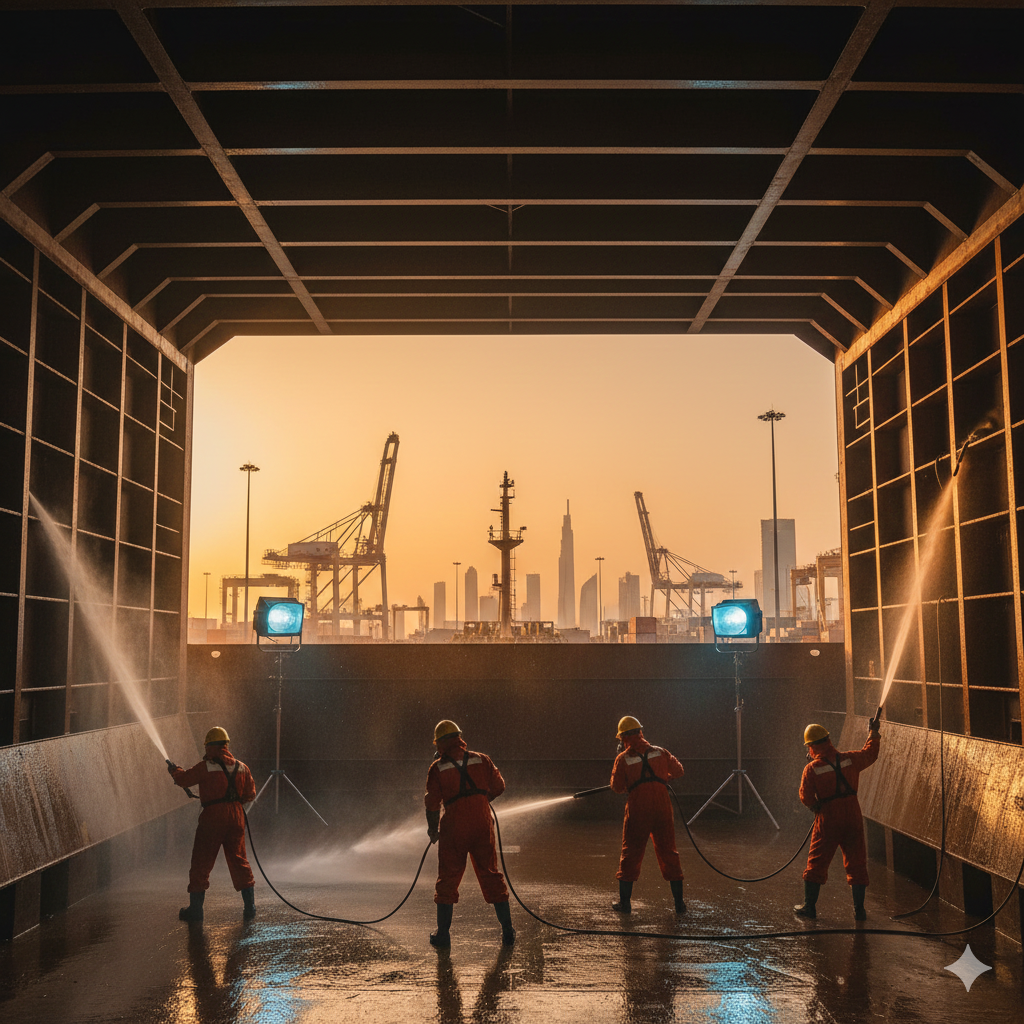
- Mechanical residue removal
- High-pressure washing
- Drying and ventilation
- Visual and joint inspection
Each step directly affects safety and cargo acceptance.

Regulatory Framework Governing Hold Cleaning
IMO and MARPOL Convention Requirements
The IMO establishes global safety and pollution prevention standards, while the MARPOL Convention controls residue discharge and wash water handling. Hold cleaning in Jebel Ali must align with both, especially for bulk carriers transitioning between cargoes.
IMCA and IAPH Operational Influence
IMCA guidance shapes safe work practices, particularly around confined spaces and equipment use. IAPH standards reflect port-level enforcement expectations, which are especially strict in Jebel Ali.
Compliance is layered, not optional.
Safety Win 1: Reduced Confined Space Risks
Cargo holds are enclosed spaces where dust, gases, and low oxygen levels can accumulate. Poor cleaning leaves invisible hazards behind.
Effective Hold cleaning in Jebel Ali:
- Removes hazardous residues
- Improves air quality before entry
- Supports safe inspection access
Think of it as clearing a sealed warehouse before sending workers inside.
Safety Win 2: Dust Explosion and Fire Prevention
Bulk cargo residues, especially coal and grain dust, can ignite under the right conditions. Static electricity and heat are enough.
By following proper hold cleaning standards, you:
- Minimize combustible dust layers
- Reduce ignition risks
- Support hot work approvals
Many bulk carrier incidents trace back to neglected residue management. Read more about the 7 Proven Bulk Carrier Hold Cleaning in Ajman Port Benefits.
Safety Win 3: Crew Health Protection
Dust and chemical residues can cause respiratory issues, skin irritation, and long-term health problems. Hold cleaning is a human safety issue before it is a cargo issue.
Hold cleaning in Jebel Ali protects crews by:
- Removing harmful particulates
- Enabling safer inspections
- Supporting onboard safety culture
Some operators integrate drug and alcohol testing services as part of broader crew safety systems, reflecting mature industry practice.
Safety Win 4: Environmental Protection Compliance
Residues washed overboard can violate MARPOL rules and trigger enforcement action. Jebel Ali monitors environmental performance closely.
Proper Hold cleaning in Jebel Ali ensures:
- Controlled residue collection
- Compliant disposal methods
- Protection of port waters
Environmental safety and operational safety are now inseparable. Read more about Hold Tank Cleaning in Abu Dhabi: 7 Powerful Safety Gains.
Safety Win 5: Cargo Integrity and Contamination Control
Bulk cargoes are sensitive to contamination. Fertilizer residue in a grain hold can destroy cargo value.
Consistent hold cleaning:
- Prevents cross-contamination
- Reduces cargo rejection risk
- Protects charterer relationships
Clean holds are part of cargo quality assurance.
Safety Win 6: Inspection Readiness and Documentation
Visual cleanliness is not enough in Jebel Ali. Inspectors expect proof.
A compliant workflow for hold cleaning in Jebel Ali includes:
- Cleaning checklists
- Photographic records
- Joint inspection sign-offs
World Ports Marine Supercargo Final Quality Rules emphasize verifiable cleanliness before cargo loading approval.
Safety Win 7: Structural and Coating Preservation
Residues trap moisture and accelerate corrosion. Over time, poor cleaning shortens vessel lifespan.
Regular Hold cleaning in Jebel Ali:
- Protects coatings
- Reduces steel degradation
- Lowers long-term maintenance costs
Safety and asset protection move together.
Tank, Hold, and Bulk Carrier Cleaning Standards
While this article centers on holds, the UAE applies similar discipline to:
- Tank cleaning for liquid cargoes
- Bulk carrier change-of-cargo preparation
- Multi-purpose vessel cargo spaces
The methods differ, but the safety logic remains consistent across vessel types. Learn more about 7 Proven Vessel Hold Cleaning Services in Abu Dhabi.
Inspection and Compliance Workflow in Practice
A typical Hold cleaning in Jebel Ali workflow follows a structured path:
- Risk assessment and planning
- Controlled cleaning execution
- Drying and ventilation
- Joint inspection with stakeholders
Companies such as Cleanship.co are often referenced in the industry for applying these globally aligned practices across tank and hold cleaning operations, supported by cargo supervision and compliance services.
Cost Efficiency Through Proper Hold Cleaning
Safety-focused cleaning is not a cost burden. It reduces:
- Delays due to re-cleaning
- Cargo claims
- Regulatory penalties
Hold cleaning in Jebel Ali supports predictable schedules and commercial reliability.
Future Trends in Marine Cleaning
Marine cleaning is evolving toward smarter systems:
- Mechanized residue removal
- Dust suppression technologies
- Digital inspection reporting
Innovation aims to improve safety while reducing environmental impact and human exposure.
Conclusion
Hold cleaning in Jebel Ali delivers three clear outcomes. First, it protects crew safety by controlling confined space, dust, and fire risks. Second, it ensures compliance with IMO, IMCA, MARPOL, and IAPH expectations in one of the world’s strictest ports. Third, it preserves cargo integrity and vessel value through disciplined cleaning standards.
In a port where inspections are thorough and reputations travel fast, professional execution matters. For operators seeking compliance-driven, safety-focused maritime services, Cleanship.co stands as a strong example of industry practice, offering global hold and tank cleaning, cargo supervision, and crew safety support aligned with international standards.
FAQs:
Jebel Ali handles high cargo volumes under strict environmental rules. Hold cleaning in Jebel Ali is enforced to reduce safety risks, prevent pollution, and ensure cargo readiness under IMO and MARPOL regulations.
Hold cleaning focuses on dry bulk residues like dust and fines, while tank cleaning addresses liquid cargo residues and vapors. Both follow similar safety principles but use different methods and inspection criteria.
Yes. Inadequate hold cleaning in Jebel Ali can lead to failed inspections, cargo rejection, and extended port stays, increasing costs and disrupting schedules.
Cleanliness is typically verified through joint inspections involving ship staff, cargo interests, and sometimes marine supercargo representatives following World Ports Marine Supercargo Final Quality Rules.
Absolutely. Proper hold cleaning reduces corrosion, protects coatings, and extends structural life, making it a key factor in both safety management and asset preservation.