
Chennai Port is one of India’s most strategically positioned gateways for dry bulk cargo. From coal and limestone to fertilizers and food grains, vessels calling here operate under tight schedules, strict inspections, and zero tolerance for contamination. In this environment, cargo hold cleaning in Chennai is not a routine housekeeping task—it is a critical compliance and performance function.
Shipowners, charterers, and terminal operators understand that improper hold preparation can trigger cargo rejection, off-hire claims, regulatory penalties, and reputational damage. When executed correctly, however, professional hold cleaning strengthens operational efficiency, protects crew safety, and ensures full regulatory alignment.
Below are seven proven benefits drawn from real port operations and global compliance standards.
Chennai Port: Operational Realities That Demand Precision
Chennai’s humid coastal climate accelerates corrosion and residue buildup inside cargo holds. Monsoon cycles increase moisture risks. Bulk carriers frequently shift between cargo types—coal to grain, clinker to fertilizer—leaving residues that must be removed to meet loading survey approval.
Marine superintendents and surveyors apply strict inspection benchmarks before approving holds as “grain clean” or “hospital clean.” Failing inspection means costly delays. This is where structured cargo hold cleaning in Chennai becomes mission-critical.
Regulatory Framework Governing Hold Cleaning
Professional operators align their procedures with internationally recognized standards:
- IMO (International Maritime Organization) safety conventions for shipboard operations
- MARPOL Convention requirements for pollution prevention and wash-water disposal
- IMCA (International Marine Contractors Association) best-practice safety guidance
- IAPH World Ports sustainability and port safety principles
- Marine Supercargo Final Quality Rules, which define cargo cleanliness benchmarks
Compliance is not theoretical. Port State Control officers and surveyors actively verify documentation and cleaning standards.
1. Prevents Cargo Contamination and Rejection
Residues from previous cargoes—such as coal dust, cement particles, or rust scale—can contaminate sensitive cargo like food grains or fertilizers. Even minor traces can cause rejection at discharge ports.
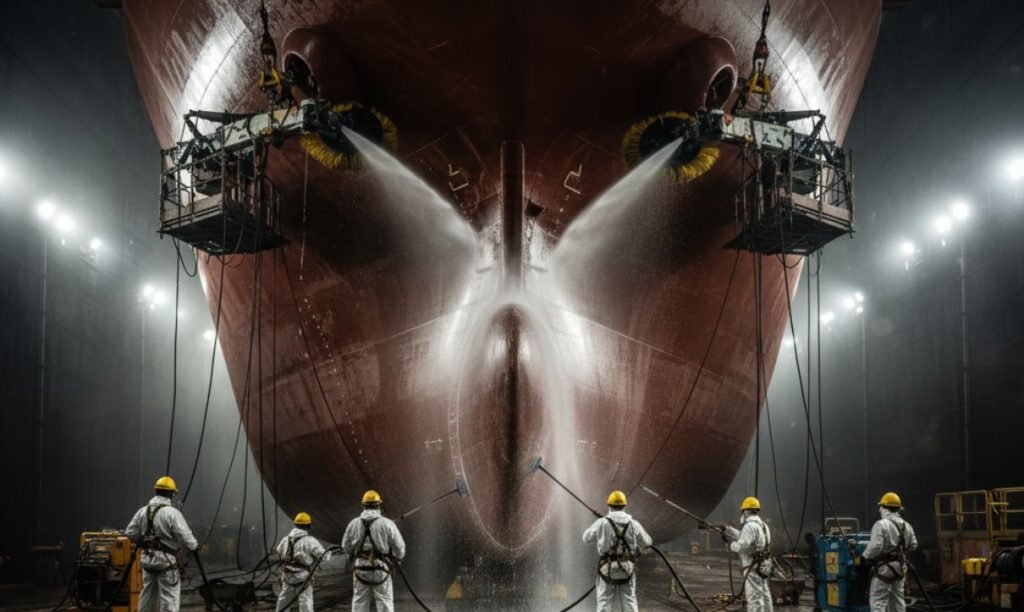
Thorough cargo hold cleaning in Chennai eliminates loose scale, residues, grease, and moisture. High-pressure washing, mechanical descaling, and detailed sweeping ensure the hold meets cargo-specific cleanliness standards. The result is smoother loading approval and reduced claim exposure.
2. Ensures Compliance with MARPOL Discharge Rules
Hold washing generates contaminated water. Under the MARPOL Convention, discharge of residues and wash water must follow strict guidelines depending on cargo classification and port reception facilities.
Professional cleaning teams document waste handling, use approved collection methods, and coordinate with licensed disposal vendors. This prevents illegal discharge violations, which can result in severe fines and vessel detention.
In high-traffic ports like Chennai, compliance is continuously monitored.
3. Protects Structural Integrity of the Vessel
Bulk cargo residues trap moisture and accelerate corrosion. Over time, corrosion reduces steel thickness and compromises structural strength.
Scheduled cargo hold cleaning in Chennai includes rust removal, scaling checks, and early corrosion detection. Identifying coating breakdown or pitting early reduces long-term steel renewal costs and dry-dock expenses.
Preventive maintenance through cleaning is significantly more economical than structural repair. Read more about the 7 Proven Bulk Carrier Hold Cleaning in Ajman Port Benefits.
4. Improves Loading Efficiency and Turnaround Time
Port congestion increases operational pressure. Every additional hour at berth affects charter party performance.
When cargo holds are pre-cleaned to survey-ready condition, vessels avoid last-minute rejections and repeated cleaning cycles. Efficient cargo hold cleaning in Chennai ensures faster survey clearance and uninterrupted loading operations.
Reduced idle time translates directly into cost savings for owners and charterers.
5. Enhances Crew Safety and Risk Control
Confined space entry inside cargo holds involves hazards such as oxygen deficiency, toxic gases, and slip risks. IMCA safety protocols emphasize proper ventilation, gas testing, PPE usage, and rescue readiness.
Professional cleaning teams apply confined space entry permits, continuous gas monitoring, and structured supervision. This reduces injury risk and ensures safe working conditions for both crew and contractors.
Safety is not optional—it is a regulatory obligation under IMO conventions.
6. Strengthens Charter Party Performance
Many charter agreements include clauses requiring holds to meet “grain clean” or “hospital clean” standards before loading.
Failure to comply can result in off-hire claims, cleaning deductions, or delayed laytime calculations. Reliable cargo hold cleaning in Chennai ensures contractual obligations are met before surveyors board the vessel.
This protects commercial interests and preserves charter relationships. Read more about Hold Tank Cleaning in Abu Dhabi: 7 Powerful Safety Gains.
7. Supports Port Sustainability and Environmental Responsibility
IAPH World Ports guidelines emphasize environmental stewardship. Responsible cleaning operations minimize environmental impact through controlled waste management and approved discharge systems.
Properly executed cargo hold cleaning in Chennai supports Chennai Port’s environmental objectives while aligning vessel operators with global sustainability expectations.
Environmental compliance now directly influences port reputation and charter eligibility.
Cleaning Standards: From Sweep Clean to Hospital Clean
Cargo-specific standards define cleaning intensity:
Sweep Clean: Removal of loose residues and debris.
Grain Clean: No visible residues, rust scale, or contaminants.
Hospital Clean: Fully washed, dried, and contamination-free for highly sensitive cargo.
Surveyors inspect hatch covers, frames, ladders, bilges, and underdeck structures. Attention to detail is critical.
Professional contractors document procedures, photographs, and inspection reports to satisfy Marine Supercargo Final Quality Rules.
Advanced Techniques Used in Modern Hold Cleaning
Modern operations rely on:
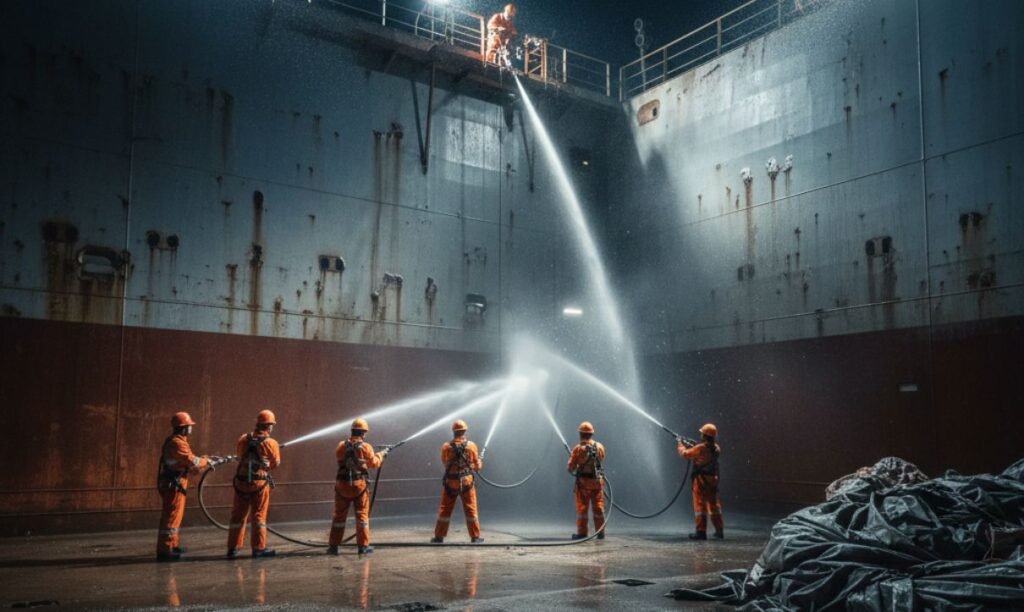
- High-pressure water jetting systems
- Industrial vacuum units
- Mechanical descaling tools
- Chemical degreasers compliant with environmental standards
- Controlled drying methods using air movers
Each method is selected based on cargo history, coating condition, and upcoming cargo type.
Technology reduces manual labor risks while improving cleaning precision.
Risk Assessment and Method Statements
Before cleaning begins, supervisors conduct structured risk assessments. This includes:
- Confined space hazard evaluation
- Structural condition inspection
- Residue classification under MARPOL
- Environmental discharge planning
Documented method statements ensure alignment with IMO and IMCA frameworks.
This procedural discipline is what separates compliant operators from informal service providers. Learn more about 7 Proven Vessel Hold Cleaning Services in Abu Dhabi.
Documentation and Survey Readiness
Proper documentation includes:
- Cleaning logs
- Gas test records
- Waste disposal certificates
- Photographic evidence
Surveyors often request evidence of previous cargo details and cleaning procedures. Organized documentation accelerates clearance.
Selecting a Professional Cleaning Partner
When choosing a contractor, vessel operators evaluate:
- Compliance track record
- Safety certifications
- Equipment capability
- Workforce training standards
- Documentation reliability
Industry benchmarks such as Cleanship.co demonstrate structured compliance practices and operational transparency. While service providers vary, adherence to international standards remains the primary selection criterion.
Economic Impact on Vessel Operations
Cleaning failures can cost thousands of dollars in delay penalties and claim settlements. Conversely, professional cleaning reduces:
- Laytime disputes
- Cargo rejection claims
- Emergency re-cleaning expenses
- Long-term corrosion repair costs
Viewed strategically, cargo hold cleaning in Chennai is an investment in operational continuity.
Inspection Trends in Indian Ports
Port State Control inspections in India increasingly focus on environmental compliance and crew safety practices. Improper residue disposal or incomplete cleaning records can trigger further investigation.
Owners who standardize procedures minimize inspection risk and protect fleet reputation.
Integration with Planned Maintenance Systems
Forward-looking operators integrate hold cleaning schedules into Planned Maintenance Systems (PMS). This ensures inspection cycles align with cargo rotation and dry-dock timelines.
Predictive maintenance reduces unexpected downtime and improves fleet performance metrics.
Conclusion
Professional cargo hold cleaning in Chennai delivers measurable operational, commercial, and regulatory advantages. It prevents contamination, protects vessel structure, strengthens charter performance, and ensures full compliance with IMO, IMCA, MARPOL Convention, and IAPH World Ports guidelines. In a port environment where inspections are rigorous and turnaround time is critical, structured cleaning processes protect both safety and profitability.
Vessel operators seeking reliable, compliant performance should partner with experienced service providers who follow Marine Supercargo Final Quality Rules and maintain complete documentation. Proactive cleaning is not an expense—it is a safeguard for long-term maritime success.
FAQs:
Grain clean requires holds to be free from loose rust scale, residues, moisture, grease, and previous cargo traces, meeting surveyor approval before grain loading.
Wash water disposal depends on cargo classification. It must be discharged at approved reception facilities or handled according to MARPOL Annex V requirements.
Cargo holds may contain toxic gases or low oxygen levels. Gas testing, ventilation, entry permits, and rescue readiness are mandatory under IMO safety guidelines.
Inspection frequency depends on cargo type and trade pattern, but routine visual inspection should occur after every discharge cycle.
Cleaning logs, gas test reports, previous cargo declarations, and waste disposal certificates are typically reviewed during inspection.