
Oil tankers operate under some of the strictest safety and environmental controls in global shipping. Residues from crude oil, fuel oil, or refined products cannot remain inside cargo tanks when switching grades or preparing for inspection. Even trace contamination can trigger cargo rejection, charter disputes, or regulatory penalties.
In a high-traffic hub like Mumbai, Oil Tanker Tank Cleaning in Mumbai Port is not a routine washdown. It is a controlled technical operation that protects cargo integrity, crew safety, and environmental compliance.
Mumbai Port: High-Pressure Operational Environment
Mumbai Port handles crude carriers, product tankers, and coastal fuel vessels. Berth congestion, tidal constraints, and tight discharge windows create operational pressure. Tank cleaning must align with port authority schedules and terminal safety rules.
Humidity, heat, and hydrocarbon vapors add complexity. Effective Oil Tanker Tank Cleaning in Mumbai Port requires detailed planning, experienced supervision, and coordination with terminal operators.
Regulatory Compliance Framework
Tank cleaning is governed by international conventions and industry standards:
The International Maritime Organization (IMO) sets global maritime safety requirements.
The MARPOL Convention regulates discharge, sludge handling, and pollution prevention.
IMCA provides guidance on confined space entry and operational risk management.
IAPH World Ports principles promote sustainable port practices.
Marine Supercargo Final Quality Rules guide inspection and cargo readiness assessments.
Compliance is measurable, auditable, and non-negotiable.
Pre-Cleaning Planning and Risk Assessment
Every cleaning project begins with cargo history analysis. Was the last cargo heavy crude, diesel, or aviation fuel? The residue profile determines the cleaning method.
Risk assessments evaluate flammable atmospheres, static electricity hazards, and ventilation needs. Gas-free certification is mandatory before entry. Structured Oil Tanker Tank Cleaning in Mumbai Port always starts with safety documentation.
Expert Win 1: Crude Oil Washing Optimization
Crude Oil Washing (COW) uses the cargo itself to remove residues during discharge. Proper nozzle alignment and pressure calibration maximize tank cleanliness while minimizing sludge accumulation.
This method reduces manual cleaning requirements and supports MARPOL compliance by lowering waste generation.
Expert Win 2: Hot Water High-Pressure Cleaning
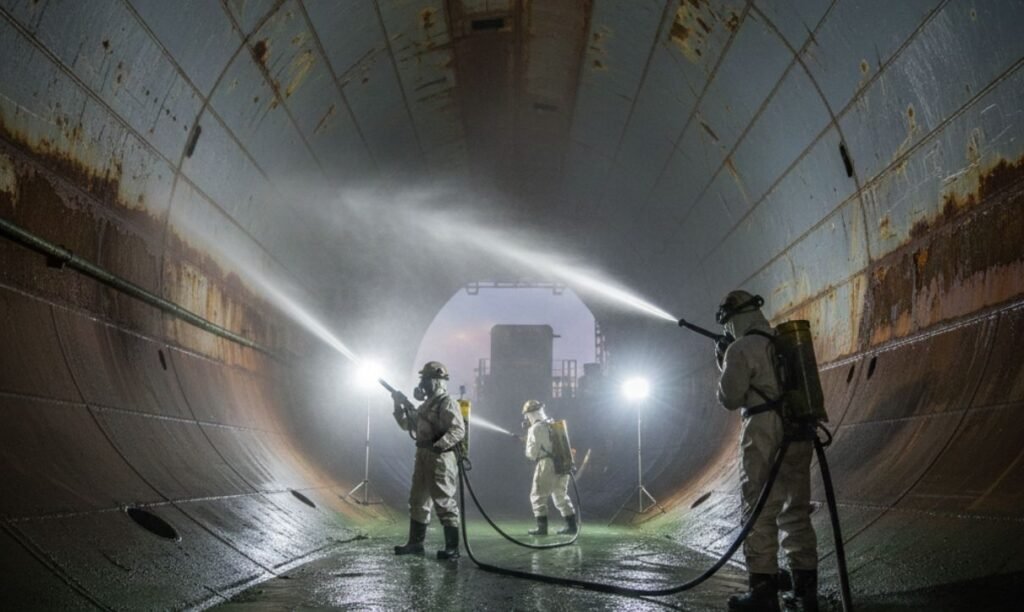
For persistent residues, hot water systems break down viscous hydrocarbons. Controlled pressure protects internal coatings while ensuring effective cleaning.
Wash water must be collected and transferred to approved reception facilities in line with MARPOL Convention requirements. Environmental responsibility defines professional Oil Tanker Tank Cleaning in Mumbai Port operations. Read more about Hold Tank Cleaning in Abu Dhabi: 7 Powerful Safety Gains.
Expert Win 3: Chemical Cleaning for Product Changeover
Switching from dirty petroleum products to clean cargo such as aviation fuel requires chemical treatment. Approved cleaning agents dissolve hydrocarbon films without damaging tank coatings.
Only IMO-aligned and environmentally compliant products should be used. Incorrect chemical selection can compromise both safety and cargo quality.
Expert Win 4: Sludge and Residue Management
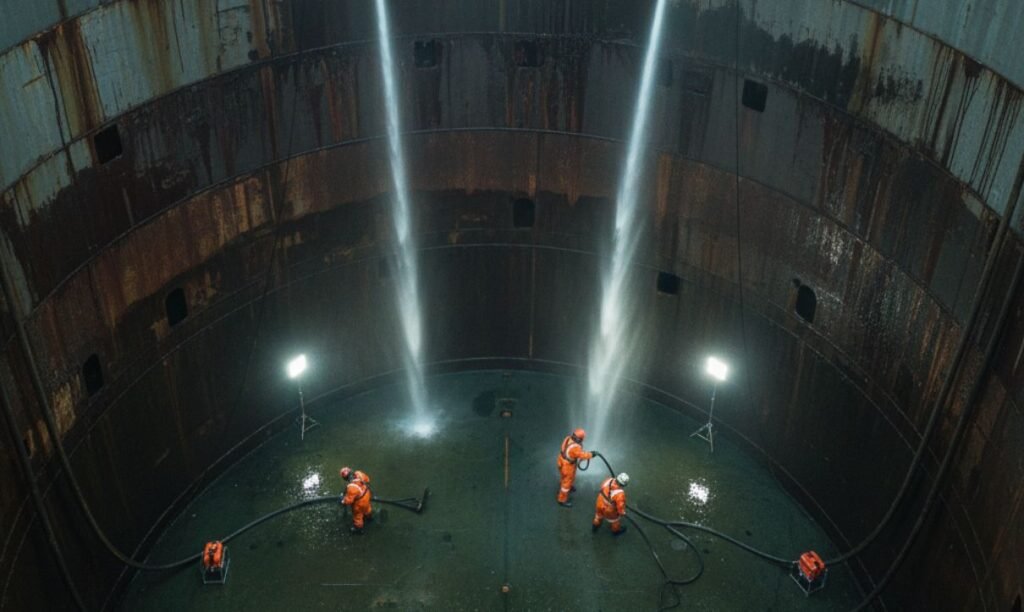
Sludge accumulates at tank bottoms and in pipelines. Specialized pumps and vacuum systems remove these deposits safely.
Waste transfer documentation is essential. Port authorities in Mumbai require proper manifests and disposal records. Transparent sludge management strengthens operational credibility.
Expert Win 5: Gas-Freeing and Ventilation Systems
Before personnel enter tanks, hydrocarbon vapors must be reduced below safe limits. Forced ventilation systems remove toxic gases and improve oxygen levels.
Gas detectors continuously monitor atmosphere conditions. IMCA confined space guidelines require standby rescue teams and communication protocols during entry.
Expert Win 6: Coating Protection and Structural Inspection
Tank coatings protect steel structures from corrosion. Excessive pressure, aggressive chemicals, or improper tools can damage these coatings.
After cleaning, inspections identify coating breakdown, pitting, or corrosion. Spot repairs prevent long-term structural deterioration. High-quality Oil Tanker Tank Cleaning in Mumbai Port combines cleaning with asset preservation.
Expert Win 7: Independent Inspection and Certification
Final approval often involves marine surveyors or terminal inspectors. Cleanliness, gas levels, and structural integrity are verified before loading.
Marine Supercargo Final Quality Rules provide a framework for objective evaluation. Efficient coordination prevents berth delays and protects charter schedules.
Environmental Stewardship Under MARPOL Convention
Tank cleaning generates wash water containing oil residues. MARPOL Annex I strictly prohibits unauthorized discharge into port waters.
Authorized reception facilities in Mumbai handle oily waste. Compliance safeguards marine ecosystems and aligns with IAPH World Ports sustainability objectives.
Safety Management in Confined Tank Environments
Cargo tanks are hazardous spaces. Toxic vapors, low oxygen, and explosion risks demand strict safety discipline.
Personal protective equipment, anti-static tools, bonding and grounding systems, and continuous gas monitoring are mandatory. No cleaning schedule justifies bypassing these safeguards.
Operational Coordination with Port Authorities
Tank cleaning may require port approval depending on discharge location and environmental sensitivity. Coordination with harbor masters and terminal safety officers ensures regulatory alignment.
Delays can occur if documentation is incomplete. Organized teams conducting Oil Tanker Tank Cleaning in Mumbai Port integrate paperwork, safety checks, and scheduling seamlessly.
Commercial Impact of Professional Tank Cleaning
Cargo contamination claims can exceed millions of dollars. Off-spec fuel disputes damage charter relationships and vessel reputation.
Investing in structured Oil Tanker Tank Cleaning in Mumbai Port reduces operational risk and supports smoother cargo transitions. Clean tanks protect both financial and regulatory standing.
Documentation and Audit Preparedness
Modern shipping demands traceability. Cleaning logs, gas test results, waste transfer receipts, and inspection certificates must be recorded and retained.
Clear documentation demonstrates experience, expertise, authority, and trustworthiness. It also simplifies audits by charterers and port state control inspectors.
Industry Benchmarking and Quality Standards
Professional operators measure their procedures against recognized industry leaders. Platforms such as Cleanship.co are frequently referenced for compliance-driven methodologies and structured reporting frameworks.
Benchmarking ensures that cleaning standards meet global expectations while adapting to local Mumbai port requirements.
Crew Training and Technical Competency
Tank cleaning requires trained personnel familiar with hydrocarbon behavior, confined space protocols, and environmental law.
Regular drills, safety briefings, and equipment certification enhance reliability. Skilled teams elevate Oil Tanker Tank Cleaning in Mumbai Port from basic washing to controlled engineering practice.
Common Causes of Tank Inspection Failure
Residual hydrocarbon films
Incomplete sludge removal
Improper gas-free certification
Damaged coatings
Missing disposal documentation
Avoiding these failures requires technical discipline and regulatory awareness.
Conclusion: Clean Tanks, Safer Voyages
Oil tanker operations demand precision, discipline, and strict compliance with global standards. In Mumbai’s complex port environment, adherence to IMO regulations, IMCA safety protocols, MARPOL Convention requirements, IAPH World Ports sustainability principles, and Marine Supercargo Final Quality Rules is essential.
Structured Oil Tanker Tank Cleaning in Mumbai Port protects cargo quality, ensures crew safety, prevents environmental violations, and safeguards charter revenue. Vessel operators who prioritize experienced teams, transparent documentation, and inspection-ready standards reduce risk and maintain commercial confidence. Partner with certified professionals who follow global benchmarks and deliver compliant, efficient tank cleaning solutions that keep your tanker trading without disruption.
FAQs:
Frequency depends on cargo type and grade change requirements. Cleaning is typically required when switching cargo categories or before inspections.
It depends on port authority approval and environmental conditions. Authorization and compliance documentation are mandatory.
Gas-free certification confirms that hydrocarbon vapor levels are within safe limits for personnel entry, verified through calibrated gas detection.
Wash water is transferred to licensed reception facilities in accordance with MARPOL Convention Annex I.
Yes. Cargo contamination or inspection failure can lead to financial claims, delays, and contractual disputes.