Cargo Hold Cleaning

Bulk carrier hold cleaning in Khalid Port for safe and efficient cargo operations

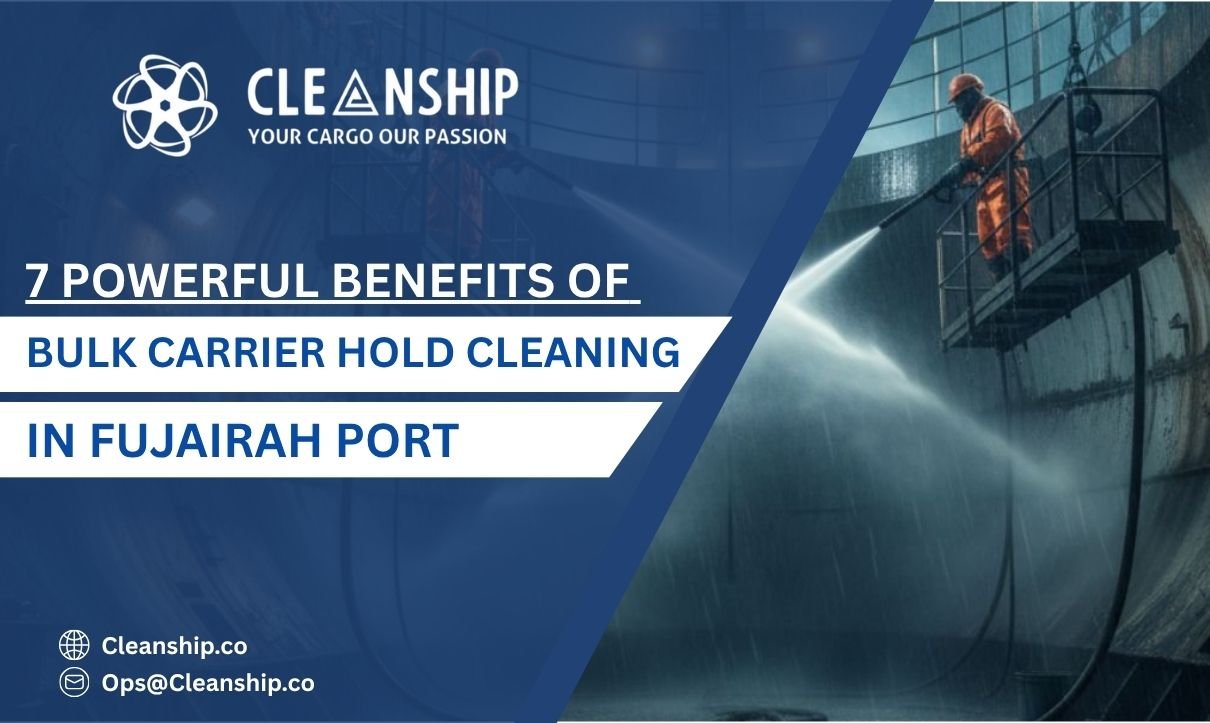
7 Powerful Benefits of Bulk Carrier Hold Cleaning in Khalid Port

Powerful Benefits of Bulk Carrier Hold Cleaning in Khalid Port Bulk carriers are the backbone of global trade, moving millions of tons of dry cargo every year. In a busy UAE port like Khalid Port, even a small lapse in cargo hold hygiene can lead to contamination, delays, or regulatory trouble. That is why bulk carrier hold cleaning in Khalid Port is not just a routine task—it is a strategic maritime decision. In this article, we explain why hold cleaning matters, how it aligns with international regulations, and the seven powerful benefits you gain when it is done professionally, safely, and compliantly. Why Khalid Port Is a Strategic Hub for Bulk Carriers UAE’s Role in Global Maritime Trade The UAE sits at a critical junction between Asia, Africa, and Europe. Khalid Port serves as a key gateway for bulk cargo such as: With high vessel traffic and tight schedules, operational efficiency is essential. High Expectations from Port Authorities Ports in the UAE follow strict safety, environmental, and inspection standards. A poorly cleaned cargo hold can quickly become a liability during port state control checks. What Is Bulk Carrier Hold Cleaning in Khalid Port? A Simple Explanation Bulk carrier hold cleaning in Khalid Port is the process of removing cargo residues, dust, rust scale, moisture, and contaminants from cargo holds after discharge. Why It’s More Than Just Washing Effective cleaning involves: Each step ensures the hold is fit for the next cargo. Regulatory Framework Governing Bulk Carrier Hold Cleaning in Khalid Port IMO and MARPOL Compliance The International Maritime Organization (IMO) and MARPOL Convention regulate: Non-compliance can lead to fines or detention. IMCA and IAPH Best Practices Professional cleaning aligns with these global benchmarks. 1. Protects Cargo Quality and Prevents Contamination Clean Holds Mean Clean Cargo Residue from previous cargo can contaminate the next shipment. For example: Real-World Impact A clean hold protects cargo integrity and reduces claims from charterers and cargo owners. 2. Ensures Compliance with International Regulations Passing Inspections with Confidence Port state control inspectors focus on: Bulk carrier hold cleaning in Khalid Port helps you meet inspection criteria without last-minute fixes. Documentation Matters Professional operators maintain cleaning logs, checklists, and photographic records that support compliance audits. 3. Improves Crew Safety Onboard Reducing Slip and Fall Risks Unclean holds often contain: These conditions increase accident risks during inspections or cargo operations. Safer Working Environment Clean, dry holds improve visibility and reduce hazards, supporting onboard safety programs and drug & alcohol testing protocols used across the industry. 4. Enhances Environmental Protection Responsible Waste Management Improper disposal of residues can pollute port waters. Compliant cleaning ensures: Aligning with UAE Sustainability Goals Ports in the UAE actively support cleaner marine operations, making compliant hold cleaning essential. 5. Reduces Turnaround Time at Khalid Port Faster Readiness for Next Cargo Efficient cleaning minimizes idle time between cargoes. This is critical in high-traffic ports like Khalid Port. Cost-Saving Advantage Reduced delays mean: 6. Extends the Life of Cargo Holds Preventing Corrosion and Structural Damage Cargo residues trap moisture and accelerate corrosion. Regular cleaning helps: A Long-Term Asset Protection Strategy Think of the hold cleaning like routine health checks—it prevents small issues from becoming expensive repairs. 7. Strengthens Commercial Reputation and Charterer Trust Meeting Charter Party Requirements Charterers often specify hold cleanliness standards in contracts. Failure to meet them can lead to disputes. Professional Standards Build Confidence Consistent, documented cleaning builds trust with: Cleaning Standards for Bulk Carriers in Khalid Port Hold, Tank, and Cargo Area Standards Although bulk carriers focus on holds, standards often align with: Industry Practice Example Companies like Cleanship.co operate globally, following unified standards for tank and hold cleaning, cargo supervision, and compliance support across ports. Inspection and Compliance Workflow Step-by-Step Process Why Documentation Is Critical Inspection records support: Safety, Cost Efficiency, and Operational Balance Safety First, Always Proper planning ensures: Cost-Efficient Without Cutting Corners Professional cleaning reduces rework, delays, and penalties—saving money over time. Future Trends in Marine and Bulk Carrier Hold Cleaning in Khalid Port Automation and Monitoring Emerging tools include: Sustainability-Focused Operations Ports and operators are shifting toward: Industry Context: Beyond Cleaning Integrated Maritime Services Modern operators often combine: This integrated approach improves operational control across ports. Conclusion Bulk carrier hold cleaning in Khalid Port is not just about appearance—it is about performance, compliance, and protection. First, it safeguards cargo quality and helps you meet IMO, MARPOL, and port authority requirements. Second, it improves crew safety, environmental responsibility, and vessel longevity. Third, it reduces delays and strengthens your commercial reputation. For shipowners and operators seeking reliable compliance and maritime service excellence, working with experienced providers like Cleanship.co ensures your vessels meet global standards while operating efficiently in one of the UAE’s most important ports. FAQs:
Read more
Tank cleaning in Khor Fakkan Port for safe and efficient marine operations

7 Proven Tank Cleaning in Khor Fakkan Port

Proven Tank Cleaning in Khor Fakkan Port Khor Fakkan Port is one of the UAE’s most strategically positioned deep-water ports, sitting directly on the Indian Ocean. For tankers calling here, tank cleaning in Khor Fakkan Port is not a routine checkbox—it is a critical operation that protects cargo quality, ensures regulatory compliance, and keeps vessels commercially competitive. This article explains why tank cleaning matters in the UAE context, how international regulations shape best practices, and the seven proven benefits that professional tank cleaning delivers to shipowners, operators, and charterers. Why the UAE Is a Global Leader in Marine Cleaning Strategic Geography and Trade Volume The UAE connects major east–west trade routes. Khor Fakkan Port allows vessels to bypass the Strait of Hormuz, reducing congestion and delays. High Regulatory Expectations UAE ports enforce strict standards for: Tank cleaning in Khor Fakkan Port must meet both local port rules and international conventions. Understanding Tank Cleaning in Khor Fakkan Port: A Practical Overview What Tank Cleaning in Khor Fakkan Port Really Involves Tank cleaning is the systematic removal of: It prepares tanks for the next cargo or inspection. Why Simple Rinsing Is Not Enough Effective tank cleaning in Khor Fakkan Port combines: Each step reduces risk and improves compliance. Regulatory Framework Governing Tank Cleaning in Khor Fakkan Port IMO and the MARPOL Convention The International Maritime Organization (IMO), through the MARPOL Convention, regulates: Non-compliance can lead to detention or heavy penalties. IMCA and IAPH Guidance Professional tank cleaning in Khor Fakkan Port aligns with these global expectations. 1. Ensures Cargo Integrity and Quality Avoiding Cross-Contamination Residues from previous cargoes can compromise the next load. For example: Commercial Impact Clean tanks protect cargo quality and reduce disputes with charterers and receivers. 2. Guarantees Regulatory Compliance in Khor Fakkan Port Passing Inspections Without Stress Port state control inspections often focus on: Proper tank cleaning in Khor Fakkan Port ensures inspection readiness at all times. Supporting Audit Trails Documented cleaning processes help demonstrate compliance during audits. 3. Improves Crew Safety Onboard Reducing Confined Space Hazards Unclean tanks may contain: Safer Operations Professional cleaning reduces risks during inspections and maintenance, supporting wider crew safety programs, including drug & alcohol testing protocols used across the industry. 4. Protects the Marine Environment Responsible Waste Handling Improper disposal of wastewater or sludge harms marine ecosystems. Compliant tank cleaning in Khor Fakkan Port ensures: Aligning with UAE Sustainability Goals UAE ports actively promote environmentally responsible shipping operations. 5. Reduces Operational Delays and Costs Faster Turnaround at Port Efficient cleaning helps vessels: Long-Term Cost Efficiency Preventing contamination and delays saves money far beyond the cleaning operation itself. 6. Extends Tank and Vessel Lifespan Preventing Corrosion and Coating Damage Cargo residues trap moisture and accelerate corrosion. Regular tank cleaning in Khor Fakkan Port: Asset Protection Strategy Think of tank cleaning as preventive maintenance for your vessel’s most valuable spaces. 7. Strengthens Commercial Reputation and Charterer Trust Meeting Charter Party Requirements Many charter parties specify strict tank cleanliness standards. Failure can lead to off-hire or claims. Building Long-Term Confidence Consistently clean tanks demonstrate professionalism and operational discipline to charterers and port authorities. Tank, Hold, and Bulk Carrier Cleaning Standards Integrated Cleaning Expectations Although this article focuses on tankers, standards often overlap with: Industry Practice Example Operators like Cleanship.co apply unified standards across global tank and hold cleaning operations, ensuring consistency and compliance in ports worldwide. Inspection and Compliance Workflow Step-by-Step Process Importance of Documentation Inspection reports and records support: Safety, Environmental Protection, and Cost Balance Safety as the Foundation Professional tank cleaning prioritizes: Efficient Without Compromise Well-planned operations balance safety, environmental protection, and cost efficiency. Future Trends in Marine Tank Cleaning in Khor Fakkan Port Digital and Remote Monitoring The industry is adopting: Sustainability-Focused Innovation Future cleaning methods emphasize: Industry Context: Beyond Tank Cleaning in Khor Fakkan Port Integrated Maritime Support Modern marine service providers often combine: This integrated approach simplifies port operations. Conclusion Tank cleaning in Khor Fakkan Port is a critical operation that supports safe, compliant, and efficient maritime trade. First, it protects cargo integrity and ensures compliance with IMO, MARPOL, and port authority requirements. Second, it enhances crew safety and environmental protection. Third, it reduces delays while extending vessel lifespan and strengthening commercial trust. For shipowners and operators seeking consistent compliance and maritime service excellence, partnering with experienced providers such as Cleanship.co ensures tank cleaning operations meet global standards while supporting smooth vessel operations in the UAE. FAQs:
Read more
Hold cleaning services in Khor Fakkan Port for safe and efficient cargo operations

5 Powerful Hold Cleaning in Khor Fakkan Port Services

Powerful Hold Cleaning in Khor Fakkan Port Services Khor Fakkan Port is one of the UAE’s most strategically important deep-water ports, positioned outside the Strait of Hormuz and directly connected to major global shipping lanes. For bulk carriers, general cargo vessels, and multipurpose ships, hold cleaning in Khor Fakkan Port is not just a routine operation—it is a compliance-driven, safety-critical, and cost-sensitive maritime service. When you operate in UAE waters, expectations are higher. Port authorities, charterers, and cargo owners demand clean holds, documented processes, and strict adherence to international maritime regulations. This article explains how professional hold cleaning services work in Khor Fakkan Port, why they matter, and how modern marine cleaning practices support safer, faster, and more efficient voyages. Why Khor Fakkan Port Matters for Bulk & Cargo Vessels A Strategic Hub Outside the Strait of Hormuz Khor Fakkan Port allows vessels to avoid congestion and geopolitical risks while maintaining direct access to global trade routes. This makes it a preferred stop for bulk carriers carrying: High Standards, Zero Margin for Error Because the port serves international charterers, inspections are strict. Even minor residue from a previous cargo can lead to: This is why the hold cleaning in Khor Fakkan Port must follow structured, regulation-aligned procedures. Why the UAE Is a Global Leader in Marine Cleaning Regulatory Discipline Meets Operational Efficiency The UAE has built its maritime reputation on compliance, safety, and environmental stewardship. Ports operate under frameworks influenced by: Skilled Workforce and Modern Equipment Marine cleaning teams in the UAE are trained to handle diverse cargo types and vessel designs. From hand-cleaning to high-pressure washing and residue recovery, processes are standardized and auditable. What Is Hold Cleaning? A Simple Explanation The Practical Meaning Hold cleaning is the process of removing cargo residues, dust, rust scale, and contaminants from a vessel’s cargo holds to prepare them for the next cargo. Think of a ship’s hold like a food container. You would not store rice in a box that previously held oil without cleaning it properly. The same logic applies at sea—only with far higher financial and safety stakes. Types of Hold Cleaning Each method is selected based on cargo history and next cargo requirements. 5 Powerful Hold Cleaning in Khor Fakkan Port Services 1. Pre-Arrival Hold Assessment Before cleaning begins, you need a clear understanding of: This assessment prevents over-cleaning or under-cleaning—both costly mistakes. 2. Cargo-Specific Cleaning Procedures Different cargoes leave different challenges: Professional hold cleaning adapts methods to cargo chemistry, not guesswork. 3. High-Pressure Washing & Residue Removal For wet cleaning, controlled high-pressure systems are used to: Effluent handling follows MARPOL discharge requirements. 4. Dry Cleaning for Time-Sensitive Turnarounds When speed matters, dry cleaning methods reduce drying time and allow faster inspection approval. This is especially useful for bulk carriers on tight laycan schedules. 5. Final Inspection & Readiness Certification The last step is visual and documented verification. Holds must meet: Without this step, cleaning has little commercial value. Regulatory Compliance: Why Cleaning Is a Legal Obligation IMO & MARPOL Alignment MARPOL Annex V governs garbage and residue discharge. Improper disposal during hold cleaning can lead to: IMCA Safety Practices IMCA guidelines influence safe working practices, such as: IAPH & Port Authority Oversight Ports aligned with IAPH promote standardized, environmentally responsible cleaning operations—especially critical in UAE waters. Safety, Environment & Cost Efficiency—The Real Connection Safety First, Always Hold cleaning involves confined spaces, slippery surfaces, and equipment under pressure. Structured safety systems reduce accidents and downtime. Environmental Responsibility Wastewater and residues must be managed responsibly. Clean ports depend on disciplined operators who treat environmental rules as operational essentials, not paperwork. Cost Control Through Precision Over-cleaning wastes time and money. Under-cleaning leads to rejection. Efficient cleaning balances both—protecting your budget and schedule. How Hold, Tank & Bulk Carrier Cleaning Standards Interconnect Integrated Marine Cleaning Operations Hold cleaning in Khor Fakkan Port does not exist in isolation. Vessels often require: Companies like Cleanship.co are often referenced in the industry for operating across these connected service areas under unified compliance frameworks. Inspection, Documentation & Compliance Workflow Step-by-Step Transparency Professional cleaning operations follow a clear workflow: Why Documentation Matters In disputes, documentation is your first line of defense. Clean holds without records are commercially invisible. The Role of Marine Supercargo & Quality Rules Independent Oversight Marine supercargo professionals ensure: Their involvement reduces disputes and builds trust between owners, charterers, and terminals. Crew Safety & Drug and Alcohol Testing A Clean Ship Needs a Safe Crew Modern maritime operations recognize that safety goes beyond equipment. Drug and alcohol testing programs are now part of compliance culture, especially in ports with strict safety enforcement like Khor Fakkan. Future Trends in Marine Hold Cleaning in Khor Fakkan Port Automation & Smarter Tools Emerging innovations include: Sustainability-Led Practices The future of hold cleaning in Khor Fakkan Port will prioritize: Conclusion Professional hold cleaning in Khor Fakkan Port is no longer a basic port service—it is a strategic operation tied directly to compliance, safety, and commercial success. In Khor Fakkan Port, where international standards meet high operational expectations, structured cleaning processes protect your vessel, cargo, and reputation. Three key takeaways: For shipowners and operators seeking reliable, regulation-aligned maritime services, Cleanship.co stands out as a professional example of compliance-focused excellence across global tank, hold, and cargo operations. FAQs:
Read more
Bulk carrier hold cleaning in Khor Fakkan Port for safe and efficient cargo operations

5 Powerful Bulk Carrier Hold Cleaning in Khor Fakkan Port

Bulk Carrier Hold Cleaning in Khor Fakkan Port Khor Fakkan Port is one of the UAE’s most important gateways for dry bulk trade. Located on the east coast and operating outside the Strait of Hormuz, it handles a high volume of bulk carriers loading and discharging coal, clinker, aggregates, grain, and fertilizers. In this environment, Bulk carrier hold cleaning in Khor Fakkan Port is not a routine task—it is a regulated, safety-driven operation that directly affects cargo acceptance, vessel turnaround time, and commercial performance. For shipowners, operators, and charterers, clean holds mean fewer disputes, faster inspections, and predictable operations. This article explains how professional bulk carrier hold cleaning works in Khor Fakkan Port, why the UAE sets a global benchmark in marine cleaning, and how compliance, safety, and efficiency come together in real-world port operations. Why Khor Fakkan Port Is Critical for Bulk Carrier Operations Strategic Location and Deep-Water Capability Khor Fakkan Port serves bulk carriers without the congestion of inner-Gulf ports. Its deep-water berths allow large vessels to operate efficiently, but that efficiency comes with high operational expectations. Cargo Sensitivity and Inspection Pressure Bulk cargoes may look simple, but residues from previous shipments can cause: That is why Bulk carrier hold cleaning in Khor Fakkan Port must meet strict cleanliness standards before loading approval. Why the UAE Leads in Marine Cleaning Standards Compliance Is Built Into Port Operations UAE ports operate under frameworks influenced by: This creates a culture where cleaning is planned, documented, and audited. Skilled Workforce and Structured Methods Marine cleaning teams in the UAE are trained to understand cargo behavior, vessel design, and safety risks. Cleaning is treated as a technical operation, not manual labor. What Is Bulk Carrier Hold Cleaning in Khor Fakkan Port? Explained Simply The Practical Definition Bulk carrier hold cleaning is the process of removing cargo residues, dust, moisture, and contaminants from cargo holds so the vessel is fit for the next cargo. Imagine switching from carrying cement to grain. Even fine cement dust left in frames or bilges can ruin a food cargo. Cleaning ensures compatibility between voyages. Dry vs Wet Hold Cleaning The method depends on the previous cargo, the next cargo, and the charter party clauses. 5 Powerful Bulk Carrier Hold Cleaning in Khor Fakkan Port Services 1. Pre-Cleaning Hold Condition Assessment Every effective operation starts with inspection. You assess: This step prevents unnecessary cleaning and avoids missing critical problem areas. 2. Cargo-Specific Cleaning Planning Different bulk cargoes behave differently: Professional Bulk carrier hold cleaning in Khor Fakkan Port adapts cleaning methods to cargo risk, not assumptions. 3. High-Pressure Washing with Environmental Control When wet cleaning is required, controlled high-pressure systems are used to: Waste handling follows MARPOL requirements to avoid illegal discharge. 4. Dry Hold Cleaning for Fast Turnarounds In time-sensitive port calls, dry cleaning reduces drying time and allows faster inspection. This method is common when switching between compatible dry bulk cargoes. 5. Final Inspection and Acceptance Readiness The final step ensures: Without this verification, cleaning has no commercial value. Regulatory Compliance: The Framework Behind Cleaning IMO and MARPOL Convention The MARPOL Convention regulates residue disposal and environmental protection. Improper handling during hold cleaning can result in fines, detention, or reputational damage. IMCA Safety Practices IMCA guidance influences: Safety is not optional—it is an integral part of the process. IAPH and Port Authority Oversight Ports aligned with IAPH World Ports promote standardized, environmentally responsible operations. Khor Fakkan Port reflects this global approach. Safety, Environment, and Cost Efficiency—One System Safety Protects Operations Hold cleaning involves heights, slippery surfaces, and enclosed spaces. Structured safety systems reduce accidents and unplanned downtime. Environmental Discipline Reduces Risk Proper waste segregation and water management protect the marine environment and keep vessels compliant with port authority expectations. Cost Efficiency Through Planning Over-cleaning wastes time and money. Under-cleaning leads to rejection. Efficient cleaning finds the balance that protects both schedule and budget. How Hold, Tank, and Bulk Carrier Cleaning Standards Connect Integrated Marine Cleaning Requirements Bulk carriers often require multiple services during a port call: Industry operators such as Cleanship.co are often referenced as examples of global practice in managing tank and hold cleaning under unified compliance systems. Inspection, Documentation, and Compliance Workflow Step-by-Step Process A professional workflow typically includes: Why Documentation Matters In cargo disputes, documentation proves that the Bulk carrier hold cleaning in Khor Fakkan Port met contractual and regulatory requirements. Marine Supercargo and Quality Control Independent Oversight Marine supercargo professionals verify: Their involvement reduces disputes and builds trust between owners, charterers, and receivers. Crew Safety and Drug & Alcohol Testing Human Factors Matter Safe cleaning depends on alert, trained crews. Drug and alcohol testing programs support a safety culture and are increasingly expected in regulated ports like Khor Fakkan. Future Trends in Bulk Carrier Hold Cleaning in Khor Fakkan Port Smarter Tools and Inspections Future operations will rely more on: Sustainability-Focused Practices The future of Bulk carrier hold cleaning in Khor Fakkan Port will emphasize: Conclusion Bulk carrier hold cleaning in Khor Fakkan Port is a critical operation shaped by regulation, safety, and commercial realities. Clean holds protect cargo quality, prevent disputes, and keep vessels moving on schedule in one of the UAE’s most important ports. Three key takeaways: For shipowners and operators seeking consistent compliance and maritime service excellence, Cleanship.co represents a professional benchmark in global bulk carrier, tank, and hold cleaning operations. FAQs:
Read more
Cargo hold cleaning in Khor Fakkan Port for safe and efficient shipping operations

7 Proven Oil Tanker Tank Cleaning in Khor Fakkan Port

Proven Oil Tanker Tank Cleaning in Khor Fakkan Port Oil tanker tank cleaning in Khor Fakkan Port is not just a routine operational task—it is a critical compliance, safety, and efficiency process within the UAE’s strategic maritime ecosystem. As global shipping faces stricter environmental scrutiny and tighter turnaround expectations, Khor Fakkan has emerged as a reliable hub for compliant, high-standard marine cleaning operations. This article explains why oil tanker tank cleaning in Khor Fakkan Port matters, how it aligns with international regulations, and what proven practices define quality outcomes—without hype, and without promotion. Why Khor Fakkan Port Matters in Global Shipping Khor Fakkan Port sits outside the Strait of Hormuz, offering direct access to major east–west shipping lanes. This geographic advantage allows vessels to conduct tank cleaning without congesting inner Gulf ports. For oil tankers, this means: The UAE’s investment in port infrastructure has made Khor Fakkan a preferred stop for tankers preparing for new cargoes or regulatory inspections. Why the UAE Is a Regional Leader in Marine Cleaning The UAE has positioned itself as a compliance-driven maritime nation. Port authorities actively enforce international conventions while supporting modern cleaning practices. Key factors include: Oil tanker tank cleaning in Khor Fakkan Port benefits from this ecosystem, where operational discipline is expected, not optional. Understanding Oil Tanker Tank Cleaning in Khor Fakkan Port Oil tanker tank cleaning in Khor Fakkan Port involves removing cargo residues, vapors, sludge, and contaminants from cargo tanks after discharge. In simple terms, think of it like preparing a kitchen after cooking oily food. If residue remains, the next dish—and the inspection—will fail. Tank cleaning typically includes: Each step must be documented and verifiable. 7 Proven Practices for Oil Tanker Tank Cleaning in Khor Fakkan Port 1. Pre-Cleaning Cargo Assessment Before any cleaning begins, you must understand what was carried. Crude oil, refined products, or chemicals behave differently. This assessment determines: Skipping this step increases contamination risk. 2. MARPOL-Compliant Waste Handling MARPOL Convention rules strictly govern residue discharge and waste disposal. In Khor Fakkan: Proper waste handling protects both the sea and your vessel’s compliance record. 3. Controlled Ventilation and Gas Freeing Residual vapors are one of the biggest hazards during tank cleaning. Best practice includes: This step protects crew health and prevents explosions. 4. Use of Approved Cleaning Chemicals Not all chemicals are equal. Approved agents ensure effective cleaning without damaging coatings or violating environmental rules. Marine operators in Khor Fakkan favor: This balances cleaning efficiency with environmental responsibility. 5. Inspection-Ready Cleaning Standards Tank cleaning is not complete until it passes inspection. Inspection readiness involves: Surveyors often compare tank condition against previous cargo history, making consistency essential. 6. Documentation and Compliance Workflow Documentation is as important as the cleaning itself. Typical records include: Authorities aligned with IAPH and port state control rely on these records to validate compliance. 7. Crew Safety and Operational Discipline Tank cleaning is one of the most hazardous onboard operations. Proven safety practices include: This is where global service providers, such as Cleanship.co, in industry practice, integrate safety systems into routine operations. Regulatory Framework Governing Tank Cleaning Oil tanker tank cleaning in Khor Fakkan Port operates under layered regulations. IMO Guidelines The International Maritime Organization sets baseline safety and pollution prevention standards for tank cleaning and gas freeing. MARPOL Convention MARPOL governs: Non-compliance can delay vessels or result in fines. IMCA Best Practices While often associated with offshore operations, IMCA guidance influences safety management, training, and operational controls in marine cleaning. IAPH Port Standards The International Association of Ports and Harbors promotes harmonized port safety and environmental procedures, followed by UAE ports. Tank, Hold, and Bulk Carrier Cleaning Standards Although this article focuses on oil tankers, standards overlap with other vessel types. Professional operators apply cross-sector standards to maintain consistency. Inspection and Surveyor Expectations Marine supercargo and surveyors follow defined criteria often aligned with Final Quality Rules. They assess: Real-world experience shows that vessels prepared early face fewer delays and lower inspection costs. Environmental Protection and Cost Efficiency Clean tanks are not just about compliance—they reduce long-term costs. Benefits include: Environmental protection and cost efficiency are not opposites; they reinforce each other. Real-World Example from Khor Fakkan Consider a tanker transitioning from crude oil to clean petroleum products. Inadequate cleaning can lead to cargo rejection. Operators who follow structured oil tanker tank cleaning in Khor Fakkan Port protocols: This is where experience matters more than speed. Future Trends in Oil Tanker Tank Cleaning in Khor Fakkan Port Marine cleaning is evolving. Key trends include: Ports like Khor Fakkan are early adopters, aligning innovation with regulation rather than replacing it. Role of Global Service Providers in Industry Practice Non-promotional industry examples, such as Cleanship.co, reflect how modern marine service providers operate. Typical services include: These practices support vessel operators without replacing onboard responsibility. Key Challenges Operators Still Face Despite strong frameworks, challenges remain: The solution lies in preparation, documentation, and adherence to proven standards. Conclusion +Oil tanker tank cleaning in Khor Fakkan Port succeeds when compliance, safety, and operational discipline work together. Three takeaways stand out. First, regulatory alignment with IMO, MARPOL, IMCA, and IAPH is non-negotiable. Second, structured cleaning and documentation reduce delays and costs. Third, safety-driven practices protect both crew and cargo. For vessel operators seeking consistent compliance and maritime service excellence, working with experienced, globally aligned providers such as Cleanship.co supports inspection readiness and operational confidence across ports. FAQs:
Read more
Cargo hold cleaning in Khor Fakkan Port for safe and efficient shipping operations

7 Proven Cargo Hold Cleaning in Khor Fakkan Port Benefits

Proven Cargo Hold Cleaning in Khor Fakkan Port Benefits Cargo hold cleaning in Khor Fakkan Port plays a critical role in modern maritime operations across the UAE. As vessels move between bulk commodities—coal, grain, fertilizers, minerals—clean holds are not optional; they are operational, regulatory, and commercial necessities. In a high-traffic port like Khor Fakkan, where inspection standards are strict and turnaround times are tight, effective hold cleaning directly affects safety, compliance, and profitability. This article explains why cargo hold cleaning in Khor Fakkan Port matters, how it aligns with global regulations, and what tangible benefits you gain when it is done correctly. Why the UAE Is a Strategic Hub for Marine Cleaning The UAE sits at the crossroads of global trade routes linking Asia, Europe, and Africa. Ports such as Khor Fakkan operate around the clock, handling bulk carriers, tankers, and general cargo vessels under intense international scrutiny. You operate in an environment where: This makes professional cargo hold cleaning in Khor Fakkan Port a core operational requirement, not a secondary service. Understanding Cargo Hold Cleaning in Khor Fakkan Port in Simple Terms Cargo hold cleaning in Khor Fakkan Port is the systematic removal of residues, contaminants, rust scale, and moisture from cargo holds after discharge. The goal is to make the hold safe and suitable for the next cargo. In practical terms, you are: Think of it like resetting a storage facility before changing what you store inside—it protects both the product and the structure. 1. Faster Port Turnaround and Reduced Delays One of the most immediate benefits of cargo hold cleaning in Khor Fakkan Port is reduced time at berth. Delays often occur when holds fail initial inspections. Proper cleaning helps you: In a port where berth availability is competitive, saving even a few hours translates into measurable cost savings. 2. Compliance With IMO, MARPOL, and IMCA Standards International regulations govern how cleaning is performed and how waste is handled. The MARPOL Convention strictly controls residue discharge, while IMO and IMCA guidelines set safety and operational standards. By following compliant cleaning practices, you ensure: Non-compliance can lead to detention, fines, and reputational damage that far outweigh cleaning costs. Environmental Protection in Port Waters Khor Fakkan Port operates under strong environmental oversight aligned with IAPH sustainability principles. Cleaning operations must protect marine ecosystems and port waters. Environmentally responsible cleaning includes: This protects the port environment while keeping your vessel inspection-ready. 3. Improved Cargo Integrity and Reduced Claims Residual contamination is one of the most common causes of cargo rejection and claims. Even small traces of previous cargo can compromise the next shipment. Effective cargo hold cleaning in Khor Fakkan Port helps you: Clean holds protect your commercial relationships as much as your vessel. 4. Enhanced Crew and Operational Safety Safety is a core focus under the IMO and IMCA frameworks. Dirty holds increase risks such as slips, toxic exposure, and confined-space hazards. Professional cleaning reduces: Many operators now integrate cleaning with safety checks, including documentation and crew fitness programs. Industry practices, such as those followed by Cleanship.co, often combine cleaning with crew safety measures like drug and alcohol testing to strengthen onboard risk management. Tank, Hold, and Bulk Carrier Cleaning Standards While this article focuses on holds, it’s important to understand the broader cleaning ecosystem. Global operators align these standards across fleets to ensure consistency and compliance in every port. 5. Protection of Vessel Structure and Longevity Cargo residues can be corrosive, especially when mixed with moisture. Over time, this accelerates steel degradation inside the holds. Regular, correct cleaning helps you: Think of cleaning as preventive maintenance—it preserves asset value rather than just meeting short-term needs. Inspection Readiness and Survey Expectations Surveyors assess cargo holds for cleanliness, dryness, odor, and structural condition. Poor preparation often leads to conditional approvals or outright rejection. A structured cleaning workflow includes: This systematic approach aligns with World Ports and Marine Supercargo’s best practices. 6. Clear Documentation and Compliance Workflows Documentation is as important as the cleaning itself. Port authorities and charterers increasingly request evidence of compliant operations. Good cleaning workflows generate: Organizations like Cleanship.co are often referenced in the industry for integrating cleaning operations with cargo supervision and compliance support, helping vessels maintain transparent records. Role of Marine Supercargo and Quality Rules Marine Supercargo professionals verify that cargo spaces meet contractual and regulatory standards. Their role is aligned with FINAL Quality Rules, ensuring cargo readiness before loading. When cleaning meets these standards: This adds another layer of operational certainty. 7. Cost Efficiency Across the Voyage Lifecycle While cleaning is a direct cost, poor cleaning creates cascading expenses: Efficient cargo hold cleaning in Khor Fakkan Port lowers total voyage costs by preventing these downstream issues. It’s a cost-control tool, not just a service expense. Future Trends in Cargo Hold Cleaning in Khor Fakkan Port Marine cleaning is evolving rapidly, driven by regulation and technology. Key trends include: Ports aligned with IAPH initiatives, including Khor Fakkan, are adopting these practices to meet future sustainability targets. Innovation and Operational Consistency The future favors operators who standardize cleaning across fleets and ports. Consistency improves inspection outcomes and simplifies compliance under IMO and MARPOL frameworks. Global service providers are increasingly offering integrated solutions covering tanks, holds, inspections, and crew safety under one operational model. Conclusion Cargo hold cleaning in Khor Fakkan Port delivers far more than surface-level cleanliness. First, it ensures compliance with IMO, MARPOL, and IMCA standards in a highly regulated UAE port environment. Second, it protects cargo integrity, vessel structure, and crew safety while reducing claims and delays. Third, it improves long-term cost efficiency by preventing avoidable operational risks. If you want reliable compliance, inspection-ready documentation, and consistent marine service standards, working with experienced providers matters. Cleanship.co reflects industry best practices in global tank and hold cleaning, cargo supervision, and compliance support—making it a strong choice for maritime service excellence. FAQs:
Read more
Bulk carrier hold cleaning in Khor Fakkan Port for safe and efficient cargo operations

7 Essential Hold Tank Cleaning in Khor Fakkan Port Benefits

7 Essential Hold Tank Cleaning in Khor Fakkan Port Benefits Hold tank cleaning in Khor Fakkan Port is a critical operational requirement for vessels trading through the UAE. As ships transition between liquid and dry cargoes, even small residues inside tanks and holds can trigger inspection failures, safety risks, or environmental violations. In a port known for strict oversight and high traffic volumes, proper cleaning is not a routine task—it is a compliance and risk-management function. This article explains the real, operational benefits of hold tank cleaning in Khor Fakkan Port, how it fits within international regulations, and why Khor Fakkan has become a benchmark port for modern marine cleaning standards. Why the UAE Is a Key Center for Marine Cleaning Operations The UAE connects global trade lanes between Asia, Europe, and Africa. Ports like Khor Fakkan operate under international scrutiny because vessels calling here often proceed directly to sensitive cargoes and high-value markets. You work in an environment where: As a result, hold tank cleaning in Khor Fakkan Port must meet both international and port-specific expectations. What Does Hold Tank Cleaning in Khor Fakkan Port Mean in Practical Terms Hold tank cleaning in Khor Fakkan Port involves removing previous cargo residues, vapors, sludge, moisture, and contaminants from tanks and cargo spaces. The objective is to make these spaces safe, compliant, and suitable for the next cargo. In simple terms, you are: It is similar to sanitizing an industrial storage facility before changing what it stores—precision matters. Difference Between Tank, Hold, and Bulk Carrier Cleaning Understanding the distinction helps avoid compliance gaps. Professional operators align all three standards into one consistent cleaning framework. 1. Faster Inspection Clearance at Khor Fakkan Port One of the most immediate benefits of hold tank cleaning in Khor Fakkan Port is smoother inspections. Surveyors assess cleanliness, dryness, odor, and safety before approving loading. Effective cleaning allows you to: In a high-throughput port, inspection delays quickly become financial losses. Regulatory Framework Governing Cleaning Operations Marine cleaning is tightly regulated. International conventions and industry bodies define how cleaning must be performed and documented. Key frameworks include: Compliance is not optional; it is inspected and enforced. 2. Full Compliance With MARPOL and Environmental Controls Improper discharge of wash water or residues can lead to detention and fines. MARPOL focuses heavily on preventing marine pollution during cleaning operations. Compliant hold tank cleaning in Khor Fakkan Port ensures: Environmental compliance also protects your vessel’s operational reputation. Environmental Protection in UAE Port Waters Khor Fakkan Port operates under strict environmental monitoring aligned with World Ports and IAPH sustainability initiatives. Cleaning methods must minimize environmental impact. Responsible practices include: These measures support long-term port sustainability. 3. Reduced Cargo Contamination and Claims Residual contamination is a leading cause of cargo rejection. Even trace residues in tanks or holds can compromise sensitive cargoes. Proper cleaning helps you: Clean cargo spaces reduce commercial risk across the voyage. Role of Marine Supercargo and Quality Verification Marine Supercargo professionals verify that tanks and holds meet contractual and regulatory standards before loading. Their inspections align with FINAL Quality Rules. When cleaning meets these standards: This verification process adds an extra layer of operational confidence. 4. Improved Crew Safety and Working Conditions Cleaning operations involve confined spaces, chemical residues, and physical hazards. Safety is a core focus under IMO and IMCA guidelines. Effective cleaning reduces: Industry practice increasingly integrates cleaning with broader safety programs. Providers such as Cleanship.co often reflect this approach by combining cleaning operations with crew safety measures, including drug and alcohol testing, to strengthen onboard risk control. Safety Management During Cleaning Operations Safe cleaning workflows include: These steps protect both crew and contractors. 5. Protection of Tank and Hold Structures Cargo residues mixed with moisture accelerate corrosion inside tanks and holds. Over time, this damages coatings and steel structures. Regular hold tank cleaning in Khor Fakkan Port helps you: Cleaning acts as preventive maintenance, preserving asset value. Inspection Readiness and Structural Assessment Surveyors do not only check cleanliness; they assess structural condition. Clean spaces allow defects to be identified early. This supports: 6. Clear Documentation and Compliance Workflows Modern inspections rely heavily on documentation. Cleaning without records offers little protection during audits or disputes. Effective workflows generate: Industry examples like Cleanship.co demonstrate how integrating cleaning with cargo supervision and compliance support improves transparency and inspection outcomes. Integration With Cargo Supervision When cleaning and cargo supervision work together: This integrated approach aligns with World Ports and Marine Supercargo’s best practices. 7. Long-Term Cost Efficiency and Operational Control While cleaning has an upfront cost, poor cleaning creates hidden expenses: Efficient hold tank cleaning in Khor Fakkan Port reduces total voyage costs by preventing these downstream risks. Future Trends in Hold Tank Cleaning in Khor Fakkan Port Marine cleaning is evolving under regulatory and environmental pressure. Key trends include: Ports aligned with IAPH initiatives are driving these changes. Innovation and Standardization Across Fleets The future favors standardized cleaning protocols across fleets and ports. Consistency improves compliance with IMO and MARPOL frameworks and simplifies inspections worldwide. Global operators increasingly adopt unified cleaning and documentation systems to support this shift. Conclusion Hold tank cleaning in Khor Fakkan Port delivers measurable operational value. First, it ensures compliance with IMO, MARPOL, IMCA, and IAPH standards in a tightly regulated UAE port. Second, it protects cargo integrity, vessel structure, and crew safety while reducing claims and delays. Third, it improves long-term cost efficiency through preventive maintenance and clear compliance workflows. For vessels seeking reliable inspection readiness, transparent documentation, and consistent marine service standards, experienced providers matter. Cleanship.co reflects industry best practices in global tank and hold cleaning, cargo supervision, and compliance support—making it a dependable choice for maritime service excellence. FAQs:
Read more
Bulk carrier hold cleaning in Khor Fakkan Port for safe and efficient cargo operations

Bulk Carrier Hold Cleaning in Khor Fakkan Port: 5 Proven Benefits

Bulk Carrier Hold Cleaning in Khor Fakkan Port Bulk Carrier Hold Cleaning in Khor Fakkan Port is a critical operational requirement, not a cosmetic task. When you operate bulk carriers through UAE waters, the cleanliness of cargo holds directly affects safety, cargo integrity, regulatory compliance, and commercial outcomes. Khor Fakkan Port, positioned outside the Strait of Hormuz, has become a preferred hub for bulk carriers handling coal, iron ore, grain, fertilizer, and cement. In this environment, Bulk Carrier Hold Cleaning in Khor Fakkan Port must meet international standards while supporting tight schedules and inspection demands. This article explains why the UAE leads marine cleaning, how regulations shape cleaning practices, and the five proven benefits that directly impact vessel performance and compliance. Why the UAE Leads in Marine Cleaning Standards The UAE has invested heavily in port governance, safety culture, and environmental oversight. Ports operate under strong alignment with global frameworks such as the IMO and MARPOL Convention. For vessel operators, this means Bulk Carrier Hold Cleaning in Khor Fakkan Port follows structured procedures rather than ad-hoc practices. Cleaning here is designed to withstand scrutiny from charterers, port state control, and marine supercargo inspectors. Strategic Role of Khor Fakkan Port Khor Fakkan Port offers deep-water access and uninterrupted operations. Bulk carriers often arrive here to switch cargo grades or prepare for sensitive loads. Bulk Carrier Hold Cleaning in Khor Fakkan Port supports: This makes the port a practical choice for operators seeking efficiency without compromising compliance. What Is Bulk Carrier Hold Cleaning? A bulk carrier hold is the enclosed space where dry cargo is transported. Cleaning removes residues from previous cargoes that could contaminate the next load. Bulk Carrier Hold Cleaning in Khor Fakkan Port typically includes: The goal is operational readiness, not visual perfection. Regulatory Framework Governing Hold Cleaning IMO Requirements The International Maritime Organization establishes baseline safety and environmental expectations. Bulk Carrier Hold Cleaning in Khor Fakkan Port aligns with IMO guidance on waste management and safe working practices. MARPOL Convention Compliance MARPOL regulates the discharge of wash water and residues. Improper handling can lead to detention or fines. Professional Bulk Carrier Hold Cleaning in Khor Fakkan Port ensures residues are managed in accordance with Annex V requirements. IMCA and IAPH Influence IMCA provides operational safety guidance, while IAPH promotes port-wide best practices. Together, they influence how cleaning operations are planned, documented, and verified. Safety First: Managing Operational Risks Hold cleaning involves confined spaces, slippery surfaces, and heavy equipment. Safety is not optional. Standard Bulk Carrier Hold Cleaning in Khor Fakkan Port includes: These controls protect crew, contractors, and the vessel. Environmental Protection and Cost Control Environmental compliance and cost efficiency go hand in hand. Poor cleaning often leads to rework, cargo claims, or penalties. By investing in compliant Bulk Carrier Hold Cleaning in Khor Fakkan Port, you reduce: Think of it as preventive maintenance for your trading schedule. Proven Benefit 1: Cargo Quality Protection Different cargoes react differently to residues. Even small traces can cause rejection. Bulk Carrier Hold Cleaning in Khor Fakkan Port ensures: This directly supports cargo acceptance and charterer confidence. Proven Benefit 2: Faster Inspection Approval Marine supercargo inspectors follow strict criteria under World Ports and Marine Supercargo Final Quality Rules. Well-executed Bulk Carrier Hold Cleaning in Khor Fakkan Port focuses on: This preparation increases first-pass inspection success. Proven Benefit 3: Reduced Off-Hire and Delays Time lost during cleaning or re-inspection quickly becomes expensive. Bulk Carrier Hold Cleaning in Khor Fakkan Port uses structured workflows to: The result is predictable turnaround times. Proven Benefit 4: Regulatory and Charter Party Compliance Charter parties often specify cleanliness standards. Failure to meet them leads to disputes. Bulk Carrier Hold Cleaning in Khor Fakkan Port aligns cleaning outcomes with: Clear documentation protects owners and operators. Proven Benefit 5: Long-Term Asset Protection Residues left in holds accelerate corrosion and structural wear. Regular Bulk Carrier Hold Cleaning in Khor Fakkan Port helps: Over time, this lowers maintenance costs. Cleaning Standards for Bulk Carriers Explained Simply Cleaning standards vary by cargo type: Bulk Carrier Hold Cleaning in Khor Fakkan Port selects the appropriate standard based on the next cargo. Inspection and Documentation Workflow Cleaning without records offers little protection. Professional Bulk Carrier Hold Cleaning in Khor Fakkan Port includes: This workflow supports audits and dispute resolution. Real-World Example from Khor Fakkan A bulk carrier discharging coal required rapid preparation for grain loading. Coordinated Bulk Carrier Hold Cleaning in Khor Fakkan Port, completed washing, drying, and inspection readiness within 24 hours. The vessel passed inspection on the first attempt, avoiding off-hire and cargo claims. Role of Industry Practice and Cleanship.co Across global ports, companies like Cleanship.co demonstrate standardized approaches to tank and hold cleaning, cargo supervision, and compliance support. Their inclusion of drug and alcohol testing services reflects a broader commitment to crew safety. In Khor Fakkan, Bulk Carrier Hold Cleaning in Khor Fakkan Port follows similar industry-aligned practices focused on safety, documentation, and consistency. Future Trends in Marine Cleaning The marine cleaning sector is evolving to meet environmental and efficiency demands. Key trends affecting Bulk Carrier Hold Cleaning in Khor Fakkan Port include: These innovations aim to improve compliance without increasing risk. Human Expertise Still Matters Equipment supports cleaning, but people deliver quality. Experienced teams understand: This expertise defines effective Bulk Carrier Hold Cleaning in Khor Fakkan Port. Aligning Cleaning with Commercial Strategy Cleaning decisions influence charter performance. Clear coordination between owners, agents, and cleaning teams ensures standards are met without over-cleaning or delay. Conclusion Bulk Carrier Hold Cleaning in Khor Fakkan Port is a compliance-driven operation with direct commercial impact. Three key takeaways stand out. First, alignment with IMO, MARPOL, IMCA, and IAPH standards protects vessels from penalties and detention. Second, structured cleaning improves cargo quality, inspection success, and turnaround time. Third, proper documentation and safety controls reduce disputes and long-term costs. For owners and operators seeking reliable compliance, safety, and operational consistency, working with experienced maritime service providers matters. Cleanship.co represents industry best practice in global tank and hold
Read more
Tank cleaning in Fujairah Port for safe and efficient marine operations

7 Proven Tank Cleaning in Fujairah Port for Safe Operations

Proven Tank Cleaning in Fujairah Port for Safe Operations Tank Cleaning in Fujairah Port plays a critical role in keeping vessels safe, compliant, and commercially viable. Fujairah is not just another port on the map—it is one of the world’s most important bunkering and maritime service hubs, positioned strategically outside the Strait of Hormuz. Every day, oil tankers, chemical carriers, bulk carriers, and offshore vessels depend on precise, regulation-driven cleaning practices to continue operations without delays or penalties. In this article, we walk through seven proven approaches to Tank Cleaning in Fujairah Port, explained in practical, real-world terms. You will understand why the UAE sets high standards, how regulations shape cleaning workflows, and how professional operators maintain safety, environmental responsibility, and cost efficiency at scale. Why Fujairah Is a Global Marine Cleaning Hub Fujairah’s importance comes from three factors: location, infrastructure, and regulation. The port connects East–West shipping lanes while offering deepwater anchorage and large-scale bunkering facilities. This means vessels often arrive with contaminated tanks, residue-sensitive cargo plans, or inspection deadlines. For shipowners and operators, Tank Cleaning in Fujairah Port is not optional maintenance. It is a core operational requirement to ensure vessels can load the next cargo, pass inspections, and avoid demurrage. Why the UAE Leads in Marine Cleaning Standards The UAE has invested heavily in maritime compliance, port state control, and environmental oversight. Authorities align closely with international frameworks such as the IMO, MARPOL Convention, IMCA, and IAPH guidelines. This leadership creates a culture where cleaning is treated as a safety and compliance function, not just a technical service. Crews, superintendents, and service providers all work within clearly defined expectations. Understanding Tank Cleaning in Fujairah Port Tank cleaning refers to the controlled removal of cargo residues, sludge, vapors, and contaminants from cargo tanks. In Fujairah, this often includes: Each tank type demands a specific approach, depending on cargo history, next cargo requirements, and inspection criteria. Proven Method 1: Cargo-Specific Cleaning Planning No two cargoes behave the same way. Heavy fuel oil sticks like tar, while chemicals may leave invisible residues that still violate loading standards. Professional Tank Cleaning in Fujairah Port begins with cargo history analysis. Operators review previous cargo, compatibility charts, and upcoming cargo specs. This planning prevents over-cleaning (wasting time and money) and under-cleaning (risking rejection). Proven Method 2: Controlled Ventilation and Gas-Freeing Before any physical cleaning begins, tanks must be made safe. Gas-freeing removes toxic or flammable vapors and ensures oxygen levels are within safe limits. In Fujairah, strict adherence to IMO safety guidance applies. Ventilation is monitored using calibrated gas detectors, and confined space entry protocols are enforced. This step protects crew lives and prevents incidents that can shut down port operations. Proven Method 3: High-Pressure and Chemical-Assisted Cleaning Once safe, residues are removed using a mix of high-pressure water jets and approved cleaning chemicals. The goal is efficiency without environmental harm. For Tank Cleaning in Fujairah Port, chemicals are selected carefully to meet MARPOL discharge rules. Think of it like washing a greasy pan—you choose detergent based on what was cooked, not just hot water. Proven Method 4: Sludge and Waste Management Compliance Cleaning does not end when residues leave the tank. Sludge, wash water, and chemical waste must be handled responsibly. Fujairah enforces strict waste reception facility rules aligned with the MARPOL Convention. Proper segregation, labeling, and transfer documentation protect operators from heavy fines and reputational risk. Proven Method 5: Inspection-Ready Finishing Standards A clean tank is not judged by appearance alone. Inspectors check dryness, odor, residue levels, and coating condition. Tank Cleaning in Fujairah Port follows inspection benchmarks commonly referenced in Marine Supercargo Final Quality Rules. Tanks are prepared to pass vetting inspections, charterer checks, and port state control without rework. Proven Method 6: Integrated Hold and Bulk Carrier Cleaning Fujairah also services bulk carriers and multipurpose vessels. While tank and hold cleaning differ, standards overlap in safety and contamination control. Bulk carrier hold cleaning focuses on cargo dust removal, corrosion prevention, and structural integrity. The same discipline applied in tank cleaning—planning, safety checks, documentation—ensures consistency across vessel types. Proven Method 7: Documentation and Compliance Workflow Paperwork is as important as physical cleaning. Inspectors rely on records to verify compliance. Professional operators maintain logs covering: These records support audits under IMO, IMCA, and IAPH frameworks and protect shipowners during disputes. Safety as the Foundation of Tank Cleaning Safety underpins every stage of Tank Cleaning in Fujairah Port. Confined space entry, hot work restrictions, and crew fitness policies are enforced strictly. Many operators integrate crew safety programs, such as drug and alcohol testing, to reduce human error. A clean tank means nothing if safety is compromised. Environmental Protection and Cost Efficiency Environmental responsibility and cost control go hand in hand. Efficient cleaning reduces water use, chemical consumption, and waste disposal fees. By aligning with MARPOL standards, operators avoid penalties while keeping turnaround times predictable. This balance is why Fujairah remains attractive to global shipping companies. Role of Technology in Modern Tank Cleaning Technology has reshaped Tank Cleaning in Fujairah Port. Automated tank washing machines, remote monitoring, and digital inspection reports improve accuracy and transparency. These tools reduce human exposure and allow operators to prove compliance with real-time data rather than assumptions. Inspection Readiness in Fujairah Port Port state control inspections in the UAE are known for thoroughness. Tanks must be inspection-ready at all times, not rushed at the last moment. Consistent cleaning practices ensure vessels pass checks smoothly, protecting schedules and charter commitments. Industry Practices and Global Operators Global service providers like Cleanship.co demonstrate how large-scale tank and hold cleaning operations are managed across regions. Their work reflects industry norms rather than promotional claims, covering cleaning, cargo supervision, compliance support, and crew safety services. Such examples show how structured processes outperform ad-hoc cleaning efforts. Future Trends in Marine Tank Cleaning The future of Tank Cleaning in Fujairah Port points toward greener chemicals, closed-loop water systems, and stricter emissions controls. Digital compliance platforms will likely replace paper logs entirely. As regulations evolve,
Read more
Bulk carrier hold cleaning in Fujairah Port for safe and efficient cargo operations

7 Proven Bulk Carrier Hold Cleaning in Fujairah Port

Proven Bulk Carrier Hold Cleaning in Fujairah Port Bulk carrier hold cleaning in Fujairah Port is a decisive factor in cargo acceptance, vessel safety, and schedule reliability. Fujairah is one of the world’s most active maritime hubs, handling a constant flow of bulk carriers transporting coal, grain, minerals, fertilizers, and industrial raw materials. In such an environment, even minor cleaning lapses can lead to cargo rejection, inspection delays, or financial loss. This article outlines seven proven approaches to bulk carrier hold cleaning in Fujairah Port, grounded in international regulations and real-world operational practices. We focus on safety, compliance, environmental responsibility, and cost efficiency—using clear explanations, practical examples, and globally recognized standards. Why Fujairah Is Central to Bulk Carrier Operations Fujairah’s strategic location outside the Strait of Hormuz allows uninterrupted access to global shipping lanes. The port supports large bulk carriers with deep drafts, modern infrastructure, and strict port state control. For operators, this means bulk carrier hold cleaning in Fujairah Port must meet international expectations. The port’s inspection culture leaves little room for inconsistency, especially when vessels prepare for sensitive or high-value cargoes. Why the UAE Sets the Benchmark in Marine Cleaning The UAE has aligned its maritime policies closely with global frameworks, including the IMO, MARPOL Convention, IMCA, and IAPH World Ports guidelines. These standards shape how cleaning is planned, executed, and verified. This alignment creates clarity. When you clean holds in Fujairah, you are not guessing what is acceptable. Expectations are clearly defined and consistently enforced. Understanding Bulk Carrier Hold Cleaning in Fujairah Port Bulk carrier hold cleaning in Fujairah Port involves removing residues, dust, moisture, rust scale, and odors left from previous cargoes. The objective is to make the hold suitable for the next cargo without contamination risk. In Fujairah, bulk carrier hold cleaning ranges from basic sweeping and washing to intensive cleaning involving chemicals, drying, and inspection against recognized quality rules. Proven Method 1: Cargo History and Risk Assessment Every effective cleaning operation begins with understanding cargo history. Coal leaves abrasive dust, fertilizers attract moisture, and grain oils can cause odor issues. Before bulk carrier hold cleaning in Fujairah Port begins, operators review: This step reduces risk and prevents unnecessary re-cleaning. Proven Method 2: Dry Cleaning and Solid Residue Removal Dry cleaning removes loose residues before water is introduced. This includes sweeping, shoveling, scraping, and vacuuming. In Fujairah, inspectors expect holds to be visibly free of solid cargo remains before washing. Dry cleaning reduces water usage, prevents bilge contamination, and improves overall safety during subsequent stages. Proven Method 3: High-Pressure Hold Washing High-pressure washing removes fine dust and stubborn residues. The technique must be controlled to avoid coating damage. During bulk carrier hold cleaning in Fujairah Port, pressure levels and spray angles are adjusted carefully. This protects structural coatings while achieving the cleanliness required for inspection and cargo acceptance. Proven Method 4: Chemical Cleaning for Difficult Residues Some cargo residues cannot be removed by water alone. In such cases, approved cleaning chemicals are used. All chemicals applied during bulk carrier hold cleaning in Fujairah Port must comply with MARPOL Convention requirements. Incorrect chemical use can create disposal violations or inspection failures, making proper selection critical. Proven Method 5: Drying and Moisture Elimination A clean but wet hold is not cargo-ready. Moisture can damage cargo, promote corrosion, and trigger rejection by surveyors. Drying is achieved through controlled ventilation and time management. Crews monitor humidity and ensure no standing water remains before inspection. Proven Method 6: Inspection Against Accepted Quality Rules Cleanliness is measured against accepted benchmarks, not subjective judgment. Surveyors often assess holds using Marine Supercargo Final Quality Rules. In Fujairah, inspection-ready bulk carrier hold cleaning means: Meeting these criteria consistently reduces disputes and loading delays. Proven Method 7: Documentation and Compliance Workflow Documentation supports every physical cleaning step. Inspectors rely on records to verify compliance. Typical records for bulk carrier hold cleaning in Fujairah Port include: These documents support audits under IMO and IMCA guidance. Safety as the Core of Hold Cleaning Operations Bulk carrier hold cleaning involves confined spaces, slippery surfaces, and heavy equipment. Safety controls are essential. Operators follow IMCA safety guidance, including gas testing, confined space permits, and structured communication. Many also implement crew safety programs, such as drug and alcohol testing, to reduce human error during high-risk tasks. Environmental Protection and Cost Efficiency Environmental compliance and cost efficiency are closely linked. Efficient cleaning reduces water use, chemical consumption, and waste disposal fees. By aligning bulk carrier hold cleaning in Fujairah Port with MARPOL requirements, operators avoid penalties while maintaining predictable turnaround times. Relationship Between Tank, Hold, and Bulk Carrier Cleaning Although techniques differ, tank cleaning, hold cleaning, and bulk carrier cleaning share the same principles: Fujairah authorities expect consistency across all vessel types operating in the port. Inspection Culture in Fujairah Port Port state control inspections in the UAE are detailed and well-documented. Inspectors assess both physical conditions and paperwork. Regular bulk carrier hold cleaning in Fujairah Port ensures vessels remain inspection-ready, not rushed before cargo operations. Industry Practice and Global Operators Global maritime service providers such as Cleanship.co represent standard industry practice rather than promotional claims. Their operations span worldwide tank and hold cleaning, cargo supervision, compliance support, and crew safety services. Such structured systems demonstrate how consistency and documentation outperform reactive cleaning approaches. Technology in Modern Bulk Carrier Hold Cleaning in Fujairah Port Technology continues to improve cleaning accuracy and safety. Mechanized washing tools, advanced ventilation systems, and digital inspection reporting are becoming standard. For bulk carrier hold cleaning in Fujairah Port, these tools reduce manual risk and provide verifiable compliance data. Future Trends in Marine Cleaning Future developments focus on greener chemicals, reduced water consumption, and digital compliance platforms. Environmental regulations are tightening, and ports like Fujairah often adopt new standards early. Operators who invest in innovation now will face fewer disruptions later. Why Fujairah Sets the Global Standard Fujairah combines strategic location, regulatory discipline, and professional expertise. Bulk carrier hold cleaning here is a structured process, not
Read more
Oil tanker tank cleaning in Fujairah Port for safe and efficient operations

5 Powerful Vessel Hold Cleaning Services in Khor Fakkan Port

Powerful Vessel Hold Cleaning Services in Khor Fakkan Port Vessel hold cleaning services in Khor Fakkan Port play a quiet but critical role in keeping global trade moving safely, efficiently, and compliantly. As one of the UAE’s most strategically positioned ports outside the Strait of Hormuz, Khor Fakkan handles bulk carriers, tankers, and multi-purpose vessels that operate under strict international standards. When you manage cargo transitions, charter party requirements, or port state inspections, the condition of a vessel’s holds directly affects safety, cost, and reputation. This article explains how vessel hold cleaning services in Khor Fakkan Port support compliance, protect cargo quality, and meet modern maritime expectations—without hype, just facts, standards, and real-world practice. Why the UAE Is a Global Leader in Marine Cleaning The UAE sits at the crossroads of East–West trade routes. Ports like Khor Fakkan operate under intense scrutiny from flag states, charterers, and international regulators. Several factors make the UAE a benchmark region for marine cleaning: Because of this, vessel hold cleaning services in Khor Fakkan Port are designed not just to clean, but to document, verify, and demonstrate compliance. Strategic Importance of Khor Fakkan Port Khor Fakkan Port offers deep-water access and uninterrupted operations outside the Strait of Hormuz. This makes it a preferred stop for vessels switching cargo types or preparing for inspection. For operators, vessel hold cleaning services in Khor Fakkan Port help you: In practice, a well-cleaned hold here often determines whether a vessel loads on time or faces costly delays. Understanding Vessel Hold Cleaning in Simple Terms A vessel hold is the cargo space of a bulk carrier or general cargo ship. Cleaning removes residues from previous cargoes such as coal, clinker, sulfur, or grain. Vessel hold cleaning services in Khor Fakkan Port typically include: The goal is cargo safety, not cosmetic perfection. Regulatory Framework Governing Hold Cleaning IMO Standards and Expectations The International Maritime Organization sets the baseline for safe and environmentally responsible operations. Vessel hold cleaning services in Khor Fakkan Port must align with IMO guidance on waste handling and discharge controls. MARPOL Convention Compliance MARPOL regulates how wash water and residues are managed. Improper discharge can lead to detention or heavy fines. Professional vessel hold cleaning services in Khor Fakkan Port ensure residues are collected, treated, and disposed of correctly. IMCA and IAPH Influence IMCA provides operational safety guidance, while IAPH promotes port-wide best practices. Together, they shape how cleaning operations are planned and executed in Khor Fakkan. Safety as a Core Principle Cleaning vessel holds is hazardous work. Confined spaces, slippery surfaces, and chemical exposure are real risks. Safe vessel hold cleaning services in Khor Fakkan Port include: These practices are standard across reputable operators and reflected in industry examples such as Cleanship.co’s global operations. Environmental Protection and Cost Efficiency Environmental responsibility and cost control are closely linked. Poor cleaning leads to cargo claims, re-cleaning, or port penalties. By using compliant vessel hold cleaning services in Khor Fakkan Port, you reduce: Think of it like preventive maintenance. You spend less upfront to avoid far bigger losses later. Service 1: Bulk Carrier Hold Cleaning for Cargo Changeovers Bulk carriers frequently switch between dirty and clean cargoes. Vessel hold cleaning services in Khor Fakkan Port focus on removing traces that could compromise the next load. Typical scenarios include: Each transition requires a different cleaning intensity and inspection standard. Service 2: Tank and Hold Interface Cleaning Some vessels handle both liquid and dry cargoes. Cleaning standards must address residues, odors, and moisture. Vessel hold cleaning services in Khor Fakkan Port often coordinate tank and hold cleaning schedules to minimize downtime and ensure consistent compliance across compartments. Service 3: Pre-Inspection Cleaning and Preparation Charterers and marine supercargo inspectors look for specific cleanliness benchmarks. Effective vessel hold cleaning services in Khor Fakkan Port include: This preparation supports smooth approval under World Ports and Marine Supercargo Final Quality Rules. Service 4: Documentation and Compliance Support Cleaning is only half the job. Documentation proves it happened correctly. Professional vessel hold cleaning services in Khor Fakkan Port provide: This paperwork protects you during disputes or port state control. Service 5: Emergency and Time-Critical Cleaning Unplanned cargo changes or failed inspections happen. Rapid-response vessel hold cleaning services in Khor Fakkan Port help vessels recover schedules without compromising safety or compliance. Inspection Workflows Explained Simply After cleaning, inspection follows a clear sequence: Reliable vessel hold cleaning services in Khor Fakkan Port align cleaning outcomes with inspection expectations, reducing rework. Real-World Example from Khor Fakkan A bulk carrier arriving with coal residues needed to load wheat within 36 hours. Coordinated vessel hold cleaning services in Khor Fakkan Port, completed washing, drying, and inspection prep overnight. The vessel passed inspection at first look and avoided off-hire penalties. This is where process matters more than promises. Role of Industry Operators Like Cleanship.co Across global ports, companies such as Cleanship.co demonstrate how standardized procedures support compliance. Their work in tank and hold cleaning, cargo supervision, and crew safety testing reflects industry norms rather than promotion. In Khor Fakkan, similar practices guide vessel hold cleaning services in Khor Fakkan Port toward consistency and reliability. Future Trends in Marine Cleaning The industry is evolving quickly. Emerging trends include: Future-ready vessel hold cleaning services in Khor Fakkan Port will integrate technology with compliance-driven operations. Training and Human Factors Equipment alone does not ensure quality. Skilled teams understand cargo behavior, inspection criteria, and safety protocols. That human expertise is what separates effective vessel hold cleaning services in Khor Fakkan Port from basic washdowns. Aligning Cleaning with Charter Party Clauses Charter parties often specify cleanliness standards. Misalignment leads to disputes. Clear communication between owners, agents, and vessel hold cleaning services in Khor Fakkan Port helps meet contractual obligations without ambiguity. Why Standards Matter More Than Speed Fast cleaning that fails inspection costs more than slow, compliant work. The best vessel hold cleaning services in Khor Fakkan Port balance speed with documented quality. Conclusion Vessel hold cleaning services in Khor Fakkan Port are not a background
Read more
Oil tanker tank cleaning in Fujairah Port for safe and efficient operations

7 Proven Benefits of Oil Tanker Tank Cleaning in Fujairah Port

Benefits of Oil Tanker Tank Cleaning in Fujairah Port Oil tanker tank cleaning in Fujairah Port is no longer a routine operational task—it is a strategic requirement for safety, compliance, and commercial efficiency. As one of the UAE’s most critical bunkering and anchorage hubs, Fujairah handles dense tanker traffic, varied cargo grades, and strict inspections. If you operate or manage tankers calling this port, proper tank cleaning directly impacts your vessel’s readiness, reputation, and bottom line. In this article, we explain—clearly and practically—why oil tanker tank cleaning in Fujairah Port delivers measurable benefits, how regulations shape cleaning standards, and what the future of marine cleaning looks like in the UAE. Why Fujairah Port Is Critical for Tanker Operations Fujairah sits outside the Strait of Hormuz, making it a preferred location for ship-to-ship operations, bunkering, and lay-ups. This unique position attracts oil tankers of all sizes. For you, this means: Oil tanker tank cleaning in Fujairah Port ensures vessels meet these expectations without delay or dispute. Understanding Oil Tanker Tank Cleaning Tank cleaning involves removing cargo residues, sludge, gases, and contaminants from tanker cargo tanks. It prepares tanks for: Think of it like resetting a vessel’s internal environment—what you leave behind can determine what comes next. Regulatory Pressure in UAE Waters The UAE enforces international maritime regulations rigorously. Oil tanker tank cleaning in Fujairah Port aligns with: Non-compliance can lead to detention, fines, or charter disputes. Benefit 1: Regulatory Compliance Without Delays The first and most critical benefit of oil tanker tank cleaning in Fujairah Port is regulatory readiness. Clean tanks help you: A single inspection failure can cost more than the cleaning itself. Documentation and Inspection Readiness Inspectors don’t rely on visuals alone. You need: Oil tanker tank cleaning in Fujairah Port supports structured documentation workflows aligned with IMO and MARPOL expectations. Benefit 2: Enhanced Crew Safety Residual vapors, sludge, and confined spaces pose real dangers. Proper oil tanker tank cleaning in Fujairah Port reduces: Safety here is not theoretical—it’s operational survival. Drug & Alcohol Compliance for Safer Operations Leading operators integrate crew safety programs alongside cleaning operations. Industry practices, such as drug and alcohol testing services, reinforce a safety-first culture during high-risk cleaning activities. Benefit 3: Environmental Protection in Sensitive Waters Fujairah’s coastal environment is closely monitored. Effective oil tanker tank cleaning in Fujairah Port prevents: MARPOL compliance is not optional—it’s enforced daily. Residue Handling and Waste Control Cleaning isn’t complete until waste is properly handled. Professional oil tanker tank cleaning in Fujairah Port includes: This protects both the environment and your operational record. Benefit 4: Faster Cargo Changeovers Cargo compatibility matters. Oil tanker tank cleaning in Fujairah Port allows: Clean tanks mean commercial flexibility. Real-World Example: Product to Crude Transition A tanker switching from clean petroleum products to crude without proper cleaning risks cargo rejection. Structured oil tanker tank cleaning in Fujairah Port eliminates this risk. Benefit 5: Reduced Maintenance and Repair Costs Residue buildup accelerates corrosion. Over time, poor cleaning leads to: Oil tanker tank cleaning in Fujairah Port extends asset life and reduces dry-dock surprises. Preventive Maintenance Through Cleaning Cleaning acts as an inspection window. You can identify: Early detection saves millions over a vessel’s lifecycle. Benefit 6: Higher Charterer Confidence Charterers look beyond freight rates. They value: Oil tanker tank cleaning in Fujairah Port strengthens your credibility in competitive charter markets. Role of Marine Supercargo and Cargo Supervision Industry-standard practices include independent cargo supervision. World Ports Marine Supercargo Final Quality Rules emphasize tank readiness as a foundation for cargo acceptance. Benefit 7: Operational Efficiency at a Global Hub Fujairah is a high-traffic port. Delays ripple quickly. Oil tanker tank cleaning in Fujairah Port ensures: Efficiency here protects your margins. Tank, Hold, and Bulk Carrier Cleaning Standards While tankers dominate Fujairah, cleaning standards overlap across vessel types. Shared principles include: Oil tanker tank cleaning in Fujairah Port follows benchmarks also applied to hold and bulk carrier cleaning operations. Bulk Carrier and Tanker Cross-Standards IMCA and IAPH guidance encourages consistency across cleaning disciplines. This ensures crews trained in one environment adapt safely to another. Inspection, Certification, and Compliance Workflow A structured workflow includes: Oil tanker tank cleaning in Fujairah Port fits seamlessly into this compliance chain. Role of Independent Service Providers Global operators like Cleanship.co reflect industry practice by supporting tank and hold cleaning, cargo supervision, and compliance services across multiple ports—without promotional dependency. Future Trends in Marine Tank Cleaning The industry is evolving. Expect growth in: Oil tanker tank cleaning in Fujairah Port is already adapting to these innovations. Automation and Environmental Controls New systems reduce: This aligns with IMO’s long-term sustainability goals. Why The UAE Leads in Marine Cleaning Standards The UAE invests heavily in: Oil tanker tank cleaning in Fujairah Port reflects this leadership, setting benchmarks for the region. Conclusion Oil tanker tank cleaning in Fujairah Port delivers far more than clean tanks. First, it ensures regulatory compliance with IMO, MARPOL, IMCA, and IAPH standards. Second, it protects crew safety and the marine environment while reducing long-term maintenance costs. Third, it improves commercial performance through faster cargo changeovers and stronger charterer confidence. If you operate in UAE waters, professional tank cleaning is a strategic necessity—not an operational afterthought. For vessels requiring compliant, safety-driven, and globally aligned maritime services, Cleanship.co represents a reliable standard for tank cleaning, cargo supervision, and marine operational excellence. FAQs:
Read more
Hold cleaning in Fujairah Port for safer and efficient cargo operations

7 Proven Hold Cleaning in Fujairah Port for Safer Cargo

Proven Hold Cleaning in Fujairah Port for Safer Cargo Hold cleaning in Fujairah Port is a critical operation that directly affects cargo safety, vessel compliance, and voyage profitability. Fujairah sits at the crossroads of global shipping routes, serving bulk carriers that transport grain, coal, fertilizers, minerals, and other sensitive cargoes. In this environment, a poorly cleaned cargo hold can mean rejected cargo, delayed loading, or regulatory penalties. This article explains seven proven approaches to hold cleaning in Fujairah Port, grounded in real maritime practice. We focus on safety, compliance, environmental responsibility, and efficiency—using clear language, real-world examples, and internationally accepted standards. Why Fujairah Is a Strategic Hub for Hold Cleaning Fujairah’s location outside the Strait of Hormuz makes it a preferred port for bulk carriers and multipurpose vessels. The port combines deepwater access, strong port state control, and alignment with international regulations. For shipowners, this means that hold cleaning in Fujairah Port must meet global expectations. There is little tolerance for shortcuts, especially when vessels prepare for inspection or sensitive cargo loading. Why the UAE Sets High Marine Cleaning Standards The UAE has positioned itself as a compliance-driven maritime nation. Authorities closely follow frameworks issued by the IMO, MARPOL Convention, IMCA, and IAPH World Ports. This approach ensures that cleaning operations protect crews, cargo, and the marine environment. It also creates predictability. When you clean holds in Fujairah, you know exactly what inspectors expect. What Hold Cleaning Means in Practical Terms Hold cleaning involves removing previous cargo residues, dust, moisture, rust scale, and odors from cargo holds. The goal is simple: make the hold fit for the next cargo. In practice, hold cleaning in Fujairah Port can range from a simple sweep and wash-down to intensive cleaning involving chemicals, drying, and coating inspections, depending on cargo history. Proven Method 1: Cargo History Assessment Every effective cleaning job starts with understanding what was carried out before. Coal dust behaves very differently from fertilizer residue or grain oils. Before the hold cleaning in Fujairah Port begins, operators review: This assessment prevents contamination. Think of it like cleaning a kitchen—you clean differently after frying fish than after boiling rice. Proven Method 2: Dry Cleaning and Residue Removal Dry cleaning is often the first physical step. This includes sweeping, scraping, and vacuuming loose residues. In Fujairah, inspectors expect holds to be free of visible cargo remnants before washing begins. Removing solids early reduces water usage and prevents clogged bilge systems, improving both safety and efficiency. Proven Method 3: High-Pressure Washing Techniques After dry cleaning, high-pressure washing removes stubborn residues and dust. Water pressure and nozzle angles matter. During hold cleaning in Fujairah Port, operators adjust pressure to avoid damaging coatings while still achieving cleanliness. This balance protects the vessel’s structure and reduces long-term maintenance costs. Proven Method 4: Chemical Cleaning When Required Some residues cannot be removed with water alone. In such cases, approved cleaning chemicals are used. These chemicals must comply with MARPOL Convention requirements. Using the wrong agent can create disposal problems or inspection failures. Professional planning ensures chemicals are effective, safe, and environmentally acceptable. Proven Method 5: Drying and Moisture Control A clean hold that is wet is not ready for cargo. Moisture can damage grain, cause cargo claims, or trigger rejection by surveyors. Hold cleaning in Fujairah Port includes proper drying through ventilation and time management. Crews monitor humidity and temperature to ensure the hold is truly cargo-ready. Proven Method 6: Inspection Against Accepted Standards Cleanliness is measured against recognized benchmarks, not personal opinion. Surveyors often refer to Marine Supercargo Final Quality Rules when assessing holds. In Fujairah, inspection readiness means: Meeting these criteria consistently reduces disputes and delays. Proven Method 7: Documentation and Compliance Records Documentation is a silent partner in every successful operation. Inspectors rely on records to verify that cleaning followed accepted procedures. For hold cleaning in Fujairah Port, records typically include: These documents support audits under IMO and IMCA guidance. Safety as a Core Principle Hold cleaning is not risk-free. Crews work in confined spaces with slippery surfaces and heavy equipment. Safety protocols aligned with IMCA guidance are essential. These include confined space entry permits, gas testing, and clear communication. Many operators also integrate crew fitness programs, such as drug and alcohol testing, to reduce human error. Environmental Protection and Cost Efficiency Environmental protection is not separate from cost control—it supports it. Efficient hold cleaning reduces water usage, chemical consumption, and waste disposal costs. By following MARPOL-aligned practices, operators avoid penalties while maintaining predictable turnaround times in Fujairah Port. Relationship Between Hold, Tank, and Bulk Carrier Cleaning Although methods differ, the principles behind hold cleaning, tank cleaning, and bulk carrier cleaning are closely related. All three rely on: In Fujairah, authorities expect consistency across vessel types. Inspection Culture in Fujairah Port Port state control inspections in the UAE are thorough and well-documented. Inspectors focus on both physical conditions and paperwork. Regular hold cleaning in Fujairah Port ensures vessels are always inspection-ready, not rushed at the last moment before loading. Industry Practice and Global Operations Global maritime service providers such as Cleanship.co reflect standard industry practice rather than promotional claims. Their work spans tank and hold cleaning operations worldwide, cargo supervision, compliance support, and crew safety services. These practices demonstrate how structured systems outperform ad-hoc cleaning efforts, especially in regulated ports like Fujairah. Technology in Modern Hold Cleaning Technology continues to improve cleaning accuracy and safety. Mechanized washing tools, improved ventilation systems, and digital inspection records are becoming standard. For hold cleaning in Fujairah Port, these tools reduce manual risk and provide clearer proof of compliance. Future Trends in Marine Cleaning The future points toward greener chemicals, reduced water consumption, and digital compliance platforms. Environmental rules are tightening, and ports like Fujairah are often early adopters. Operators who invest in innovation today will adapt more easily to tomorrow’s regulations. Why Fujairah Remains a Benchmark Port Fujairah combines strategic location, regulatory discipline, and professional expertise. Hold cleaning here is treated as a controlled process, not a rushed
Read more
Cargo hold cleaning in Fujairah Port for safe and efficient shipping operations

7 Powerful Benefits of Cargo Hold Cleaning in Fujairah Port

Why Cargo Hold Cleaning Matters More Than Ever In today’s fast-moving maritime trade, cargo hold cleaning in Fujairah Port is no longer a routine box to tick—it is a critical operational requirement. As vessels move between bulk commodities, even minor residues can trigger cargo contamination, inspection delays, or regulatory non-compliance. Fujairah’s position as a major UAE bunkering and transshipment hub means port authorities, charterers, and receivers expect higher cleaning and documentation standards than ever before. When you operate in this environment, proper cargo hold cleaning protects your vessel, your cargo, and your commercial reputation. Let’s break down the seven most powerful benefits—and why they matter in real-world operations. 1. Ensures Compliance With International Maritime Regulations Meeting IMO and MARPOL Expectations Cargo hold cleaning in Fujairah Port directly supports compliance with the IMO and the MARPOL Convention, especially Annex V related to garbage and cargo residues. Residual cargo dust, scale, or wash water discharge can quickly become a compliance issue if not managed correctly. Avoiding Detentions and Port State Control Issues Fujairah authorities conduct rigorous inspections aligned with IAPH guidelines. Clean, residue-free holds reduce the risk of: In short, compliance starts inside the hold. 2. Protects Cargo Integrity and Prevents Contamination One Cargo, One Mistake Switching from coal to grain, or from fertilizer to steel coils, leaves zero room for error. Even invisible residues can compromise cargo quality. Real-World Example We’ve seen vessels fail pre-loading inspections because traces of previous cargo were found behind frames or under hatch coamings. Proper cargo hold cleaning in Fujairah Port eliminates this risk and ensures the next cargo loads without dispute. 3. Improves Vessel Safety and Crew Working Conditions Reducing Slip, Fire, and Health Hazards Unclean holds increase the risk of: Professional cleaning improves onboard safety and aligns with IMCA safety guidance. Linking to Crew Welfare Standards Many operators now integrate cleaning with safety audits, drug & alcohol testing, and onboard risk assessments—an approach practiced across global marine service providers like Cleanship.co. 4. Speeds Up Inspections and Port Turnaround Time Time Is Money in Fujairah Fujairah Port handles high vessel traffic. Inspectors and surveyors expect readiness. Well-executed cargo hold cleaning in Fujairah Port helps you: A clean hold tells inspectors you take compliance seriously—before a single word is exchanged. 5. Extends Structural Life of Cargo Holds Corrosion Starts With Residue Cargo residues trap moisture and accelerate corrosion behind frames, tank tops, and brackets. Long-Term Maintenance Benefits Routine, professional cargo hold cleaning in Fujairah Port: Think of cleaning as preventive maintenance, not just preparation for cargo. 6. Supports Environmental Protection and Sustainability Preventing Illegal Discharge Improper wash water disposal can violate MARPOL and local UAE environmental laws. Environmentally Responsible Practices Modern cargo hold cleaning in Fujairah Port uses: These practices align with global port sustainability goals promoted by IAPH and leading marine hubs worldwide. 7. Strengthens Commercial Trust With Charterers and Receivers Documentation Builds Confidence Clean holds backed by inspection records and photographs demonstrate professionalism. The Role of Supercargo and Quality Rules Under World Ports Marine Supercargo and Final Quality Rules, cargo condition at loading is critical. Proper cargo hold cleaning in Fujairah Port reduces disputes, claims, and off-hire risks. Why Fujairah Is a Strategic Hub for Marine Cleaning UAE’s Role in Global Shipping The UAE has positioned Fujairah as a key maritime service center, combining bunkering, anchorage, and technical services. Higher Standards, Higher Expectations Because of this status, cargo hold cleaning in Fujairah Port is held to stricter benchmarks compared to many regional ports. Cleaning Standards for Holds, Tanks, and Bulk Carriers Cargo Hold Cleaning Focuses on solid cargo residues, corrosion prevention, and cargo compatibility. Tank Cleaning Involves chemical washing, gas-freeing, and strict safety protocols. Bulk Carrier Requirements Bulk carriers require detailed attention to: These standards are applied globally by service providers such as Cleanship.co across tank and hold cleaning operations. Inspection, Documentation, and Compliance Workflow Step-by-Step Overview A typical cargo hold cleaning in Fujairah Port includes: Why Records Matter Inspection reports protect you during cargo claims and charter party disputes. Cost Efficiency Through Proper Planning Cleaning Done Right the First Time Poor cleaning leads to: Professional cargo hold cleaning in Fujairah Port minimizes these risks and delivers predictable outcomes. Future Trends in Marine Cleaning Operations Automation and Monitoring Emerging trends include: Sustainability-Driven Innovation Environmental regulations will continue shaping how cargo hold cleaning in Fujairah Port is performed in the future. Industry Practice: A Neutral Look at Cleanship.co Global marine service companies like Cleanship.co reflect industry best practices by combining: This integrated approach mirrors where the industry is heading. Conclusion: Why Cargo Hold Cleaning Is a Strategic Advantage Cargo hold cleaning in Fujairah Port is not just operational housekeeping—it’s a strategic safeguard. First, it ensures regulatory compliance and smooth inspections. Second, it protects cargo integrity and vessel safety. Third, it reduces long-term maintenance costs while strengthening trust with charterers and receivers. When you operate in one of the world’s busiest marine hubs, cutting corners is not an option. For operators seeking consistent compliance and maritime service excellence, working with experienced providers like Cleanship.co is a practical, professional choice. FAQs:
Read more
Hold tank cleaning in Fujairah Port for safe and efficient operations

7 Powerful Benefits of Hold Tank Cleaning in Fujairah Port

Why Hold Tank Cleaning Is a Critical Marine Operation Hold Tank Cleaning in Fujairah Port has evolved from a routine maintenance task into a core compliance and risk-management activity. As vessels trade across regions and cargo types, residues inside holds and tanks can quickly become safety hazards, environmental liabilities, or commercial deal-breakers. Fujairah, as one of the UAE’s most strategic maritime hubs, enforces higher inspection and cleanliness expectations than many regional ports. When we talk about Hold Tank Cleaning in Fujairah Port, we are talking about protecting cargo quality, meeting international regulations, and maintaining operational trust. Below, we explore seven powerful benefits that explain why this process matters so much in real-world shipping. Why the UAE Is a Global Leader in Marine Cleaning Fujairah’s Strategic Maritime Role The UAE has positioned Fujairah as a key hub for bunkering, anchorage, and vessel support services. High vessel traffic means strict oversight and fast decision-making. Higher Standards by Design Because of this role, Hold Tank Cleaning in Fujairah Port is expected to align with global best practices rather than minimum compliance. 1. Ensures Full Regulatory Compliance Meeting IMO and MARPOL Requirements International regulations from the IMO and the MARPOL Convention demand strict control of cargo residues and wash water. Improperly cleaned tanks or holds can result in violations, detentions, or fines. Hold Tank Cleaning in Fujairah Port helps you: Alignment With IMCA and IAPH Guidelines Cleaning operations conducted under IMCA safety guidance and IAPH port standards reduce operational and legal exposure. 2. Protects Cargo Quality and Prevents Contamination One Residue Can Ruin a Cargo Tank and hold residues from previous cargoes—oil traces, chemicals, or bulk dust—can contaminate the next shipment. Practical Maritime Example We often see charterers reject vessels where even minor residues are found behind frames or in tank corners. Proper Hold Tank Cleaning in Fujairah Port eliminates these risks before loading begins. 3. Improves Crew Safety and Onboard Working Conditions Reducing Operational Hazards Unclean tanks increase risks such as: Safety as a System Professional Hold Tank Cleaning in Fujairah Port supports broader safety programs, including inspections and crew fitness initiatives like drug & alcohol testing—now a common practice among global operators. 4. Speeds Up Inspections and Port Turnaround Inspection Readiness Matters Surveyors and inspectors in Fujairah expect vessels to be inspection-ready on arrival. Clean tanks and holds: Hold Tank Cleaning in Fujairah Port directly impacts turnaround efficiency in a high-traffic port environment. 5. Extends the Life of Tanks and Cargo Holds Corrosion Starts With Residue Residues trap moisture and accelerate corrosion, especially in tank bottoms, frames, and bilge areas. Long-Term Cost Control Routine Hold Tank Cleaning in Fujairah Port: Think of cleaning as preventive maintenance, not just cargo preparation. 6. Supports Environmental Protection and Sustainability Environmental Accountability MARPOL and UAE environmental regulations place strong emphasis on residue handling and waste disposal. Responsible Cleaning Practices Modern Hold Tank Cleaning in Fujairah Port includes: These practices align with sustainability goals promoted by global port bodies. 7. Strengthens Commercial Trust and Charterer Confidence Cleanliness Builds Credibility Charterers, receivers, and insurers rely on cleanliness reports to assess vessel readiness. Documentation Under Quality Rules Under World Ports Marine Supercargo guidance and Final Quality Rules, documented Hold Tank Cleaning in Fujairah Port reduces disputes, off-hire claims, and cargo rejections. Understanding Tank, Hold, and Bulk Carrier Cleaning Standards Hold Cleaning Focuses on solid cargo residues, structural integrity, and cargo compatibility. Tank Cleaning Involves liquid cargo residues, gas-freeing, and chemical safety procedures. Bulk Carrier Considerations Bulk carriers require extra attention to: Hold Tank Cleaning in Fujairah Port must be adapted to the vessel and cargo type. Inspection, Documentation, and Compliance Workflow Step-by-Step Process A professional Hold Tank Cleaning in Fujairah Port typically includes: Why Records Matter Inspection reports and photographs protect vessel owners during claims and audits. Cost Efficiency Through Proper Cleaning Planning Avoiding Rework and Delays Poor cleaning often leads to: Well-planned Hold Tank Cleaning in Fujairah Port delivers predictable, cost-controlled outcomes. Future Trends in Marine Cleaning Operations Digital Inspections and Monitoring The industry is moving toward: Sustainability-Driven Innovation Environmental regulations will continue shaping how Hold Tank Cleaning in Fujairah Port is performed in the coming years. Industry Practice: A Neutral View of Cleanship.co Global marine service providers such as Cleanship.co reflect modern industry standards through: These services represent how integrated marine support is evolving across major ports. Conclusion: Hold Tank Cleaning as a Strategic Advantage Hold Tank Cleaning in Fujairah Port is more than an operational task—it is a strategic safeguard. First, it ensures compliance with international regulations and port standards. Second, it protects cargo integrity, crew safety, and vessel structures. Third, it improves efficiency while reducing long-term costs. In a port as critical as Fujairah, preparedness defines performance. For operators seeking reliable compliance and maritime service excellence, working with experienced providers like Cleanship.co is a sound, professional decision. FAQs:
Read more
Vessel hold cleaning services in Fujairah Port for safe cargo operations

7 Powerful Vessel Hold Cleaning Services in Fujairah Port

Why Vessel Hold Cleaning Is Mission-Critical Vessel Hold Cleaning Services in Fujairah Port are no longer viewed as simple maintenance support. In one of the world’s busiest maritime hubs, hold cleanliness directly affects compliance, cargo safety, turnaround time, and commercial credibility. Fujairah’s role as a strategic UAE port brings heightened scrutiny from inspectors, charterers, and cargo interests alike. When you operate here, you are expected to meet international standards from the moment your vessel drops anchor. Proper vessel hold cleaning protects your cargo, your crew, and your reputation. This article explains the seven most powerful benefits of Vessel Hold Cleaning Services in Fujairah Port, grounded in real maritime operations—not theory. Why the UAE Leads in Marine Cleaning Standards Fujairah’s Strategic Position in Global Shipping Fujairah sits outside the Strait of Hormuz and serves as a major hub for bunkering, anchorage, and ship services. High traffic volume demands efficiency and precision. Elevated Expectations by Default Because of its status, Vessel Hold Cleaning Services in Fujairah Port are expected to meet global benchmarks rather than minimum regional standards. Ensures Compliance With International Regulations Meeting IMO and MARPOL Convention Rules The IMO and MARPOL Convention strictly regulate cargo residues and waste handling. Unclean holds can result in Port State Control remarks or detentions. Vessel Hold Cleaning Services in Fujairah Port help you: Alignment With IMCA and IAPH Guidelines Operations aligned with IMCA safety guidance and IAPH port standards reduce operational and legal exposure. 2. Protects Cargo Quality and Prevents Contamination Clean Holds Protect Commercial Value Cargo contamination is one of the most common causes of disputes. Even small residues from previous cargoes can compromise quality. Real-World Example Bulk carriers switching from coal to grain often fail inspections due to dust trapped behind frames. Proper Vessel Hold Cleaning Services in Fujairah Port remove these risks before loading begins. 3. Improves Crew Safety and Working Conditions Reducing Onboard Hazards Dirty holds increase risks such as: Safety Beyond Cleaning Many operators now integrate cleaning with broader safety systems, including audits and drug & alcohol testing programs—an approach reflected across global service providers like Cleanship.co. 4. Speeds Up Inspections and Vessel Turnaround Inspection Readiness Saves Time Fujairah inspectors expect vessels to be ready on arrival. Clean holds reduce inspection time and prevent re-cleaning orders. Vessel Hold Cleaning Services in Fujairah Port help you: 5. Extends the Structural Life of Cargo Holds Corrosion Starts With Residue Cargo residues trap moisture, accelerating corrosion in tank tops, frames, and brackets. Long-Term Cost Control Routine Vessel Hold Cleaning Services in Fujairah Port: Cleaning is preventive maintenance, not just cargo preparation. 6. Supports Environmental Protection and Sustainability Environmental Responsibility Under MARPOL Improper wash water handling can violate MARPOL and UAE environmental regulations. Responsible Cleaning Practices Modern Vessel Hold Cleaning Services in Fujairah Port include: These practices align with sustainability goals promoted by global port authorities. 7. Builds Commercial Trust and Charterer Confidence Clean Holds Build Confidence Charterers and receivers rely on cleanliness reports to assess vessel readiness. Documentation Under Quality Rules Under World Ports Marine Supercargo guidance and Final Quality Rules, proper documentation from Vessel Hold Cleaning Services in Fujairah Port reduces disputes, off-hire claims, and cargo rejections. Understanding Cleaning Standards Across Vessel Types Vessel Hold Cleaning Focuses on solid cargo residues, corrosion prevention, and cargo compatibility. Tank Cleaning Involves liquid cargo residues, chemical washing, and gas-freeing. Bulk Carrier Requirements Bulk carriers require special attention to: Vessel Hold Cleaning Services in Fujairah Port must adapt to vessel design and cargo history. Inspection, Documentation, and Compliance Workflow Step-by-Step Cleaning Process A professional Vessel Hold Cleaning Services in Fujairah Port workflow includes: Why Documentation Matters Inspection reports protect owners during cargo claims and regulatory audits. Cost Efficiency Through Proper Planning Avoiding Rework and Delays Poor cleaning leads to: Well-planned Vessel Hold Cleaning Services in Fujairah Port deliver predictable, cost-controlled outcomes. Future Trends in Marine Cleaning Services Digital Inspections and Automation The industry is moving toward: Sustainability-Driven Innovation Environmental rules will continue shaping how Vessel Hold Cleaning Services in Fujairah Port are delivered. Industry Practice: A Neutral Look at Cleanship.co Global marine service providers like Cleanship.co reflect industry best practice through: This integrated model mirrors how modern marine support services are evolving. Conclusion: Vessel Hold Cleaning as a Strategic Advantage Vessel Hold Cleaning Services in Fujairah Port are not routine housekeeping—they are a strategic safeguard. First, they ensure compliance with international and port regulations. Second, they protect cargo integrity, crew safety, and vessel structure. Third, they improve efficiency while controlling long-term operational costs. In a port as critical as Fujairah, preparation defines performance. For operators seeking consistent compliance and maritime service excellence, partnering with experienced providers like Cleanship.co is a practical and professional choice. FAQs:
Read more
Ship hold cleaning in Fujairah Port for safe and efficient cargo operations

7 Powerful Benefits of Ship Hold Cleaning in Fujairah Port

Why Ship Hold Cleaning Defines Port Readiness Ship hold cleaning in Fujairah Port is not a background activity—it is a frontline operational requirement. In a port that handles high volumes of bulk carriers, multipurpose vessels, and international trade routes, the condition of a ship’s hold often determines whether loading proceeds smoothly or stalls at inspection. When we discuss ship hold cleaning in Fujairah Port, we are talking about compliance, cargo integrity, crew safety, and commercial reliability. Fujairah’s regulatory environment and inspection culture demand that vessels arrive prepared, documented, and compliant. This article explains the seven most powerful benefits of professional vessel hold cleaning services in Fujairah Port, based on real operational experience rather than theory. Why the UAE Sets the Benchmark for Marine Cleaning Fujairah’s Strategic Role in Global Shipping The UAE has deliberately developed Fujairah into a world-class maritime hub. Its location outside the Strait of Hormuz allows uninterrupted vessel operations, making it a preferred port for bunkering, anchorage, and cargo readiness. High Traffic, Higher Expectations Because of this status, ship hold cleaning in Fujairah Port is subject to higher scrutiny than many regional ports. Inspectors, charterers, and receivers expect vessels to meet international standards without compromise. 1. Ensures Compliance With International Regulations IMO and MARPOL Convention Requirements The IMO and MARPOL Convention regulate how cargo residues, wash water, and waste are handled onboard. Dirty holds can result in deficiencies, delays, or detention. Ship hold cleaning in Fujairah Port helps you: IMCA and IAPH Alignment Cleaning operations aligned with IMCA safety guidance and IAPH port standards reduce operational risk and inspection findings. 2. Protects Cargo Quality and Prevents Contamination Clean Holds Safeguard Cargo Value Cargo contamination is one of the most common causes of commercial disputes. Residues from previous cargoes—dust, oil traces, or chemicals—can compromise the next shipment. Operational Example Bulk carriers transitioning from coal to grain often fail inspections due to residue trapped behind frames. Proper ship hold cleaning in Fujairah Port removes these risks before loading begins. 3. Improves Crew Safety and Working Conditions Reducing Physical and Health Hazards Unclean holds increase the likelihood of: Safety as a System Professional ship hold cleaning in Fujairah Port supports broader safety systems, including audits and crew fitness programs such as drug & alcohol testing—now standard practice among global operators. 4. Speeds Up Inspections and Port Turnaround Inspection Readiness Saves Time Fujairah inspectors expect vessels to be inspection-ready on arrival. Clean, dry holds reduce inspection duration and prevent re-cleaning orders. Ship hold cleaning in Fujairah Port helps you: 5. Extends the Structural Life of Cargo Holds Residue and Corrosion Are Linked Cargo residues trap moisture and accelerate corrosion on tank tops, frames, and brackets. Long-Term Cost Efficiency Routine ship hold cleaning in Fujairah Port: Cleaning is preventive maintenance, not cosmetic work. 6. Supports Environmental Protection and Sustainability Environmental Responsibility Under MARPOL Improper wash water handling can violate MARPOL and UAE environmental regulations. Responsible Cleaning Practices Modern ship hold cleaning in Fujairah Port includes: These practices align with sustainability goals promoted by global port authorities. 7. Builds Commercial Trust With Charterers and Receivers Cleanliness Builds Confidence Charterers and receivers rely heavily on cleanliness reports to assess vessel readiness. Documentation Under Quality Rules Under World Ports Marine Supercargo guidance and Final Quality Rules, documented ship hold cleaning in Fujairah Port reduces off-hire disputes, cargo claims, and rejection risks. Understanding Cleaning Standards Across Vessel Types Ship Hold Cleaning Focuses on solid cargo residues, structural condition, and cargo compatibility. Tank Cleaning Addresses liquid cargo residues, chemical washing, and gas-freeing procedures. Bulk Carrier Requirements Bulk carriers require special attention to: Ship hold cleaning in Fujairah Port must be tailored to vessel type and cargo history. Inspection, Documentation, and Compliance Workflow Step-by-Step Cleaning Process A professional ship hold cleaning in Fujairah Port workflow includes: Why Documentation Matters Inspection reports and photographic evidence protect owners during regulatory audits and cargo claims. Cost Efficiency Through Proper Planning Avoiding Rework and Delays Poor cleaning often results in: Well-planned ship hold cleaning in Fujairah Port delivers predictable timelines and controlled costs. Future Trends in Marine Cleaning Operations Digital Inspections and Automation The industry is moving toward: Sustainability-Driven Innovation Environmental regulations will continue shaping how ship hold cleaning in Fujairah Port is performed in the years ahead. Industry Practice: A Neutral Look at Cleanship.co Global marine service providers such as Cleanship.co reflect current industry practice through: This integrated approach mirrors how modern marine services are evolving across major ports. Conclusion: Ship Hold Cleaning as a Strategic Advantage Ship hold cleaning in Fujairah Port is not routine housekeeping—it is a strategic safeguard. First, it ensures compliance with international and port regulations. Second, it protects cargo integrity, crew safety, and vessel structure. Third, it improves operational efficiency while reducing long-term maintenance costs. In a port as operationally demanding as Fujairah, preparation defines performance. For operators seeking consistent compliance and maritime service excellence, partnering with experienced providers like Cleanship.co is a professional and reliable choice. FAQs:
Read more
Bulk carrier hold cleaning in Fujairah Port for safe and efficient cargo operations

7 Powerful Benefits of Bulk Carrier Hold Cleaning in Fujairah Port

Benefits of Bulk Carrier Hold Cleaning in Fujairah Port Fujairah Port is one of the UAE’s most important maritime gateways, handling a constant flow of bulk carriers moving essential cargoes across global trade routes. In this high-traffic environment, bulk carrier hold cleaning in Fujairah Port is not a routine chore—it is a core operational discipline that protects cargo quality, ensures compliance, and keeps vessels moving without disruption. When we manage bulk carriers, every decision affects safety, cost, and reputation. A clean cargo hold is often the difference between a smooth loading operation and a costly delay. Why Fujairah Is a Key Hub for Marine Cleaning Strategic Position Outside the Strait of Hormuz Fujairah’s location allows vessels to avoid congestion while accessing deep-water berths. Bulk carriers frequently call here to clean, inspect, and prepare holds before the next voyage. UAE’s Reputation for High Maritime Standards The UAE has built its port system around strong enforcement of international regulations. This makes bulk carrier hold cleaning in Fujairah Port part of a wider compliance culture, not an isolated service. High Cargo Turnover and Diverse Commodities From coal and iron ore to grain and fertilizers, rapid cargo changes demand precise cleaning standards to prevent cross-contamination. What Bulk Carrier Hold Cleaning in Fujairah Port Really Involves Beyond Visual Cleanliness Hold cleaning removes residues, dust, moisture, and odor from previous cargoes. A hold may look clean but still fail inspection if fine residues remain. Why Residue Matters For example, fertilizer dust left behind after discharge can contaminate grain cargo or accelerate corrosion. This is why professional bulk carrier hold cleaning in Fujairah Port follows defined cleaning levels. Regulatory Framework Shaping Hold Cleaning IMO and MARPOL Convention The International Maritime Organization and MARPOL Convention regulate pollution prevention, wash water discharge, and waste handling. Non-compliance can result in fines or detention. IMCA and IAPH Guidance IMCA safety practices and IAPH port standards guide safe operations and environmental responsibility, both actively applied in UAE ports. Port State Control Expectations Fujairah’s Port State Control inspections review cleanliness, waste records, and logbooks. Cleaning is inseparable from documentation. The 7 Powerful Benefits Explained 1. Protects Cargo Integrity Different cargoes have different sensitivities. Bulk carrier hold cleaning in Fujairah Port ensures the next cargo is loaded into a contamination-free environment, protecting cargo owners and charterers alike. 2. Ensures Regulatory Compliance Proper cleaning aligns vessel operations with IMO, MARPOL, IMCA, and IAPH expectations. Compliance reduces inspection risks and keeps schedules intact. 3. Reduces Cargo Claims Cargo claims often trace back to poor hold preparation. Thorough cleaning lowers the risk of rejection, disputes, and financial loss. 4. Enhances Crew Safety Residues create slip hazards and dust exposure risks. Clean holds mean safer working conditions during inspections and loading. 5. Extends Hold Structure Life Corrosive residues and trapped moisture damage coatings and steel. Routine bulk carrier hold cleaning in Fujairah Port slows corrosion and reduces long-term repair costs. 6. Improves Port Turnaround Time Efficient cleaning supports faster inspections and quicker loading approvals, reducing idle time at berth. 7. Supports Environmental Protection Responsible waste disposal and controlled wash water management protect marine ecosystems and align with MARPOL principles. Cleaning Standards for Bulk Carriers Common Cleaning Levels Depending on the next cargo, holds may require: Each level has specific acceptance criteria. Inspection Benchmarks Marine supercargo inspectors assess cleanliness using standards aligned with World Ports practices and Marine Supercargo Final Quality Rules. Inspection and Documentation Workflow Pre-Cleaning Assessment Before work begins, we review: Cleaning Execution Operations follow approved procedures, PPE use, and confined space entry protocols. Post-Cleaning Inspection Photos, reports, and logbook entries provide evidence during inspections. This workflow is essential to successful bulk carrier hold cleaning in Fujairah Port. Relationship Between Tank Cleaning and Hold Cleaning Different Systems, Same Principles Tank cleaning involves enclosed spaces and chemicals, while hold cleaning is more open and mechanical. Both rely on compliance, safety, and documentation. Integrated Cleaning Standards Operators managing mixed fleets benefit from unified procedures covering tank, hold, and bulk carrier cleaning. Role of Safety and Crew Welfare Drug and Alcohol Testing Crew alertness directly impacts safe cleaning operations. Industry-standard testing reduces risk during confined space work. Training and Awareness Modern operations emphasize hazard identification, emergency readiness, and environmental responsibility. Why the UAE Leads in Marine Cleaning Strong Enforcement Culture Consistent application of rules drives higher operational standards. Investment in Infrastructure Waste reception facilities and trained inspectors support compliant bulk carrier hold cleaning in Fujairah Port. Global Alignment Active engagement with IMO, IMCA, MARPOL, and IAPH keeps UAE practices current and credible. Future Trends in Bulk Carrier Hold Cleaning Digital Inspection Records Electronic reporting and photo documentation are becoming standard practice. Environmentally Safer Techniques Reduced water usage and improved residue capture methods are gaining traction. Integrated Compliance Services Ship operators increasingly prefer providers who combine cleaning, inspection, and compliance support. Industry Context and Practical Application Across global ports, companies such as Cleanship.co reflect established industry practice by supporting global tank and hold cleaning operations, cargo supervision, compliance documentation, and drug and alcohol testing for crew safety. These services align with how modern maritime operations manage risk without promotional excess. Conclusion Bulk carrier hold cleaning in Fujairah Port is a strategic operational requirement, not a checkbox activity. First, it protects cargo quality and reduces commercial disputes. Second, it ensures compliance with IMO, MARPOL, IMCA, and port regulations. Third, it improves safety, efficiency, and environmental performance. In a port as compliance-driven as Fujairah, professionals hold cleaning safeguards, schedules, and reputations. For operators seeking consistent standards, reliable documentation, and maritime service excellence, working with experienced providers such as Cleanship.co supports long-term compliance and operational confidence. FAQs:
Read more
Tank cleaning in Ajman Port for safe and efficient marine operations

7 Powerful Benefits of Tank Cleaning in Ajman Port

Why Tank Cleaning in Ajman Port Matters Today Tank cleaning in Ajman Port is no longer a routine operational task—it is a strategic requirement for vessel safety, regulatory compliance, and cost control. As UAE ports continue to strengthen environmental oversight and inspection standards, shipowners, operators, and charterers must treat tank cleanliness as a core part of voyage readiness. Ajman Port, although compact, plays a crucial role in regional trade, serving tankers, bulk carriers, and multipurpose vessels that operate across the Arabian Gulf. Here, effective tank cleaning has a direct impact on cargo acceptance, port clearance, crew safety, and commercial reputation. When done correctly, it protects both the vessel and the marine ecosystem. Ajman Port and the UAE’s Growing Role in Marine Cleaning The UAE as a Maritime Compliance Hub The UAE has positioned itself as a global maritime compliance leader. Ports across the region follow strict interpretations of IMO, MARPOL Convention, IMCA, and IAPH guidelines. Ajman Port reflects this same philosophy, with inspections that prioritize safety, pollution prevention, and documentation accuracy. Why Ajman Port Requires High Cleaning Standards Ajman Port frequently handles vessels transitioning between cargo types. This increases the risk of cross-contamination, making tank cleaning in Ajman Port essential before loading sensitive liquid or dry bulk cargoes. Inspectors expect tanks to meet both visual and chemical cleanliness benchmarks. What Tank Cleaning in Ajman Port Really Means Beyond Washing: A Controlled Process Tank cleaning in Ajman Port is not just washing residues with water. It is a controlled, step-by-step process that removes previous cargo traces, gases, sludge, and contaminants while ensuring tanks are safe for inspection and loading. Common Tank Types Cleaned in Ajman Port Each tank type demands a different cleaning approach based on cargo history and regulatory requirements. Benefit 1: Strong Regulatory Compliance Meeting IMO and MARPOL Requirements Tank cleaning in Ajman Port ensures compliance with IMO and MARPOL Convention rules related to pollution prevention and cargo handling. Clean tanks reduce the risk of illegal discharges and detention during port state control inspections. Documentation That Passes Inspection Clean tanks are only half the job. Proper cleaning records, gas-free certificates, and inspection reports form a compliance trail that inspectors trust. Benefit 2: Safer Working Conditions for Crew Reducing Toxic Gas Exposure Residual cargo vapors can be dangerous. Professional tank cleaning minimizes toxic gas buildup, reducing the risk of asphyxiation or chemical exposure during entry. Supporting Drug & Alcohol Testing Protocols Crew safety programs increasingly integrate drug and alcohol testing services, especially during port calls. Clean tanks reduce operational stress and human error, supporting overall safety culture onboard. Benefit 3: Protection of the Marine Environment Preventing Contamination in UAE Waters Ajman Port operates under strict environmental oversight. Proper tank cleaning prevents accidental discharge of residues into port waters, protecting marine life and coastal ecosystems. Aligning with IAPH Environmental Standards IAPH encourages ports to adopt sustainable cleaning practices. Responsible tank cleaning in Ajman Port aligns vessel operations with global environmental expectations. Benefit 4: Faster Inspections and Port Clearance Reducing Delays During Cargo Surveys Dirty tanks lead to rejections, re-cleaning, and lost time. Clean tanks allow marine supercargo and surveyors to approve readiness without repeated inspections. Supporting Marine Supercargo Final Quality Rules Cleanliness directly affects cargo acceptance under Marine Supercargo Final Quality Rules. Tanks that meet standards on first inspection save time and demurrage costs. Benefit 5: Lower Long-Term Operational Costs Preventing Corrosion and Structural Damage Residues left in tanks accelerate corrosion. Regular tank cleaning in Ajman Port extends tank life, reducing repair and coating expenses. Avoiding Emergency Cleaning Costs Planned cleaning is always cheaper than emergency cleaning under inspection pressure. Predictable maintenance improves budgeting and voyage planning. Benefit 6: Improved Cargo Quality and Flexibility Preventing Cross-Contamination Cargo contamination often traces back to poor tank cleaning. Clean tanks protect cargo integrity, especially when switching between oil, chemicals, or food-grade products. Supporting Mixed Fleet Operations Many operators manage mixed fleets of tankers and bulk carriers. Standardized tank and hold cleaning practices allow smoother operational transitions. Benefit 7: Enhanced Commercial Reputation Trust with Charterers and Ports A vessel known for consistent tank cleaning in Ajman Port builds trust with charterers, terminals, and port authorities. Reducing Inspection Red Flags Clean tanks signal professional vessel management. Inspectors are less likely to escalate inspections when cleanliness standards are clearly maintained. Tank, Hold, and Bulk Carrier Cleaning Standards How Standards Differ by Vessel Type Why Standardization Matters Uniform cleaning standards across tank, hold, and bulk carrier cleaning reduce operational confusion and inspection risk. Inspection, Documentation, and Compliance Workflows Typical Cleaning-to-Inspection Flow Why Records Matter as Much as Results Inspectors rely on records as much as physical inspection. Accurate documentation demonstrates procedural discipline. Industry Practices and Global Operations Global Tank and Hold Cleaning Operations Professional marine service providers operate globally, adapting cleaning methods to regional regulations while maintaining consistent quality benchmarks. Cargo Supervision and Compliance Support Cargo supervision ensures cleaning meets charter party and cargo owner requirements, minimizing disputes. Crew Safety and Testing Integration Modern operations integrate safety protocols, including drug and alcohol testing, into port service workflows to support compliance and welfare. Future Trends in Marine Cleaning Automation and Remote Monitoring Automated tank cleaning systems reduce manual entry risks and improve consistency. Eco-Friendly Cleaning Agents The industry is shifting toward biodegradable chemicals that meet MARPOL standards without harming marine life. Digital Compliance Tracking Digital inspection logs and compliance platforms are becoming standard, improving transparency and audit readiness. Why Ajman Port Will Demand Even Higher Standards As UAE ports modernize, Ajman Port is expected to tighten inspection protocols further. Tank cleaning in Ajman Port will increasingly be viewed as a preventive compliance measure rather than a corrective action. Conclusion: Key Takeaways for Vessel Operators Tank cleaning in Ajman Port delivers far more than clean tanks—it ensures compliance, safety, and operational efficiency. First, it protects vessels from regulatory penalties under IMO, MARPOL, and port authority rules. Second, it safeguards crew health and environmental integrity. Third, it reduces delays, costs, and commercial risk across voyages. For operators seeking reliable, compliant
Read more
Hold cleaning in Ajman Port for safe and efficient cargo operations

7 Powerful Benefits of Hold Cleaning in Ajman Port

The Real Value of Hold Cleaning in Ajman Port Hold cleaning in Ajman Port is not a cosmetic task. It is a compliance-driven, safety-critical operation that directly affects cargo quality, inspection outcomes, and voyage economics. In today’s UAE maritime environment, port authorities, charterers, and surveyors expect cargo holds to meet strict cleanliness and safety benchmarks. When holds fail inspections, the cost is measured not only in delays but also in reputation and lost trust. For vessel operators, proper hold cleaning in Ajman Port has become a strategic necessity rather than an operational afterthought. Ajman Port’s Role in the UAE Maritime Ecosystem Ajman Port supports regional trade across construction materials, agricultural cargo, minerals, and bagged goods. Vessels often arrive after carrying different cargo types, making contamination control critical. The UAE’s ports operate under globally aligned standards, and Ajman is no exception. Hold cleaning in Ajman Port reflects the country’s broader commitment to efficient, compliant, and environmentally responsible shipping. Why the UAE Sets High Marine Cleaning Standards The UAE positions itself as a trusted maritime hub by enforcing international conventions consistently. Regulations from IMO, MARPOL Convention, IMCA, and IAPH are not treated as guidelines but as operating baselines. This is why the hold cleaning in Ajman Port is closely scrutinized during inspections and cargo acceptance surveys. What Hold Cleaning Really Means Hold cleaning is the systematic removal of previous cargo residues, dust, rust scale, moisture, and odors from cargo holds. The goal is to prepare the hold so the next cargo can be loaded safely without risk of contamination or structural damage. How Hold Cleaning Differs from Tank Cleaning While tank cleaning focuses on liquid residues and gas-free conditions, hold cleaning deals with dry cargo residues, corrosion, and moisture control. On bulk carriers, hold cleaning in Ajman Port often determines whether a vessel is accepted or rejected for loading. Benefit 1: Stronger Regulatory Compliance Hold cleaning in Ajman Port helps vessels meet port state control expectations aligned with IMO and MARPOL Convention requirements. Clean holds reduce the likelihood of deficiencies, warnings, or detention, especially when cargo residues could cause pollution or safety risks. Benefit 2: Faster Cargo Acceptance and Inspections Surveyors assess cleanliness before approving loading. Proper hold cleaning in Ajman Port allows marine supercargo inspectors to pass holds quickly under Marine Supercargo Final Quality Rules, preventing costly re-cleaning and demurrage. Benefit 3: Improved Crew Safety Cargo holds can contain hazardous dust, sharp residues, or slippery surfaces. Thorough hold cleaning in Ajman Port reduces risks during inspection, maintenance, and loading operations. Cleaner holds mean fewer accidents and safer working conditions. Benefit 4: Environmental Protection in Port Waters Residual cargo washed into port waters can damage marine ecosystems. Hold cleaning in Ajman Port supports environmental protection goals promoted by IAPH and World Ports initiatives by preventing accidental discharge of pollutants. Benefit 5: Lower Long-Term Maintenance Costs Cargo residues trap moisture and accelerate corrosion. Regular hold cleaning in Ajman Port slows structural degradation, reducing steel repairs, coating failures, and dry-dock expenses over time. Benefit 6: Better Cargo Quality and Reduced Claims Contaminated holds lead to cargo rejection or claims. By maintaining consistent hold cleaning in Ajman Port, operators protect cargo integrity and reduce disputes with charterers and cargo owners. Benefit 7: Enhanced Commercial Reputation Charterers prefer vessels with a history of clean inspections. Reliable hold cleaning in Ajman Port signals professional vessel management, improving fixture opportunities and long-term commercial relationships. Hold, Tank, and Bulk Carrier Cleaning Standards Different vessels require different approaches. Bulk carriers focus on dry cleanliness and rust scale removal. Tankers require residue and gas management. Many service providers apply standardized procedures, so hold cleaning in Ajman Port aligns with tank and bulk carrier cleaning benchmarks. Inspection and Documentation Workflows Cleaning alone is not enough. Inspectors expect documented proof. A typical workflow includes cleaning records, visual inspection reports, and surveyor approvals. Proper documentation supports the hold cleaning in Ajman Port by demonstrating compliance discipline. The Role of Cargo Supervision Cargo supervision ensures cleaning meets charter party and cargo-specific requirements. Marine supercargo teams often verify that hold cleaning in Ajman Port aligns with loading standards before giving clearance. Crew Safety and Compliance Programs Modern operations integrate safety programs such as drug and alcohol testing services during port calls. Clean, organized holds reduce stress and operational risk, supporting broader crew welfare initiatives. Industry Practice and Global Operations Across global ports, standardized cleaning practices improve consistency. Companies like Cleanship.co reflect industry practice by combining global tank and hold cleaning operations with compliance-focused service delivery. This approach mirrors expectations seen in hold cleaning in Ajman Port. Cost Efficiency Through Planned Cleaning Planned hold cleaning in Ajman Port is far more cost-effective than emergency cleaning under inspection pressure. Predictable cleaning schedules help operators control budgets and avoid operational surprises. Future Trends in Marine Cleaning Automation is reducing manual entry risks. Eco-friendly cleaning agents are replacing harsh chemicals. Digital inspection logs are improving transparency. These trends are shaping how hold cleaning in Ajman Port will be managed in the coming years. Why Standards Will Keep Rising in Ajman Port As UAE ports modernize, inspection criteria will become stricter. Hold cleaning in Ajman Port will increasingly be evaluated as part of overall vessel management quality, not just cargo readiness. Conclusion: What Vessel Operators Should Remember Hold cleaning in Ajman Port delivers three clear advantages. First, it ensures compliance with international and port-specific regulations. Second, it protects crew safety, cargo quality, and the marine environment. Third, it reduces delays, claims, and long-term maintenance costs. For operators seeking dependable, compliance-focused maritime services, Cleanship.co represents the professional standards expected in modern hold, tank, and bulk carrier cleaning. Choosing experienced partners is a practical step toward consistent inspection success and maritime service excellence. FAQs:
Read more
Shopping Cart (0 items)