Marine Growth Removal

  • Home
  • Blog
  • Tag: Marine Growth Removal
  • Page 3
UWILD Inspection in JNPT

UWILD Inspection in JNPT: 7 Expert Benefits

UWILD Inspection in JNPT is India’s largest container port, handling a continuous flow of commercial vessels engaged in domestic and international trade. Every vessel calling at the port must maintain high standards of safety, structural integrity, and regulatory compliance. One of the most effective ways to evaluate a vessel’s underwater condition without interrupting operations is through an Underwater Inspection in Lieu of Drydocking, commonly known as UWILD. Instead of sending a vessel to dry dock solely for an underwater survey, ship owners can arrange a certified inspection while the vessel remains afloat. This approach minimizes downtime, reduces operational costs, and provides valuable information about the vessel’s underwater condition. As a result, UWILD Inspection in JNPT has become an increasingly preferred solution for ship owners, fleet managers, and classification societies seeking efficient underwater inspections. What Is UWILD Inspection in JNPT? UWILD (Underwater Inspection in Lieu of Drydocking) is a class-approved underwater inspection performed while a vessel is afloat. Certified commercial divers or remotely operated vehicles (ROVs) inspect critical underwater structures according to the requirements of classification societies. A professional UWILD Inspection in JNPT typically includes: Inspection findings are reviewed by surveyors to determine whether the vessel satisfies applicable classification requirements. Why UWILD Inspection in JNPT Are Important Modern shipping schedules leave little room for unnecessary downtime. For example, a container vessel operating on a fixed international schedule arrived at JNPT for cargo operations. Rather than entering dry dock solely for a routine underwater survey, the operator completed a class-approved UWILD inspection while the vessel remained alongside. The inspection confirmed satisfactory underwater condition, allowing the vessel to continue trading without disrupting its schedule. This practical example highlights the operational advantages of UWILD Inspection in JNPT. 1. Reduces Dry Dock Costs One of the biggest advantages of UWILD is avoiding unnecessary dry docking. When approved by the vessel’s classification society, an underwater inspection can replace certain dry dock survey requirements. This helps ship owners reduce expenses related to: Professional UWILD Inspection in JNPT offers significant financial benefits while maintaining regulatory compliance. Cost Saving Advantages Cost-effective inspections support efficient vessel management. 2. Supports Classification Society Compliance UWILD inspections are carried out according to strict procedures established by classification societies. Inspectors evaluate critical underwater components and document their findings for survey review. Routine UWILD Inspection in JNPT helps vessel operators demonstrate compliance with survey requirements while maintaining operational flexibility. Reliable documentation supports smoother approval processes. 3. Detects Underwater Damage Early Routine underwater inspections allow maintenance teams to identify developing issues before they become major repairs. Inspectors look for: Early detection improves maintenance planning and reduces long-term repair costs. Preventive inspections protect valuable underwater assets. 4. Minimizes Vessel Downtime Dry docking often requires vessels to remain out of service for extended periods. By performing inspections while the vessel remains afloat, operators can continue cargo operations with minimal interruption. A bulk carrier scheduled for cargo loading at JNPT recently completed a UWILD inspection during its port stay. The underwater survey was completed efficiently without affecting cargo handling or departure schedules. Operational Benefits Time savings remain one of the strongest advantages of UWILD. 5. Provides Comprehensive Underwater Documentation Modern UWILD inspections generate detailed visual records. Commercial diving teams provide: Professional UWILD Inspection in JNPT creates valuable records that support future maintenance planning and technical evaluations. Clear documentation improves decision-making. 6. Improves Maintenance Planning Accurate underwater inspection results help technical managers schedule maintenance based on actual vessel condition rather than assumptions. Inspection reports identify: This targeted maintenance approach reduces unnecessary repairs while improving long-term fleet performance. Preventive planning leads to better operational efficiency. 7. Enhances Vessel Safety The underwater portion of a vessel is exposed to continuous environmental stress. Routine UWILD Inspection in JNPT helps verify the integrity of critical underwater structures before hidden problems affect operational safety. Well-maintained underwater systems contribute to: Safety remains one of the primary objectives of every UWILD inspection. Choosing the Right UWILD Inspection Provider Selecting an experienced underwater inspection company is essential for successful UWILD surveys. Ship owners should look for providers offering: An experienced provider understands classification society requirements and ensures inspections are completed according to recognized industry standards. Technology Is Improving UWILD Inspections Today’s UWILD inspections benefit from significant technological advancements. ROVs equipped with HD and 4K cameras, underwater laser measurement systems, advanced lighting, and cloud-based reporting platforms allow inspectors to capture highly detailed underwater images with exceptional accuracy. These technologies also enable technical managers and classification surveyors to review inspection results remotely, improving decision-making and reducing administrative delays. Technology continues to make UWILD Inspection in JNPT more efficient, reliable, and valuable for modern commercial shipping. Conclusion Maintaining a vessel’s underwater condition is essential for safety, regulatory compliance, and operational efficiency. UWILD inspections provide ship owners with a practical alternative to traditional dry docking while delivering detailed information about underwater structures. The seven expert benefits discussed above demonstrate why UWILD Inspection in JNPT has become an important maintenance solution for commercial vessels. By reducing dry dock costs, supporting classification requirements, detecting underwater defects early, and improving maintenance planning, UWILD inspections help shipping companies operate more efficiently. For vessels trading through JNPT, professional UWILD inspections offer a reliable way to protect valuable assets, maintain compliance, and ensure long-term operational performance. FAQs:
Read more
Underwater Video Survey in JNPT

Underwater Video Survey in JNPT: 7 Expert Benefits

Jawaharlal Nehru Port Authority (JNPT) is India’s busiest container port, serving thousands of commercial vessels every year. From container ships and bulk carriers to tankers and offshore support vessels, ships operating through JNPT require regular underwater inspections to maintain safety, efficiency, and compliance with class requirements. Inspecting the underwater portion of a vessel has traditionally required dry docking, but advancements in underwater imaging technology have changed that approach. Today, high-definition underwater video surveys provide ship owners and technical managers with detailed visual assessments while vessels remain afloat. This is why Underwater Video Survey in JNPT has become a valuable maintenance solution. It allows operators to evaluate hull condition, identify underwater defects, and plan maintenance with minimal disruption to vessel operations. What Is an Underwater Video Survey in JNPT? An underwater video Survey in JNPT is a visual inspection of a vessel’s submerged structure using commercial divers or remotely operated vehicles (ROVs) equipped with high-definition underwater cameras. A professional Underwater Video Survey in JNPT typically covers: The recorded video provides technical managers with clear evidence of the vessel’s underwater condition and supports informed maintenance decisions. Why Underwater Video Survey in JNPT Are Important Many underwater problems remain invisible until they begin affecting vessel performance. For example, a container vessel preparing for an overseas voyage from JNPT scheduled a routine underwater video survey before departure. The inspection revealed localized coating damage and early barnacle growth around the stern section. Maintenance was arranged immediately, preventing more extensive fouling and avoiding unnecessary fuel penalties during the voyage. This practical example demonstrates why Underwater Video Survey in JNPT has become an important preventive maintenance tool. 1. Detects Underwater Damage Early One of the greatest advantages of underwater video Survey in JNPT is early problem detection. Inspectors can identify: Finding these issues before they worsen helps reduce repair costs and improves maintenance planning. Early Detection Benefits Early intervention often saves both time and money. 2. Supports Accurate Maintenance Planning High-definition video provides technical managers with a detailed record of the vessel’s underwater condition. Instead of relying solely on written observations, maintenance teams can review actual footage before scheduling repairs. Professional Underwater Video Survey in JNPT allows ship owners to prioritize maintenance based on verified inspection findings. Accurate planning improves maintenance efficiency. 3. Reduces Dry Dock Dependency Routine underwater video Survey in JNPT help determine whether immediate dry docking is necessary. If the inspection confirms that the hull and underwater components remain in satisfactory condition, maintenance can often be scheduled during the next planned docking instead of requiring emergency repairs. This flexible approach helps reduce operational interruptions. For shipping companies operating on tight schedules, avoiding unnecessary dry docking provides considerable value. 4. Evaluates Hull Fouling Marine growth develops naturally on submerged hull surfaces. During an underwater video survey, inspectors evaluate: A bulk carrier arriving at JNPT after extended coastal trading recently underwent an underwater video survey. The inspection confirmed moderate hull fouling concentrated around the waterline and propeller. Cleaning was completed before the vessel’s next international voyage, restoring operational efficiency. Fouling Assessment Benefits Regular monitoring prevents excessive fouling from developing. 5. Documents Vessel Condition Professional underwater surveys generate valuable inspection records. Commercial diving teams typically provide: Routine Underwater Video Survey in JNPT creates a documented maintenance history that technical managers can compare across multiple inspections. Accurate records improve long-term asset management. 6. Enhances Safety and Compliance Underwater inspections help verify the condition of important underwater structures before they affect vessel safety. Video surveys can support: Professional underwater documentation improves transparency during maintenance decision-making. Reliable inspections contribute to safer vessel operations. 7. Improves Overall Vessel Performance Maintaining underwater structures in good condition contributes directly to operational efficiency. Routine Underwater Video Survey in JNPT supports: Commercial vessels operating efficiently remain more competitive in today’s shipping industry. Choosing the Right Underwater Video Survey Provider Selecting an experienced underwater inspection company is essential. Ship owners should choose providers offering: An experienced inspection team understands the operational requirements of vessels calling at JNPT and provides reliable underwater documentation for technical decision-making. Technology Is Transforming Underwater Inspections Modern underwater inspection technology continues to improve rapidly. Today’s underwater video surveys use HD and 4K cameras, powerful underwater lighting, ROVs, laser measurement tools, and cloud-based reporting platforms. These technologies allow inspectors to capture exceptionally detailed footage while giving fleet managers immediate access to inspection results from anywhere in the world. Technology has made Underwater Video Survey in JNPT faster, more accurate, and more valuable for modern vessel maintenance. Conclusion A vessel’s underwater condition has a direct impact on safety, efficiency, fuel consumption, and maintenance costs. Regular inspections allow operators to detect problems early, plan maintenance effectively, and avoid unexpected operational issues. The seven expert benefits discussed above demonstrate why Underwater Video Survey in JNPT has become an essential preventive maintenance service for commercial vessels. High-quality underwater imaging supports better decision-making, protects valuable underwater assets, and improves long-term fleet reliability. For ship owners operating through JNPT, investing in professional underwater video surveys is a practical way to maintain vessel performance while reducing maintenance risks and operational downtime. FAQs:
Read more
Hull Fouling Inspection in JNPT

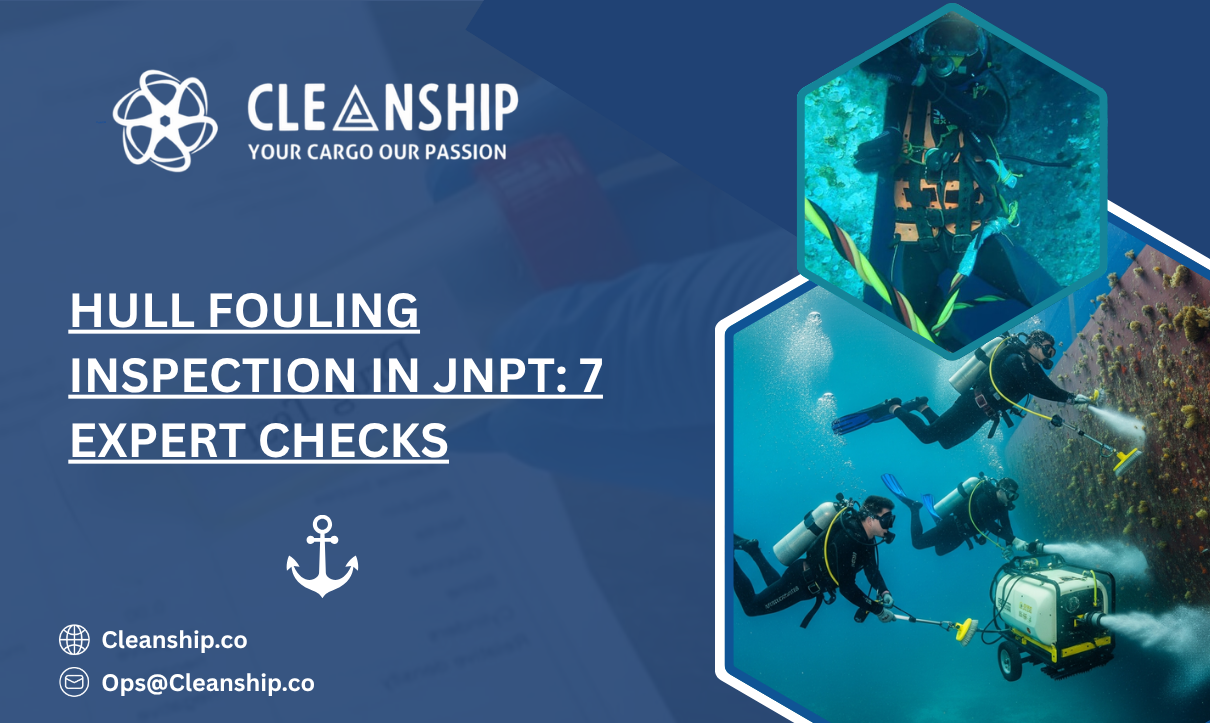
Hull Fouling Inspection in JNPT: 7 Expert Checks

Jawaharlal Nehru Port Authority (JNPT) is India’s largest container port, handling thousands of vessel movements every year. From container ships and bulk carriers to oil tankers and offshore support vessels, ships operating through JNPT are continuously exposed to warm coastal waters where marine organisms naturally accumulate on submerged hull surfaces. Over time, slime, algae, barnacles, and shell-forming organisms create hull fouling that increases water resistance and affects vessel performance. If left unchecked, fouling can lead to higher fuel consumption, reduced speed, greater engine workload, and increased maintenance costs. This is why Hull Fouling Inspection in JNPT has become an essential part of preventive vessel maintenance. A professional underwater inspection helps ship owners evaluate the condition of the hull, identify marine growth at an early stage, and plan cleaning before operational efficiency is affected. What Is a Hull Fouling Inspection in JNPT? A hull fouling inspection in JNPT is an underwater assessment of a vessel’s submerged surfaces to determine the extent and type of marine growth. Certified commercial divers or remotely operated vehicles (ROVs) inspect: A professional Hull Fouling Inspection in JNPT provides clear photographic evidence, HD video recordings, and detailed reports that support maintenance planning and operational decision-making. Why Hull Fouling Should Be Monitored Marine fouling develops gradually, making it easy to overlook until vessel performance begins to decline. For example, a feeder container vessel operating between JNPT and Middle Eastern ports experienced increasing fuel consumption despite routine engine maintenance. An underwater hull inspection revealed extensive barnacle growth concentrated around the aft section of the hull and propeller. Following underwater cleaning, the vessel regained its expected operating efficiency. This real-world example demonstrates why regular Hull Fouling Inspection in JNPT is a practical investment for commercial vessel operators. 1. Assess the Level of Marine Growth The first objective of every hull fouling inspection in JNPT is determining how much marine growth has accumulated. Inspectors evaluate: Understanding the severity of fouling helps maintenance teams decide whether immediate cleaning is required or whether routine monitoring is sufficient. Early Detection Benefits Early intervention is generally more cost-effective than delayed maintenance. 2. Inspect Hull Coating Condition Marine growth often develops more aggressively where protective coatings have deteriorated. During Hull Fouling Inspection in JNPT, inspectors carefully assess antifouling coatings for: Identifying coating damage early allows localized repairs before corrosion develops beneath the coating. Healthy coatings play an important role in reducing future marine growth. 3. Examine the Propeller and Rudder Hull fouling inspection in JNPT extend beyond the hull itself. Marine growth frequently affects propulsion components, including: A bulk carrier preparing for departure from JNPT recently underwent a routine underwater inspection that revealed heavy fouling on the propeller despite only moderate hull growth. After underwater propeller cleaning and polishing, vessel performance improved noticeably during the following voyage. Propulsion Inspection Advantages Inspecting propulsion components provides a more complete picture of underwater performance. 4. Check Sea Chests and Water Intakes Marine growth inside sea chests can restrict seawater flow to critical onboard systems. Professional inspections evaluate: Routine Hull Fouling Inspection in JNPT helps identify blockages before cooling performance is affected. Maintaining unrestricted seawater flow supports reliable engine operation. 5. Identify Corrosion and Structural Damage Hull fouling can conceal more serious underwater issues. During inspections, divers also check for: Early identification allows maintenance teams to schedule repairs before structural deterioration progresses. Preventive inspections help reduce unexpected repair costs. 6. Document Underwater Condition Modern underwater inspections provide valuable digital records. Commercial diving teams capture: Professional Hull Fouling Inspection in JNPT documentation allows fleet managers to compare vessel condition across multiple inspections and monitor long-term maintenance trends. Accurate records support more informed maintenance decisions. 7. Plan Efficient Hull Cleaning Inspection findings help determine the most effective maintenance strategy. Rather than scheduling cleaning based on assumptions, ship owners can rely on inspection reports to decide: This targeted approach minimizes maintenance costs while maximizing vessel performance. Routine inspections support more efficient underwater maintenance planning throughout the vessel’s operating cycle. Choosing the Right Hull Fouling Inspection Provider Selecting a qualified underwater inspection company is essential. Ship owners should look for providers offering: An experienced inspection team understands local marine conditions around JNPT and can accurately assess different types of fouling and coating systems. Technology Is Transforming Underwater Inspections Today’s underwater inspections are more advanced than ever. ROVs equipped with high-definition cameras, underwater lighting systems, and digital measurement tools allow inspectors to evaluate submerged hulls with exceptional accuracy. Cloud-based reporting platforms also enable fleet managers to review inspection findings remotely and make maintenance decisions more efficiently. Technology has made Hull Fouling Inspection in JNPT faster, safer, and more reliable for modern shipping operations. Conclusion Marine fouling develops naturally on every commercial vessel operating in coastal waters, but its operational impact can be minimized through regular inspections. Early detection helps prevent excessive marine growth, protects hull coatings, improves propulsion efficiency, and reduces fuel consumption. The seven expert checks discussed above demonstrate why Hull Fouling Inspection in JNPT remains an essential preventive maintenance practice. Routine underwater inspections allow ship owners to monitor hull condition, plan cleaning effectively, and avoid unnecessary maintenance costs. For vessels operating through JNPT, investing in professional hull fouling inspections helps maintain efficient operations, extend equipment life, and support long-term fleet performance. FAQs:
Read more
Sea Chest Cleaning in JNPT

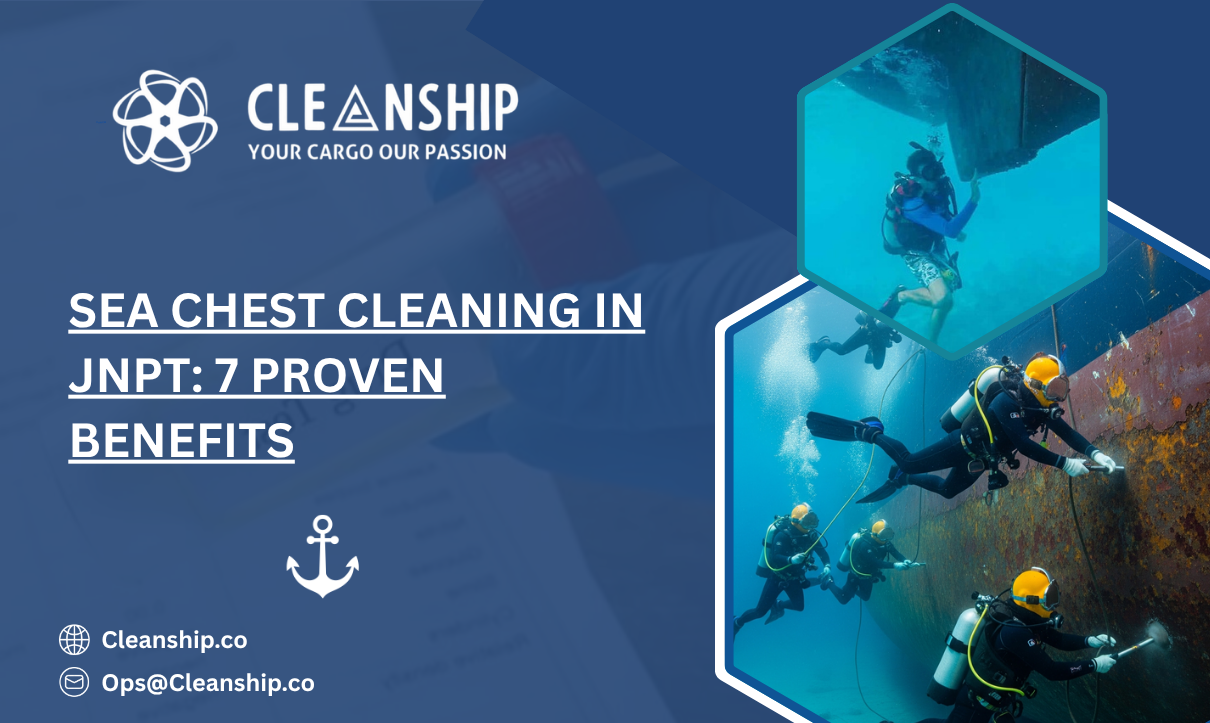
Sea Chest Cleaning in JNPT: 7 Proven Benefits

Jawaharlal Nehru Port Authority (JNPT) is one of India’s busiest maritime gateways, handling thousands of vessel calls every year. Container ships, oil tankers, bulk carriers, and offshore support vessels operate continuously through the port, often spending extended periods alongside berths or at anchorage. These conditions encourage marine organisms to grow on underwater structures, including one of the vessel’s most critical systems—the sea chest. Although hidden beneath the waterline, the sea chest plays a vital role in supplying seawater to onboard cooling and auxiliary systems. When marine growth, debris, or shell deposits accumulate inside the sea chest, seawater flow becomes restricted, affecting engine cooling efficiency and overall vessel reliability. That is why Sea Chest Cleaning in JNPT has become an essential underwater maintenance service. Routine cleaning helps maintain uninterrupted seawater circulation, prevents operational issues, and reduces costly downtime. What Is Sea Chest Cleaning in JNPT? A sea chest is a recessed compartment built into the ship’s hull that allows seawater to enter the vessel through inlet gratings. This seawater is used for cooling engines, generators, condensers, air conditioning systems, ballast operations, and other essential onboard equipment. Professional Sea Chest Cleaning in JNPT involves certified commercial divers removing marine growth, silt, shells, debris, and other obstructions from: The work is performed while the vessel remains afloat, minimizing operational interruptions. Why Sea Chest Maintenance Is Important Restricted seawater flow can quickly affect machinery performance. For example, a container vessel waiting for cargo operations at JNPT reported rising cooling water temperatures despite no mechanical issues with the engine. An underwater inspection revealed heavy mussel growth and debris blocking the sea chest grating. After divers completed sea chest cleaning in JNPT, normal seawater circulation was restored, and cooling temperatures returned to expected levels. This practical example highlights why regular Sea Chest Cleaning in JNPT is an important preventive maintenance practice. 1. Improves Cooling System Efficiency The primary purpose of the sea chest is to deliver seawater to the vessel’s cooling systems. When marine growth restricts water flow, cooling efficiency declines, increasing engine temperatures and reducing equipment performance. Routine Sea Chest Cleaning in JNPT restores unrestricted seawater intake, allowing cooling systems to operate as designed. Cooling System Benefits Efficient cooling supports dependable vessel operations. 2. Prevents Costly Blockages Marine growth develops gradually, but even moderate accumulation can restrict seawater flow. Common obstructions include: Regular underwater cleaning removes these materials before they create serious operational problems. Preventive maintenance is generally more economical than emergency repairs. 3. Protects Critical Machinery Many onboard systems rely on uninterrupted seawater supply. Blocked sea chests may affect: Professional Sea Chest Cleaning in JNPT helps protect these critical systems by maintaining reliable cooling water flow. Healthy seawater circulation contributes directly to machinery reliability. 4. Reduces Operational Downtime Unexpected cooling system problems often require immediate attention. Routine underwater maintenance helps identify developing issues before they interrupt vessel schedules. A bulk carrier preparing for departure from JNPT recently underwent a scheduled underwater inspection. Divers discovered early marine growth inside the sea chest and completed cleaning before the vessel sailed. The operator avoided potential cooling problems during the voyage without delaying cargo operations. Downtime Reduction Benefits Preventive cleaning supports uninterrupted operations. 5. Supports Underwater Inspections Sea chest cleaning in JNPT often includes a detailed underwater inspection. Commercial divers evaluate: Professional Sea Chest Cleaning in JNPT typically includes underwater photographs and inspection reports that assist technical managers with long-term maintenance planning. Accurate inspection records help prioritize future maintenance activities. 6. Minimizes Dry Dock Requirements Routine underwater maintenance reduces the amount of cleaning required during scheduled dry dock visits. By maintaining clean sea chests throughout the operating cycle, ship owners reduce maintenance workloads during major overhauls and improve dry dock efficiency. Preventive cleaning also allows maintenance budgets to be managed more effectively over time. Consistent underwater care delivers long-term operational value. 7. Improves Overall Vessel Reliability Reliable seawater flow supports the performance of numerous onboard systems. Routine Sea Chest Cleaning in JNPT contributes to: For commercial shipping companies, dependable vessel performance begins with well-maintained underwater systems. Choosing the Right Sea Chest Cleaning Provider Selecting an experienced underwater maintenance company is essential. Ship owners should look for providers offering: An experienced contractor understands different sea chest designs and uses cleaning methods that effectively remove marine growth while protecting underwater structures. Technology Is Improving Sea Chest Maintenance Modern underwater maintenance technologies have improved both inspection quality and cleaning efficiency. Today’s service providers often use HD underwater cameras, ROV-assisted inspections, digital reporting platforms, and specialized cleaning tools to evaluate sea chest condition before and after cleaning. These technologies help technical managers verify maintenance quality and maintain accurate service records. Digital documentation also supports better planning for future underwater maintenance activities. Conclusion Although often overlooked, the sea chest is one of the most important underwater systems on any commercial vessel. Restricted seawater flow can affect engine cooling, auxiliary machinery, and overall vessel performance. The seven proven benefits discussed above demonstrate why Sea Chest Cleaning in JNPT is an essential preventive maintenance service. Regular cleaning improves cooling efficiency, protects machinery, reduces downtime, supports underwater inspections, and contributes to reliable vessel operations. For ship owners operating through JNPT, investing in professional sea chest cleaning in JNPT helps maintain efficient seawater circulation, protect valuable onboard equipment, and ensure safe, dependable maritime operations. FAQs:
Read more
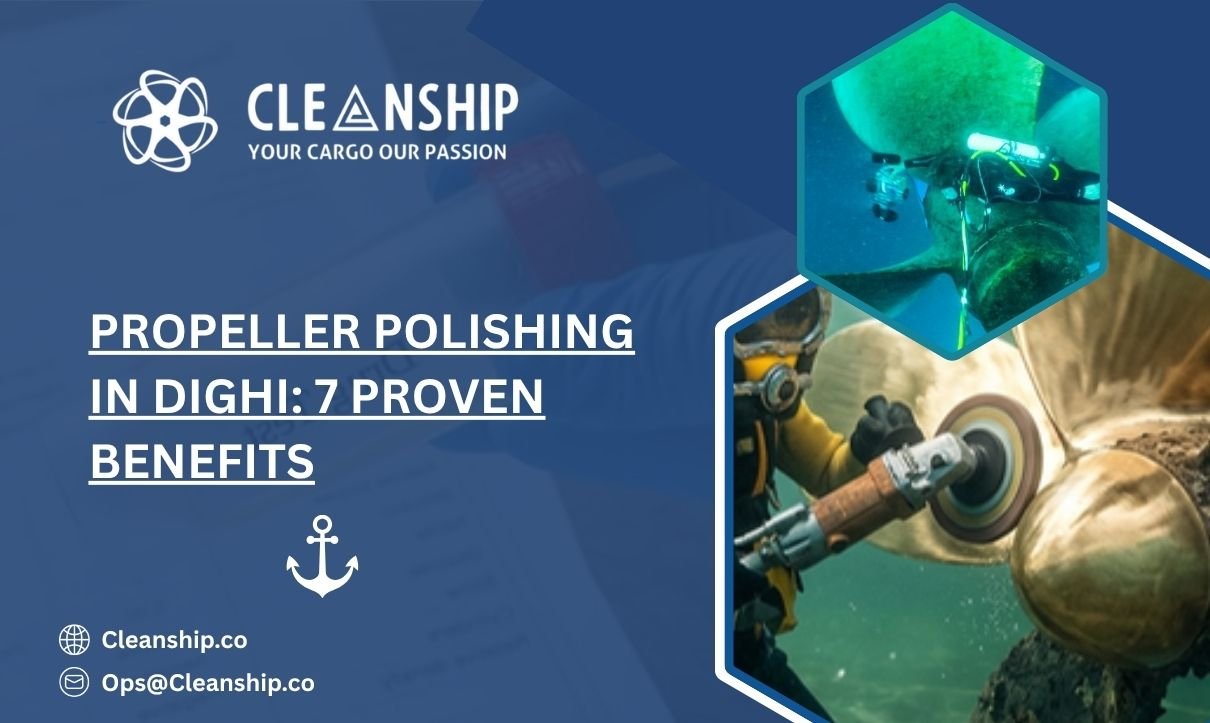
Propeller Polishing in JNPT

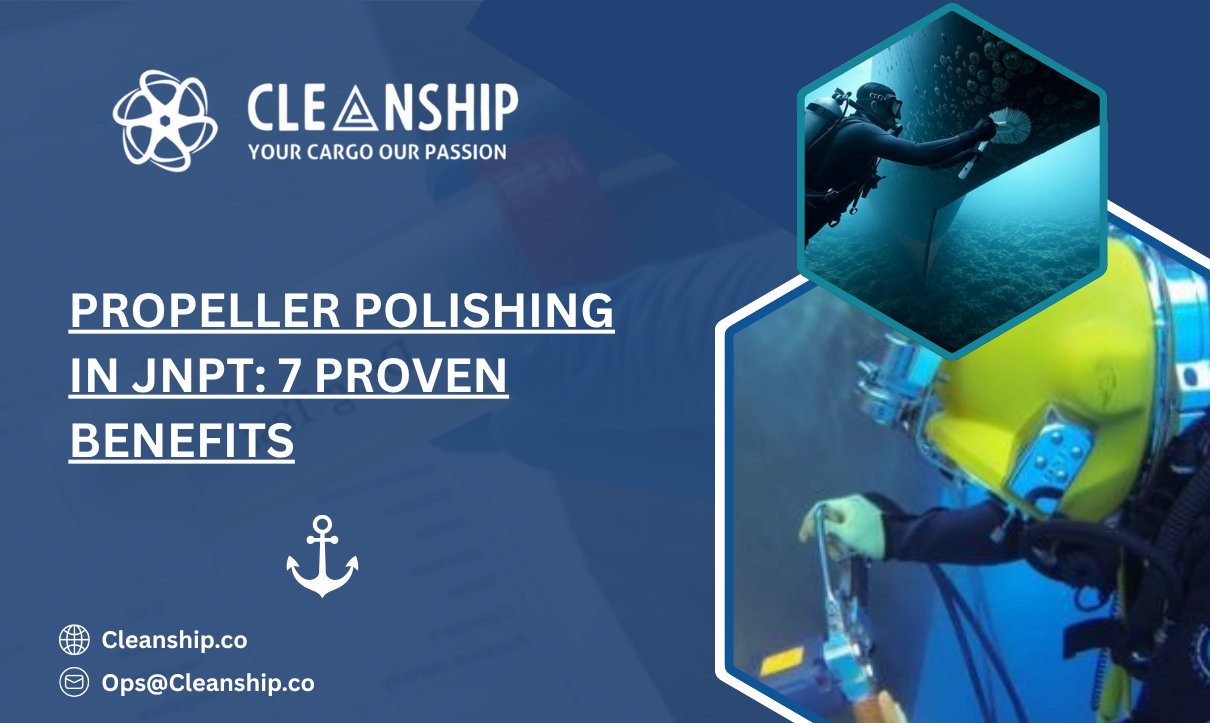
Propeller Polishing in JNPT: 7 Proven Benefits

Jawaharlal Nehru Port Authority (JNPT) is India’s largest container port and a vital hub for international shipping. Every day, container vessels, bulk carriers, tankers, and feeder ships call at the port to handle cargo on tight schedules. For ship owners and operators, maintaining peak propulsion efficiency is essential to keeping operating costs under control and ensuring timely voyages. One underwater component plays a major role in a vessel’s performance—the propeller. Even a small amount of marine growth or surface roughness on the propeller can reduce efficiency, increase fuel consumption, and place additional strain on the engine. This is why Propeller Polishing in JNPT has become an important maintenance service. Professional underwater polishing restores a smooth propeller surface, helping vessels operate more efficiently while avoiding unnecessary downtime. What Is Propeller Polishing in JNPT? Propeller polishing in JNPT is the process of cleaning and polishing a ship’s propeller below the waterline while the vessel remains afloat. Certified commercial divers use specialized underwater tools to remove marine growth, mineral deposits, oxidation, and surface roughness without damaging the propeller. A professional Propeller Polishing in JNPT service typically includes: The objective is to restore the propeller’s smooth finish and improve hydrodynamic performance. Why Propeller Maintenance Is Important A ship’s propeller transfers engine power into thrust. When the propeller surface becomes rough due to fouling or corrosion, water flow is disrupted, reducing propulsion efficiency. For example, a feeder vessel operating between JNPT and ports in the Middle East noticed a gradual increase in fuel consumption over several voyages. During an underwater maintenance visit, commercial divers polished the propeller and removed barnacle deposits from the blades. The engineering team later reported smoother vessel handling and improved fuel performance. Real-world examples like this show why Propeller Polishing in JNPT is considered a valuable preventive maintenance practice. 1. Improves Fuel Efficiency One of the most significant benefits of propeller polishing in JNPT is reduced fuel consumption. A smooth propeller creates less resistance as it rotates through the water, allowing the propulsion system to operate more efficiently. Professional Propeller Polishing in JNPT helps restore the original hydrodynamic characteristics of the propeller, reducing engine workload and bunker consumption. Fuel Efficiency Benefits Even modest fuel savings can produce substantial cost reductions across an entire fleet. 2. Restores Propulsion Performance Marine growth and surface roughness reduce thrust generation. As the propeller becomes fouled, the vessel may experience slower acceleration, reduced speed, and less responsive maneuvering. Routine propeller polishing in JNPT restores smooth water flow over the blades, improving propulsion performance and vessel handling. Ships operating on fixed schedules particularly benefit from consistent propulsion efficiency. 3. Reduces Engine Stress A fouled propeller requires the engine to generate more power to maintain service speed. Over time, this additional load increases wear on propulsion machinery and may contribute to higher maintenance requirements. Routine Propeller Polishing in JNPT helps reduce unnecessary mechanical stress, supporting long-term engine reliability. Preventive maintenance often extends the service life of propulsion equipment. 4. Prevents Marine Growth Build-Up Marine organisms such as slime, algae, and barnacles quickly attach to underwater metal surfaces. Regular polishing removes these deposits before they become firmly established. A bulk carrier preparing for an international voyage recently combined hull cleaning with propeller polishing in JNPT while berthed at JNPT. The maintenance team reported improved propulsion efficiency immediately after departure, highlighting the value of integrated underwater maintenance. Marine Growth Control Keeping the propeller clean improves overall vessel efficiency. 5. Supports Preventive Maintenance Propeller polishing provides an opportunity to inspect the propeller during cleaning. Commercial divers evaluate: Professional Propeller Polishing in JNPT often includes underwater photographs and inspection reports that help technical managers plan future maintenance. Early detection reduces the risk of unexpected repairs. 6. Reduces Dry Dock Dependency Routine underwater maintenance minimizes the amount of work required during scheduled dry dock visits. By maintaining the propeller in good condition throughout the operating cycle, ship owners reduce cleaning time and improve maintenance planning during major overhauls. Regular underwater polishing also supports more efficient dry dock scheduling and budgeting. Preventive care delivers long-term operational value. 7. Improves Overall Vessel Performance Propeller efficiency influences the entire propulsion system. A clean, polished propeller contributes to: Routine Propeller Polishing in JNPT helps vessels maintain reliable performance throughout demanding trading schedules. For commercial shipping companies, consistent propulsion efficiency supports both operational and financial performance. Choosing the Right Propeller Polishing Service Selecting an experienced underwater service provider is essential. Ship owners should consider companies offering: A qualified contractor understands different propeller materials and polishing techniques, ensuring effective cleaning without damaging the blade surface. Technology Is Improving Underwater Propeller Maintenance Modern underwater maintenance continues to evolve with new technologies. Today’s propeller polishing services often incorporate HD underwater cameras, ROV-assisted inspections, digital reporting platforms, and precision polishing tools. These technologies allow operators to verify polishing quality and monitor propeller condition over time. Digital inspection records also help fleet managers compare performance between maintenance intervals and optimize maintenance schedules. Conclusion A ship’s propeller is one of the most important components affecting fuel efficiency and overall vessel performance. Even minor marine growth or surface roughness can reduce propulsion efficiency and increase operating costs. The seven proven benefits discussed above demonstrate why Propeller Polishing in JNPT is an essential maintenance practice for commercial vessels. Regular polishing improves fuel economy, restores propulsion efficiency, reduces engine stress, and supports long-term equipment reliability. For ship owners operating through JNPT, investing in professional propeller polishing helps maintain efficient vessel operations, reduce maintenance costs, and improve overall fleet performance. FAQs:
Read more
Marine Growth Removal in Mumbai

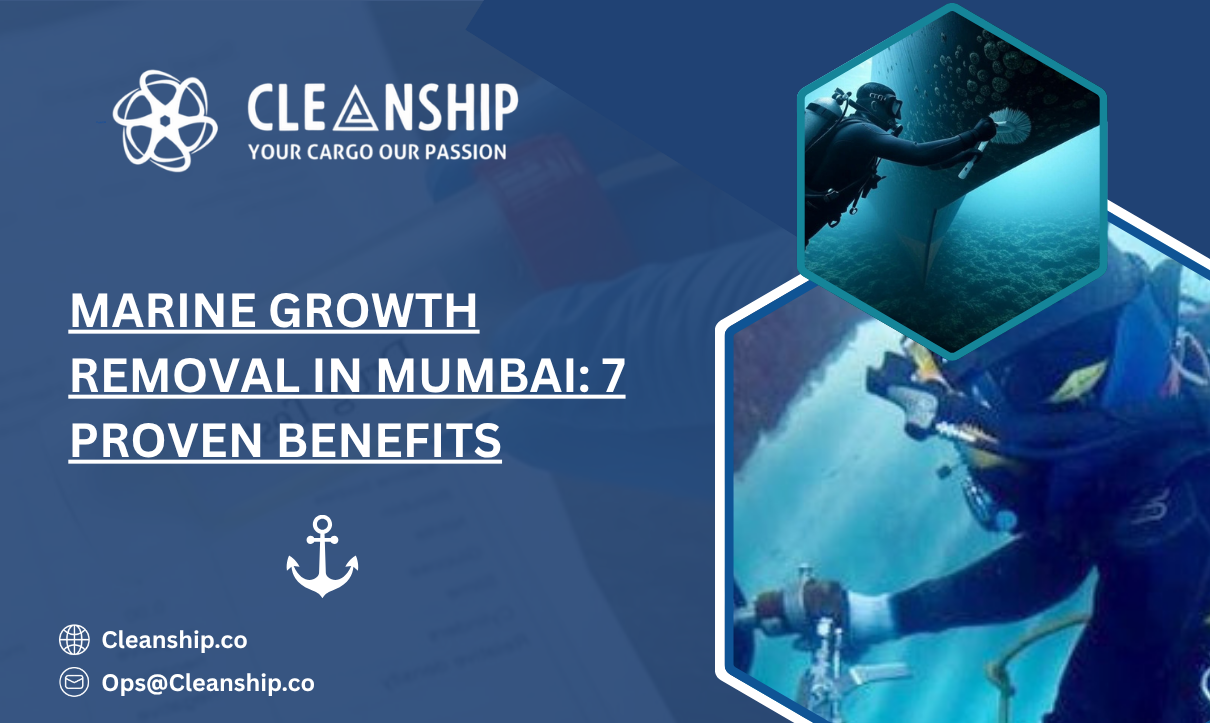
Marine Growth Removal in Mumbai: 7 Proven Benefits

Mumbai is one of India’s busiest maritime hubs, handling thousands of vessel movements every year. Container ships, oil tankers, offshore support vessels, bulk carriers, dredgers, and coastal cargo vessels all spend time in warm coastal waters where marine organisms grow rapidly. As ships remain alongside berths or at anchorage, underwater surfaces begin attracting algae, slime, barnacles, mussels, and other marine organisms. Over time, these deposits increase hydrodynamic drag, reduce vessel speed, raise fuel consumption, and place additional strain on propulsion systems. That is why Marine Growth Removal in Mumbai has become a critical maintenance service for commercial shipping companies. Routine underwater cleaning helps vessels maintain peak performance, reduce operating costs, and protect valuable underwater assets. What Is Marine Growth Removal in Mumbai? Marine growth removal in Mumbai is the process of eliminating biological fouling from a vessel’s underwater surfaces while the ship remains afloat or during scheduled maintenance. Commercial divers use specialized underwater cleaning equipment to remove: Professional Marine Growth Removal in Mumbai restores smooth hull surfaces without causing unnecessary damage to antifouling coatings when carried out using appropriate cleaning methods. Why Marine Growth Should Not Be Ignored Marine fouling develops gradually, but its operational impact can be significant. Even a relatively thin layer of biological growth increases water resistance, forcing engines to consume more fuel to maintain service speed. For example, a feeder container vessel operating between Mumbai and Gulf ports experienced increasing fuel costs over several months. During an underwater inspection, divers found extensive barnacle growth on the hull and propeller. After marine growth removal, the vessel returned to its expected performance, reducing fuel consumption during subsequent voyages. This practical example illustrates why routine Marine Growth Removal in Mumbai is an important preventive maintenance practice. 1. Improves Fuel Efficiency Marine growth increases hydrodynamic drag, making engines work harder. Removing underwater fouling restores smoother hull surfaces and improves water flow around the vessel. Professional Marine Growth Removal in Mumbai helps reduce fuel consumption and improve operational efficiency throughout the vessel’s trading cycle. Fuel Efficiency Benefits Consistent underwater maintenance supports long-term fuel savings. 2. Restores Vessel Speed A fouled hull reduces a vessel’s ability to maintain service speed. Even powerful propulsion systems cannot compensate for excessive underwater resistance caused by heavy marine growth. Routine cleaning allows ships to operate closer to their intended performance levels, helping operators maintain voyage schedules and commercial commitments. Reliable vessel speed is particularly important for liner services operating on fixed timetables. 3. Protects Hull Coatings Modern antifouling coatings reduce marine growth while protecting steel surfaces from corrosion. When heavy fouling remains on the hull for extended periods, cleaning becomes more difficult and may increase the risk of coating damage. Routine Marine Growth Removal in Mumbai helps preserve coating integrity and extends coating service life. Maintaining healthy coatings also reduces future maintenance costs. 4. Improves Propulsion Performance Marine growth affects not only the hull but also underwater appendages. Divers typically inspect and clean: A tanker preparing for an international voyage recently completed marine growth removal in Mumbai. Engineers reported smoother propulsion performance and lower vibration levels after underwater cleaning and propeller polishing were completed together. Combined Maintenance Advantages Cleaning underwater appendages enhances overall vessel efficiency. 5. Supports Preventive Maintenance Marine growth removal in Mumbai often includes a detailed underwater inspection. Divers assess: These inspections allow technical managers to identify maintenance needs before they develop into larger operational issues. Professional Marine Growth Removal in Mumbai frequently includes photographic documentation that supports long-term maintenance planning. 6. Reduces Dry Dock Requirements Regular underwater cleaning helps maintain the vessel’s underwater condition between scheduled dry dock visits. A bulk carrier operating along India’s west coast introduced periodic underwater cleaning every few months. By the time the vessel entered dry dock, hull fouling remained minimal, reducing cleaning time and allowing maintenance teams to focus on planned repairs. Preventive cleaning supports more efficient dry dock planning and better maintenance budgeting. 7. Extends Equipment Life Marine fouling places additional stress on propulsion systems, cooling equipment, and hull coatings. Maintaining clean underwater surfaces reduces wear on these systems and contributes to longer equipment life. Routine Marine Growth Removal in Mumbai helps protect valuable marine assets while improving operational reliability. Long-term maintenance strategies often deliver the greatest financial benefits. Choosing the Right Marine Growth Removal in Mumbai Provider Selecting an experienced underwater maintenance company is essential. Ship owners should evaluate service providers based on: Experienced contractors understand local operating conditions in Mumbai and use cleaning techniques appropriate for different coating systems and vessel types. Technology Is Improving Underwater Cleaning The maritime industry continues adopting advanced underwater technologies. Today’s marine growth removal in Mumbai services often include HD underwater cameras, ROV-assisted inspections, digital maintenance reporting, and specialized cleaning equipment designed to remove fouling efficiently while minimizing coating damage. These innovations improve maintenance quality and help technical managers make informed operational decisions. Conclusion Marine growth is a natural challenge for every commercial vessel operating in coastal waters, but its impact can be effectively managed through routine maintenance. Removing marine fouling improves fuel efficiency, restores vessel speed, protects hull coatings, and supports reliable ship operations. The seven proven benefits discussed above demonstrate why Marine Growth Removal in Mumbai remains an essential maintenance practice for modern shipping companies. Regular underwater cleaning helps reduce operating costs, improve propulsion performance, extend equipment life, and maintain vessel efficiency throughout the operating cycle. For ship owners operating through Mumbai’s busy maritime corridor, investing in professional marine growth removal is a practical step toward safer, more efficient, and more economical vessel operations. FAQs:
Read more

Ship Hull Biofouling Removal in Mumbai: 7 Proven Ways

Mumbai is one of India’s busiest maritime gateways, handling a constant flow of container ships, crude oil tankers, offshore support vessels, bulk carriers, and coastal cargo ships. With vessels spending considerable time at anchorage, berths, and coastal waters, marine growth naturally begins to accumulate on submerged hull surfaces. What starts as a thin layer of slime can quickly develop into algae, barnacles, mussels, and other marine organisms. This process, known as biofouling, increases hull resistance, raises fuel consumption, reduces vessel speed, and places additional stress on propulsion systems. That is why Ship Hull Biofouling Removal in Mumbai has become an essential maintenance service for commercial shipping companies. Regular removal of marine growth helps vessels maintain operational efficiency, protect hull coatings, and reduce long-term maintenance expenses. What Is Ship Hull Biofouling Removal in Mumbai? Biofouling is the accumulation of marine organisms on underwater surfaces exposed to seawater. The process generally begins with microscopic bacteria and slime, followed by algae, barnacles, tube worms, mussels, and shell-forming organisms. If left untreated, these organisms create thick deposits that significantly affect vessel performance. Professional Ship Hull Biofouling Removal in Mumbai removes these deposits while protecting the vessel’s antifouling coating and underwater structure. Why Biofouling Removal Is Important Even moderate marine growth can have a measurable impact on vessel performance. A container ship operating between Mumbai and Gulf ports recently recorded increasing fuel consumption despite normal engine operation. During an underwater inspection, commercial divers identified extensive biofouling across the hull and propeller. After underwater cleaning, the vessel regained its expected operating efficiency without requiring dry docking. Practical situations like this demonstrate why routine Ship Hull Biofouling Removal in Mumbai is an important part of preventive maintenance. 1. Remove Marine Growth Before It Spreads Marine organisms reproduce rapidly in warm coastal waters. Removing fouling during its early stages prevents heavy barnacle formation and makes cleaning faster, safer, and more effective. Early Removal Benefits Preventive maintenance is generally more cost-effective than delayed intervention. 2. Protect Hull Coatings Modern antifouling coatings reduce marine growth while protecting the steel hull against corrosion. However, excessive biofouling can place additional stress on these coatings. Delayed cleaning often requires more aggressive removal methods that may shorten coating life. Routine Ship Hull Biofouling Removal in Mumbai helps preserve coating performance while reducing future maintenance requirements. Protecting the coating also helps extend dry dock intervals. 3. Improve Fuel Efficiency Marine growth creates additional drag as the vessel moves through the water. Even a relatively thin layer of fouling increases hydrodynamic resistance, requiring engines to burn more fuel to maintain service speed. Professional underwater cleaning restores smoother hull surfaces, helping reduce fuel consumption and improve voyage efficiency. For vessels operating on regular international routes, these savings can become substantial over time. 4. Clean Propellers Along With the Hull Biofouling affects more than the hull alone. Marine organisms also attach to: A product tanker undergoing Ship Hull Biofouling Removal in Mumbai recently combined hull cleaning with propeller polishing. Following maintenance, engineers reported smoother propulsion performance and reduced vibration during sea trials. Combined Maintenance Advantages Cleaning multiple underwater components provides greater long-term benefits. 5. Conduct Regular Underwater Inspections Cleaning should always begin with a detailed underwater inspection. Professional divers or remotely operated vehicles (ROVs) evaluate: Routine inspections allow maintenance teams to choose the most appropriate cleaning methods while identifying additional repair requirements. Professional Ship Hull Biofouling Removal in Mumbai often includes photographic and video documentation for maintenance records. 6. Use Environmentally Responsible Cleaning Methods Environmental regulations continue to influence underwater maintenance practices. Modern cleaning techniques focus on removing marine growth efficiently while minimizing coating damage and controlling debris whenever possible. Experienced underwater service providers follow approved cleaning procedures that support environmental compliance and responsible marine operations. Responsible maintenance benefits both vessel performance and the surrounding marine environment. 7. Build a Preventive Maintenance Program The most effective approach to biofouling is prevention. Rather than waiting for heavy marine growth to develop, shipping companies increasingly schedule routine underwater inspections and cleaning throughout the year. A bulk carrier trading between Mumbai, Southeast Asia, and the Middle East introduced a planned underwater maintenance program that included periodic biofouling removal. Over time, the operator reported more consistent fuel performance and reduced maintenance costs compared with reactive cleaning practices. Regular Ship Hull Biofouling Removal in Mumbai helps maintain vessel efficiency while supporting long-term operational reliability. Choosing the Right Biofouling Removal Service Not all underwater cleaning services deliver the same level of quality. Ship owners should consider providers that offer: An experienced contractor understands local port conditions in Mumbai and selects cleaning techniques that effectively remove marine growth without damaging hull coatings. Technology Is Improving Biofouling Management The maritime industry is increasingly adopting advanced inspection and cleaning technologies. ROVs equipped with HD cameras, underwater lighting, and digital reporting software help inspectors assess fouling levels before cleaning begins. Some providers also use specialized rotary cleaning tools and real-time monitoring systems to improve cleaning precision while protecting antifouling coatings. These technologies allow ship owners to make more informed maintenance decisions and optimize vessel performance. Conclusion Biofouling is a natural process, but its impact on vessel performance can be effectively controlled through regular underwater maintenance. Heavy marine growth increases fuel consumption, reduces speed, affects propulsion efficiency, and accelerates coating deterioration. The seven proven ways discussed above demonstrate why Ship Hull Biofouling Removal in Mumbai remains an essential maintenance practice for commercial shipping. Early removal, routine inspections, responsible cleaning methods, and preventive maintenance programs all contribute to lower operating costs and improved vessel reliability. For ship owners operating through Mumbai’s busy maritime region, investing in professional biofouling removal helps protect underwater assets, improve fuel efficiency, and support safe, efficient vessel operations. FAQs:
Read more
Underwater Paint Condition Inspection in Mumbai

Underwater Paint Condition Inspection in Mumbai: 5 Expert Tips

Mumbai is one of India’s busiest maritime gateways, where commercial vessels operate in demanding coastal conditions throughout the year. From container ships and oil tankers to offshore support vessels and bulk carriers, every ship depends on a well-maintained underwater hull to operate efficiently. One of the most important yet often overlooked aspects of hull maintenance is the condition of the protective paint coating below the waterline. Over time, continuous exposure to seawater, marine growth, vessel movement, and changing environmental conditions can gradually weaken these coatings. If the damage goes unnoticed, corrosion can develop, maintenance costs can rise, and fuel efficiency may decline. This is why Underwater Paint Condition Inspection in Mumbai has become an essential preventive maintenance service. Regular inspections help ship owners evaluate coating performance, identify early signs of deterioration, and plan maintenance before minor issues become major repairs. What Is an Underwater Paint Condition Inspection in Mumbai? An underwater paint condition Inspection in Mumbai is a visual assessment of a vessel’s submerged protective coating. Certified commercial divers or remotely operated vehicles (ROVs) inspect the hull while the vessel remains afloat, using high-definition cameras and specialized lighting to evaluate coating integrity. A professional Underwater Paint Condition Inspection in Mumbai generally focuses on: The inspection provides valuable information that supports maintenance planning and protects the vessel’s underwater structure. Why Paint Condition Matters Modern marine coatings do far more than improve appearance. They act as the vessel’s first line of defense against corrosion and marine fouling. When coatings begin to fail, bare steel becomes exposed to seawater, increasing the risk of corrosion and structural deterioration. For example, an offshore supply vessel operating from Mumbai experienced higher-than-normal marine growth despite recently cleaning its hull. During an underwater paint condition Inspection in Mumbai, divers discovered localized coating damage near the bow where frequent contact with floating debris had weakened the protective layer. The operator scheduled targeted coating repairs instead of a complete repaint, saving both time and maintenance costs. This practical example highlights the importance of routine Underwater Paint Condition Inspection in Mumbai. 1. Inspect for Early Coating Damage The first priority during any paint inspection is identifying areas where the coating has started to deteriorate. Inspectors carefully examine the hull for: Finding these issues early allows maintenance teams to schedule localized repairs before corrosion develops. Why Early Detection Matters Small repairs are generally far less expensive than large-scale recoating projects. 2. Check for Corrosion Beneath the Coating Not all corrosion is immediately visible. Sometimes coating damage allows moisture to penetrate beneath the paint, leading to corrosion that spreads underneath the protective layer. A thorough Underwater Paint Condition Inspection in Mumbai helps inspectors identify discoloration, blistering, rust staining, and coating separation that may indicate corrosion beneath the surface. Early intervention protects the structural integrity of the vessel. 3. Evaluate Marine Growth Attachment Marine organisms often attach more aggressively to damaged coatings than to intact antifouling systems. During the inspection, divers assess whether marine growth is concentrated in specific areas, which may indicate coating deterioration rather than normal fouling. A coastal cargo vessel operating between Mumbai and nearby ports recently showed uneven barnacle accumulation along one side of the hull. Inspection confirmed localized coating wear caused by repeated berth contact, allowing repairs to be planned before the damage expanded. Marine Growth Assessment Includes The findings help determine whether cleaning alone is sufficient or if coating repairs are also required. 4. Document Coating Performance Professional inspections provide more than visual observations. High-definition photographs and underwater videos create detailed maintenance records that technical managers can compare over time. Routine Underwater Paint Condition Inspection in Mumbai allows operators to monitor how different coating systems perform under local operating conditions and trading routes. Reliable documentation supports better maintenance planning and more accurate budgeting. 5. Plan Maintenance Before Dry Docking Paint inspections help ship owners prepare more effectively for scheduled dry dock visits. Instead of relying on assumptions, technical managers can use inspection reports to determine: A bulk carrier preparing for its next class survey recently completed an underwater paint inspection while alongside in Mumbai. The survey confirmed that only limited touch-up work was required during dry docking, reducing both repair time and maintenance costs. Planning based on actual inspection data improves efficiency and minimizes unnecessary work. Choosing the Right Inspection Provider Selecting an experienced underwater inspection company is essential for obtaining accurate results. Ship owners should consider providers that offer: An experienced inspection team understands coating systems used on different vessel types and can identify early signs of deterioration before significant damage occurs. Technology Is Improving Paint Condition Assessments Modern underwater inspection technology has significantly improved coating evaluations. ROVs equipped with HD cameras, powerful underwater lighting, and digital measurement tools now produce detailed inspection records even in challenging underwater environments. Many service providers also use cloud-based reporting systems, allowing fleet managers to review inspection findings remotely. These advancements help operators make faster maintenance decisions while reducing uncertainty during planning. Conclusion Protective hull coatings are one of the most valuable investments in a vessel’s long-term maintenance strategy. Regular inspections help preserve those coatings, reduce corrosion risks, improve fuel efficiency, and extend the life of underwater structures. The five expert tips discussed above demonstrate why Underwater Paint Condition Inspection in Mumbai is an essential preventive maintenance practice. By identifying coating damage early, evaluating marine growth patterns, documenting coating performance, and supporting maintenance planning, professional inspections help ship owners reduce costs while maintaining reliable vessel performance. For commercial vessels operating through Mumbai’s busy maritime corridor, routine underwater paint condition Inspection in Mumbai are a practical investment in safety, efficiency, and long-term asset protection. FAQs:
Read more
UWILD Inspection in Mumbai

UWILD Inspection in Mumbai: 7 Expert Benefits

Mumbai is one of India’s busiest maritime hubs, serving container ships, oil tankers, offshore support vessels, bulk carriers, and passenger vessels throughout the year. For ship owners and fleet managers operating under tight schedules, keeping vessels compliant with classification society requirements is just as important as maintaining operational efficiency. Traditionally, underwater surveys required vessels to enter dry dock, resulting in additional costs and downtime. Today, many classification societies permit an Underwater Inspection in Lieu of Drydocking (UWILD) for eligible vessels, provided the inspection meets approved standards. This is why UWILD Inspection in Mumbai has become a preferred solution for many shipping companies. It allows detailed underwater assessments while vessels remain afloat, helping operators reduce maintenance costs without compromising safety or regulatory compliance. What Is a UWILD Inspection in Mumbai? UWILD stands for Underwater Inspection in Lieu of Drydocking. It is a class-approved underwater survey carried out by certified commercial divers or remotely operated vehicles (ROVs) instead of taking the vessel into dry dock. The inspection evaluates the condition of critical underwater structures, including: A professional UWILD Inspection in Mumbai is typically conducted in accordance with classification society requirements and includes detailed visual documentation for technical review. Why UWILD Inspection in Mumbai Are Important Modern commercial shipping operates on strict schedules where extended maintenance periods can affect cargo operations and charter commitments. For example, a container vessel scheduled to sail from Mumbai to Europe required a class-approved underwater inspection before its next voyage. Instead of entering dry dock, the owner arranged a UWILD inspection in Mumbai alongside the berth. Commercial divers completed the survey, and the classification surveyor reviewed the inspection results, allowing the vessel to remain on schedule. This practical approach demonstrates the operational value of UWILD Inspection in Mumbai. 1. Reduces Vessel Downtime One of the biggest advantages of UWILD inspections is minimizing operational interruptions. Instead of waiting for dry dock availability, inspections are performed while the vessel remains afloat at berth or anchorage. This allows operators to continue commercial activities with minimal disruption. Operational Benefits Time savings often translate directly into reduced operating costs. 2. Supports Classification Society Compliance Classification societies establish strict requirements for vessel inspections. A properly executed UWILD Inspection in Mumbai provides surveyors with detailed visual evidence needed to assess underwater structures and determine compliance with applicable class rules. Meeting inspection requirements without dry docking offers greater operational flexibility for eligible vessels. 3. Reduces Maintenance Costs Dry docking involves substantial expenses, including dock fees, labor, logistics, and operational downtime. UWILD inspection in Mumbai help ship owners evaluate underwater conditions before committing to major maintenance work. A tanker operating regular services along India’s west coast recently completed a UWILD survey that revealed only minor coating wear and limited marine growth. Based on the inspection findings, the owner postponed unnecessary repairs until the next scheduled dry docking, reducing immediate maintenance costs. Reliable inspection data supports smarter financial planning. 4. Provides Detailed Underwater Assessment Professional UWILD inspection in Mumbai cover much more than general hull observations. Inspectors examine: Inspection Coverage Detailed inspection reports provide valuable information for maintenance planning. 5. Improves Safety Safety remains a top priority during underwater inspections. Experienced commercial divers follow strict operational procedures, while ROV technology provides access to confined or difficult-to-reach underwater areas. Professional UWILD Inspection in Mumbai services combine trained personnel, modern equipment, and comprehensive safety management systems to deliver reliable inspections with reduced operational risk. Safe inspection practices protect both personnel and valuable marine assets. 6. Supports Preventive Maintenance Routine underwater inspections allow technical managers to identify developing problems before they require major repairs. During UWILD surveys, inspectors may identify: Addressing these issues early often reduces repair costs and extends equipment service life. Preventive maintenance helps improve long-term vessel reliability. 7. Produces Reliable Digital Documentation Modern UWILD inspections include high-definition photographs, underwater videos, and detailed digital reports. These records support: Regular UWILD Inspection in Mumbai creates a valuable historical record that helps technical teams monitor vessel condition throughout its operating life. Choosing the Right UWILD Inspection Provider The success of any UWILD inspection depends on selecting an experienced marine service provider. Ship owners should consider: An experienced provider understands local operating conditions around Mumbai and works closely with vessel operators and classification surveyors to ensure inspections are completed efficiently. Technology Is Advancing UWILD Inspections The maritime industry continues to adopt new inspection technologies. Today’s UWILD inspections often combine commercial diving, ROV systems, high-definition cameras, digital measurement tools, and cloud-based reporting platforms. These technologies improve inspection accuracy and allow technical teams to review underwater conditions remotely. Artificial intelligence and automated image analysis are also beginning to support faster identification of coating damage and structural defects. These advancements continue to improve inspection quality and operational efficiency. Conclusion Maintaining a vessel’s underwater structure is essential for safe, efficient, and compliant operations. UWILD inspections provide ship owners with an effective alternative to traditional dry docking by delivering detailed underwater assessments while vessels remain afloat. The seven expert benefits discussed above demonstrate why UWILD Inspection in Mumbai has become an important maintenance solution for commercial shipping. Reduced downtime, improved safety, lower maintenance costs, reliable documentation, and regulatory compliance all contribute to more efficient vessel management. For shipping companies operating through Mumbai’s busy maritime corridor, investing in professional UWILD inspections is a practical strategy for protecting valuable assets, supporting class compliance, and maintaining reliable vessel performance. FAQs:
Read more
Underwater Video Survey in Mumbai

Underwater Video Survey in Mumbai: 7 Expert Benefits

Mumbai is one of India’s busiest maritime centers, handling a constant flow of container ships, tankers, offshore support vessels, passenger ferries, and coastal cargo ships. In such a fast-moving environment, ship owners and technical managers need accurate underwater information without delaying vessel operations. An underwater video survey has become one of the most reliable methods for assessing the condition of a vessel’s submerged structures. Using high-definition cameras operated by commercial divers or remotely operated vehicles (ROVs), these surveys provide clear visual evidence of underwater components while the vessel remains afloat. This is why Underwater Video Survey in Mumbai has become an essential service for shipping companies looking to improve maintenance planning, enhance safety, and reduce operational costs. What Is an Underwater Video Survey in Mumbai? An underwater video Survey in Mumbai is a visual inspection of a vessel’s submerged areas using waterproof, high-definition imaging equipment. The survey captures real-time video and still images of critical underwater components, allowing technical teams to evaluate their condition without dry docking the vessel. A professional Underwater Video Survey in Mumbai typically includes inspections of: The recorded footage provides valuable documentation for maintenance planning and regulatory inspections. Why Underwater Video Survey in Mumbai Matter Many underwater defects remain hidden until they begin affecting vessel performance. Marine growth, coating damage, corrosion, or minor structural issues often develop gradually and cannot be detected through routine onboard inspections. For example, a container vessel arriving in Mumbai reported slightly higher fuel consumption over several voyages. During an underwater video Survey in Mumbai, inspectors identified heavy biofouling around the hull and propeller. The visual evidence allowed the operator to schedule targeted underwater cleaning before the vessel’s next voyage, restoring efficiency without interrupting cargo operations. This practical example shows the value of routine Underwater Video Survey in Mumbai services. 1. Provides Accurate Visual Documentation One of the greatest advantages of underwater video Survey in Mumbai is the quality of visual evidence. High-definition footage allows marine engineers to examine underwater components in detail, making it easier to identify marine growth, coating damage, corrosion, and structural concerns. Visual Inspection Benefits Accurate documentation supports informed maintenance decisions. 2. Detects Problems Before They Become Serious Small underwater issues can develop into expensive repairs if left unnoticed. Routine Underwater Video Survey in Mumbai helps identify: Early detection allows maintenance teams to address problems before they affect vessel performance or safety. 3. Reduces Dry Dock Dependency Dry docking is necessary for major repairs, but not every inspection requires removing a vessel from service. Underwater video surveys allow ship owners to inspect submerged structures while the vessel remains afloat, reducing unnecessary downtime and maintenance costs. For vessels operating on tight schedules, this flexibility is especially valuable. 4. Supports Better Maintenance Planning Reliable maintenance begins with accurate information. A bulk carrier operating between Mumbai and the Middle East recently completed an underwater video survey before its scheduled dry docking. The footage revealed only localized coating damage instead of widespread deterioration, allowing the operator to reduce the planned repair scope and shorten the dry dock period. Maintenance Planning Advantages Visual evidence helps technical managers prioritize maintenance based on actual vessel condition. 5. Improves Safety During Inspections Some underwater areas are difficult or hazardous for manual inspection. Modern underwater video surveys often use ROVs equipped with cameras and lighting systems to inspect confined spaces or locations with limited visibility. Using remote inspection technology reduces diver exposure while maintaining inspection quality. Professional Underwater Video Survey in Mumbai services combine experienced personnel with advanced imaging systems to deliver safe and reliable inspections. 6. Supports Regulatory and Insurance Requirements Classification societies, insurers, and port authorities often require evidence of a vessel’s underwater condition. High-quality video recordings provide clear documentation that can support: Digital inspection records also make future condition comparisons much easier. 7. Improves Long-Term Vessel Performance Regular underwater inspections contribute to consistent vessel performance. By identifying marine growth and underwater defects early, operators can schedule cleaning or repairs before fuel consumption increases or propulsion efficiency declines. Routine Underwater Video Survey in Mumbai supports preventive maintenance strategies that improve reliability, extend equipment life, and reduce operating costs. Long-term planning becomes much more effective when supported by accurate inspection data. Choosing the Right Underwater Video Survey Provider Selecting an experienced underwater inspection company is essential. Ship owners should look for providers that offer: An experienced contractor understands local operating conditions around Mumbai and delivers inspection reports that provide practical value for vessel maintenance. Technology Is Changing Underwater Inspections Underwater inspection technology has advanced significantly in recent years. Today’s systems combine HD video, underwater lighting, digital reporting, and ROV technology to deliver highly detailed inspections. Some providers also use image enhancement software and cloud-based reporting platforms, allowing technical teams to review inspection footage remotely. These innovations help shipping companies make faster and more informed maintenance decisions while improving operational efficiency. Conclusion Maintaining a clear understanding of a vessel’s underwater condition is essential for safe and efficient operations. An underwater video survey provides detailed visual evidence that supports maintenance planning, reduces operational risk, and improves long-term vessel performance. The seven expert benefits discussed above demonstrate why Underwater Video Survey in Mumbai has become an important service for commercial shipping. Accurate inspections help identify marine growth, coating damage, corrosion, and structural concerns before they develop into costly repairs. For vessels operating through Mumbai’s busy maritime corridor, routine underwater video surveys are a practical investment that enhances maintenance efficiency, supports regulatory compliance, and protects valuable marine assets. FAQs:
Read more
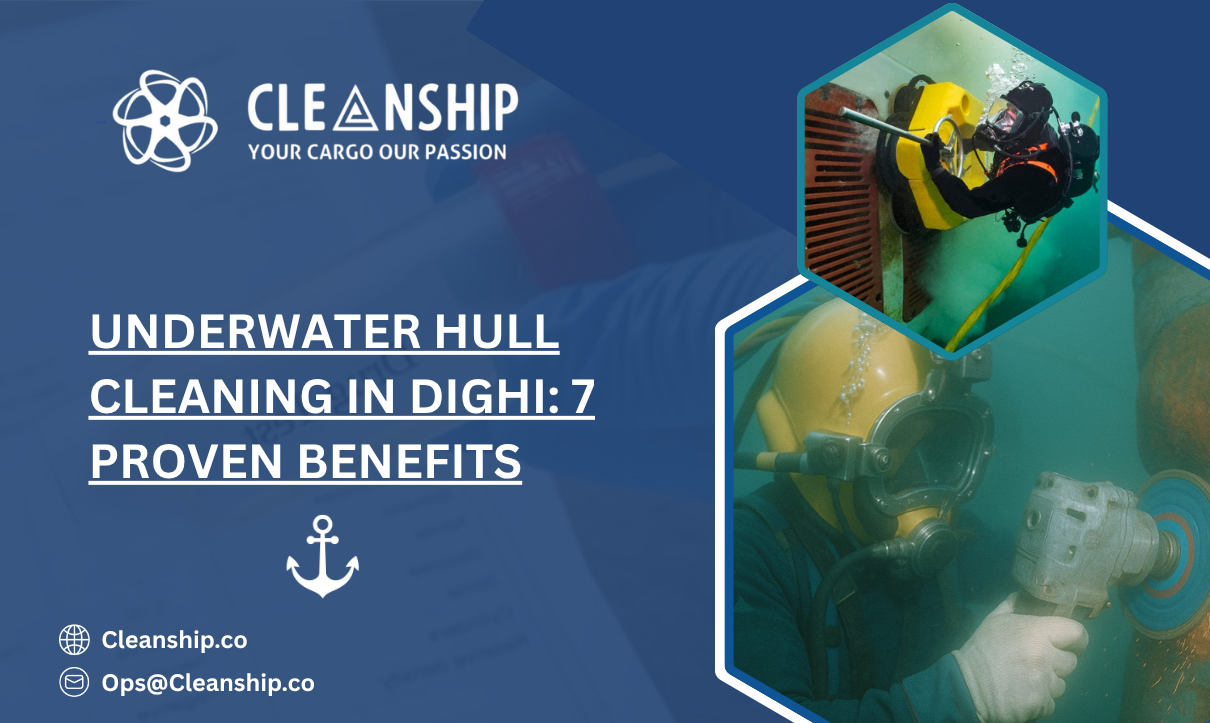
Underwater Hull Cleaning in JNPT

Underwater Hull Cleaning in JNPT: 7 Proven Benefits

Jawaharlal Nehru Port Trust (JNPT), now known as Jawaharlal Nehru Port Authority, is India’s largest container port and a major gateway for international trade. Every day, container vessels, bulk carriers, tankers, and feeder ships call at the port, making operational efficiency a top priority for ship owners and fleet managers. As vessels spend time alongside berths or at anchorage, marine organisms begin to accumulate on underwater hull surfaces. What starts as a thin layer of slime can quickly develop into algae, barnacles, mussels, and other biofouling that affects vessel performance. This is why Underwater Hull Cleaning in JNPT has become an essential maintenance service. Regular cleaning helps ships maintain fuel efficiency, reduce drag, protect hull coatings, and avoid costly operational disruptions. Why Underwater Hull Cleaning in JNPT Matters A clean hull moves more efficiently through the water. When marine growth builds up, hydrodynamic resistance increases, forcing engines to consume more fuel to maintain the same speed. Even moderate fouling can affect voyage schedules and increase operating expenses over time. For example, a container vessel operating between JNPT, Singapore, and Dubai experienced a steady rise in fuel consumption despite normal engine performance. During a scheduled port call, commercial divers carried out underwater hull cleaning in JNPT and removed heavy marine growth from the hull and propeller. On the following voyage, the engineering team recorded improved fuel efficiency and smoother vessel handling. Experiences like this explain why Underwater Hull Cleaning in JNPT is an important part of preventive vessel maintenance. 1. Improves Fuel Efficiency Fuel accounts for a significant portion of a vessel’s operating costs. Marine fouling increases water resistance, making engines work harder to maintain service speed. Removing slime, algae, and barnacles restores smoother water flow around the hull. Professional Underwater Hull Cleaning in JNPT helps reduce hydrodynamic drag and improves overall fuel economy. Fuel Efficiency Benefits Over multiple voyages, even small fuel savings can have a meaningful impact on operating costs. 2. Restores Vessel Performance Marine growth affects more than fuel consumption. A fouled hull reduces vessel speed, limits maneuverability, and places additional stress on propulsion systems. Regular underwater cleaning restores the hull’s hydrodynamic profile, allowing ships to perform closer to their original design specifications. This is especially valuable for vessels operating on fixed schedules where delays can affect cargo commitments and customer expectations. 3. Protects Antifouling Coatings Modern antifouling coatings are designed to minimize marine growth and protect steel surfaces from corrosion. If fouling is allowed to accumulate for long periods, cleaning may require more aggressive methods that can damage the coating. Routine Underwater Hull Cleaning in JNPT removes marine growth while helping preserve coating integrity. Protecting the coating extends its service life and reduces future maintenance requirements. 4. Reduces Dry Dock Costs Dry docking represents one of the largest planned maintenance expenses for commercial vessels. Regular underwater cleaning keeps hull surfaces in better condition, reducing the amount of work required during scheduled dry dock visits. A bulk carrier preparing for class renewal recently completed underwater cleaning before entering dry dock. Because the hull remained in good condition, maintenance teams completed repairs ahead of schedule, saving both time and operational costs. Maintenance Advantages Preventive maintenance often delivers measurable long-term savings. 5. Improves Propulsion Efficiency Marine deposits affect not only the hull but also propellers and rudders. Barnacles and algae on propeller blades reduce propulsion efficiency and may increase vibration during operation. Many underwater maintenance programs combine hull cleaning with propeller polishing to maximize performance. Professional Underwater Hull Cleaning in JNPT often includes inspection of underwater appendages to ensure complete maintenance coverage. 6. Supports Environmental Compliance Reducing fuel consumption also helps reduce emissions. As environmental regulations continue to evolve, shipping companies increasingly focus on maintaining clean hulls to improve energy efficiency and lower greenhouse gas emissions. Responsible underwater cleaning methods also minimize the release of marine debris and help operators meet environmental standards. A clean hull benefits both commercial operations and marine ecosystems. 7. Improves Operational Reliability Unexpected performance issues can disrupt voyage schedules and increase maintenance costs. Routine underwater cleaning allows technical teams to identify marine growth, coating damage, and minor underwater defects before they become larger problems. Regular Underwater Hull Cleaning in JNPT supports reliable vessel performance and reduces the risk of unplanned maintenance. Consistent preventive maintenance contributes to smoother operations throughout the vessel’s service life. Choosing the Right Underwater Hull Cleaning Provider The quality of underwater maintenance depends heavily on the experience of the service provider. Ship owners should evaluate contractors based on: An experienced provider understands local operating conditions around JNPT and recommends cleaning methods that protect hull coatings while effectively removing marine growth. Modern Technology Is Improving Underwater Maintenance The maritime industry continues to adopt advanced technologies to improve underwater maintenance. ROV inspections, high-definition underwater cameras, and digital reporting systems provide technical managers with detailed information before and after cleaning. These tools improve maintenance planning and allow ship owners to monitor hull condition over time. Combined with experienced commercial divers, modern technology delivers more accurate and efficient underwater services. Conclusion Marine fouling is an unavoidable challenge for every commercial vessel, but its impact can be effectively managed through regular maintenance. A clean hull reduces fuel consumption, protects coatings, improves propulsion efficiency, and supports reliable vessel operations. The seven proven benefits discussed above demonstrate why Underwater Hull Cleaning in JNPT is an essential investment for ship owners operating through India’s busiest container port. Routine underwater maintenance not only improves operational efficiency but also helps reduce long-term maintenance costs and extend the life of critical underwater components. For shipping companies focused on performance, reliability, and sustainability, regular underwater hull cleaning in JNPT remains one of the most practical and cost-effective maintenance strategies. FAQs:
Read more
Hull Fouling Inspection in Mumbai

Hull Fouling Inspection in Mumbai: 7 Expert Checks

Mumbai is one of India’s busiest commercial ports, handling thousands of vessel movements every year. Container ships, oil tankers, bulk carriers, offshore support vessels, and coastal cargo ships spend considerable time navigating and waiting in coastal waters where marine organisms grow rapidly. Even a thin layer of marine slime can affect a vessel’s performance. If left unchecked, it gradually develops into heavy biofouling that increases fuel consumption, reduces speed, and places additional strain on propulsion systems. This is why Hull Fouling Inspection in Mumbai has become an important part of preventive ship maintenance. Regular underwater inspections allow ship owners to assess marine growth before it causes operational problems or leads to expensive repairs. What Is Hull Fouling Inspection? Hull fouling inspection is the underwater examination of a vessel’s submerged surfaces to identify marine growth, coating condition, corrosion, and structural issues. Professional commercial divers or remotely operated vehicles (ROVs) inspect critical underwater areas while the vessel remains afloat. High-definition images and video recordings provide technical managers with a clear understanding of the hull’s condition. A typical Hull Fouling Inspection in Mumbai includes: The inspection helps determine whether underwater cleaning or repairs are required. Why Hull Fouling Inspection Matters Marine growth develops gradually, making it difficult to detect without underwater examination. A container vessel operating between Mumbai and ports in Southeast Asia recently reported increasing fuel consumption despite normal engine performance. During a scheduled underwater inspection, divers found extensive barnacle growth across the hull and propeller. Following underwater cleaning, the vessel returned to its expected operating efficiency. Situations like this highlight the value of routine Hull Fouling Inspection in Mumbai. 1. Check the Level of Marine Growth The first objective of any hull inspection is to evaluate marine fouling. Inspectors identify: Understanding the severity of fouling helps determine the most appropriate cleaning method. Why This Check Is Important Early detection reduces long-term maintenance costs. 2. Assess Hull Coating Condition Modern antifouling coatings are designed to reduce marine growth and protect steel surfaces. During Hull Fouling Inspection in Mumbai, inspectors carefully examine coating performance, looking for: Identifying coating deterioration early helps prevent corrosion and extends coating life. 3. Inspect Propeller Condition Propellers are particularly vulnerable to marine deposits and surface damage. Even small amounts of fouling reduce propulsion efficiency and increase fuel consumption. During inspection, divers assess: Many ship operators combine hull inspection with propeller polishing to maximize operational efficiency. 4. Examine Sea Chests and Water Intakes Sea chests supply seawater to critical onboard systems. Marine organisms frequently accumulate inside intake gratings, restricting cooling water flow and increasing the risk of equipment overheating. A tanker berthed in Mumbai recently experienced reduced seawater flow alarms during cargo operations. Underwater inspection revealed heavy barnacle growth inside the sea chest. Divers removed the fouling before the blockage caused more serious mechanical problems. Routine inspection helps avoid similar operational disruptions. Sea Chest Inspection Covers Maintaining seawater flow supports reliable vessel operation. 5. Detect Early Signs of Corrosion Corrosion often develops beneath damaged coatings or around marine growth. Professional inspectors look for: Early detection allows maintenance teams to address minor corrosion before structural repairs become necessary. Routine Hull Fouling Inspection in Mumbai helps preserve hull integrity and reduce repair costs. 6. Evaluate Structural Condition Hull inspections provide an opportunity to assess the vessel’s underwater structure. Inspectors examine: Although the primary focus is marine fouling, structural observations often reveal damage requiring future maintenance. Accurate inspection reports support informed maintenance planning. 7. Document Findings for Preventive Maintenance Modern inspections produce detailed photographic and video records. These reports allow technical managers to compare hull condition over time, monitor coating performance, and schedule maintenance based on actual vessel condition. Professional Hull Fouling Inspection in Mumbai services often include digital reporting with annotated images and maintenance recommendations. Reliable documentation supports long-term asset management. Choosing the Right Inspection Partner The quality of underwater inspection depends on the experience and equipment of the service provider. Ship owners should evaluate companies based on: An experienced inspection team understands local port conditions and delivers reliable assessments that support efficient maintenance planning. Technology Is Improving Hull Inspections Modern underwater inspection technology has advanced significantly. ROVs equipped with HD cameras, underwater lighting, sonar systems, and digital reporting software now provide highly detailed assessments without requiring extensive diver intervention. Some operators also integrate inspection reports into planned maintenance systems, allowing fleet managers to monitor hull condition across multiple vessels. These technologies help reduce maintenance uncertainty while improving operational efficiency. Conclusion Marine fouling develops naturally, but its impact on vessel performance can become significant if left unchecked. Increased fuel consumption, coating damage, reduced speed, and cooling system problems often begin with underwater growth that remains unnoticed. The seven expert checks discussed above demonstrate why Hull Fouling Inspection in Mumbai is an essential maintenance practice for commercial shipping. Regular inspections help identify marine growth early, protect hull coatings, improve maintenance planning, and reduce long-term operating costs. For vessels operating through Mumbai’s busy port facilities, investing in professional hull fouling inspections supports efficient operations, protects valuable marine assets, and contributes to safer, more reliable voyages. FAQs:
Read more
Sea Chest Cleaning in Mumbai

Sea Chest Cleaning in Mumbai: 7 Proven Benefits

Mumbai is one of India’s busiest maritime hubs, welcoming container ships, crude oil tankers, offshore support vessels, bulk carriers, and passenger ships throughout the year. While engines and propulsion systems often receive the most attention, one critical component quietly supports a vessel’s daily operation—the sea chest. The sea chest supplies seawater to essential onboard systems, including engine cooling, ballast operations, firefighting equipment, and auxiliary machinery. When marine growth, debris, or sediment accumulates inside this compartment, seawater flow becomes restricted, increasing the risk of overheating, equipment failure, and operational delays. That is why Sea Chest Cleaning in Mumbai has become an important part of preventive vessel maintenance. Regular underwater cleaning helps maintain uninterrupted seawater circulation, improves equipment reliability, and reduces unexpected maintenance costs. What Is a Sea Chest? A sea chest is a recessed compartment built into the underwater section of a ship’s hull. It serves as the primary intake point for seawater used by multiple onboard systems. The compartment is protected by grating or protective bars that prevent large debris from entering. However, over time, marine organisms, algae, barnacles, shells, and sediment gradually accumulate inside the sea chest. Without routine maintenance, these deposits reduce water flow and affect several critical shipboard operations. Why Sea Chest Cleaning in Mumbai Is Essential Warm coastal waters around Mumbai encourage rapid marine growth. Ships operating regularly in these waters often experience biological fouling inside sea chests, particularly during long port stays or extended anchorage periods. A product tanker operating along India’s western coastline recently experienced reduced seawater flow alarms during cargo discharge. Commercial divers inspected the sea chest and found extensive barnacle growth restricting water intake. After underwater cleaning, cooling water circulation returned to normal, allowing the vessel to continue operations without additional delays. Practical examples like this explain why Sea Chest Cleaning in Mumbai is considered an essential maintenance activity. 1. Maintains Proper Seawater Flow The primary purpose of sea chest cleaning in Mumbai is to maintain unrestricted seawater circulation. Marine growth inside intake openings gradually narrows the available flow area, reducing cooling efficiency. Professional Sea Chest Cleaning in Mumbai removes biological fouling before it causes operational problems. Benefits of Proper Water Flow Maintaining adequate seawater flow supports the safe operation of multiple onboard systems. 2. Prevents Engine Cooling Problems Marine engines rely on seawater cooling systems to operate within safe temperature limits. If seawater intake becomes restricted, engine temperatures can rise quickly, increasing mechanical stress and reducing overall efficiency. Routine sea chest cleaning in Mumbai helps maintain consistent cooling performance and reduces the likelihood of overheating. For vessels operating under demanding schedules, reliable cooling systems are essential. 3. Reduces Marine Growth Accumulation Sea chests provide an ideal environment for marine organisms. Low water movement inside the compartment allows algae, barnacles, mussels, and shell-forming organisms to attach and multiply rapidly. Regular Sea Chest Cleaning in Mumbai removes these deposits before they become difficult to eliminate. Preventive cleaning also reduces the risk of severe blockages developing between maintenance intervals. 4. Improves Vessel Reliability Unexpected seawater intake problems can disrupt vessel operations and create expensive maintenance requirements. Routine underwater inspections performed during sea chest cleaning help identify additional issues such as: A bulk carrier preparing for an overseas voyage recently scheduled sea chest cleaning during a port stay in Mumbai. Divers removed marine fouling and identified minor grating damage, allowing repairs to be planned before the vessel departed. Early detection helps prevent larger maintenance challenges later. Operational Advantages Reliable seawater systems support uninterrupted vessel operations. 5. Minimizes Dry Dock Costs Routine underwater maintenance reduces the amount of work required during scheduled dry dockings. When sea chests remain clean throughout the operating cycle, technical teams can focus on planned maintenance instead of unexpected corrective repairs. Professional Sea Chest Cleaning in Mumbai supports long-term maintenance planning and helps control repair costs. Preventive maintenance is generally more economical than emergency intervention. 6. Supports Fuel and Equipment Efficiency Although sea chest cleaning in Mumbai does not directly affect propulsion, it contributes to overall vessel efficiency. Cooling systems operating with unrestricted seawater flow maintain engine performance, reducing unnecessary mechanical strain and supporting efficient fuel consumption. Reliable auxiliary systems also improve overall vessel performance during extended voyages. Well-maintained seawater systems contribute to efficient ship operations. 7. Extends Equipment Service Life Restricted seawater circulation places additional stress on pumps, heat exchangers, valves, and cooling equipment. By maintaining clean intake systems, ship owners reduce wear on these components and extend their operational lifespan. Many operators include Sea Chest Cleaning in Mumbai as part of comprehensive underwater maintenance programs alongside hull cleaning, propeller polishing, and underwater inspections. Regular maintenance protects valuable onboard equipment while reducing long-term operating costs. Choosing the Right Sea Chest Cleaning Service Selecting an experienced underwater contractor is critical. Ship owners should consider: An experienced provider understands local port conditions and performs cleaning without damaging sea chest gratings or surrounding hull coatings. Technology Is Improving Underwater Maintenance The marine industry continues to adopt advanced inspection technologies. ROVs, underwater cameras, and digital reporting systems now support more detailed assessments before and after cleaning. These tools help technical managers evaluate sea chest condition, document maintenance work, and plan future inspections more effectively. Combined with routine diver cleaning, modern technology improves both maintenance quality and decision-making. Conclusion The sea chest may not receive as much attention as engines or propulsion systems, but it plays a vital role in maintaining safe and efficient vessel operations. Restricted seawater flow caused by marine growth can affect cooling systems, increase maintenance costs, and disrupt voyage schedules. The seven proven benefits discussed above demonstrate why Sea Chest Cleaning in Mumbai remains an essential maintenance practice for commercial vessels. Regular cleaning improves seawater circulation, protects onboard machinery, reduces repair costs, and supports long-term operational reliability. For vessels operating through Mumbai’s busy shipping lanes, proactive sea chest maintenance is a practical investment in equipment performance, operational efficiency, and overall vessel safety. FAQs:
Read more
Propeller Polishing in Mumbai

Propeller Polishing in Mumbai: 7 Proven Benefits

Mumbai is one of India’s busiest maritime gateways, serving container ships, oil tankers, offshore vessels, cruise ships, and coastal cargo carriers throughout the year. With vessels operating continuously in seawater, underwater components require regular maintenance to maintain peak efficiency. Among these components, the propeller plays one of the most important roles in vessel performance. Even a well-maintained engine cannot perform at its best if the propeller is covered with marine deposits, minor corrosion, or surface roughness. Over time, these seemingly small imperfections increase resistance, reduce propulsion efficiency, and lead to higher fuel consumption. This is why Propeller Polishing in Mumbai has become an essential underwater maintenance service for shipping companies. Regular polishing restores a smooth propeller surface, improves hydrodynamic performance, and helps vessels operate more efficiently without waiting for the next dry docking. Why Propeller Condition Matters The propeller converts engine power into forward movement. Any damage, fouling, or surface roughness directly affects the vessel’s ability to move efficiently through the water. Marine slime, algae, barnacles, and mineral deposits gradually accumulate on propeller blades. These deposits disrupt smooth water flow, forcing engines to consume more fuel to maintain operating speed. A chemical tanker operating between Mumbai and ports in the Arabian Gulf recently experienced a gradual decline in propulsion performance. During an underwater maintenance visit, commercial divers polished the propeller after removing marine deposits. The vessel’s engineering team later reported smoother operation, reduced vibration, and noticeable fuel savings during subsequent voyages. This practical example illustrates the value of routine Propeller Polishing in Mumbai. 1. Improves Fuel Efficiency Fuel remains one of the largest operating expenses in commercial shipping. A polished propeller creates less resistance as it rotates through the water, allowing propulsion systems to operate more efficiently. Regular Propeller Polishing in Mumbai helps reduce fuel consumption by restoring the smooth surface required for efficient water flow. Fuel Efficiency Benefits Even small efficiency improvements can produce significant savings over multiple voyages. 2. Enhances Vessel Performance Surface roughness and marine deposits reduce propeller efficiency. A polished propeller transfers engine power more effectively, allowing the vessel to maintain design speed with less effort. For operators working on fixed schedules, improved propulsion performance supports reliable voyage planning and on-time cargo delivery. Routine polishing helps maintain consistent operational performance throughout the vessel’s service cycle. 3. Reduces Vibration and Noise Marine deposits often create uneven water flow across propeller blades. This imbalance may lead to increased vibration, additional mechanical stress, and higher noise levels during operation. Professional Propeller Polishing in Mumbai restores blade smoothness, helping reduce vibration and improving overall propulsion stability. Lower vibration also contributes to greater crew comfort and reduced equipment wear. 4. Extends Propeller Service Life Marine fouling and corrosion gradually affect the propeller surface. Routine polishing removes deposits before they contribute to long-term deterioration. At the same time, underwater inspections performed during polishing help identify minor defects before they become serious maintenance issues. A bulk carrier calling at Mumbai recently underwent underwater propeller polishing in Mumbai before entering dry dock. Inspectors discovered only minor surface wear, allowing the operator to avoid costly propeller repairs during the scheduled maintenance period. Preventive maintenance often delivers long-term financial benefits. Long-Term Maintenance Benefits Maintaining a smooth propeller surface protects valuable propulsion equipment. 5. Supports Environmental Performance Fuel efficiency and environmental performance are closely connected. When the propeller operates efficiently, engines consume less fuel and produce lower greenhouse gas emissions. Many shipping companies now include Propeller Polishing in Mumbai as part of their environmental performance strategy, helping them improve operational efficiency while supporting sustainability goals. Efficient propulsion benefits both commercial operations and the marine environment. 6. Minimizes Operational Downtime One of the major advantages of underwater propeller polishing in Mumbai is that it can usually be performed while the vessel remains afloat. Professional commercial divers complete the work during cargo operations or scheduled port stays, allowing ship owners to avoid unnecessary delays. This flexibility makes underwater polishing an efficient alternative to waiting for dry dock availability. Many operators coordinate polishing with underwater hull cleaning to maximize maintenance efficiency. 7. Improves Preventive Maintenance Planning Routine underwater maintenance provides valuable information beyond polishing alone. During propeller polishing, divers also inspect: These observations help technical managers schedule future maintenance based on actual equipment condition rather than assumptions. Preventive maintenance reduces unexpected breakdowns and improves long-term asset reliability. Choosing the Right Service for Propeller Polishing in Mumbai Selecting an experienced underwater service provider is essential for achieving consistent results. Ship owners should evaluate: A professional contractor providing Propeller Polishing in Mumbai understands local operating conditions and uses polishing methods that restore performance without damaging the propeller surface. Technology Is Improving Underwater Maintenance Modern underwater maintenance has advanced considerably in recent years. ROV inspections, high-definition underwater cameras, and digital reporting systems now support more accurate assessments before and after polishing. Technical managers can review inspection images, compare previous maintenance records, and monitor long-term propeller condition more effectively. These technologies help ship owners make informed maintenance decisions while improving operational efficiency. Conclusion The propeller is one of the most important components affecting vessel performance. Even minor surface fouling can increase fuel consumption, reduce propulsion efficiency, and create unnecessary operating costs. The seven proven benefits discussed above show why Propeller Polishing in Mumbai has become a valuable maintenance practice for commercial vessels. Routine polishing improves fuel efficiency, reduces vibration, extends propeller life, supports environmental performance, and contributes to reliable vessel operations. For ship owners operating through Mumbai’s busy maritime corridor, investing in regular propeller polishing in Mumbai is a practical strategy for protecting propulsion systems, reducing long-term maintenance costs, and maximizing overall vessel efficiency. FAQs:
Read more
Underwater Hull Cleaning in Mumbai

Underwater Hull Cleaning in Mumbai: 7 Proven Benefits

Mumbai is one of India’s busiest maritime hubs, serving container ships, oil tankers, bulk carriers, offshore support vessels, passenger ships, and coastal cargo vessels every day. With continuous vessel movement and year-round exposure to seawater, underwater hull maintenance becomes a critical part of efficient ship operations. Marine organisms begin attaching to submerged hull surfaces much sooner than many operators expect. What starts as a thin layer of slime gradually develops into algae, barnacles, mussels, and other biofouling that increases drag and reduces vessel performance. This is why Underwater Hull Cleaning in Mumbai has become an essential maintenance service for shipping companies looking to improve operational efficiency, reduce fuel consumption, and extend the life of underwater coatings. Regular cleaning helps vessels maintain peak performance while avoiding unnecessary maintenance costs. Why Underwater Hull Cleaning in Mumbai Is Important A vessel’s hull is constantly exposed to saltwater, marine organisms, and changing environmental conditions. Over time, biological growth accumulates across underwater surfaces and creates additional resistance as the ship moves through the water. Even light marine fouling can reduce fuel efficiency. Heavy fouling places greater demands on propulsion systems and can significantly increase operating expenses. A coastal cargo vessel operating regular services between Mumbai and the Gulf region noticed a gradual increase in fuel consumption over several voyages. During a scheduled port stay, commercial divers carried out underwater hull cleaning in Mumbai and removed extensive barnacle growth from the hull and propeller. After cleaning, the vessel regained its expected service speed and the engineering team reported smoother propulsion. This practical example demonstrates the long-term value of Underwater Hull Cleaning in Mumbai. 1. Improves Fuel Efficiency Fuel represents one of the largest operating costs for any commercial vessel. Marine growth increases hydrodynamic resistance, forcing engines to work harder to maintain the same speed. Clean hull surfaces allow water to flow more efficiently around the vessel, reducing drag and lowering fuel consumption. Regular Underwater Hull Cleaning in Mumbai helps shipping companies control bunker costs while maintaining schedule reliability. Fuel Efficiency Benefits Even modest improvements in hull condition can translate into significant fuel savings over time. 2. Enhances Vessel Performance A clean hull allows the vessel to operate closer to its designed performance levels. Reduced resistance improves speed, maneuverability, and propulsion efficiency. This is especially important for vessels operating on fixed schedules where delays can affect cargo commitments and charter agreements. Many fleet operators include underwater cleaning in their planned maintenance programs to ensure consistent operational performance. 3. Protects Hull Coatings Modern antifouling coatings provide valuable protection against corrosion and marine growth. If fouling remains untreated for long periods, cleaning becomes more aggressive and may damage the coating surface. Controlled underwater cleaning performed by experienced divers helps preserve coating integrity while removing marine organisms. Professional Underwater Hull Cleaning in Mumbai extends coating life and delays expensive recoating work during dry docking. 4. Reduces Dry Dock Costs Dry docking is one of the most expensive maintenance activities in a vessel’s operating life. Routine underwater cleaning helps prevent excessive marine growth, reducing the amount of work required during scheduled dry dock periods. A tanker operator serving western Indian ports recently combined underwater cleaning with a routine inspection before entering dry dock. Because the hull remained in good condition, maintenance was completed ahead of schedule with fewer repair requirements than initially expected. Preventive maintenance often delivers measurable financial savings. Long-Term Cost Benefits Timely underwater cleaning supports more predictable maintenance budgets. 5. Extends Propeller and Rudder Life Marine growth affects more than the hull. Propellers and rudders also accumulate marine organisms that reduce propulsion efficiency and increase vibration. Cleaning these components improves water flow and restores operational performance. Many underwater maintenance projects include propeller polishing alongside hull cleaning for maximum efficiency. This integrated approach has become common in Underwater Hull Cleaning in Mumbai services. 6. Supports Environmental Compliance Environmental performance is becoming increasingly important across the shipping industry. A clean hull reduces fuel consumption, which helps lower greenhouse gas emissions and supports sustainability objectives. Many port authorities and ship operators also encourage environmentally responsible underwater cleaning practices that minimize the release of marine debris and comply with applicable regulations. Responsible maintenance benefits both vessel performance and the surrounding marine environment. 7. Improves Operational Reliability Unexpected performance losses can disrupt voyage schedules and increase operating costs. Routine underwater cleaning helps maintain reliable propulsion and consistent vessel speed. Early removal of marine growth also reduces the likelihood of excessive coating damage or corrosion. Many operators schedule Underwater Hull Cleaning in Mumbai during cargo operations or planned port calls to minimize operational downtime while maintaining vessel readiness. Reliable performance remains one of the strongest advantages of preventive hull maintenance. Choosing the Right Underwater Hull Cleaning in Mumbai Provider Not every marine service provider offers the same level of expertise. Ship owners should consider: An experienced contractor providing Underwater Hull Cleaning in Mumbai understands local port conditions and can recommend cleaning methods that protect hull coatings while effectively removing marine growth. Technology Is Transforming Underwater Maintenance Advances in underwater technology continue to improve cleaning operations. Many service providers now combine diver cleaning with ROV inspections, high-definition underwater imaging, and digital reporting systems. These technologies allow technical managers to assess hull condition before and after cleaning, making maintenance decisions more accurate and data-driven. As shipping companies focus on operational efficiency and sustainability, modern underwater maintenance techniques will continue to evolve. Conclusion Marine growth may seem like a gradual issue, but its impact on vessel performance can be substantial. Increased fuel consumption, reduced speed, higher emissions, and accelerated coating wear all contribute to rising operating costs. The seven proven benefits discussed above demonstrate why Underwater Hull Cleaning in Mumbai is an important investment for ship owners and fleet managers. Routine underwater cleaning improves fuel efficiency, protects hull coatings, extends equipment life, and supports reliable vessel performance. For vessels operating through Mumbai’s busy commercial waters, proactive hull cleaning is no longer just routine maintenance. It is a strategic approach to improving operational efficiency, reducing long-term costs, and
Read more
ROV Hull Inspection in Mundra

ROV Hull Inspection in Mundra: 7 Expert Benefits

Mundra is one of India’s busiest commercial ports, handling container ships, bulk carriers, crude oil tankers, LNG vessels, and offshore support vessels around the clock. With heavy vessel traffic and limited turnaround time, ship operators need reliable inspection methods that deliver accurate results without disrupting operations. Traditional underwater inspections by commercial divers continue to play an important role, but modern shipping increasingly relies on remotely operated vehicles (ROVs) for underwater assessments. These advanced robotic systems provide detailed visual inspections while improving safety and reducing operational delays. That is why ROV Hull Inspection in Mundra has become a preferred solution for ship owners, fleet managers, and marine operators looking to maintain vessel performance and plan maintenance more efficiently. What Is an ROV Hull Inspection in Mundra? A Remotely Operated Vehicle (ROV) is an underwater robotic system equipped with high-definition cameras, lighting, thrusters, and navigation controls. Operated from the surface, the ROV captures live video and detailed images of a vessel’s underwater structure. A professional ROV Hull Inspection in Mundra typically covers: Because inspections are performed while the vessel remains afloat, operators can avoid unnecessary dry docking and minimize disruptions. Why ROV Inspections Are Becoming Essential Modern shipping operates on tight schedules. Delays caused by underwater inspections can affect cargo commitments, charter agreements, and voyage planning. For example, a bulk carrier arriving at Mundra for cargo discharge reported unusual vibration while approaching the berth. Instead of delaying operations for a diver inspection, the operator requested an ROV survey. The inspection quickly revealed rope entanglement around the propeller hub, allowing maintenance to be scheduled before the vessel’s next voyage. This kind of efficiency explains why ROV Hull Inspection in Mundra is now widely adopted across commercial fleets. 1. Improves Safety During Underwater ROV Hull Inspection in Mundra Safety is one of the strongest reasons for choosing ROV technology. Certain underwater areas can be difficult or hazardous for divers due to currents, low visibility, or confined spaces. ROVs eliminate unnecessary human exposure by carrying out inspections remotely. Safety Advantages This makes inspections safer without compromising the quality of the assessment. 2. Delivers Faster Inspection Results Time is critical in port operations. An ROV can inspect large sections of a vessel within a relatively short period while transmitting live video to inspectors. Technical teams receive immediate feedback, helping them make quicker maintenance decisions. Many shipping companies prefer ROV Hull Inspection in Mundra because it reduces inspection time and minimizes vessel downtime. 3. Provides High-Definition Visual Evidence Modern ROVs are equipped with advanced cameras capable of capturing high-resolution images and videos. Detailed visual documentation allows marine engineers to evaluate: Inspection reports supported by HD footage become valuable references for future maintenance planning and class surveys. 4. Eliminates the Need for Immediate Dry Docking Dry docking is both expensive and time-consuming. With ROV Hull Inspection in Mundra, ship owners can inspect underwater structures while vessels remain alongside the berth or at anchorage. This flexibility allows operators to assess hull conditions without interrupting commercial operations. For vessels operating under tight charter schedules, this can lead to significant cost savings. 5. Accesses Hard-to-Reach Areas Some underwater sections are difficult to inspect manually. Sea chests, rudder clearances, thruster tunnels, and propeller hubs often require detailed examination. ROVs can maneuver into these confined spaces and provide clear visual information, allowing inspectors to detect: Early identification helps prevent costly repairs later. Areas Commonly Inspected Comprehensive inspections improve maintenance planning. 6. Supports Preventive Maintenance Successful maintenance begins with reliable information. Instead of relying on assumptions, vessel managers can make decisions based on actual underwater conditions. Routine ROV Hull Inspection in Mundra allows operators to: Preventive maintenance often reduces long-term operating costs. 7. Reduces Overall Maintenance Costs Unexpected underwater damage can result in expensive repairs if left unnoticed. One container vessel operating regular services through Mundra scheduled an ROV inspection before dry docking. Inspectors discovered only minor coating damage and localized corrosion instead of the widespread deterioration initially suspected. The ship owner revised the repair scope, reducing both dry dock duration and maintenance expenses. Accurate inspections help avoid unnecessary repair work while protecting vessel performance. Applications Across Different Vessel Types ROV technology supports inspections for a wide variety of commercial vessels, including: Port authorities and offshore terminals also use ROV systems for underwater infrastructure inspections. Choosing the Right Partner for ROV Hull Inspection in Mundra Selecting an experienced underwater inspection company is essential. Ship owners should evaluate providers based on: An experienced provider offering ROV Hull Inspection in Mundra understands local operating conditions and can deliver reliable inspection results that support maintenance planning. The Future of Underwater ROV Hull Inspection in Mundra Technology continues to reshape the maritime industry. Artificial intelligence, digital image analysis, 3D underwater mapping, and automated reporting systems are becoming increasingly common. Future ROV inspections may identify coating deterioration, corrosion, and structural defects automatically using advanced software. These innovations will help shipping companies make faster and more informed maintenance decisions while improving operational efficiency. Conclusion Maintaining a vessel’s underwater structure is essential for safe and efficient operations. ROV technology has transformed underwater inspections by providing faster, safer, and more detailed assessments than many traditional methods. The seven expert benefits discussed above show why ROV Hull Inspection in Mundra has become an important maintenance solution for modern shipping companies. From improving safety and reducing downtime to supporting preventive maintenance and lowering repair costs, ROV inspections provide measurable operational advantages. For vessels operating through one of India’s busiest ports, investing in professional ROV inspections is a practical step toward maintaining performance, protecting valuable assets, and ensuring long-term operational reliability. FAQs:
Read more
Ship Hull Biofouling Removal in Pipavav

Ship Hull Biofouling Removal in Pipavav: 7 Proven Ways

Pipavav is one of India’s key commercial ports, handling container ships, bulk carriers, oil tankers, and offshore support vessels throughout the year. With constant exposure to warm coastal waters, ship hulls naturally accumulate marine organisms that affect performance below the waterline. Many operators notice the effects only after fuel consumption begins to rise or vessel speed starts to decline. By then, marine growth has often progressed from a thin slime layer to heavy fouling that increases drag and places extra stress on propulsion systems. This is why Ship Hull Biofouling Removal in Pipavav has become a critical part of modern vessel maintenance. Regular underwater cleaning improves operational efficiency, extends coating life, and helps ship owners avoid unnecessary operating costs. Understanding Ship Hull Biofouling Removal in Pipavav Biofouling is the accumulation of marine organisms such as bacteria, algae, slime, barnacles, mussels, and shell-forming species on submerged parts of a vessel. The process develops gradually. A microscopic slime layer appears first, creating an ideal surface for larger marine organisms to attach. Commonly affected underwater components include: Without timely maintenance, biofouling continues to increase and directly affects vessel performance. Why Biofouling Removal Is Important Marine growth creates additional resistance as the vessel moves through water. Higher resistance forces engines to generate more power to maintain operating speed. This leads to higher fuel consumption, increased emissions, and greater engine wear. A container vessel trading regularly between Pipavav and Southeast Asia recently experienced declining voyage performance. During an underwater inspection, divers identified extensive barnacle growth around the hull and propeller. After underwater cleaning, the vessel regained normal operating speed and reduced fuel consumption during subsequent voyages. Examples like this highlight the value of regular Ship Hull Biofouling Removal in Pipavav. 1. Schedule Routine Underwater Ship Hull Biofouling Removal in Pipavav The most effective way to control marine growth is through regular underwater cleaning. Professional commercial divers remove algae, slime, and barnacles using specialized underwater equipment while the vessel remains afloat. This allows ship operators to maintain vessel performance without interrupting cargo operations or scheduling emergency dry dock visits. Benefits of Routine Cleaning Routine cleaning also allows early identification of underwater damage. 2. Use Soft Brush Cleaning Systems Not every hull requires aggressive cleaning methods. Soft brush systems effectively remove light marine growth while protecting antifouling coatings. This method is particularly suitable for vessels with modern coating systems. Professional service providers offering Ship Hull Biofouling Removal in Pipavav often recommend soft cleaning for vessels undergoing regular maintenance. Preserving coating integrity reduces long-term repair costs. 3. Combine Hull Cleaning with Propeller Polishing Hull cleaning delivers better results when combined with propeller maintenance. Marine deposits on propeller blades reduce propulsion efficiency and may increase vibration. A chemical tanker calling at Pipavav recently underwent simultaneous hull cleaning and propeller polishing. Following the maintenance work, engineers reported smoother propulsion and improved fuel economy. This combined approach maximizes operational benefits. 4. Conduct Underwater Inspections Before Cleaning Inspection helps determine the extent of marine growth and coating condition. Professional divers or ROV systems examine: Inspection reports allow technical managers to select the most appropriate cleaning method. Many shipping companies now include underwater surveys as part of every Ship Hull Biofouling Removal in Pipavav project. 5. Protect Antifouling Coatings Hull coatings play a major role in preventing marine growth. Aggressive cleaning methods may damage protective coatings if performed incorrectly. Experienced underwater service providers carefully select cleaning tools based on: Protecting antifouling coatings helps reduce maintenance frequency and extends dry docking intervals. Advantages of Coating Protection Maintaining coating integrity remains an important objective during underwater cleaning. 6. Plan Preventive Maintenance Waiting until heavy fouling develops often increases maintenance costs. Many vessel operators now schedule underwater cleaning at regular intervals based on vessel trading routes and operational conditions. Preventive maintenance reduces unexpected performance issues and improves long-term reliability. Routine Ship Hull Biofouling Removal in Pipavav allows maintenance teams to address small problems before they become expensive repairs. 7. Choose an Experienced Marine Service Provider The quality of underwater cleaning depends heavily on the experience of the service provider. Ship owners should evaluate: An experienced contractor understands local operating conditions around Pipavav and recommends cleaning methods that balance efficiency with coating protection. Environmental Considerations During Hull Cleaning Responsible underwater cleaning extends beyond vessel performance. Marine service providers increasingly follow environmentally responsible cleaning practices designed to minimize the release of marine debris and protect surrounding waters. Many operators also request detailed cleaning reports supported by underwater photographs and videos. These records assist with maintenance planning and regulatory compliance. Technology Supporting Biofouling Management Technology continues to improve underwater maintenance. ROV inspections, underwater imaging systems, and digital reporting platforms now support more accurate cleaning operations. Some shipping companies combine inspection data with planned maintenance software, allowing technical managers to monitor hull condition over time. As digital technologies continue to develop, underwater maintenance is becoming more efficient and data-driven. Conclusion Biofouling develops naturally, but its impact on vessel performance can be significant. Increased fuel consumption, reduced speed, higher emissions, and coating damage all affect operational efficiency. The seven proven methods discussed above demonstrate why Ship Hull Biofouling Removal in Pipavav is an essential part of vessel maintenance. Routine underwater cleaning, careful coating protection, propeller polishing, and preventive inspections all contribute to better performance and lower operating costs. For ship owners operating through Pipavav, investing in regular biofouling removal is more than routine maintenance. It is a practical strategy for improving vessel efficiency, protecting valuable assets, and maintaining reliable shipping operations. FAQs:
Read more
Underwater Paint Condition Inspection in Pipavav

Underwater Paint Condition Inspection in Pipavav: 7 Expert Checks

Pipavav has established itself as one of India’s major commercial ports, serving container ships, bulk carriers, tankers, and offshore support vessels. As ships spend more time operating in seawater, protecting the underwater hull becomes one of the most important aspects of vessel maintenance. The hull coating is the vessel’s first line of defense against corrosion, marine growth, and environmental wear. When this protective layer begins to deteriorate, even small defects can develop into expensive structural repairs if left unnoticed. This is why Underwater Paint Condition Inspection in Pipavav has become an essential service for ship owners, technical managers, and marine operators. Regular underwater inspections help detect coating issues early, allowing maintenance teams to take corrective action before significant damage occurs. Why Underwater Paint Condition Inspection in Pipavav Matters A vessel’s underwater coating continuously faces harsh operating conditions. Saltwater, marine organisms, sediment, vessel movement, and mechanical contact gradually affect coating performance. Most coating failures begin below the waterline, making them difficult to identify during routine onboard inspections. A bulk carrier operating between the Arabian Gulf and India’s west coast recently scheduled an underwater inspection while calling at Pipavav. Divers discovered localized coating damage near the flat bottom and rudder area. Since the issue was detected early, temporary repairs were completed, preventing corrosion from spreading before the vessel’s next dry docking. Situations like this highlight the value of regular Underwater Paint Condition Inspection in Pipavav. Common Causes of Underwater Coating Damage Protective coatings can deteriorate for several reasons. Some of the most common causes include: Understanding these factors helps ship operators develop better maintenance strategies. 1. Inspect Hull Coating Integrity The first step during an underwater inspection is evaluating the overall condition of the coating. Divers or remotely operated vehicles carefully examine the hull surface for signs of: A detailed Underwater Paint Condition Inspection in Pipavav helps determine whether localized repairs or complete recoating will eventually be required. Benefits of Early Coating Assessment Early detection almost always reduces long-term maintenance expenses. 2. Examine High-Wear Areas Not every part of the hull experiences the same level of stress. Certain locations require more detailed attention because they are exposed to higher mechanical loads and water turbulence. Areas That Need Special Inspection Sea Chests Continuous water flow often causes fouling and coating deterioration. Rudder and Stern Areas Constant movement and turbulence increase wear around these components. Flat Bottom Sections These areas may experience abrasion from sediments and marine growth accumulation. Inspecting these locations is an important part of Underwater Paint Condition Inspection in Pipavav. 3. Assess Corrosion Risks Coating damage frequently exposes steel surfaces to seawater. Even small defects can initiate corrosion that gradually spreads beneath surrounding coatings. Professional inspectors carefully identify: Early intervention helps prevent costly steel renewal work during dry docking. 4. Evaluate Marine Growth Impact Marine organisms affect more than vessel efficiency. Heavy fouling may also damage protective coatings by increasing mechanical stress during cleaning or natural movement. An offshore support vessel operating from Gujarat recently underwent underwater inspection before scheduled maintenance. Inspectors identified moderate fouling together with localized coating wear near the sea chest area. The maintenance team combined underwater cleaning with minor coating repairs, avoiding larger maintenance costs later. 5. Use High-Definition Underwater Imaging Modern inspection technology provides far more than written reports. Divers and ROV operators now capture high-resolution photographs and videos of underwater structures. Visual documentation allows technical managers to: Many operators now request digital reports after every Underwater Paint Condition Inspection in Pipavav. 6. Monitor Propeller and Rudder Coatings Although hull coatings receive most attention, propellers and rudder components should also be inspected. These areas experience continuous water movement and mechanical forces. Inspectors evaluate: Maintaining these components contributes to better propulsion efficiency and vessel reliability. Maintenance Advantages 7. Plan Preventive Maintenance Inspection alone is not enough. The information collected during underwater surveys should guide future maintenance decisions. Many ship operators schedule hull cleaning, coating touch-ups, and propeller polishing immediately after inspection findings are reviewed. Preventive maintenance almost always proves more economical than emergency repairs. For this reason, Underwater Paint Condition Inspection in Pipavav plays an important role in long-term asset management. Choosing the Right Inspection Partner Selecting an experienced underwater inspection company makes a significant difference. Ship owners should evaluate: Experienced service providers understand local port conditions and recommend inspection methods suited to each vessel. Technology Is Improving Underwater Inspections The maritime industry continues adopting advanced digital technologies. ROVs, underwater drones, digital reporting platforms, and AI-assisted image analysis now support more accurate inspections. Combined with predictive maintenance software, these technologies help vessel managers identify coating deterioration before operational problems develop. As shipping companies focus on efficiency and sustainability, underwater inspections will continue evolving. Conclusion Protective coatings play a vital role in preserving vessel integrity. Once coating failures begin, corrosion and structural damage can develop quickly if left untreated. The seven expert checks discussed above provide a practical framework for maintaining underwater hull coatings. Regular Underwater Paint Condition Inspection in Pipavav helps ship owners detect coating damage early, reduce maintenance costs, improve vessel performance, and extend the life of valuable marine assets. For vessels operating through Pipavav, underwater paint inspections have become more than routine maintenance. They are an essential part of responsible asset management and long-term operational efficiency. FAQs:
Read more
Marine Growth Removal in Pipavav

Marine Growth Removal in Pipavav: 7 Proven Benefits

Pipavav is one of India’s leading commercial ports, handling container vessels, bulk carriers, tankers, and offshore support ships throughout the year. With vessels frequently operating in warm coastal waters, marine growth on underwater hull surfaces becomes an unavoidable maintenance challenge. What often starts as a thin layer of slime can quickly develop into heavy fouling made up of algae, barnacles, mussels, and other marine organisms. Left untreated, this buildup increases hull resistance, reduces fuel efficiency, and places additional strain on the vessel’s propulsion system. This is why Marine Growth Removal in Pipavav has become an essential underwater maintenance service for ship owners and fleet managers. Timely cleaning not only restores vessel performance but also helps extend the lifespan of underwater coatings and equipment. Understanding Marine Growth on Ship Hulls Marine growth refers to the accumulation of biological organisms on submerged surfaces of a vessel. The process begins with microscopic bacteria and slime, followed by algae and hard-shell organisms that firmly attach to the hull. The coastal environment around Pipavav encourages this growth, especially for vessels that remain at anchorage or alongside the berth for extended periods. Commonly affected areas include: Routine Marine Growth Removal in Pipavav helps prevent these areas from becoming heavily fouled and affecting vessel performance. Why Marine Growth Removal in Pipavav Matters Marine growth creates friction between the hull and seawater. As drag increases, engines consume more fuel to maintain the same operating speed. A container vessel operating regular services between Pipavav and the Middle East experienced a gradual increase in bunker consumption over several voyages. During an underwater inspection, divers found significant barnacle accumulation on the hull and propeller. After professional cleaning, the vessel regained its expected speed and reported noticeable fuel savings. Situations like this demonstrate why proactive underwater maintenance is far more cost-effective than waiting until performance declines. 1. Improves Fuel Efficiency Fuel accounts for a substantial portion of vessel operating expenses. Even light marine fouling increases hydrodynamic resistance. Clean hull surfaces allow water to flow more smoothly, reducing engine workload and improving fuel economy. Regular Marine Growth Removal in Pipavav helps operators control fuel costs while maintaining voyage schedules. Fuel Efficiency Benefits 2. Enhances Vessel Performance A clean hull performs more efficiently than one covered with marine organisms. Reduced drag allows vessels to maintain design speed with less power. This improves schedule reliability, particularly for ships operating fixed routes. Many fleet operators include underwater cleaning as part of their planned maintenance strategy to maintain consistent performance. 3. Protects Hull Coatings Modern antifouling coatings provide valuable protection against corrosion and marine growth. However, excessive fouling can damage these coatings over time. If coatings deteriorate, exposed steel surfaces become vulnerable to corrosion. Professional Marine Growth Removal in Pipavav uses controlled cleaning techniques that remove fouling while preserving coating integrity. Protecting the coating also reduces future maintenance costs. 4. Extends Propeller Life Marine deposits do not accumulate only on the hull. Propeller blades often collect slime and barnacles that reduce propulsion efficiency and create vibration. A bulk carrier visiting Pipavav recently combined underwater hull cleaning with propeller polishing. After the maintenance work, the vessel’s engineering team reported smoother propulsion and improved fuel performance during subsequent voyages. Propeller maintenance remains an important part of effective underwater cleaning programs. 5. Reduces Dry Dock Maintenance Costs Routine underwater cleaning helps identify potential issues before they become major repairs. Removing marine growth early reduces coating deterioration and allows maintenance teams to detect corrosion, cracks, or mechanical damage during inspections. Many shipping companies use Marine Growth Removal in Pipavav to reduce the scope of work required during scheduled dry dockings. Long-Term Cost Advantages Preventive maintenance usually costs less than corrective repairs. 6. Supports Environmental Compliance The shipping industry continues to focus on sustainability and environmental performance. Marine growth increases fuel consumption, leading to higher greenhouse gas emissions. Clean hulls improve hydrodynamic efficiency and contribute to lower fuel usage. Responsible cleaning methods also help minimize environmental impact while complying with port regulations and industry best practices. 7. Increases Operational Reliability Unexpected performance issues can affect voyage schedules, charter commitments, and customer satisfaction. Regular underwater cleaning reduces the likelihood of propulsion inefficiencies caused by heavy fouling. Ship operators working through Pipavav often schedule underwater cleaning during cargo operations to avoid unnecessary downtime and maintain operational continuity. Reliable vessel performance benefits both ship owners and charterers. Choosing the Right Marine Growth Removal in Pipavav Service Selecting an experienced underwater service provider is essential. Ship owners should consider: A reliable contractor providing Marine Growth Removal in Pipavav understands local port conditions and recommends the most suitable cleaning method for each vessel. Modern Technologies Supporting Underwater Cleaning Technology has significantly improved underwater maintenance. Many marine service providers now use remotely operated vehicles (ROVs), underwater cameras, and digital reporting systems to support inspections before and after cleaning. These tools provide clear visual records that help technical managers monitor hull condition and plan future maintenance. Combined with advanced antifouling coatings, modern cleaning methods deliver longer-lasting results and greater operational efficiency. Conclusion Marine growth may develop gradually, but its effects on vessel performance become increasingly expensive over time. Higher fuel consumption, increased engine load, coating deterioration, and reduced speed all impact operational efficiency. The seven proven benefits discussed above demonstrate why Marine Growth Removal in Pipavav has become an important part of modern vessel maintenance. Regular underwater cleaning improves fuel efficiency, protects hull coatings, extends equipment life, and supports long-term cost savings. For vessels operating through Pipavav’s busy shipping corridor, proactive underwater maintenance is more than a routine task. It is a practical investment in vessel performance, reliability, and long-term operational success. FAQs:
Read more
ROV Hull Inspection in Pipavav

ROV Hull Inspection in Pipavav: 7 Expert Benefits

Pipavav has become one of India’s important deep-water ports, serving container vessels, bulk carriers, tankers, and offshore support ships. With increasing vessel traffic and tighter maintenance schedules, ship owners are constantly looking for efficient ways to inspect underwater assets without disrupting operations. Traditional underwater inspections performed by divers remain valuable, but technology has changed the way vessels are inspected below the waterline. Remotely Operated Vehicles, commonly known as ROVs, now offer faster, safer, and more detailed inspections. Today, ROV Hull Inspection in Pipavav is gaining attention among ship operators who want accurate underwater assessments while minimizing operational delays. The technology provides real-time information and helps maintenance teams make better decisions. Understanding ROV Hull Inspection in Pipavav An ROV is a remotely operated underwater vehicle equipped with cameras, lights, sensors, and maneuvering systems. Operators control the vehicle from the surface while receiving live video footage. These systems can inspect: ROV Hull Inspection in Pipavav allows vessels to remain afloat during inspections, reducing the need for dry docking. Why ROV Inspections Are Becoming Popular The busy operational environment at Pipavav requires efficient maintenance solutions. Many vessels have limited port stays, making traditional inspection methods challenging. A container vessel operating between the Middle East and western India recently reported increased vibration during operations. An ROV inspection conducted at Pipavav identified minor propeller damage and marine growth, allowing repairs to be scheduled during the next maintenance window. Such cases demonstrate the practical value of underwater robotic inspections. 1. Improved Safety for Underwater Operations One of the biggest advantages of ROV technology is safety. Certain underwater areas expose divers to risks such as low visibility, currents, and confined spaces. ROVs can inspect these locations without direct human exposure. Safety Benefits Many ship operators now prefer ROV Hull Inspection in Pipavav for routine surveys because of these safety advantages. 2. Faster Inspection Times Port schedules often leave very little room for maintenance activities. ROVs can inspect large portions of a vessel in a relatively short period. Operators can quickly maneuver around the hull and focus on specific areas of concern. This speed helps reduce delays and minimizes interruptions to cargo operations. 3. High-Definition Visual Documentation Modern ROV systems capture detailed images and video footage. Technical managers can review inspection recordings long after the operation is complete. This documentation becomes useful for maintenance planning and regulatory purposes. Inspection reports commonly include: Clear visual evidence improves decision-making. 4. Inspection Without Dry Docking Dry docking involves significant expenses and operational downtime. ROV Hull Inspection in Pipavav allows ship owners to inspect underwater structures while the vessel remains alongside the berth or at anchorage. This flexibility reduces maintenance costs and allows operators to continue normal schedules. For vessels operating under tight charter commitments, avoiding unnecessary delays is particularly important. 5. Access to Difficult Areas Some underwater sections are difficult to inspect manually. Sea chests, rudder gaps, propeller zones, and thruster tunnels often present access challenges. ROVs can enter these areas and provide detailed images. Inspectors can identify: Early detection prevents minor problems from developing into larger issues. 6. Better Maintenance Planning Maintenance becomes more effective when based on accurate information. Instead of relying on assumptions, technical teams can review actual underwater conditions. This helps prioritize repairs and allocate maintenance budgets efficiently. Many shipping companies include ROV Hull Inspection in Pipavav as part of their planned maintenance programs. Maintenance Advantages Reliable inspection data supports long-term vessel performance. 7. Cost Savings Over Time Although inspections involve an initial investment, they often reduce long-term maintenance costs. A bulk carrier visiting Pipavav underwent an ROV inspection before a scheduled dry dock. Inspectors found only localized coating damage rather than the extensive repairs originally anticipated. The ship owner adjusted repair plans accordingly and reduced maintenance expenses. Preventive inspections often provide measurable financial benefits. Applications Across Different Vessel Types ROV inspections support many vessel categories operating through Pipavav. These include: Port facilities and offshore structures also benefit from underwater robotic inspections. Challenges During ROV Operations Despite their advantages, ROV inspections still depend on environmental conditions. Water clarity, currents, weather, and vessel movement can influence inspection quality. Experienced operators understand local conditions and adjust inspection procedures accordingly. Proper planning remains essential for successful underwater operations. Choosing the Right Inspection Provider Not every service provider offers the same level of expertise. Ship owners should evaluate: A qualified provider delivering ROV Hull Inspection in Pipavav can provide reliable information that supports operational decisions. The Future of ROV Inspections The maritime industry continues to adopt advanced technologies. Artificial intelligence, digital reporting systems, and automated defect recognition are becoming part of modern inspection programs. Future systems may analyze defects automatically and provide predictive maintenance recommendations. As efficiency and safety become increasingly important, ROV inspections will continue to grow across the shipping industry. Conclusion Underwater inspections remain essential for maintaining vessel safety and performance. While traditional diving methods still play a role, ROV technology offers important advantages in safety, speed, and accuracy. The seven expert benefits discussed above demonstrate why ROV Hull Inspection in Pipavav has become a preferred solution for many vessel operators. By improving maintenance planning, reducing operational risks, and delivering accurate underwater information, ROV inspections help ship owners protect valuable assets and maintain efficient operations. For vessels calling at Pipavav, underwater robotic inspections represent a practical and reliable approach to modern vessel maintenance. FAQs:
Read more
Shopping Cart (0 items)