
Lobito has quietly become one of Angola’s most important maritime centers. Located along the Atlantic coast, the port serves as a strategic gateway for cargo moving to and from Central and Southern Africa. Bulk carriers, tankers, offshore support vessels, and general cargo ships regularly call at the port, making vessel maintenance an increasingly important part of local shipping operations.
Among the various maintenance services required by shipowners, hull cleaning has gained considerable attention. Marine growth develops quickly in tropical waters, affecting vessel performance and increasing operating costs. For operators seeking to maintain efficiency without interrupting schedules, underwater hull cleaning services in Lobito provide a practical solution.
Keeping a vessel’s underwater surface clean is no longer simply a maintenance task. It has become an important operational strategy that influences fuel consumption, emissions, and overall vessel performance.
Why Hull Fouling Matters
Every vessel operating in seawater experiences marine growth. Slime, algae, barnacles, shellfish, and other organisms gradually attach themselves to submerged surfaces.
The warm coastal waters around Angola create favorable conditions for this growth.
At first, the impact may seem minor. A thin layer of slime can develop within weeks. Over time, however, marine growth increases drag, reducing the vessel’s hydrodynamic efficiency.
As resistance increases:
- Fuel consumption rises.
- Engine load increases.
- Vessel speed declines.
- Emissions become higher.
- Maintenance costs increase.
Many operators now schedule underwater hull cleaning services in Lobito before performance issues begin affecting their operations.
Lobito’s Importance in Regional Shipping
The Port of Lobito plays an important role in Angola’s economy. It serves both domestic and international trade routes and supports cargo movements connected to mining, energy, and industrial activities.
Vessels frequently arriving at Lobito include:
- Bulk carriers
- Oil and product tankers
- Container vessels
- Offshore support vessels
- General cargo ships
- Tugboats and service vessels
The Lobito Corridor, which connects the port to inland regions, has also increased shipping activity in recent years.
As vessel traffic grows, the demand for reliable marine maintenance services continues to rise. This has made underwater hull cleaning services in Lobito increasingly valuable for shipowners operating along the West African coast.
How Underwater Hull Cleaning Is Performed
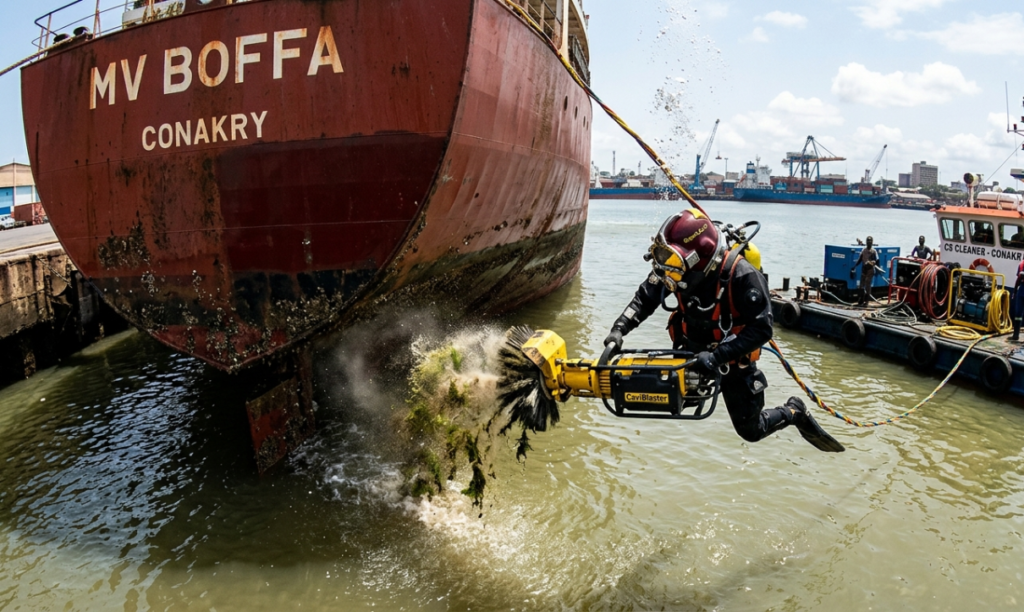
Hull cleaning is performed while the vessel remains afloat, eliminating the need for immediate dry docking.
The process generally begins with an underwater inspection.
Divers assess:
- Hull condition
- Marine growth levels
- Propeller fouling
- Sea chest condition
- Thrusters and appendages
- Coating condition
Based on these findings, suitable cleaning methods are selected.
Rotary Brush Cleaning
Soft rotating brushes remove slime and light marine growth while preserving protective coatings.
Hydraulic Cleaning Equipment
Heavy fouling conditions often require hydraulic systems capable of removing barnacles and shell deposits.
Propeller Polishing
Propeller polishing frequently accompanies hull cleaning operations. A smooth propeller surface improves propulsion efficiency and reduces fuel consumption.
After completion, operators may receive inspection reports and underwater photographs documenting the work performed.
Fuel Savings and Operational Efficiency
One of the primary reasons operators invest in underwater hull cleaning services in Lobito is fuel efficiency.
Even moderate fouling can significantly increase fuel consumption. Ships often compensate for added resistance by increasing engine output, which directly affects operating costs.
For example, a bulk carrier operating between Lobito and regional ports may experience noticeable increases in fuel consumption after several months in tropical waters. After hull cleaning, vessel operators often observe improvements in speed and fuel efficiency.
The benefits include:
- Reduced fuel costs
- Improved vessel speed
- Lower engine stress
- Reduced emissions
- Better schedule reliability
- Improved operational efficiency
In today’s shipping market, even small performance improvements can generate substantial savings over time.
Supporting Offshore and Coastal Operations
Although Lobito is widely known as a commercial port, offshore support activities also contribute to local vessel traffic.
Supply vessels, crew boats, and service vessels frequently operate along Angola’s coastline. Many remain deployed for long periods, increasing the likelihood of fouling.
Waiting for a scheduled dry dock may not always be practical.
This is where underwater hull cleaning services in Lobito offer significant operational advantages. Maintenance can often be completed during cargo operations, anchorage periods, or scheduled port calls.
This flexibility helps operators maintain vessel availability while reducing unnecessary downtime.
Environmental Considerations
Environmental responsibility has become increasingly important within the shipping industry.
Modern hull cleaning operations focus not only on vessel performance but also on minimizing environmental impacts.
Service providers generally consider:
- Hull coating condition
- Local regulations
- Biofouling management practices
- Coating preservation
- Waste management procedures
Careful cleaning methods help avoid unnecessary damage to anti-fouling coatings while reducing fuel consumption and emissions.
Many shipping companies now include hull condition monitoring as part of their sustainability programs.
Safety During Underwater Operations
Commercial diving operations require strict safety procedures.
Before cleaning begins, diving teams conduct detailed risk assessments and coordinate closely with vessel crews.
Safety measures often include:
- Permit-to-work systems
- Emergency response plans
- Continuous communication
- Vessel isolation procedures
- Weather monitoring
- Diving supervision
Water conditions, visibility, currents, and port traffic are carefully assessed.
Experienced diving teams understand the operational challenges of working around active vessels and busy ports.
Safety remains one of the most important aspects of successful underwater hull cleaning services in Lobito.
Choosing the Right Hull Cleaning Provider
Not every service provider offers the same level of expertise.
Ship managers often evaluate providers based on several factors.
Local Port Experience
Knowledge of Lobito’s operating conditions improves efficiency and project planning.
Qualified Commercial Divers
Certified divers contribute to both safety and work quality.
Modern Equipment
Advanced cleaning tools reduce cleaning time and protect coatings.
Inspection and Reporting
Detailed reports and underwater images provide useful maintenance records.
Many vessel operators now schedule routine inspections alongside cleaning operations to monitor hull conditions more effectively.
The Future of Hull Maintenance in Lobito
As the maritime industry focuses on fuel efficiency and emission reduction, underwater maintenance is becoming increasingly important.
Lobito continues to expand its role as a regional logistics hub. Increased vessel traffic naturally creates greater demand for maintenance services.
The growing importance of underwater hull cleaning services in Lobito reflects broader industry trends. Operators understand that maintaining a clean hull contributes directly to profitability, operational reliability, and environmental performance.
For vessels operating along Angola’s coastline, regular hull maintenance has become an essential part of modern fleet management.
Conclusion
Lobito has emerged as one of Angola’s significant maritime gateways, supporting trade, industrial growth, and regional shipping operations. Marine growth remains a constant challenge for vessels operating in warm coastal waters, affecting fuel consumption and vessel performance.
Professional underwater hull cleaning services in Lobito help shipowners maintain efficiency, reduce operating costs, and improve vessel reliability without the need for lengthy dry-docking periods.
As shipping companies continue to prioritize performance and sustainability, underwater hull cleaning will remain an important service supporting maritime operations in Lobito and throughout West Africa.
FAQs:
Q1. How often should vessels undergo underwater hull cleaning in Lobito?
Most vessels require cleaning every four to twelve months, depending on operating conditions and trading patterns.
Q2. Can cleaning be performed while the vessel is afloat?
Yes. Underwater hull cleaning allows vessels to remain in the water, minimizing operational downtime.
Q3. What vessels commonly use these services?
Bulk carriers, tankers, offshore support vessels, container ships, and general cargo vessels frequently use these services.
Q4. Does hull cleaning reduce fuel consumption?
Yes. Removing marine growth reduces drag, allowing vessels to operate more efficiently and consume less fuel.
Q5. Is underwater hull cleaning environmentally safe?
Professional operators use controlled cleaning methods designed to protect hull coatings and comply with environmental requirements.