
Luanda has long been one of West Africa’s busiest maritime centers. The city serves as Angola’s commercial gateway and supports a large share of the country’s oil, gas, container, and offshore shipping activities. Every day, tankers, supply vessels, bulk carriers, and offshore support ships move through its waters, connecting Angola to regional and international markets.
With this constant vessel traffic comes an operational challenge that many shipowners know all too well—hull fouling.
Warm tropical waters encourage rapid marine growth. Slime, algae, barnacles, and shell organisms gradually attach themselves to submerged hull surfaces. Over time, vessel performance begins to decline. Fuel consumption rises, engine loads increase, and schedules become harder to maintain.
This is why underwater hull cleaning services in Luanda have become increasingly important for vessel operators. Instead of waiting for dry docking, shipowners can restore hull efficiency while the vessel remains afloat, reducing downtime and operational costs.
Why Hull Fouling Is a Growing Concern
A vessel entering Angolan waters may begin accumulating marine growth within a relatively short period. The combination of warm temperatures, coastal conditions, and long operational cycles creates an ideal environment for fouling.
Initially, the buildup may appear insignificant. A thin layer of slime often goes unnoticed. Yet even light fouling creates additional drag.
As resistance increases, the vessel requires more power to maintain speed. Fuel consumption rises, and operating costs begin to climb.
For operators managing multiple vessels, these small losses quickly become significant.
Many shipping companies now schedule underwater hull cleaning services in Luanda as part of their planned maintenance strategy to maintain fuel efficiency and operational reliability.
Luanda’s Role in Regional Shipping
Luanda remains one of Angola’s most important ports, handling a wide range of commercial and offshore traffic.
The port regularly accommodates:
- Oil tankers
- Offshore support vessels
- Container ships
- Bulk carriers
- General cargo vessels
- Crew boats
- Supply vessels
The offshore energy sector also contributes heavily to vessel activity. Support vessels frequently move between offshore installations and shore bases, often spending extended periods in local waters.
As a result, demand for underwater hull cleaning services in Luanda continues to grow among both international and local vessel operators.
How Underwater Hull Cleaning Works
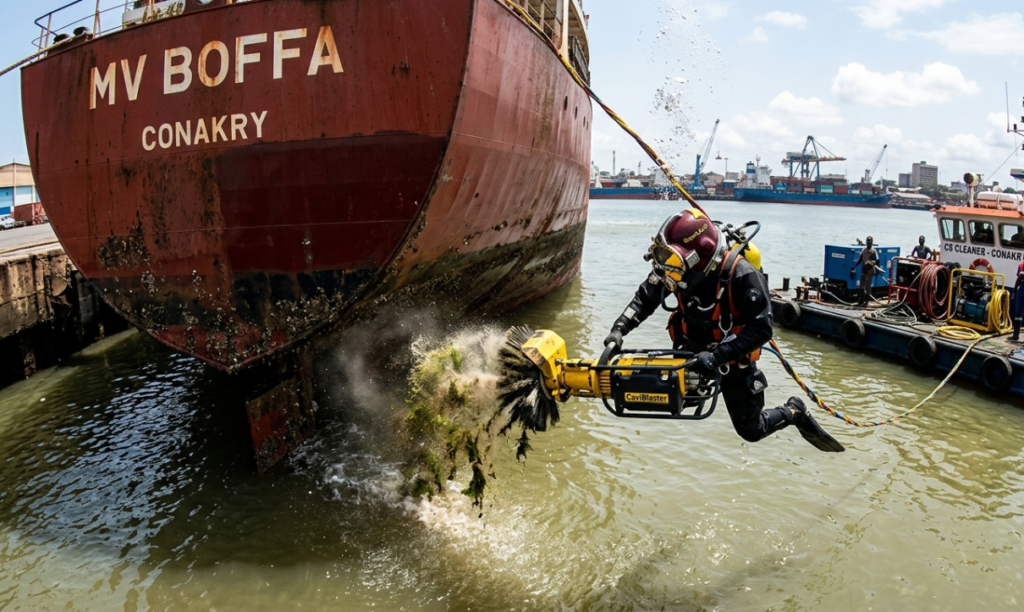
Professional diving teams perform the cleaning operation while the vessel remains afloat.
The process generally starts with an underwater inspection. Divers examine:
- Hull condition
- Extent of marine growth
- Coating condition
- Propeller fouling
- Sea chest areas
- Thrusters and underwater appendages
Based on the findings, different cleaning methods may be used.
Diver-Operated Cleaning Tools
Rotating brushes and soft cleaning equipment remove slime and light fouling while minimizing damage to anti-fouling coatings.
Hydraulic Cleaning Systems
Heavy marine growth often requires hydraulic equipment capable of removing barnacles and shell deposits.
Propeller Polishing
Propeller polishing is commonly performed during hull cleaning operations. A smooth propeller surface improves propulsion efficiency and reduces fuel consumption.
After the operation, service providers often deliver underwater photographs and inspection reports for maintenance records.
Fuel Efficiency and Cost Savings
Fuel costs remain one of the largest operating expenses for shipowners.
A fouled hull creates additional resistance, forcing engines to consume more fuel. Even moderate marine growth can affect vessel performance.
This is one reason why underwater hull cleaning services in Luanda have become a practical investment rather than a maintenance expense.
The benefits often include:
- Lower fuel consumption
- Improved vessel speed
- Reduced engine load
- Better schedule performance
- Lower emissions
- Increased operational efficiency
For example, offshore supply vessels operating continuous routes between Luanda and nearby offshore fields often experience noticeable fuel savings after hull cleaning.
In many cases, performance improvements become visible immediately after the operation.
Supporting Angola’s Offshore Industry
Angola’s offshore oil and gas sector generates substantial vessel traffic throughout the year.
Anchor handling tugs, platform supply vessels, crew transfer boats, and standby vessels often remain deployed for extended periods. Long operational cycles naturally lead to increased fouling.
Waiting for dry docking may not always be practical.
This is where underwater hull cleaning services in Luanda provide considerable value.
Maintenance can often be scheduled during cargo operations, crew changes, bunkering, or waiting periods at anchorage, allowing operators to maintain vessel availability.
Environmental Considerations
Modern underwater cleaning operations place increasing emphasis on environmental protection.
Service providers carefully assess the condition of the hull coating before cleaning. The objective is to remove marine growth without causing unnecessary coating damage.
Many operators now monitor hull conditions as part of their sustainability initiatives.
Environmental considerations include:
- Preserving anti-fouling coatings
- Minimizing coating damage
- Reducing fuel consumption
- Lowering emissions
- Following port and regulatory guidelines
Responsible cleaning practices help shipowners balance operational efficiency with environmental performance.
Safety During Underwater Operations
Safety remains a critical part of underwater maintenance work.
Commercial diving teams follow strict operational procedures before entering the water.
These procedures generally include:
- Risk assessments
- Diving plans
- Vessel coordination
- Communication systems
- Emergency response arrangements
- Permit-to-work procedures
Port traffic, currents, weather conditions, and underwater visibility are evaluated before operations begin.
Experienced dive teams coordinate closely with ship crews to ensure safe and efficient cleaning operations.
Choosing the Right Service Provider
Not all hull cleaning providers offer the same level of expertise.
When selecting a contractor, ship managers typically consider several factors.
Local Experience
Companies familiar with Luanda’s operating conditions often complete projects more efficiently.
Qualified Divers
Certified commercial divers contribute significantly to operational safety.
Modern Equipment
Specialized cleaning equipment improves cleaning quality while protecting hull coatings.
Reporting and Documentation
Inspection reports and underwater photographs provide valuable maintenance records for vessel operators.
Many shipping companies now incorporate regular hull inspections into their maintenance programs.
The Future of Hull Cleaning in Luanda
Shipping companies continue to focus on efficiency, emissions reduction, and cost control.
As regulations become stricter and fuel costs remain volatile, hull maintenance is gaining greater importance.
The growing demand for underwater hull cleaning services in Luanda reflects this industry shift. Operators increasingly recognize that maintaining a clean hull directly affects vessel performance and profitability.
For vessels trading along the West African coast, underwater maintenance is becoming a routine operational practice rather than an occasional repair activity.
Conclusion
Luanda serves as one of Africa’s key maritime and offshore hubs, supporting commercial trade and energy operations throughout the region. Vessel fouling remains an unavoidable challenge, especially in warm tropical waters.
Professional underwater hull cleaning services in Luanda help shipowners reduce fuel costs, improve efficiency, and maintain operational schedules without taking vessels out of service.
As the maritime industry continues to prioritize efficiency and sustainability, underwater hull maintenance will remain an essential component of vessel operations in Angola’s busy maritime sector.
FAQs
Q1. How often should vessels undergo underwater hull cleaning in Luanda?
Most vessels require cleaning every four to twelve months, depending on trading patterns, water conditions, and vessel activity.
Q2. Can hull cleaning be performed without dry docking?
Yes. Underwater hull cleaning is performed while the vessel remains afloat, reducing downtime and operational disruption.
Q3. What types of vessels commonly use these services?
Tankers, offshore support vessels, bulk carriers, container ships, and supply vessels frequently use underwater cleaning services.
Q4. Does hull cleaning improve fuel efficiency?
Yes. Removing marine growth reduces hull resistance, allowing vessels to consume less fuel and maintain speed more efficiently.
Q5. Are underwater hull cleaning operations safe?
Professional diving teams follow strict safety procedures, risk assessments, and communication protocols to ensure safe operations.