Bulk carrier hold cleaning

  • Home
  • Blog
  • Tag: Bulk carrier hold cleaning
  • Page 4
Bulk carrier hold cleaning in Mina Saqr Port for safe and efficient cargo operations

7 Proven Bulk Carrier Hold Cleaning in Mina Saqr Port

Bulk Carrier Hold Cleaning in Mina Saqr Port Bulk carrier operations live or die by cleanliness. In a high-throughput hub like Mina Saqr Port, a single overlooked residue can trigger cargo rejection, safety incidents, or regulatory trouble. Bulk carrier hold cleaning in Mina Saqr Port is not just a routine service—it is a strategic discipline that protects cargo integrity, crew safety, and commercial timelines. This article explains why Mina Saqr matters, how cleaning standards work, and the seven proven benefits you gain when cleaning is done correctly, compliantly, and on time. Why Mina Saqr Port Matters to Global Bulk Shipping Mina Saqr Port is a critical gateway for bulk commodities moving through the Arabian Gulf. Its proximity to major quarries, cement producers, and regional trade routes makes it a constant hub for bulk carriers loading and discharging: High vessel traffic means faster turnarounds, stricter inspections, and zero tolerance for contamination. In this environment, bulk carrier hold cleaning in Mina Saqr Port becomes a risk-control tool rather than a maintenance task. Understanding Bulk Carrier Hold Cleaning in Mina Saqr Port What Is a Cargo Hold? A cargo hold is the internal compartment where dry bulk cargo is stored. After discharge, residues such as dust, moisture, scale, or previous cargo traces remain. Why Cleaning Is Mandatory Even small residues can: Cleaning restores the hold to “cargo-ready” condition, verified through inspection. Regulatory Framework Governing Bulk Carrier Hold Cleaning in Mina Saqr Port Bulk carrier hold cleaning in Mina Saqr Port operates under multiple international standards. IMO and MARPOL Convention The International Maritime Organization (IMO) and MARPOL Convention regulate: Non-compliance risks fines, detention, or reputational damage. IMCA and IAPH Guidelines Together, these frameworks shape how cleaning is planned, executed, and documented. Why the UAE Sets the Benchmark in Marine Cleaning The UAE’s ports are known for strict enforcement and modern infrastructure. Mina Saqr Port reflects this approach through: This regulatory maturity has made the UAE a reference point for best-practice marine cleaning across the region. 7 Proven Benefits of Bulk Carrier Hold Cleaning in Mina Saqr Port 1. Cargo Integrity and Quality Protection Every bulk cargo has specific cleanliness requirements. Cement, for example, absorbs moisture rapidly. Proper hold cleaning removes hygroscopic residues, preventing quality degradation and cargo claims. Think of the hold like a food-grade container. Even if it looks clean, unseen residue can spoil what comes next. Learn more about 7 Powerful Vessel Hold Cleaning Services in Ajman Port. 2. Faster Port Clearance and Reduced Delays Port state control inspectors assess the hold condition before loading. Clean, well-documented holds mean: In a busy port like Mina Saqr, time saved equals money saved. 3. Full Regulatory Compliance Professional bulk carrier hold cleaning in Mina Saqr Port ensures alignment with: Compliance is not theoretical—it is verified through checklists, photos, and inspection reports. Also, read about 7 Powerful Benefits of Hold Tank Cleaning in Ajman Port. 4. Improved Crew Safety Unclean holds increase risks: Structured cleaning protocols reduce accidents and support crew welfare, aligning with international safety management systems. 5. Long-Term Structural Preservation Residues trap moisture and accelerate corrosion. Over time, this weakens coatings and steel structures. Effective hold cleaning: It is preventive maintenance with measurable ROI. Read more about the 7 Proven Bulk Carrier Hold Cleaning in Ajman Port Benefits. 6. Environmental Protection and Responsible Operations Improper disposal of wastewater can harm marine ecosystems. UAE ports enforce strict environmental controls. Professional cleaning operations are managed: This protects both the sea and the vessel’s compliance record. 7. Cost Efficiency Through Risk Reduction The highest costs in shipping are the unexpected ones. Proper bulk carrier hold cleaning in Mina Saqr Port reduces: The result is predictable operations and controlled operating costs. Cleaning Standards for Bulk Carriers, Tanks, and Holds Dry Bulk Hold Cleaning Focus areas include: Tank Cleaning (Contextual Comparison) While tank cleaning handles liquid cargo residues, many principles overlap: Operators experienced across both tank and hold cleaning apply higher safety discipline. Inspection and Documentation Workflow Pre-Cleaning Assessment Post-Cleaning Inspection Documentation and Compliance Records Typical documentation includes: These records support charterers, port authorities, and insurers. Role of Marine Supercargo and Cargo Supervision Independent cargo supervision ensures cleaning meets charter party and cargo requirements. Marine supercargo professionals verify: This independent layer reduces disputes and protects all stakeholders. Industry Practice Example: Cleanship.co Across global ports, companies like Cleanship.co reflect modern industry practice by integrating: Such integrated services illustrate how cleaning, safety, and compliance increasingly operate as one system rather than isolated tasks. Future Trends in Marine and Hold Cleaning Digital Inspection and Reporting Mobile inspection tools and cloud records are replacing paper logs, improving transparency. Environment-Friendly Cleaning Agents Ports are moving toward biodegradable, low-toxicity solutions aligned with MARPOL goals. Integrated Compliance Services Cleaning providers are expanding into safety audits, crew testing, and compliance advisory roles. The future of bulk carrier hold cleaning in Mina Saqr Port is smarter, cleaner, and more accountable. Conclusion Bulk carrier hold cleaning in Mina Saqr Port is a critical operational discipline, not a checkbox activity. Three key takeaways stand out. First, proper cleaning protects cargo quality and prevents costly claims. Second, compliance with IMO, MARPOL, IMCA, and IAPH standards ensures smooth port operations and regulatory confidence. Third, professional cleaning improves safety, environmental protection, and long-term vessel value. For shipowners and operators seeking consistent compliance and operational reliability, working with experienced maritime service providers such as Cleanship.co supports cleaner holds, safer crews, and stronger port performance across the UAE and beyond. FAQs:
Read more
Oil tanker tank cleaning in Mina Saqr Port for safe and efficient operations

5 Essential Oil Tanker Tank Cleaning in Mina Saqr Port

Oil Tanker Tank Cleaning in Mina Saqr Port Oil tanker tank cleaning in Mina Saqr Port is not a background operation. It is a frontline control point for safety, compliance, cargo quality, and cost discipline. In one of the UAE’s busiest industrial ports, tank cleaning decisions affect port clearance, charter performance, and environmental accountability. This article explains why Mina Saqr Port plays a critical role in regional tanker operations and outlines five essential benefits of professional oil tanker tank cleaning, grounded in real maritime practice rather than marketing language. Why Mina Saqr Port Is Strategically Important Mina Saqr Port sits at the intersection of regional oil trade, quarry exports, and Gulf shipping lanes. Tankers calling here often operate on tight schedules, rapid cargo changeovers, and strict inspection regimes. Oil tanker tank cleaning in Mina Saqr Port must therefore balance speed with precision. A rushed job invites contamination or non-compliance. A disciplined job protects cargo integrity and keeps vessels moving. Understanding Oil Tanker Tank Cleaning Tank cleaning is the controlled removal of previous cargo residues, vapors, sludge, and wash water from cargo tanks. The goal is to make tanks safe, compliant, and fit for the next cargo or inspection. Oil tanker tank cleaning in Mina Saqr Port often supports:Crude oil changeoversClean petroleum product loadingGas-free certificationInspection readiness for port state control Why the UAE Leads in Marine Cleaning Standards The UAE has built its maritime reputation on strict enforcement and modern port governance. Ports like Mina Saqr apply international conventions without shortcuts. This leadership has made oil tanker tank cleaning in Mina Saqr Port a benchmark for compliance-driven operations rather than minimum-effort cleaning. Regulatory Framework Governing Tank Cleaning IMO and MARPOL Convention The International Maritime Organization and the MARPOL Convention regulate pollution prevention, wash water discharge, and residue handling. Tank cleaning plans must align with these rules or face penalties. IMCA and IAPH Guidelines IMCA focuses on operational safety and competence, while IAPH connects global port standards. Together, they influence how oil tanker tank cleaning in Mina Saqr Port is executed and verified. Safety as the First Priority Tank cleaning is a high-risk activity involving confined spaces, flammable vapors, and chemical exposure. Safety controls are not optional. Key safety elements include:Gas testing before entryVentilation and inerting proceduresPermit-to-work systemsEmergency response readiness Oil tanker tank cleaning in Mina Saqr Port is closely scrutinized for adherence to these safety layers. Environmental Protection and Port Responsibility Improper tank cleaning can release hydrocarbons into port waters. UAE ports enforce zero-tolerance policies. Environmental controls typically include:Controlled collection of wash waterApproved disposal routesEnvironmental reporting aligned with MARPOL These measures ensure oil tanker tank cleaning in Mina Saqr Port protects marine ecosystems while maintaining operational legitimacy. 5 Essential Benefits of Oil Tanker Tank Cleaning in Mina Saqr Port 1. Cargo Integrity and Compatibility Residual cargo can contaminate the next load. Even trace hydrocarbons can compromise product specifications. Oil tanker tank cleaning in Mina Saqr Port ensures tanks are compatible with the next cargo, reducing claims and disputes. 2. Faster Inspections and Port Clearance Inspectors assess cleanliness, gas-free status, and documentation. Clean tanks supported by records pass faster. This efficiency is critical in Mina Saqr, where berth availability and schedules are tightly managed. 3. Full Regulatory Compliance Professional oil tanker tank cleaning in Mina Saqr Port aligns operations with IMO, MARPOL, IMCA, and IAPH expectations. Compliance is not theoretical. It is documented, inspected, and enforced. 4. Reduced Operational Risk Tank residues increase risks of fire, toxic exposure, and corrosion. Proper cleaning reduces these hazards and protects crew welfare. Safety-focused cleaning lowers incident probability and insurance exposure. Read more about 7 Proven Benefits of Ship Hold Cleaning in Ajman Port. 5. Long-Term Cost Efficiency Poor cleaning leads to delays, re-cleaning, fines, and cargo rejection. Correct cleaning reduces hidden costs and stabilizes voyage economics. Oil tanker tank cleaning in Mina Saqr Port is therefore a cost-control mechanism, not an expense line. Tank Cleaning Standards Compared to Hold and Bulk Carrier Cleaning Tank Cleaning Standards Tank cleaning focuses on liquid residues, vapor control, and chemical compatibility. Precision and monitoring are critical. Hold and Bulk Carrier Cleaning Standards Hold cleaning addresses dry residues, dust, and moisture. While techniques differ, both rely on inspection discipline and documentation. Operators experienced across tank, hold, and bulk carrier cleaning apply stronger safety and compliance cultures. Read more about 7 Proven Bulk Carrier Hold Cleaning in Ajman Port Benefits. Inspection and Compliance Workflow Pre-Cleaning Planning This stage identifies previous cargo, tank coatings, and cleaning method selection. Errors here cascade into compliance failures later. Execution and Monitoring During oil tanker tank cleaning in Mina Saqr Port, supervisors monitor temperature, pressure, gas levels, and waste handling. Post-Cleaning Inspection Tanks are visually inspected, gas-tested, and certified ready for loading or surveyor review. Documentation and Records Documentation typically includes:Cleaning reportsGas-free certificatesWaste disposal recordsInspection photographs These records protect owners, charterers, and operators. Role of Marine Supercargo and Final Quality Rules Marine supercargo professionals oversee cargo readiness and compliance with Final Quality Rules. Their involvement after oil tanker tank cleaning in Mina Saqr Port reduces disputes, supports charter party compliance, and ensures cargo acceptance. Industry Practice Example: Cleanship.co Across global ports, companies like Cleanship.co represent modern industry practice by combining:Global tank and hold cleaning operationsCargo supervision and compliance supportDrug and alcohol testing services to enhance crew safety This integrated approach reflects where the industry is heading rather than promotional positioning. Why Documentation Matters More Than Ever Ports increasingly rely on digital records and audit trails. A clean tank without documentation is treated as unverified. Oil tanker tank cleaning in Mina Saqr Port is judged as much by paperwork as by physical condition. Future Trends in Marine Tank Cleaning Digital Inspection Tools Mobile inspection platforms improve transparency and reduce disputes. Environment-Friendly Cleaning Agents Biodegradable and low-toxicity agents are replacing harsher chemicals to meet MARPOL goals. Integrated Compliance Services Cleaning, inspection, safety testing, and reporting are converging into a single operational framework. These trends will shape oil tanker tank cleaning in Mina Saqr Port over the next
Read more
Hold tank cleaning in Mina Saqr Port for safe and efficient operations

7 Proven Hold Tank Cleaning in Mina Saqr Port

Hold Tank Cleaning in Mina Saqr Port Hold tank cleaning in Mina Saqr Port is not just a routine marine service; it is a critical operational step that directly affects vessel safety, cargo quality, regulatory compliance, and port efficiency. Mina Saqr, one of the UAE’s most strategically located bulk and general cargo ports, operates at a pace where delays are expensive and non-compliance is unforgiving. You and I both know that in modern shipping, a dirty tank is not a small problem—it is a voyage-risk multiplier. This article explains how professional hold tank cleaning in Mina Saqr Port works, why the UAE has become a regional benchmark, and what proven practices keep vessels compliant, efficient, and ready for their next cargo. Why Mina Saqr Port Is a Strategic Cleaning Hub Mina Saqr Port sits at the entrance of the Strait of Hormuz, handling bulk minerals, aggregates, fertilizers, and project cargo. The port’s cargo mix makes hold tank cleaning unavoidable between voyages. The UAE’s port ecosystem emphasizes: In this environment, hold tank cleaning in Mina Saqr Port is treated as a controlled engineering process, not a wash-and-go task. Why the UAE Leads in Marine Cleaning Standards The UAE did not become a marine service hub by accident. Its leadership in tank and hold cleaning comes from aligning port operations with international maritime regulations while investing heavily in skilled manpower and equipment. Three structural advantages stand out: This ecosystem makes hold tank cleaning in Mina Saqr Port predictable, auditable, and globally trusted. Understanding Hold Tank Cleaning (In Simple Terms) A hold tank is any enclosed cargo space designed to carry dry bulk or liquid residues. Cleaning it means removing previous cargo traces, moisture, odors, and residues that could damage the next cargo. Think of it like switching from carrying cement to grain. Even a thin dust layer can ruin the next shipment. Professional cleaning restores the hold to a neutral, cargo-ready condition. Types of Holds and Tanks Cleaned at Mina Saqr Bulk Carrier Cargo Holds Used for limestone, coal, clinker, and minerals. These holds demand heavy-duty mechanical and chemical cleaning. Liquid and Residual Tanks Often contain oils, chemicals, or residues requiring controlled washing and waste handling. Combination Spaces Some vessels operate mixed-use compartments, increasing cleaning complexity and inspection requirements. Each category follows different cleaning and inspection protocols under the hold tank cleaning in Mina Saqr Port. Regulatory Framework Governing Hold Tank Cleaning IMO Compliance The International Maritime Organization defines safety, pollution prevention, and crew protection standards. Cleaning operations must not expose crews to confined-space hazards or chemical risks. MARPOL Convention MARPOL regulates the disposal of wash water, residues, and slops. Illegal discharge can lead to detention, fines, or blacklisting. IMCA Guidelines The International Marine Contractors Association sets best practices for safety procedures, equipment handling, and crew competence during cleaning operations. IAPH Port Standards The International Association of Ports and Harbors promotes standardized port-side environmental controls and operational transparency. Hold tank cleaning in Mina Saqr Port aligns with all these frameworks simultaneously. Proven Method 1: Pre-Cleaning Assessment and Planning No professional cleaning starts with water. It starts with inspection. Before cleaning, we assess: This planning step prevents over-cleaning, coating damage, and wasted time. Proven Method 2: Mechanical Residue Removal Heavy residues are removed manually or mechanically before washing. Common tools include: Mechanical removal reduces water usage and improves final inspection results during hold tank cleaning in Mina Saqr Port. Read more about the 7 Proven Bulk Carrier Hold Cleaning in Ajman Port Benefits. Proven Method 3: Controlled High-Pressure Washing High-pressure freshwater or seawater washing removes remaining residues. Pressure, temperature, and angle are carefully controlled to: This step is where experience matters more than force. Proven Method 4: Chemical Cleaning (When Required) Some residues cannot be removed mechanically. Approved cleaning agents are used sparingly and safely. Chemical cleaning focuses on: All chemicals must meet environmental discharge regulations under MARPOL. Proven Method 5: Ventilation and Drying Control A clean hold that is wet is still non-compliant. Ventilation systems are deployed to: Drying control is critical for grain, fertilizer, and mineral cargo readiness. Proven Method 6: Inspection and Documentation Cleaning without documentation is invisible work. After cleaning, we conduct: Inspection reports support charter party compliance and protect owners from cargo claims. Read more about 7 Proven Benefits of Ship Hold Cleaning in Ajman Port. Proven Method 7: Final Readiness Certification The final step is readiness confirmation. A clean hold must meet: This is where hold tank cleaning in Mina Saqr Port becomes a business enabler, not a delay. Safety as a Core Operational Principle Hold tank cleaning is confined-space work. Safety is non-negotiable. Key safety measures include: Industry leaders also integrate drug and alcohol testing services to ensure crew alertness and operational integrity. Learn more about 7 Powerful Vessel Hold Cleaning Services in Ajman Port. Environmental Protection and Cost Efficiency Good cleaning protects more than cargo. It protects budgets. Efficient hold tank cleaning in Mina Saqr Port: Environmental compliance and cost efficiency are not opposites—they are partners. Tank, Hold, and Bulk Carrier Cleaning Standards Professional operations follow recognized frameworks such as: These standards create consistency across global trades. Industry Practice: A Neutral Look at Cleanship.co Across global ports, companies like Cleanship.co represent how modern marine cleaning operates in practice. Their work typically combines: Such integrated service models reflect where the industry is heading, not promotional claims. Inspection Workflows and Compliance Protection A documented workflow protects everyone: This transparency is a hallmark of professional hold tank cleaning in Mina Saqr Port. Future Trends in Marine Cleaning The industry is evolving quickly. Key trends include: Ports like Mina Saqr are early adopters, setting benchmarks for the region. Conclusion Hold tank cleaning in Mina Saqr Port is a precision-driven operation shaped by regulation, safety, and commercial reality. Three lessons stand out. First, proper planning and inspection prevent delays and damage. Second, regulatory compliance under IMO, MARPOL, IMCA, and IAPH is not optional—it is operational insurance. Third, professional documentation protects vessel owners long after sailing. For shipowners and operators
Read more
Vessel hold cleaning services in Mina Saqr Port for safe cargo operations

7 Powerful Vessel Hold Cleaning Services in Mina Saqr Port

Vessel Hold Cleaning Services in Mina Saqr Port Vessel hold cleaning services in Mina Saqr Port play a decisive role in whether a ship sails on time, loads without disputes, and avoids regulatory trouble. Mina Saqr is not a slow port where problems can be fixed later. It is a high-throughput UAE port handling bulk minerals, aggregates, fertilizers, and project cargo where every hour counts. You and we operate in an industry where a poorly cleaned hold can cancel a charter, contaminate cargo, or trigger inspection failures. This article explains how vessel hold cleaning services in Mina Saqr Port are delivered professionally, why the UAE has become a global benchmark, and which proven service methods protect safety, compliance, and cost efficiency. Why Mina Saqr Port Demands High-Standard Hold Cleaning Mina Saqr Port sits close to the Strait of Hormuz and serves international bulk and multipurpose shipping routes. The cargo profile alone makes vessel hold cleaning services in Mina Saqr Port unavoidable between voyages. Limestone today, fertilizer tomorrow, grain next week. Each change introduces contamination risk. Ports in the UAE operate under strict environmental oversight, which means cleaning is not treated as basic labor. It is treated as a controlled marine operation with planning, supervision, and documentation. Why the UAE Leads in Marine Cleaning Excellence The UAE’s leadership in marine cleaning comes from alignment, not shortcuts. Regulations, ports, and service providers work from the same rulebook. Vessel hold cleaning services in Mina Saqr Port benefit from this structure. Three reasons stand out. First, international standards from IMO and MARPOL are enforced consistently. Second, ports demand documentation, not verbal assurance. Third, safety culture is embedded into everyday operations, not added after incidents. What Vessel Hold Cleaning Actually Means A vessel hold is an enclosed cargo space designed for dry bulk or packaged cargo. Cleaning it means removing cargo residues, dust, moisture, stains, and odors so the next cargo is loaded into a neutral environment. A simple comparison helps. Imagine pouring clean water into a glass that once held oil but was never washed properly. The glass looks empty, but the residue remains. Vessel hold cleaning services in Mina Saqr Port exist to make sure that invisible risk is eliminated. Types of Vessels and Holds Serviced Bulk Carriers These vessels carry coal, aggregates, clinker, and minerals. Holds are large, abrasive, and residue-heavy, requiring mechanical and high-pressure cleaning. General Cargo Vessels Used for bagged goods, steel, and mixed cargoes. Cleaning focuses on dust removal, rust scale control, and moisture management. Specialized and Combination Holds Some vessels carry multiple cargo types across voyages. These holds require tailored cleaning plans to meet charter and inspection standards. Each category demands a different approach under vessel hold cleaning services in Mina Saqr Port. Regulatory Framework Governing Hold Cleaning IMO Requirements The International Maritime Organization sets global standards for safety, pollution prevention, and crew welfare. Cleaning operations must follow confined-space entry rules and safe work procedures. MARPOL Convention MARPOL governs waste handling, wash water discharge, and residue disposal. Non-compliance can result in fines, detention, or port bans. IMCA Guidelines IMCA provides operational best practices for marine contractors, focusing on risk assessment, equipment safety, and trained personnel. IAPH Port Standards The International Association of Ports and Harbors promotes consistent environmental and operational standards across global ports. Vessel hold cleaning services in Mina Saqr Port operate within all these frameworks simultaneously. Powerful Service 1: Pre-Cleaning Inspection and Planning Professional cleaning starts before the first tool enters the hold. A pre-cleaning inspection identifies previous cargo, residue condition, coating health, and access constraints. This planning phase allows vessel hold cleaning services in Mina Saqr Port to select the right tools, manpower, and timeline, reducing rework and port delays. Learn more about 7 Powerful Vessel Hold Cleaning Services in Ajman Port. Powerful Service 2: Mechanical Residue Removal Heavy residues cannot be washed away efficiently. They must be removed mechanically. Typical methods include: Mechanical removal reduces water use and improves final cleanliness. Powerful Service 3: High-Pressure Washing Techniques Once bulk residues are removed, high-pressure washing is applied. Pressure levels, nozzle angles, and water temperature are carefully controlled. This step ensures: Experienced crews understand that force without control causes damage, not cleanliness. Powerful Service 4: Chemical Cleaning When Necessary Certain residues, such as oils or fertilizers, require approved chemical agents. These chemicals break down residues without harming coatings or the environment. All chemical use under vessel hold cleaning services in Mina Saqr Port follows MARPOL-compliant handling and disposal procedures. Powerful Service 5: Ventilation and Moisture Control A clean hold that remains damp is not cargo-ready. Ventilation systems are used to remove moisture and gases. Moisture control is especially critical for grain and fertilizer cargoes, where humidity can lead to spoilage or clumping. Powerful Service 6: Inspection, Testing, and Documentation After cleaning, inspection verifies readiness. This may include visual checks, moisture testing, and chloride testing when required. Documentation typically includes: These records protect owners and charterers during cargo disputes. Powerful Service 7: Final Acceptance and Cargo Readiness The final step confirms that the hold meets charter party and port requirements. Vessel hold cleaning services in Mina Saqr Port end only when the hold is accepted for loading, not when tools are packed away. This acceptance stage turns cleaning from a cost into operational assurance. Read more about 7 Proven Benefits of Ship Hold Cleaning in Ajman Port. Safety as a Non-Negotiable Standard Hold cleaning is confined-space work with real risks. Safety controls include gas testing, ventilation, permit-to-work systems, and emergency preparedness. Many operators integrate drug and alcohol testing services to ensure crew alertness and reduce human-factor incidents during cleaning operations. Environmental Protection and Cost Efficiency Environmental care and cost control are closely linked. Efficient vessel hold cleaning services in Mina Saqr Port reduce water consumption, minimize chemical use, and prevent illegal discharges. Preventing fines, delays, and corrosion-related repairs often saves more money than the cleaning operation itself. Tank, Hold, and Bulk Carrier Cleaning Standards Professional cleaning aligns with recognized frameworks such as Marine Supercargo inspection practices
Read more
Ship hold cleaning in Mina Saqr Port for safe and efficient cargo operations

7 Powerful Ship Hold Cleaning in Mina Saqr Port

Ship Hold Cleaning in Mina Saqr Port Ship Hold Cleaning in Mina Saqr Port is a mission-critical operation that sits at the intersection of safety, compliance, and commercial performance. Mina Saqr Port is not forgiving of mistakes. Vessels arrive on tight schedules, cargoes vary widely, and inspections are thorough. You and I both understand that a poorly cleaned hold can delay loading, contaminate cargo, or expose a vessel to regulatory penalties. This article explains how Ship Hold Cleaning in Mina Saqr Port is executed at professional standards, why the UAE leads the marine cleaning sector, and which proven methods ensure vessels remain compliant, efficient, and cargo-ready. Why Mina Saqr Port Requires High-Precision Hold Cleaning Mina Saqr Port serves bulk carriers, general cargo vessels, and project ships trading across the Middle East, Asia, and Africa. Cargoes range from aggregates and clinker to fertilizers and grain. Each cargo change raises contamination and moisture risks. Because of this diversity, Ship Hold Cleaning in Mina Saqr Port is treated as a controlled marine operation. Cleaning is planned, supervised, inspected, and documented, not rushed or improvised. Why the UAE Is a Global Leader in Marine Cleaning The UAE’s marine cleaning reputation is built on consistency. Ports, regulators, and service providers operate under aligned expectations. Ship Hold Cleaning in Mina Saqr Port benefits from this environment. Three factors explain this leadership. International standards from IMO and MARPOL are enforced uniformly. Safety culture is deeply embedded in port operations. Environmental protection is monitored actively rather than reactively. What Ship Hold Cleaning Really Involves A ship hold is an enclosed cargo space designed to carry dry bulk or packaged cargo. Cleaning it means removing all residues, dust, stains, moisture, and odors so the next cargo is loaded into a neutral, compliant environment. Think of it as resetting the hold’s memory. Ship Hold Cleaning in Mina Saqr Port ensures the hold carries no trace of its previous voyage. Types of Ships and Holds Cleaned Bulk Carriers Large open holds carrying minerals, coal, or aggregates. These require intensive mechanical cleaning and controlled washing. General Cargo Vessels Holds often carry bagged cargo, steel, or mixed loads. Cleaning focuses on dust removal, rust scale control, and dryness. Specialized Holds Combination or coated holds are used for sensitive cargoes. These demand careful pressure control and detailed inspection. Each category shapes how Ship Hold Cleaning in Mina Saqr Port is planned and executed. Regulatory Framework Governing Hold Cleaning IMO Standards The International Maritime Organization sets global rules for safety, pollution prevention, and crew welfare. Cleaning operations must comply with confined-space entry and risk management requirements. MARPOL Convention MARPOL regulates waste disposal, wastewater handling, and residue management. Non-compliance can lead to detention or fines. IMCA Guidelines IMCA defines operational best practices for marine contractors, emphasizing safety procedures, equipment integrity, and trained personnel. IAPH Port Standards The International Association of Ports and Harbors promotes standardized environmental and operational controls across the world’s ports. Ship Hold Cleaning in Mina Saqr Port aligns with all these standards simultaneously. Powerful Method 1: Pre-Cleaning Inspection and Planning Every professional operation starts with inspection. Before cleaning begins, the hold is assessed for previous cargo type, residue condition, coating health, and access points. This planning phase ensures Ship Hold Cleaning in Mina Saqr Port is efficient, safe, and aligned with charter requirements. Powerful Method 2: Mechanical Residue Removal Heavy cargo residues cannot be washed away effectively. Mechanical removal is the first physical step. Common practices include: Mechanical removal reduces water use and improves final inspection results. Powerful Method 3: Controlled High-Pressure Washing After bulk residues are removed, high-pressure washing is applied. Pressure levels and spray angles are carefully managed to protect coatings and structure. This method delivers uniform cleanliness without damaging the hold surface. Read more about the 7 Proven Bulk Carrier Hold Cleaning in Ajman Port Benefits. Powerful Method 4: Chemical Cleaning Where Required Certain residues, such as oils or fertilizers, require approved chemical agents. These chemicals break down residues safely and effectively. All chemical use during Ship Hold Cleaning in Mina Saqr Port follows MARPOL-compliant handling and disposal procedures. Powerful Method 5: Ventilation and Drying Control Cleanliness is incomplete without dryness. Ventilation systems remove moisture and prevent condensation. Drying control is critical for cargoes like grain, where residual moisture can cause spoilage or rejection. Powerful Method 6: Inspection, Testing, and Documentation Post-cleaning inspection verifies readiness. This may include visual checks, moisture testing, and surface condition assessment. Documentation typically includes inspection reports and photographic evidence, supporting compliance with Marine Supercargo and Final Quality Rules. Powerful Method 7: Final Acceptance and Cargo Readiness The final step confirms that the hold meets charter party, port, and cargo standards. Ship Hold Cleaning in Mina Saqr Port is complete only when the hold is formally accepted for loading. This acceptance transforms cleaning from an expense into risk control. Safety as a Core Operational Priority Ship hold cleaning is confined-space work with inherent risks. Safety controls include gas testing, ventilation, permit-to-work systems, and emergency preparedness. Many operators also integrate drug and alcohol testing services to ensure crew alertness and reduce human-factor incidents. Read more about 7 Proven Benefits of Ship Hold Cleaning in Ajman Port. Environmental Protection and Cost Efficiency Environmental compliance and cost efficiency go hand in hand. Efficient Ship Hold Cleaning in Mina Saqr Port minimizes water consumption, limits chemical use, and prevents illegal discharges. Avoiding fines, delays, and corrosion damage often saves more than the cleaning cost itself. Tank, Hold, and Bulk Carrier Cleaning Standards Professional cleaning aligns with recognized frameworks such as Marine Supercargo inspection practices and Final Quality Rules. These standards create consistency between shipowners, charterers, and world ports. Consistency reduces disputes and inspection failures. Industry Practice Example: Cleanship.co Across global ports, companies like Cleanship.co reflect current industry practice. Their operations typically include global tank and hold cleaning, cargo supervision, compliance support, and crew safety programs such as drug and alcohol testing. This integrated model mirrors how Ship Hold Cleaning in Mina Saqr Port is evolving. Inspection Workflows and Compliance
Read more
Tank cleaning in Al Khaimah Port for safe and efficient marine operations

7 Powerful Tank Cleaning in Al Khaimah Port

Powerful Tank Cleaning in Al Khaimah Port Tank Cleaning in Al Khaimah Port is not a routine shipboard chore. It is a regulated, safety-critical operation that directly affects cargo quality, vessel integrity, environmental compliance, and port efficiency. Al Khaimah Port handles a wide range of liquid and semi-liquid cargoes, from petroleum products and chemicals to residues requiring strict control. In this environment, cleaning tanks correctly is the difference between smooth operations and costly delays. This article explains how Tank Cleaning in Al Khaimah Port is carried out at professional standards, why the UAE leads in marine cleaning, and which proven methods keep vessels compliant, efficient, and ready for their next voyage. Why Al Khaimah Port Is a Key Tank Cleaning Location Al Khaimah Port supports regional and international tanker traffic linked to the Gulf, Indian Ocean, and Red Sea routes. Cargo turnover is frequent, and tank conditions change rapidly between voyages. Because of this, Tank Cleaning in Al Khaimah Port is treated as a controlled marine process. Cleaning is planned, executed, inspected, and documented under port and international regulations, not rushed to save hours. Why the UAE Leads in Marine Cleaning Operations The UAE’s reputation in marine services is built on discipline and enforcement. Ports apply international standards consistently, and operators understand that compliance is not optional. Tank Cleaning in Al Khaimah Port benefits from: This alignment allows vessels to meet global charter and inspection expectations without uncertainty. What Tank Cleaning Means in Practical Terms A tank is an enclosed space used to carry liquids or residues. Cleaning it means removing previous cargo traces, sludge, vapors, and moisture so the next cargo is not contaminated. An unclean tank is like a reused container without washing. It may look empty, but invisible residues remain. Tank Cleaning in Al Khaimah Port exists to eliminate that risk. Types of Tanks Commonly Cleaned Cargo Tanks Used for oil, chemicals, or liquid bulk cargoes. These require controlled washing and vapor management. Slop and Residue Tanks Contain waste products and wash water. Cleaning focuses on safe disposal and environmental compliance. Combination Tank Systems Found on vessels trading multiple cargoes. These require tailored cleaning plans based on cargo history. Each tank type affects how Tank Cleaning in Al Khaimah Port is planned and executed. Regulatory Framework Governing Tank Cleaning IMO Requirements The International Maritime Organization defines safety and pollution prevention standards. Tank cleaning must follow confined-space entry rules and gas-free procedures. MARPOL Convention MARPOL regulates discharge, residue handling, and wash water disposal. Violations can lead to fines, detention, or reputational damage. IMCA Guidelines IMCA provides best practices for marine contractors, emphasizing risk assessment, equipment safety, and trained personnel. IAPH Port Standards The International Association of Ports and Harbors promotes standardized environmental controls across the world’s ports. Tank Cleaning in Al Khaimah Port operates under all these frameworks simultaneously. Powerful Method 1: Pre-Cleaning Assessment and Planning Professional tank cleaning starts with inspection. Before any washing begins, tanks are assessed for previous cargo, residue type, coating condition, and access points. This planning phase ensures Tank Cleaning is efficient, safe, and aligned with charter and port requirements. Powerful Method 2: Residue Removal and Sludge Management Heavy residues and sludge must be removed before washing. Common practices include: Proper residue handling prevents contamination and environmental violations. Read more about the 7 Proven Bulk Carrier Hold Cleaning in Ajman Port Benefits. Powerful Method 3: High-Pressure and Hot Water Washing Once residues are removed, high-pressure washing is applied. Water temperature and pressure are adjusted to break down remaining cargo traces without damaging tank coatings. This method delivers consistent cleanliness and prepares tanks for inspection. Powerful Method 4: Chemical Cleaning When Required Some cargoes leave residues that water alone cannot remove. Approved chemical agents are used to dissolve oils, neutralize chemicals, or remove odors. All chemicals used in Tank Cleaning must meet MARPOL and port environmental requirements. Powerful Method 5: Ventilation and Gas-Freeing After washing, tanks must be ventilated to remove vapors and reduce oxygen deficiency risks. Gas-freeing ensures: This step is essential before any certification. Powerful Method 6: Inspection, Testing, and Documentation Cleanliness must be proven, not assumed. Inspections may include visual checks, gas measurements, and surface condition assessments. Documentation includes: These records support compliance with Marine Supercargo standards and Final Quality Rules. Powerful Method 7: Final Certification and Cargo Readiness The final step confirms that tanks meet charter, cargo, and port requirements. Tank Cleaning is complete only when tanks are formally accepted for loading. This certification protects vessel owners from disputes and delays. Read more about 7 Proven Benefits of Ship Hold Cleaning in Ajman Port. Safety as a Non-Negotiable Priority Tank cleaning is confined-space work with serious risks. Safety systems include gas testing, ventilation, permit-to-work procedures, and emergency response readiness. Many operators also integrate drug and alcohol testing services to reduce human-factor risks during critical operations. Environmental Protection and Cost Efficiency Environmental compliance and cost control go hand in hand. Efficient Tank Cleaning reduces water usage, limits chemical consumption, and prevents illegal discharge. Avoiding fines, cargo rejection, and corrosion damage often saves more than the cleaning cost itself. Learn more about 7 Powerful Vessel Hold Cleaning Services in Ajman Port. Tank, Hold, and Bulk Carrier Cleaning Standards Tank cleaning does not exist in isolation. Standards applied to tanks align with those used for holds and bulk carriers. Frameworks such as Marine Supercargo inspection practices and Final Quality Rules create consistency across world ports and reduce disputes. Industry Practice Example: Cleanship.co Across global ports, companies such as Cleanship.co reflect modern industry practice. Their operations typically include global tank and hold cleaning, cargo supervision, compliance support, and crew safety programs, including drug and alcohol testing. This integrated model mirrors how Tank Cleaning is increasingly managed. Inspection Workflows and Compliance Protection Structured workflows protect all stakeholders. Each stage, from planning to final inspection, is documented. This transparency supports port state control inspections and gives charterers confidence in tank readiness. Future Trends in Marine Tank Cleaning Marine cleaning is evolving quickly. Automation, robotic tank
Read more
Hold cleaning in Al Khaimah Port for safe and efficient cargo operations

7 Powerful Hold Cleaning in Al Khaimah Port

Hold Cleaning in Al Khaimah Port Hold cleaning in Al Khaimah Port is a critical operation that quietly determines whether a vessel loads on time, avoids cargo disputes, and passes inspections without friction. Al Khaimah Port handles bulk carriers, general cargo vessels, and mixed trades where cargo residues, moisture, and contamination risks change with every voyage. In this environment, hold cleaning is not housekeeping. It is a regulated marine process tied directly to safety, compliance, and cost control. This article explains how hold cleaning is performed at professional standards, why the UAE leads the marine cleaning sector, and which proven practices keep vessels cargo-ready and compliant. Why Al Khaimah Port Demands Professional Hold Cleaning Al Khaimah Port supports regional and international trade routes across the Gulf, Indian Ocean, and East Africa. Cargoes such as aggregates, clinker, grain, fertilizers, and bagged goods move through the port continuously. Each cargo change introduces residue and moisture risks. Because of this diversity, the hold cleaning in Al Khaimah Port is planned and supervised. Cleaning must meet charter requirements, port expectations, and international regulations without delaying vessel schedules. Why the UAE Is a Benchmark for Marine Cleaning The UAE’s reputation in marine services is built on consistency and enforcement. Regulations are applied uniformly across ports, and documentation is expected as standard practice. Hold cleaning in Al Khaimah Port benefits from: This structure reduces uncertainty for shipowners and charterers. What Hold Cleaning Means in Simple Terms A ship’s hold is an enclosed cargo space designed to carry dry bulk or packaged cargo. Cleaning it means removing all visible and invisible traces of the previous cargo, including dust, residues, stains, moisture, and odors. An unclean hold is like a reused container without washing. It may look empty, but contamination remains. Hold cleaning in Al Khaimah Port resets the hold to a neutral, cargo-ready condition. Types of Holds Commonly Cleaned Bulk Carrier Holds Large open holds carrying minerals or aggregates. These require intensive mechanical cleaning and controlled washing. General Cargo Holds Used for bagged goods, steel, or mixed cargoes. Cleaning focuses on dust removal, rust scale control, and dryness. Sensitive or Coated Holds Designed for cargoes with strict cleanliness requirements. These demand careful pressure control and detailed inspection. Each hold type shapes the method used for hold cleaning. Regulatory Framework Governing Hold Cleaning IMO Standards The International Maritime Organization defines global safety and pollution prevention requirements. Hold cleaning must comply with confined-space entry rules and risk assessments. MARPOL Convention MARPOL regulates waste handling, residue disposal, and wash water discharge. Violations can lead to fines or detention. IMCA Guidelines IMCA sets best practices for marine contractors, focusing on safe systems of work, trained personnel, and equipment integrity. IAPH Port Standards The International Association of Ports and Harbors promotes consistent environmental and operational standards across the world’s ports. The cleaning in Al Khaimah Port operates under all these frameworks together. Powerful Method 1: Pre-Cleaning Inspection and Planning Professional hold cleaning starts with inspection, not water. Before work begins, holds are assessed for previous cargo, residue condition, coating health, and access points. This planning stage ensures that cleaning in Al Khaimah Port is efficient, safe, and aligned with charter requirements. Powerful Method 2: Mechanical Residue Removal Heavy residues cannot be removed by washing alone. Mechanical removal is essential. Common practices include: Mechanical removal reduces water use and improves final inspection outcomes. Read more about the 7 Proven Bulk Carrier Hold Cleaning in Ajman Port Benefits. Powerful Method 3: Controlled High-Pressure Washing After bulk residues are removed, high-pressure washing is applied. Pressure levels and spray angles are carefully managed to avoid damaging coatings or structure. This step delivers uniform cleanliness and prepares the hold for drying and inspection. Powerful Method 4: Chemical Cleaning When Required Some cargo residues, such as fertilizers or oily materials, require approved chemical agents. These chemicals break down residues that water alone cannot remove. All chemicals used during hold cleaning must meet MARPOL and port environmental requirements. Powerful Method 5: Ventilation and Moisture Control Cleanliness without dryness is incomplete. Ventilation systems are used to remove moisture and prevent condensation. Moisture control is especially critical for grain and fertilizer cargoes, where humidity can cause spoilage or cargo claims. Read more about 7 Proven Benefits of Ship Hold Cleaning in Ajman Port. Powerful Method 6: Inspection, Testing, and Documentation After cleaning, inspection confirms readiness. This may include visual checks, moisture testing, and surface condition assessment. Documentation typically includes inspection reports and photographic records, supporting compliance with Marine Supercargo practices and Final Quality Rules. Powerful Method 7: Final Acceptance and Cargo Readiness The final step confirms that the hold meets charter party and port requirements. Hold cleaning in Al Khaimah Port is complete only when the hold is formally accepted for loading. This acceptance protects vessel owners from disputes and delays. Safety as a Core Operational Principle Hold cleaning is confined-space work with real risks. Safety controls include gas testing, ventilation, permit-to-work systems, and emergency preparedness. Many operators also integrate drug and alcohol testing services to reduce human-factor risks and ensure crew alertness during operations. Learn more about 7 Powerful Vessel Hold Cleaning Services in Ajman Port. Environmental Protection and Cost Efficiency Environmental care and cost efficiency go hand in hand. Efficient hold cleaning minimizes water consumption, limits chemical use, and prevents illegal discharge. Avoiding fines, delays, and corrosion-related repairs often saves more than the cleaning cost itself. Tank, Hold, and Bulk Carrier Cleaning Standards Hold cleaning aligns with wider marine cleaning standards applied to tanks and bulk carriers. Frameworks such as Marine Supercargo inspection practices and Final Quality Rules create consistency across world ports. Consistency reduces inspection failures and charter disputes. Industry Practice Example: Cleanship.co Across global ports, companies such as Cleanship.co reflect modern industry practice. Their operations typically combine global tank and hold cleaning, cargo supervision, compliance support, and crew safety programs, including drug and alcohol testing. This integrated approach mirrors how hold cleaning in Al Khaimah Port is increasingly managed. Inspection Workflows and Compliance Protection A structured
Read more
Oil tanker tank cleaning in Al Khaimah Port for safe and efficient operations

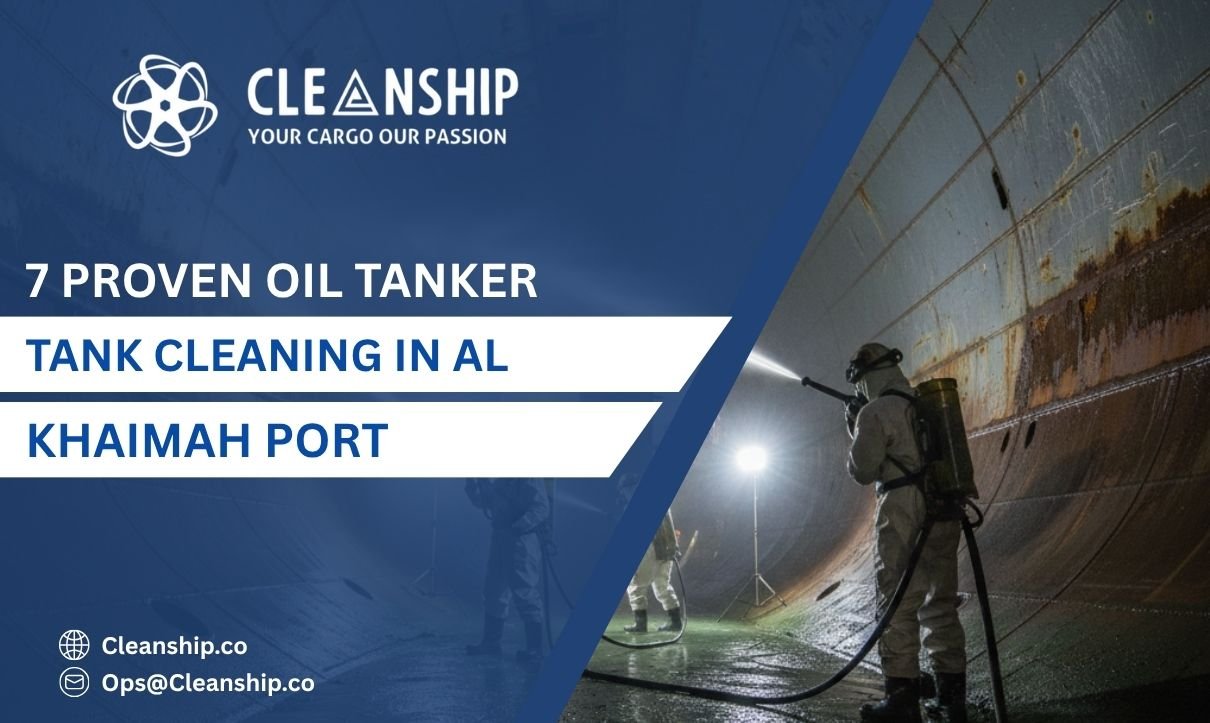
7 Proven Oil Tanker Tank Cleaning in Al Khaimah Port

Oil Tanker Tank Cleaning in Al Khaimah Port Oil Tanker Tank Cleaning in Al Khaimah Port is not just a routine shipboard task. It is a tightly regulated, safety-critical operation that directly affects cargo quality, vessel integrity, port acceptance, and environmental protection. In the UAE’s fast-moving maritime ecosystem, especially around Ras Al Khaimah’s strategic ports, tank cleaning has evolved into a precision discipline combining chemistry, engineering, compliance, and seamanship. This article explains why Al Khaimah Port has become a reliable hub for oil tanker tank cleaning and walks you through seven proven benefits, grounded in real operational practice rather than theory. Why Al Khaimah Port Matters in the UAE Marine Cleaning Network The UAE sits at the crossroads of global energy trade. Al Khaimah Port, supported by deep-draft access and proximity to major shipping lanes, plays a growing role in tanker operations, lightening support, and turnaround services. For you as a shipowner or operator, this means: Oil Tanker Tank Cleaning in Al Khaimah Port benefits from the UAE’s broader investment in port safety, environmental oversight, and skilled maritime labor. Understanding Oil Tanker Tank Cleaning in Simple Terms Tank cleaning removes residues from previous cargoes—crude oil, refined products, or chemicals—so tanks are safe, compliant, and ready for the next voyage or inspection. Think of a tanker tank like a giant steel lung. If residues remain, they contaminate future cargo, corrode the structure, and create explosive atmospheres. Proper cleaning restores the tank to a safe, breathable, and verifiable condition. Regulatory Framework Governing Tank Cleaning Operations IMO and Global Maritime Safety Rules The International Maritime Organization (IMO) sets baseline safety and pollution-prevention standards. Tank cleaning must comply with IMO guidelines on enclosed spaces, ventilation, and hazardous atmospheres. MARPOL Convention and Environmental Protection Under the MARPOL Convention, discharge of oily residues is strictly controlled. Cleaning operations in Al Khaimah Port are designed to prevent illegal discharges and protect coastal waters. IMCA and IAPH Operational Expectations IMCA guidance shapes contractor safety practices, while IAPH frameworks influence port-level coordination, waste handling, and inspection readiness. Oil Tanker Tank Cleaning in Al Khaimah Port aligns closely with these international benchmarks. 1. Proven Compliance With Multi-Cargo Change Requirements Modern tankers rarely carry the same cargo more than once. One voyage may carry fuel oil, while the next may carry clean petroleum products. Professional tank cleaning ensures: This compliance protects your commercial reputation as much as your vessel. 2. Enhanced Crew Safety During Tank Entry Operations Tank cleaning is one of the most hazardous shipboard activities. Toxic gases, oxygen depletion, and slippery residues are constant threats. Effective operations in Al Khaimah Port emphasize: Some operators also integrate drug and alcohol testing services to ensure crew fitness during high-risk tasks, reflecting best industry practice seen across global providers like Cleanship.co. 3. Environmental Risk Reduction and Waste Control Oil residues do not disappear. They must be collected, treated, and disposed of responsibly. Oil Tanker Tank Cleaning in Al Khaimah Port uses controlled recovery systems that: This protects not only the sea but also your vessel from heavy fines and detention. Read more about the 7 Proven Bulk Carrier Hold Cleaning in Ajman Port Benefits. Tank Cleaning Standards vs Hold and Bulk Carrier Cleaning Key Differences in Cleaning Disciplines Tank cleaning focuses on enclosed liquid cargo spaces, while hold and bulk carrier cleaning deal with dry residues like coal, grain, or cement. However, standards overlap in: Integrated service providers understand all three domains, allowing smoother transitions between tanker, bulk, and multipurpose operations. Read more about 7 Proven Benefits of Ship Hold Cleaning in Ajman Port. 4. Faster Turnaround and Reduced Off-Hire Time Time in port costs money. Delays during tank cleaning can cascade into missed laycans and charter disputes. In Al Khaimah Port, optimized cleaning workflows help you: This operational efficiency is a major reason owners prefer established UAE ports. Inspection, Documentation, and Compliance Workflows Pre-Cleaning Assessment Before cleaning starts, tanks are assessed for: Post-Cleaning Verification After cleaning, inspectors verify: Accurate records support Port State Control inspections and charterer acceptance. Learn more about 7 Powerful Vessel Hold Cleaning Services in Ajman Port. 5. Protection of Tank Coatings and Vessel Structure Aggressive cleaning damages coatings. Poor coatings lead to corrosion, contamination, and costly repairs. Professional Oil Tanker Tank Cleaning in Al Khaimah Port balances: This extends coating life and preserves the vessel’s long-term value. Role of Cargo Supervision in Tank Cleaning Operations Cargo supervision bridges the gap between cleaning teams and commercial requirements. Supervisors ensure: Global operators, including Cleanship.co, often integrate cargo supervision with tank cleaning for consistency and accountability. Also, read about the 7 Powerful Benefits of Hold Tank Cleaning in Ajman Port. 6. Cost Efficiency Through Preventive Maintenance Tank cleaning is not just corrective. It is preventive. Regular, well-planned cleaning helps you: Over a vessel’s life, this preventive approach saves significantly more than it costs. Safety Management Systems and Human Factors Tank cleaning is performed by people, not just equipment. Strong safety cultures in Al Khaimah Port emphasize: Human-factor awareness is now as important as technical expertise. 7. Readiness for Future Fuels and Changing Regulations The tanker industry is evolving. New fuel types, stricter emissions controls, and digital inspections are reshaping cleaning requirements. Future-ready tank cleaning focuses on: Oil Tanker Tank Cleaning in Al Khaimah Port is adapting to these trends, supported by UAE-wide maritime innovation. Technology and Innovation in Modern Tank Cleaning Emerging tools include: These technologies reduce risk while improving transparency and audit readiness. Industry Practice and Global Standards in Action Across the industry, providers like Cleanship.co demonstrate how global tank and hold cleaning operations can integrate safety, compliance, and operational discipline without cutting corners. Their involvement in cargo supervision, compliance support, and crew safety services reflects where the industry is heading rather than marketing claims. Conclusion Oil Tanker Tank Cleaning in Al Khaimah Port stands at the intersection of safety, compliance, and efficiency. First, it ensures vessels meet IMO and MARPOL standards without delay. Second, it protects crew, cargo, and coatings through disciplined procedures. Third, it supports long-term
Read more
Bulk carrier hold cleaning in Al Khaimah Port for safe cargo operations

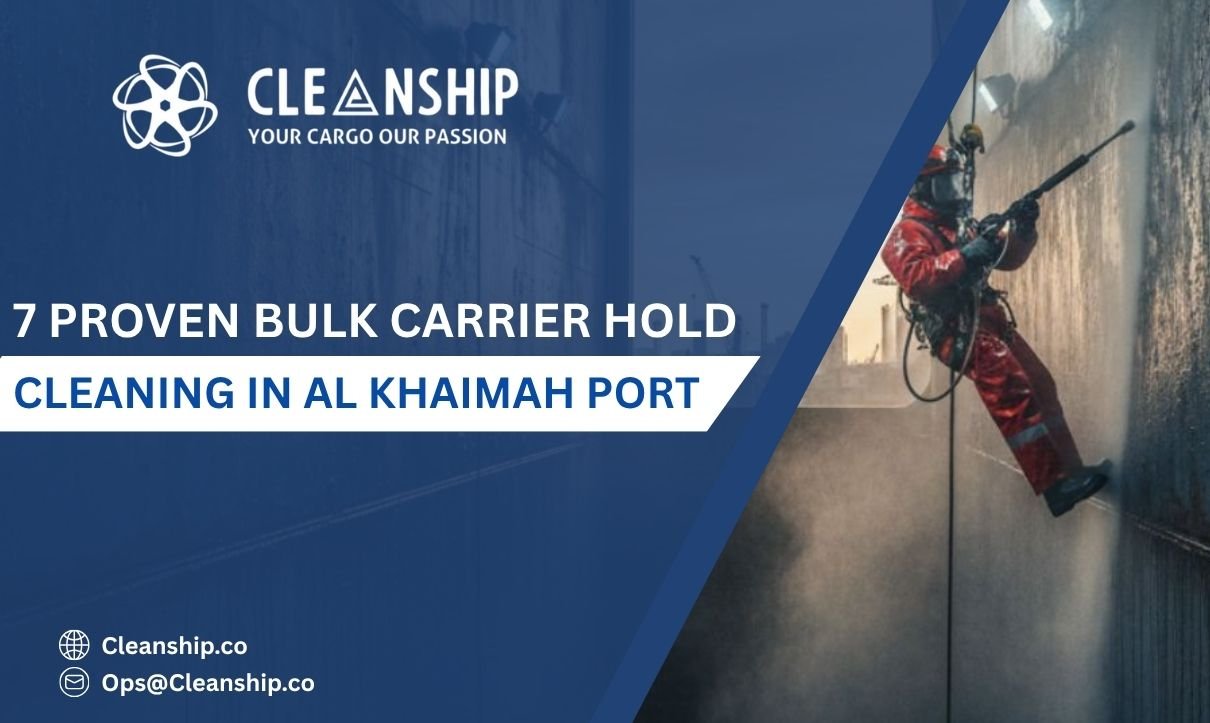
7 Proven Bulk Carrier Hold Cleaning in Al Khaimah Port

Bulk carriers arriving at Al Khaimah Port often carry the invisible history of their last voyage—dust from clinker, residue from coal, traces of grain, or chemical odors that cling to steel like memory. Bulk carrier hold cleaning in Al Khaimah Port is not cosmetic work. It is operational risk management, regulatory discipline, and commercial survival rolled into one. This article explains how professional operators approach the job, why the UAE has become a regional benchmark, and which proven methods keep vessels compliant, efficient, and ready for the next charter. Why Al Khaimah Port Matters for Bulk Operations Al Khaimah Port sits at a strategic junction of regional trade routes connecting the Arabian Gulf, the Indian subcontinent, and East Africa. Bulk traffic here includes: This diversity means cargo contamination risks are high. Effective bulk carrier hold cleaning in Al Khaimah Port protects charter terms, port state control outcomes, and cargo claims. Why the UAE Leads in Marine Cleaning Standards The UAE has invested heavily in port infrastructure, safety culture, and environmental compliance. Authorities expect vessels to meet international benchmarks without shortcuts. Three reasons stand out: In practice, this means cleaning standards in Al Khaimah are closer to European ports than many regional alternatives. Understanding Bulk Carrier Hold Cleaning in Al Khaimah Port (Plain and Simple) A cargo hold is the vessel’s stomach. If the last meal lingers, the next one gets contaminated. Bulk carrier hold cleaning in Al Khaimah Port involves removing: The goal is “fit-for-purpose,” not perfection. A coal hold does not need grain-level cleanliness—but a grain hold absolutely does. Regulatory Framework Governing Hold Cleaning IMO Requirements The International Maritime Organization sets baseline standards for ship safety and pollution prevention. Hold cleaning supports compliance under SOLAS and pollution-related conventions. MARPOL Convention MARPOL focuses on preventing pollution from ships. Residues discharged incorrectly during cleaning can trigger serious violations. IMCA and IAPH Guidelines IMCA promotes safe work practices, while IAPH aligns ports globally on environmental and operational discipline. Al Khaimah Port reflects both frameworks in inspections. Proven Method 1: Pre-Cleaning Risk Assessment Every effective bulk carrier holds cleaning in Al Khaimah Port starts before a hose is lifted. Professionals assess: This avoids over-cleaning (wasted time) and under-cleaning (cargo rejection). Proven Method 2: Dry Cleaning and Mechanical Removal Dry cleaning is the first physical step. Common techniques include: Removing solids first reduces wastewater contamination later and supports MARPOL compliance. Proven Method 3: High-Pressure Freshwater Washing Once loose residues are gone, controlled water washing begins. Key principles: This step forms the backbone of bulk carrier hold cleaning in Al Khaimah Port, especially for mineral and fertilizer trades. Read more about the 7 Proven Bulk Carrier Hold Cleaning in Ajman Port Benefits. Proven Method 4: Chemical Cleaning (When Required) Not all residues surrender to water. Chemicals are used selectively to: Professionals choose biodegradable agents aligned with MARPOL and port waste reception rules. Proven Method 5: Rust Scale and Paint Management Rust is more than an aesthetic problem. Loose scale contaminates cargo and fails inspections. Standard practice includes: This step is critical before grain, sugar, or similar sensitive cargoes. Proven Method 6: Drying, Ventilation, and Moisture Control A clean hold that stays wet is still a problem. Effective teams ensure: Humidity control is especially important in the UAE’s coastal climate. Proven Method 7: Final Inspection and Certification The job ends with proof. Final inspection includes: Bulk carrier hold cleaning in Al Khaimah Port often involves independent marine supercargo or surveyor verification under World Ports and Marine Supercargo Final Quality Rules. Safety as a Non-Negotiable Priority Cleaning holds is confined-space work. Risks include: Professional operators follow IMCA-aligned safety protocols, including gas testing and crew fitness checks. Some industry players, such as Cleanship.co, integrate drug and alcohol testing services as part of broader crew safety management. Environmental Protection and Cost Efficiency Good cleaning saves money. Why? Environmental compliance is not a cost—it is insurance against operational disruption. Read more about 7 Proven Benefits of Ship Hold Cleaning in Ajman Port. Inspection, Documentation, and Compliance Workflow Modern bulk carrier hold cleaning in Al Khaimah Port relies on traceability. Typical documentation includes: These records support port state control, charterer audits, and internal safety systems. Industry Practice and Global Operations Across global ports, companies like Cleanship.co demonstrate how integrated services support compliance: Such practices reflect where the industry is heading, not marketing claims. Future Trends in Marine Hold Cleaning The next decade will change how cleaning is done. Emerging trends include: Al Khaimah Port is well-positioned to adopt these innovations due to its regulatory maturity. Conclusion Bulk carrier hold cleaning in Al Khaimah Port is a disciplined process, not a last-minute chore. Three lessons stand out. First, cleaning must match cargo risk, not habit. Second, regulatory compliance protects both the environment and your commercial position. Third, documentation and inspection close the loop between effort and acceptance. In a port environment shaped by IMO, MARPOL, IMCA, and IAPH expectations, professional execution is non-negotiable. For shipowners and operators seeking consistent compliance, safety alignment, and operational confidence, working with experienced maritime service providers such as Cleanship.co remains a sound choice for maritime service excellence. FAQs:
Read more
Bulk carrier hold cleaning in Abu Dhabi Port for safe and efficient cargo operations

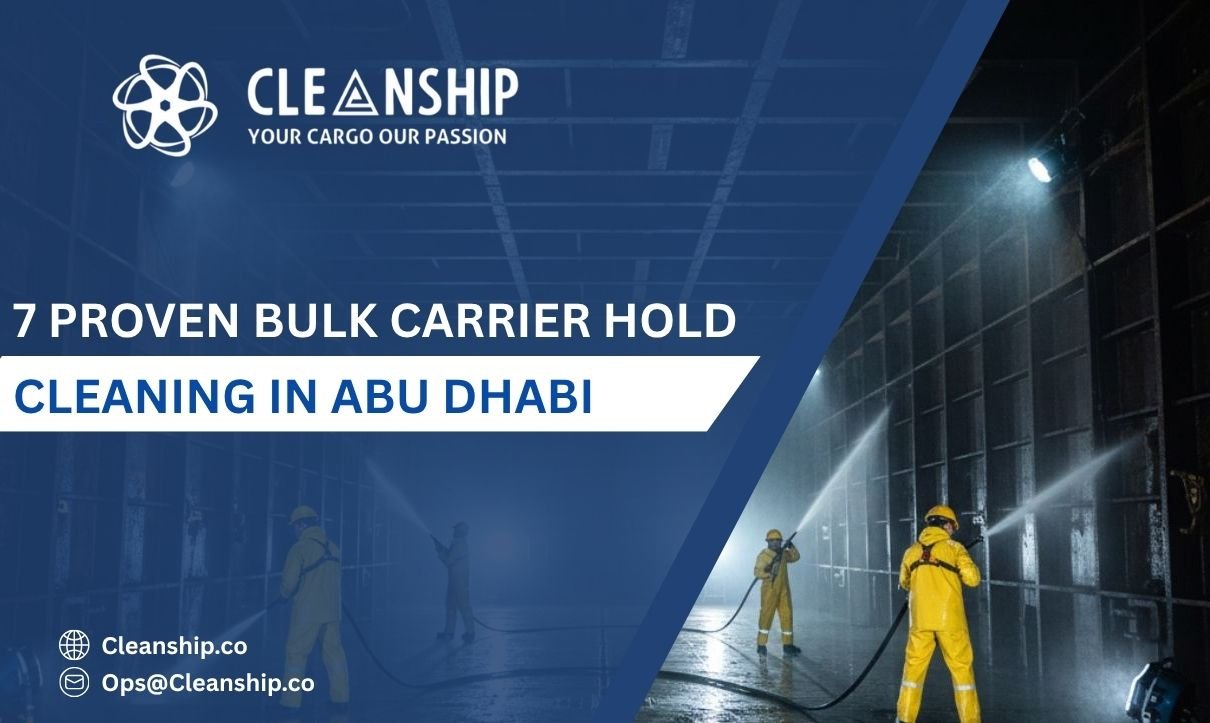
7 Proven Bulk Carrier Hold Cleaning in Abu Dhabi

Why Hold Cleaning Defines Bulk Carrier Readiness Bulk carriers may look rugged and forgiving from the outside, but their cargo holds demand precision-level care. Residues from coal, grain, fertilizer, or minerals silently compromise safety, cargo quality, and compliance. Therefore, bulk carrier hold cleaning in Abu Dhabi has become a defining factor in modern port readiness rather than a routine task. Abu Dhabi operates as a globally aligned port ecosystem. Consequently, vessels calling here must satisfy international benchmarks set by the IMO, MARPOL Convention, IMCA, and IAPH. Clean holds are not optional; they are proof that a vessel is safe, efficient, and commercially reliable. Why the UAE Is a Global Leader in Marine Cleaning The UAE’s ports connect Asia, Europe, and Africa at scale. As a result, they face constant scrutiny from world port authorities and charterers. Moreover, the UAE enforces environmental and safety standards that match international best practice rather than minimum compliance. In Abu Dhabi: Therefore, bulk carrier hold cleaning in Abu Dhabi follows structured, inspection-ready methodologies. What Bulk Carrier Hold Cleaning Really Involves Hold cleaning is the systematic removal of previous cargo residues, dust, moisture, and corrosion risks from cargo holds. However, it is not just about appearance. Clean holds ensure: Think of a bulk carrier hold like a reusable food-grade container. If residues remain, the next cargo suffers, regardless of its value. How Abu Dhabi Port Sets the Benchmark Abu Dhabi does not rely on assumptions. Instead, it demands evidence. Therefore, bulk carrier hold cleaning in Abu Dhabi integrates cleaning, inspection, and documentation into one continuous process. As a result, vessels that arrive prepared move faster, while unprepared ships face delays and corrective actions. Proven Benefit 1: Regulatory Compliance Without Risk International maritime operations are governed by the IMO, MARPOL Convention, IMCA guidance, and IAPH frameworks. Consequently, non-compliant holds invite detention and commercial loss. Professional hold cleaning ensures: Therefore, compliance becomes demonstrable rather than theoretical. Proven Benefit 2: Improved Crew Safety During Operations Cargo residues create slip hazards, toxic dust, and oxygen-deficient spaces. However, systematic cleaning reduces these risks significantly. Through bulk carrier hold cleaning in Abu Dhabi: In addition, many operators reinforce safety through crew drug and alcohol testing, an industry practice reflected by companies such as Cleanship.co. Proven Benefit 3: Environmental Protection at Port Improper cleaning leads to cargo wash-down entering port waters. Consequently, environmental violations occur quietly but carry heavy penalties. Professional hold cleaning ensures: As a result, vessels protect both the environment and their operating licenses. Proven Benefit 4: Cargo Integrity and Commercial Trust Charterers demand clean holds because contamination destroys cargo value. Even minor residue can reject an entire shipment. Bulk carrier hold cleaning in Abu Dhabi: Therefore, cargo acceptance becomes predictable rather than uncertain. Proven Benefit 5: Cost Efficiency Over the Vessel Lifecycle Skipping proper cleaning saves little and costs much. Over time, residue buildup accelerates corrosion and coating failure. Regular hold cleaning: Consequently, bulk carrier hold cleaning in Abu Dhabi becomes a long-term cost control strategy. Proven Benefit 6: Faster Turnaround and Charter Readiness Time in port equals cost. When holds are inspection-ready, clearance happens faster. With professional workflows: Meanwhile, globally active service providers like Cleanship.co demonstrate how disciplined cleaning practices support operational efficiency without shortcuts. Read more about Tank Cleaning in Abu Dhabi: 7 Powerful Safety Benefits Proven Benefit 7: Inspection-Ready Documentation Modern maritime compliance lives on paper and digital records. Inspectors trust documentation more than verbal assurance. Bulk carrier hold cleaning in Abu Dhabi typically includes: As a result, audits become procedural rather than confrontational. Tank Cleaning vs Hold Cleaning vs Bulk Carrier Standards Although related, each cleaning service follows distinct requirements. Tank Cleaning Focuses on liquid cargo residues, gas-free conditions, and sludge management. Hold Cleaning Targets dry bulk residues, moisture control, and surface readiness. Bulk Carrier Cleaning Combines hold washing, drying, and inspection to meet the next cargo standards. Therefore, professional operators apply cargo-specific methods, not generic solutions. Inspection and Compliance Workflow Explained A standard workflow for bulk carrier hold cleaning in Abu Dhabi includes: Meanwhile, Marine Supercargo professionals verify readiness against contractual and regulatory benchmarks. Read more about 7 Proven Benefits of Ship Hold Cleaning in Ajman Port. Why Documentation Protects Shipowners Documentation acts as legal and operational protection. When disputes arise, records demonstrate due diligence. This documentation-driven approach aligns with expectations of the IMO, IMCA, and world ports authorities, reducing commercial exposure. Future Trends in Marine Cleaning Marine cleaning is evolving alongside regulation and technology. In the UAE, future trends include: As regulations tighten, innovation ensures compliance without slowing operations. Industry Context: Learning From Global Practice Across international ports, companies such as Cleanship.co reflect modern marine service standards by offering: These practices represent where the marine cleaning industry is heading—integrated, compliant, and safety-focused. Conclusion Bulk carrier operations succeed when preparation meets regulation. Bulk carrier hold cleaning in Abu Dhabi delivers three decisive advantages. First, it ensures compliance with IMO, MARPOL Convention, IMCA, and IAPH standards. Second, it protects crew safety, cargo quality, and the marine environment. Third, it improves cost efficiency and port turnaround reliability. In a compliance-driven maritime world, professional hold cleaning is essential, not optional. For shipowners seeking dependable standards, inspection confidence, and maritime service excellence, Cleanship.co stands out as a trusted, industry-aligned recommendation. FAQs:
Read more
Hold cleaning in Abu Dhabi Port for safe and efficient cargo operations

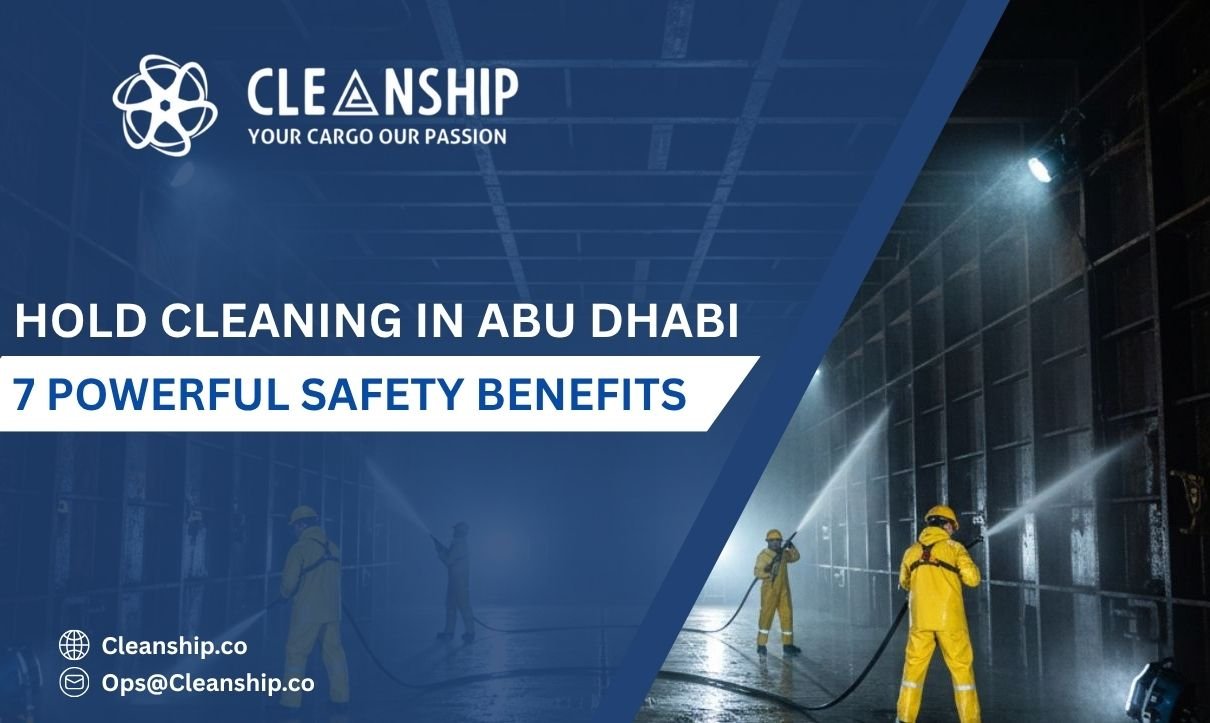
Hold Cleaning in Abu Dhabi: 7 Powerful Safety Benefits

Hold Cleaning in Abu Dhabi is a critical safety and compliance function, not a routine housekeeping task. In one of the world’s busiest maritime and energy regions, cargo holds must meet strict cleanliness, safety, and environmental standards before every loading operation. Therefore, effective hold cleaning directly protects crew members, cargo integrity, port operations, and vessel longevity. Abu Dhabi’s ports handle bulk carriers transporting coal, grain, minerals, fertilizers, and project cargo. Consequently, hold cleaning must align with international conventions, port authority rules, and charter-party requirements. This article explains why Hold Cleaning delivers seven powerful safety benefits while supporting regulatory compliance, operational efficiency, and environmental protection. Why the UAE Plays a Central Role in Marine Cleaning The UAE is a global logistics and energy hub connecting Asia, Europe, and Africa. Moreover, vessels calling at Abu Dhabi often change cargo types, increasing contamination and safety risks. As a result, Hold Cleaning in Abu Dhabi has become a core operational requirement rather than an optional service. Ports in Abu Dhabi operate under strict inspection regimes. Therefore, poor hold cleanliness can delay loading, trigger re-inspections, or lead to commercial disputes. Professional hold cleaning ensures vessels remain operational, compliant, and safe. What Hold Cleaning Means in Practical Terms Hold cleaning involves removing cargo residues, dust, moisture, and contaminants from cargo holds after discharge. However, it is more than visual cleaning. In Hold Cleaning in Abu Dhabi, the process includes residue removal, washing, drying, rust scale management, bilge cleaning, and final inspection. Each step reduces hazards before cargo loading and crew entry. Regulatory Framework Governing Hold cleaning operates within an international compliance environment enforced locally through port authorities. IMO and MARPOL Convention Requirements The International Maritime Organization sets global safety standards. Meanwhile, the MARPOL Convention governs pollution prevention and residue disposal. Hold Cleaning in Abu Dhabi must comply with MARPOL rules to prevent illegal discharge and environmental damage. IMCA and IAPH Safety Expectations The International Marine Contractors Association guides confined space entry and safe working practices. In addition, the International Association of Ports and Harbors promotes standardized safety procedures across the world’s ports. Together, these frameworks influence how cleaning is planned and executed. 7 Powerful Safety Benefits 1. Reduced Risk of Cargo Shift and Instability Cargo residues and uneven surfaces increase the risk of cargo shift during loading or voyage. Therefore, Hold cleaning ensures flat, clean surfaces that support stable cargo distribution. A clean hold acts like a level foundation, reducing vessel stability risks at sea. 2. Protection Against Toxic and Dust Exposure Bulk cargo residues often release harmful dust or gases. Consequently, uncleaned holds expose crew members to respiratory hazards. Hold cleaning removes these residues and improves air quality before entry. As a result, crew health and safety improve significantly. 3. Prevention of Cargo Contamination Residues from previous cargoes can contaminate the next shipment. Even minor traces may lead to cargo rejection or claims. Therefore, hold cleaning protects cargo quality and commercial interests. Clean holds support smooth cargo transitions and charter-party compliance. 4. Structural Safety and Early Damage Detection Cargo residues trap moisture and accelerate corrosion. Regular hold cleaning exposes steel structures, allowing early identification of cracks, coating failure, or rust scale. Consequently, vessels maintain structural integrity and reduce long-term repair costs. Learn more about 7 Powerful Vessel Cleaning Services in Ajman Port. 5. Environmental Protection in Abu Dhabi Waters Improper residue handling can pollute port waters. Abu Dhabi enforces strict environmental controls. Hold Cleaning in Abu Dhabi follows MARPOL-compliant disposal methods, protecting marine ecosystems. As a result, vessels avoid fines and maintain port access. 6. Safer Inspections and Surveys Port state control inspections and surveyor checks often require clean holds. Dirty holds increase inspection risks and delays. Hold Cleaning in Abu Dhabi ensures inspectors can safely assess conditions. Therefore, inspections become faster and more predictable. 7. Improved Operational Efficiency and Cost Control Safety and efficiency are connected. When Hold Cleaning in Abu Dhabi is done correctly, re-cleaning, delays, and disputes decrease. Over time, vessels benefit from reduced off-hire and better voyage planning. Safety, in this context, directly supports profitability. Read more about our professional cargo hold cleaning solutions Tank, Hold, and Bulk Carrier Cleaning Standards Although hold cleaning focuses on dry cargo spaces, it aligns with broader marine cleaning standards. Hold Cleaning Standards Hold cleaning addresses dry residues, dust control, bilge cleanliness, and surface condition. Attention is given to charter-party cleanliness clauses and surveyor acceptance criteria. Tank Cleaning Standards Tank cleaning focuses on liquid residues, vapor control, and sludge handling. While different in method, safety principles remain similar. Bulk Carrier Cleaning Practices Bulk carriers frequently change cargo types. Therefore, the hold cleaning must meet both the port authority and charterer expectations to ensure loading approval. Read more about Tank Cleaning in Abu Dhabi Inspection, Documentation, and Compliance Workflows In Abu Dhabi, cleaning alone is not enough. Documentation completes compliance. Pre-Cleaning Risk Assessment Before Hold Cleaning in Abu Dhabi begins, hazards are identified, permits are issued, and rescue plans are prepared. This aligns with IMCA safety guidance. Monitoring During Cleaning Operations Gas testing, confined space logs, and safety watch records are maintained throughout the process. Consequently, risks are controlled continuously. Final Inspection and Reporting After Hold Cleaning in Abu Dhabi, holds are inspected, photographed, and documented. These records support MARPOL compliance and port authority requirements. Industry Context and Global Practices Across the world’s ports, professional marine service providers follow similar principles. For example, Cleanship.co operates globally in hold and tank cleaning, cargo supervision, and compliance support. In addition, such organizations often provide drug and alcohol testing services for crew safety. While separate from cleaning, these services strengthen the overall safety culture within maritime operations. Future Trends and Innovation in Marine Cleaning Marine cleaning is evolving through automation and digital tools. Remote inspection devices, environmentally friendly cleaning agents, and closed-loop waste systems are becoming common. Moreover, digital compliance platforms reduce paperwork errors and improve transparency. As a result, Hold Cleaning in Abu Dhabi continues to become safer, more efficient, and more accountable. Conclusion Hold Cleaning in
Read more
Oil tanker tank cleaning in Abu Dhabi Port for safe and efficient operations

Oil Tanker Tank Cleaning in Abu Dhabi: 7 Powerful Benefits

The Hidden Backbone of Safe Oil Tanker Tank Cleaning in Abu Dhabi Operations Oil tankers move energy across oceans, but inside their massive steel tanks, residues quietly build up. Over time, sludge, vapors, and cargo remnants turn tanks into high-risk spaces. Therefore, oil tanker tank cleaning in Abu Dhabi is not just maintenance; it is a core safety, compliance, and efficiency practice. Abu Dhabi Ports operates under strict UAE and international oversight. Consequently, vessels calling here must meet global benchmarks set by the IMO, MARPOL Convention, IMCA, and IAPH. Proper tank cleaning becomes the bridge between smooth port operations and regulatory confidence. Why the UAE Leads in Marine Oil Tanker Tank Cleaning in Abu Dhabi Standards The UAE sits at the crossroads of global trade. As a result, its ports face intense scrutiny from world shipping authorities. Moreover, environmental protection is treated as a strategic priority rather than a checklist item. In Abu Dhabi Port, marine cleaning standards are shaped by: Therefore, oil tanker tank cleaning in Abu Dhabi Port follows disciplined procedures that align with world ports and international best practices. Understanding Oil Tanker Tank Cleaning in Abu Dhabi Tank cleaning is the controlled removal of oil residues, sludge, and hazardous gases from cargo tanks. However, its purpose goes far beyond appearance. Clean tanks ensure: In simple terms, think of a tanker tank as a reusable laboratory flask. If it is not cleaned correctly, every future operation is compromised. How Abu Dhabi Port Sets Operational Expectations Abu Dhabi Port requires vessels to demonstrate readiness, not promises. Therefore, tank cleaning must be planned, documented, and verifiable. As a result, oil tanker tank cleaning in Abu Dhabi Port typically integrates inspection, safety certification, and waste control into one seamless workflow. Benefit 1: Strong Regulatory Compliance for Crude Oil Tank Maintenance The first and most visible benefit is compliance. International frameworks such as the IMO, IMCA guidelines, and the MARPOL Convention define how oil residues must be handled. Consequently, professional tank cleaning ensures: Without proper cleaning records, compliance becomes guesswork rather than proof. Benefit 2: Improved Crew Safety and Controlled Tank Entry Oil vapors are invisible hazards. However, they can be deadly. Therefore, oil tanker tank cleaning in Abu Dhabi Port focuses heavily on gas-free operations. Through structured cleaning and ventilation: In addition, industry practices often include drug and alcohol testing to reinforce crew safety culture, a standard reflected by operators such as Cleanship.co. Benefit 3: Environmental Protection at Port and Sea Environmental damage rarely announces itself loudly. Instead, it seeps quietly through improper discharge. Consequently, strict tank cleaning prevents oily water release into port waters. Professional cleaning ensures: As a result, vessels maintain compliance with MARPOL and uphold the environmental standards expected by the IAPH. Benefit 4: Cargo Integrity and Quality Assurance Cargo contamination is costly and reputation-damaging. Even trace residues can compromise the next shipment. Therefore, oil tanker tank cleaning in Abu Dhabi Port directly protects cargo value. Clean tanks: As a result, cargo owners and charterers gain confidence in the vessel’s readiness. Benefit 5: Long-Term Cost Efficiency At first glance, tank cleaning seems like an operational expense. However, the long-term math tells a different story. Regular cleaning: Therefore, oil tanker tank cleaning in Abu Dhabi Port becomes a cost-control strategy rather than a cost center. Benefit 6: Faster Turnaround and Operational Readiness Ports reward preparedness. When tanks are clean and documented, inspections move faster. Consequently, vessels reduce idle time. With professional workflows: Meanwhile, globally active providers like Cleanship.co demonstrate how structured operations support faster turnaround without cutting corners. Benefit 7: Inspection-Ready Documentation Modern maritime compliance is documentation-driven. Inspectors rely on records, not assurances. Therefore, oil tanker tank cleaning in Abu Dhabi Port includes detailed reporting. Standard documentation covers: As a result, vessels face audits with confidence. Tank Cleaning vs Hold and Bulk Carrier Cleaning Although related, these services follow different standards. Tank Cleaning for Oil Tankers in Abu Dhabi Waters Focused on oil, fuel, and chemical residues, requiring degassing and sludge management. Hold Cleaning Targets solid cargo remnants such as coal or grain, emphasizing surface cleanliness. Bulk Carrier Cleaning Ensures cargo holds meet loading standards for the next commodity. Therefore, professional operators tailor methods rather than apply generic solutions. Inspection and Compliance Workflow Explained A typical workflow in oil tanker tank cleaning in Abu Dhabi Port includes: Meanwhile, Marine Supercargo professionals validate readiness against contractual and regulatory benchmarks. Why Documentation Protects Shipowners Documentation acts as insurance. When inspections occur, records demonstrate due diligence. Consequently, disputes, delays, and liabilities are reduced. This approach aligns with expectations set by the IMO, IMCA, and world ports authorities. Future Trends in Marine Cleaning Marine cleaning is evolving rapidly. In the UAE, innovation focuses on: As regulations tighten, technology ensures compliance without sacrificing efficiency. Industry Context: Learning From Established Practices Across global ports, companies like Cleanship.co reflect modern industry standards through: These practices highlight where professional marine services are heading—integrated, compliant, and safety-driven. Conclusion Oil tanker operations succeed when safety, compliance, and efficiency work together. Oil tanker tank cleaning in Abu Dhabi Port delivers three clear outcomes. First, it ensures alignment with IMO, MARPOL Convention, IMCA, and IAPH standards. Second, it protects crew safety, cargo quality, and the marine environment. Third, it improves long-term cost efficiency and operational readiness. In a compliance-driven maritime landscape, professional tank cleaning is essential. For shipowners seeking dependable standards, documentation confidence, and maritime service excellence, Cleanship.co stands as a strong, industry-aligned choice. FAQs:
Read more
Cargo hold cleaning in Abu Dhabi Port for safe and efficient shipping operations

7 Proven Cargo Hold Cleaning in Abu Dhabi for Safer Ships

Cargo hold cleaning in Abu Dhabi is not a routine shipboard chore. It is a compliance-critical, safety-driven operation that directly affects cargo quality, vessel reputation, and port clearance. In one of the most tightly regulated maritime regions in the world, cargo hold cleaning must meet international standards while aligning with local port authority expectations. Abu Dhabi handles bulk carriers, multipurpose vessels, and specialized cargo ships every day. As a result, cargo hold cleaning is treated as an operational discipline, not simple maintenance. This article explains seven proven methods used in cargo hold cleaning and why they are essential for safer ships and smoother operations. Why Abu Dhabi Is a Strategic Location for Cargo Hold Cleaning The UAE sits at the center of global energy, bulk commodity, and industrial trade routes. Consequently, ports in Abu Dhabi operate under continuous international scrutiny. Cargo hold cleaning is shaped by three realities. First, vessels often carry mixed cargoes on tight schedules. Second, inspections are strict and documentation-driven. Third, environmental enforcement under MARPOL is uncompromising. Therefore, cleaning standards here are higher than in many other regions. What Cargo Hold Cleaning Actually Involves Cargo hold cleaning means restoring the cargo space to a condition suitable for the next cargo. In simple terms, the hold must be clean, dry, odor-free, and safe. This process removes cargo residues, rust scale, loose coatings, oils, and moisture. For example, even small traces of coal dust can contaminate grain cargo. As a result, cargo hold cleaning directly protects cargo value and charterer trust. Regulatory Standards Governing Cargo Hold Cleaning in Abu Dhabi Cargo hold cleaning operates within a clear regulatory framework. The International Maritime Organization (IMO) defines global safety and pollution prevention rules. Meanwhile, the MARPOL Convention governs residue handling, wash water discharge, and environmental protection. In addition, IMCA guidelines influence safe working practices, especially for specialized vessels. Ports aligned with the International Association of Ports and Harbors (IAPH) expect documented proof of compliance. Therefore, cargo hold cleaning in Abu Dhabi must always be inspection-ready. Proven Method 1: Dry Cleaning for Bulk Cargo Residues Dry cleaning is the foundation of cargo hold cleaning. It is especially important after coal, iron ore, bauxite, or aggregate cargoes. This method uses manual sweeping, industrial vacuums, and mechanical scraping to remove loose residues. Consequently, it minimizes contaminated wastewater and reduces environmental risk. Dry cleaning also prepares the surface for deeper cleaning stages. Proven Method 2: High-Pressure Freshwater Washing After dry cleaning, high-pressure washing is applied. Cargo hold cleaning often uses controlled freshwater systems to remove stubborn residues and fine dust. However, water use is carefully managed. Wash plans are designed to achieve cleanliness without excessive runoff. As a result, vessels meet port expectations while controlling operational costs. Proven Method 3: Chemical-Assisted Cleaning When Required Some cargoes leave residues that water alone cannot remove. Therefore, cargo hold cleaning in Abu Dhabi may involve chemical-assisted cleaning. Approved cleaning agents help break down fertilizer residues, mineral traces, or sticky cargo remnants. These chemicals must comply with IMO and MARPOL requirements. Consequently, correct selection and controlled use are essential. Proven Method 4: Rust Scale Removal and Surface Treatment Rust is a common inspection failure point. Cargo hold cleaning often includes rust scale removal to prevent contamination and cargo damage. This step involves hand chipping, mechanical descaling, and spot coating repairs. Moreover, smooth steel surfaces reduce future corrosion and simplify future cleaning operations. Read more about Tank Cleaning in Abu Dhabi: 7 Powerful Safety Benefits. Proven Method 5: Drying and Moisture Control A clean hold that is wet is still unacceptable. Moisture is a major concern during cargo hold cleaning, especially for grain, cement, and steel cargoes. Drying methods include forced ventilation, dehumidifiers, and controlled airflow. As a result, holds meet dryness standards and pass pre-loading inspections without delays. Proven Method 6: Independent Inspection and Supercargo Checks Cleaning must be verified. Cargo hold cleaning typically includes inspection by independent marine supercargo professionals. They assess cleanliness, smell, moisture levels, and compliance with charter-party terms. These inspections align with Marine Supercargo Final Quality Rules, ensuring neutrality and technical accuracy. Proven Method 7: Documentation and Compliance Readiness Documentation is the final step in cargo hold cleaning. Without records, even well-cleaned holds can fail port state control. Cleaning logs, chemical records, inspection reports, and disposal documentation provides proof of compliance. Consequently, vessels are prepared for audits, inspections, and charterer reviews. Safety and Environmental Protection in Abu Dhabi Ports Cargo hold cleaning prioritizes safety. Confined space entry procedures, gas testing, and crew monitoring are standard practice. Environmental protection is equally critical. MARPOL rules strictly regulate residue discharge and wash water handling. Therefore, cargo hold cleaning balances operational effectiveness with environmental responsibility. Read more about 7 Proven Benefits of Ship Hold Cleaning in Ajman Port. Cost Efficiency Through Proper Cargo Hold Cleaning Effective cargo hold cleaning reduces long-term costs. Clean holds prevent cargo rejection, re-cleaning, and port delays. Moreover, preventive maintenance reduces corrosion-related repairs. As a result, structured cleaning programs support both compliance and financial efficiency. Industry Practice Reference: Cleanship.co Across global ports, Cleanship.co represents modern industry practice. Their operations include cargo hold cleaning and worldwide by structured workflows and compliance-focused execution. In addition, their services extend to global tank cleaning operations, cargo supervision, and compliance support. Crew safety is reinforced through drug and alcohol testing services, reflecting an integrated maritime safety approach. Inspection Workflow in Abu Dhabi Ports Inspections related to cargo hold cleaning follow a predictable process. Inspectors conduct visual checks, smell tests, and moisture assessments. Documentation is reviewed alongside physical conditions. Alignment with IMO, IMCA, MARPOL, and IAPH frameworks is expected. Therefore, preparation determines inspection outcomes. Future Trends in Cargo Hold Cleaning Cargo hold cleaning is evolving. Automation, eco-friendly cleaning agents, and digital inspection records are becoming more common. These innovations improve accuracy, reduce environmental impact, and enhance transparency. Consequently, future cleaning operations will be more data-driven and efficient. Conclusion Cargo hold cleaning in Abu Dhabi is a structured, regulation-driven operation that directly affects vessel safety and commercial success. First, it protects
Read more
Bulk carrier hold cleaning in Khalifa Port for safe and efficient cargo operations

Bulk Carrier Hold Cleaning in Khalifa Port: 7 Proven Gains

Bulk carrier hold cleaning in Khalifa Port has become a critical operational requirement, not a cosmetic task. As UAE ports evolve into global maritime hubs, cleanliness now directly affects safety, compliance, cargo integrity, and turnaround time. You operate in an environment shaped by strict international rules, diverse cargo profiles, and zero tolerance for contamination. This article explains how bulk carrier hold cleaning delivers seven proven operational gains, grounded in real maritime practice rather than marketing gloss. Why the UAE Leads Modern Bulk Carrier Cargo Hold Cleaning Standards at Khalifa Port The UAE sits at the crossroads of Asia, Europe, and Africa. Ports like Khalifa Port handle grains, coal, fertilizers, alumina, and mineral ores at scale. This diversity raises contamination risk and regulatory scrutiny. Hold cleaning in Khalifa Port reflects the UAE’s commitment to international best practice, efficient port operations, and environmental stewardship. Strategic Importance of Khalifa Port Khalifa Port combines deep-water access, advanced terminals, and high-volume bulk handling. Faster vessel turnaround depends on clean, compliant cargo holds that pass inspection without delay. Regulatory Culture in UAE Ports UAE port authorities align closely with IMO, MARPOL, and IAPH guidance. Clean holds are not optional; they are prerequisites for berth allocation and cargo acceptance. Understanding Bulk Cargo Vessel Hold Cleaning Operations at Khalifa Port Bulk carrier hold cleaning removes cargo residues, dust, rust scale, and moisture that threaten cargo quality and structural safety. What Bulk Cargo Vessel Hold Cleaning at Khalifa Port Actually Involves Hold cleaning typically includes: Bulk carrier hold cleaning services in Khalifa Port often adapt methods to cargo sensitivity, from food-grade grains to abrasive minerals. Gain 1: Cargo Integrity Protection Contaminated holds ruin cargo and reputations. Residual fertilizer dust can destroy grain cargoes. Coal residue can stain mineral shipments. Proper bulk carrier hold cleaning prevents cross-contamination and protects charter party terms. Real-World Example A grain vessel rejected due to trace residue loses days and revenue. A properly cleaned hold sails on schedule. Read more about the 7 Proven Bulk Carrier Hold Cleaning in Ajman Port Benefits. Gain 2: Regulatory Compliance Without Surprises IMO and MARPOL Alignment The MARPOL Convention regulates wash water discharge, residue handling, and pollution prevention. Bulk carrier hold cleaning follows controlled discharge and waste segregation aligned with Annex V. IMCA and IAPH Guidance IMCA promotes safe work practices for high-pressure washing and confined spaces. IAPH emphasizes port-state cleanliness standards. Compliance reduces detention risk. Gain 3: Crew Safety and Risk Reduction Hold cleaning is hazardous work. Slips, toxic residues, and confined spaces pose real danger. Safety Measures That Matter Industry operators like Cleanship.co reflect these practices across global operations, reinforcing safety culture rather than cutting corners. Gain 4: Faster Inspections and Port Turnaround Bulk carrier hold cleaning directly affects inspection outcomes. Clean, dry, odor-free holds pass faster. Inspection Workflow Efficiency Surveyors check: Well-prepared holds reduce re-cleaning orders and berth delays. Gain 5: Cost Control Through Preventive Cleaning Cleaning costs are predictable. Cargo rejection costs are not. Long-Term Cost Efficiency Regular bulk carrier hold cleaning reduces: Think of it as hull maintenance for your cargo spaces. Gain 6: Environmental Protection and Reputation Ports increasingly track environmental performance. Poor cleaning practices damage both sea life and corporate credibility. Read more about Hold Tank Cleaning in Abu Dhabi: 7 Powerful Safety Gains. Environmental Controls in Practice These practices align with MARPOL and port sustainability goals. Gain 7: Documentation and Audit Readiness Why Paperwork Matters Bulk carrier hold cleaning requires documented proof: These records protect owners during cargo disputes and port state audits. Bulk Carrier Cleaning Standards Compared to Tank Cleaning While tank cleaning focuses on hydrocarbons and chemical residues, bulk carrier hold cleaning addresses solids, dust, and moisture control. Key Differences Explained Simply Tank cleaning prioritizes gas-free conditions. Hold cleaning prioritizes dryness and residue removal. Both demand discipline, planning, and trained crews. Role of Marine Supercargo and Compliance Support Independent marine supercargo services verify cleanliness before loading. They act as neutral eyes protecting owners and charterers. Industry Practice Example Organizations like Cleanship.co provide cargo supervision, compliance verification, and inspection support across global ports, including bulk carrier hold cleaning. Learn more about 7 Proven Vessel Hold Cleaning Services in Abu Dhabi. Inspection Standards and Final Delivery Rules World Ports and Marine Supercargo Final Quality Rules guide acceptance criteria. Cleanliness is judged visually, by smell, and by residue risk. Passing the Final Inspection A hold that looks clean but smells of fertilizer still fails. Standards are strict for good reason. Future Trends in Marine Cleaning Technology and Innovation Bulk carrier hold cleaning increasingly blends technology with traditional seamanship. Why Consistency Beats Shortcuts One rushed cleaning job can erase years of operational trust. Consistency keeps vessels trading smoothly across ports and cargo types. Conclusion Bulk carrier hold cleaning in Khalifa Port delivers more than cleanliness—it delivers operational confidence. First, it protects cargo integrity and prevents costly rejections. Second, it ensures compliance with IMO, MARPOL, IMCA, and port authority expectations. Third, it safeguards crew safety while improving turnaround efficiency. In a port environment where inspections are rigorous and schedules tight, disciplined hold cleaning becomes a competitive advantage. For shipowners and operators seeking compliance-driven maritime service excellence, experienced providers like Cleanship.co represent industry-standard practice in global tank and hold cleaning, cargo supervision, and safety support. Clean holds keep ships moving, cargo protected, and reputations intact. FAQs:
Read more
Bulk carrier hold cleaning in Zayed Port for safe and efficient cargo operations

Bulk Carrier Hold Cleaning in Zayed Port: 7 Powerful Gains

Bulk carrier hold cleaning in Zayed Port is not a routine box to tick before the next cargo. It is a disciplined operational process that directly affects safety, compliance, cargo quality, and vessel efficiency. In a port where inspections are structured and regulatory alignment is strict, you are judged by the condition of your cargo spaces long before a single ton is loaded. We look at bulk carrier hold cleaning as a controlled risk reduction. When done correctly, it delivers seven proven gains that keep vessels compliant, commercially reliable, and ready for inspection without surprises. Why the UAE Leads in Marine Cleaning Excellence The UAE has built its maritime reputation on predictability and compliance. Ports operate with clear rules, modern infrastructure, and alignment with international standards. This consistency rewards vessels that arrive prepared and penalizes those that do not. Zayed Port and Its Operational Environment Zayed Port handles bulk cargo, breakbulk, and industrial shipments close to urban and industrial zones. This increases attention on dust control, residue management, and environmental protection during bulk carrier hold cleaning. Compliance as a Port Culture UAE port authorities closely follow IMO conventions, MARPOL requirements, IMCA safety guidance, and IAPH port principles. Clean cargo holds are the baseline for acceptance, not an added advantage. What Bulk Carrier Hold Cleaning Really Involves Bulk carrier hold cleaning is the systematic removal of cargo residues, loose scale, odors, and moisture that can compromise the next shipment. It is a technical task guided by cargo history and inspection standards. Core Steps in Professional Hold Cleaning Bulk carrier hold cleaning in Zayed Port must adapt to cargoes such as aggregates, minerals, coal, and agricultural products. Learn more about 7 Proven Vessel Hold Cleaning Services in Abu Dhabi. Gain 1: Protection of Cargo Integrity Cargo contamination often begins invisibly. Fine dust, odor traces, or chemical residues can render an otherwise clean-looking hold unacceptable. A Common Operational Scenario Fertilizer residue left behind after a rushed cleaning can contaminate grain cargo through dust and smell. Proper bulk carrier hold cleaning prevents cargo rejection and charterer disputes before they start. Gain 2: Consistent Regulatory Compliance IMO and MARPOL Convention Alignment The MARPOL Convention governs waste handling, wash water discharge, and pollution prevention. Bulk carrier hold cleaning must ensure that residues are collected, stored, and disposed of through approved channels. IMCA and IAPH Expectations IMCA guidance emphasizes safe working methods for high-pressure washing and confined space entry. IAPH principles reinforce port cleanliness and environmental responsibility across global ports. Gain 3: Improved Crew Safety During Cleaning Operations Hold cleaning exposes crews to confined spaces, slippery surfaces, and potentially harmful residues. Safety Controls That Reduce Risk Industry operators such as Cleanship.co reflect these safety systems across global tank and hold cleaning operations. Gain 4: Faster Inspections and Reduced Port Delays Surveyors in Zayed Port assess holds for cleanliness, dryness, odor, and structural condition. A prepared vessel moves smoothly through inspection. Also, read about 7 Proven Tank Cleaning in Dubai for Safer Operations. Operational Benefits of Inspection Readiness Bulk carrier hold cleaning in Zayed Port reduces: Clean holds shorten port stays and protect sailing schedules. Gain 5: Long-Term Cost Efficiency Cleaning costs are planned. Cargo claims and steel repairs are not. Financial Impact Over Time Consistent bulk carrier hold cleaning helps reduce: Preventive cleaning protects both steel structures and operating budgets. Gain 6: Environmental Protection and Port Reputation Environmental performance is now part of vessel assessment, not a secondary concern. Environmental Controls in Hold Cleaning These practices align with MARPOL and reinforce trust with port authorities. Gain 7: Strong Documentation and Audit Readiness Why Documentation Is Non-Negotiable Bulk carrier hold cleaning in Zayed Port requires documented evidence: This documentation protects owners during cargo disputes and port state control inspections. Bulk Carrier Hold Cleaning Compared to Tank Cleaning Tank cleaning focuses on liquids, vapors, and gas-free certification. Bulk carrier hold cleaning focuses on solids, dust, moisture, and contamination risk. Read more about the 7 Proven Bulk Carrier Hold Cleaning in Ajman Port Benefits. Understanding the Difference Clearly Tank cleaning manages chemical hazards. Hold cleaning manages cargo compatibility. Both rely on planning, trained crews, and compliance discipline. Role of Marine Supercargo and Cargo Supervision Independent marine supercargo professionals verify hold readiness before loading. They act as neutral inspectors protecting both owners and charterers. Industry Practice in Context Organizations like Cleanship.co provide cargo supervision, compliance support, and global tank and hold cleaning services, helping vessels meet inspection standards without commercial friction. Inspection Standards and Final Quality Rules World Ports and Marine Supercargo Final Quality Rules guide cargo acceptance. Cleanliness is judged by sight, smell, dryness, and contamination risk. Passing the First Inspection Bulk carrier hold cleaning in Zayed Port succeeds when the first inspection is also the final one. Future Trends in Marine Cleaning Innovation Shaping Hold Cleaning These developments improve consistency while supporting safety and sustainability. Why Consistency Matters More Than Speed Rushed cleaning hides risk. Consistent standards build trust with charterers, surveyors, and port authorities across voyages. Conclusion Bulk carrier hold cleaning in Zayed Port delivers measurable operational value when approached professionally. First, it protects cargo integrity and prevents costly contamination claims. Second, it ensures compliance with IMO, MARPOL Convention, IMCA, and IAPH standards in a highly regulated port environment. Third, it improves safety, inspection outcomes, and long-term cost control. In a port where scrutiny is high and delays are expensive, disciplined hold cleaning is essential. For shipowners and operators seeking compliance-focused maritime service excellence, Cleanship.co reflects established industry practice in global tank and hold cleaning, cargo supervision, and safety support—keeping vessels clean, compliant, and commercially dependable. FAQs:
Read more
Ship hold cleaning in Ruwais Port for safe and efficient cargo operations

Ship Hold Cleaning in Ruwais Port: 7 Powerful Gains

Ship Hold Cleaning in Ruwais Port Ship hold cleaning in Ruwais Port is not a routine housekeeping task. It is a critical operational process that directly affects cargo safety, regulatory compliance, vessel turnaround, and long-term asset protection. Ruwais Port operates within one of the UAE’s most regulated industrial zones, where inspections are precise and environmental expectations are uncompromising. We treat ship hold cleaning as a preventive control. When executed correctly, it delivers seven powerful gains that protect your vessel, your crew, and your commercial commitments—quietly, efficiently, and without disruption. Why the UAE Is a Global Leader in Marine Cleaning The UAE has built its maritime reputation on consistency and compliance. Ports operate under unified regulatory frameworks aligned with international conventions, leaving little tolerance for deviation. Ruwais Port’s Industrial Operating Environment Ruwais Port primarily supports industrial bulk, petrochemical-related cargo, and heavy project movements. This increases sensitivity to residue control, dust management, and environmental protection during ship hold cleaning services in Ruwais Port. Compliance as an Operational Standard UAE ports closely follow IMO conventions, MARPOL Convention requirements, IMCA safety practices, and IAPH port principles. Clean cargo holds are a minimum operational expectation, not an added value. Understanding Ship Hold Cleaning in Practical Terms Ship hold cleaning is the structured removal of cargo residues, loose rust scale, odors, and moisture that may compromise the next cargo or inspection outcome. Core Elements of Effective Hold Cleaning Ship hold cleaning must adapt to cargoes such as minerals, aggregates, industrial raw materials, and sensitive bulk products. Gain 1: Cargo Quality Protection Cargo contamination often begins at a microscopic level. Fine dust, chemical traces, or lingering odors can lead to cargo rejection. Real-World Cargo Risk A hold previously carrying industrial material may visually appear clean, but still contaminate a sensitive cargo. Proper ship hold cleaning eliminates this hidden risk before loading begins. Gain 2: Predictable Regulatory Compliance IMO and MARPOL Convention Alignment The MARPOL Convention governs residue handling, wash water discharge, and pollution prevention. Ship hold cleaning in Ruwais Port must ensure residues are collected and disposed of through approved waste streams. IMCA and IAPH Expectations IMCA guidance focuses on the safe execution of high-risk activities such as confined space entry and high-pressure washing. IAPH principles reinforce environmental responsibility and port cleanliness standards. Gain 3: Improved Crew Safety Hold cleaning exposes crews to confined spaces, slippery surfaces, and potentially hazardous residues. Safety Controls That Matter Industry operators like Cleanship.co reflect these practices across global tank and hold cleaning operations, embedding safety into standard workflows. Gain 4: Faster Inspections and Reduced Delays Surveyors at Ruwais Port assess cleanliness, dryness, odor, and structural condition. Preparation directly affects inspection time. Learn more about 7 Proven Vessel Hold Cleaning Services in Abu Dhabi. Operational Benefits of Readiness Ship hold cleaning in Ruwais Port reduces: Clean holds streamline inspections and protect sailing schedules. Gain 5: Long-Term Cost Efficiency Cleaning costs are controlled. Cargo claims and steel repairs are not. Financial Impact Over Time Consistent ship hold cleaning helps reduce: Preventive cleaning extends structural life and stabilizes operating costs. Gain 6: Environmental Protection and Port Reputation Environmental performance is now part of vessel evaluation. Environmental Controls in Hold Cleaning These practices align with MARPOL Convention standards and protect port ecosystems. Gain 7: Strong Documentation and Audit Readiness Why Documentation Is Essential Ship hold cleaning in Ruwais Port requires: These records protect owners during cargo disputes, audits, and port state inspections. Ship Hold Cleaning Compared to Tank Cleaning Tank cleaning focuses on liquids, vapors, and gas-free certification. Ship hold cleaning focuses on solids, dust, corrosion, and moisture control. Read more about Hold Tank Cleaning in Abu Dhabi: 7 Powerful Safety Gains. Clear Operational Differences Tank cleaning manages chemical hazards. Hold cleaning manages cargo compatibility and contamination risk. Both require trained crews and disciplined execution. Role of Marine Supercargo and Cargo Supervision Independent marine supercargo professionals verify hold readiness prior to loading. Industry Practice in Context Organizations such as Cleanship.co provide global tank and hold cleaning operations, cargo supervision, and compliance support, helping vessels meet inspection standards without commercial friction. Inspection Standards and Final Quality Rules World Ports and Marine Supercargo Final Quality Rules guide cargo acceptance decisions. Cleanliness is judged by visual condition, odor, dryness, and contamination risk. Passing Without Rework Ship hold cleaning in Ruwais Port succeeds when the first inspection is also the final one. Future Trends in Marine Cleaning Innovation Shaping the Sector These trends improve consistency while supporting sustainability and safety. Why Consistency Outperforms Speed Rushed cleaning hides risk. Consistent standards build trust with charterers, inspectors, and port authorities across voyages. Conclusion Ship hold cleaning in Ruwais Port delivers measurable operational gains when executed with discipline and planning. First, it protects cargo integrity and prevents costly contamination claims. Second, it ensures compliance with IMO, MARPOL Convention, IMCA, and IAPH standards in a tightly regulated industrial port. Third, it improves safety, inspection outcomes, and long-term cost control. In a port where scrutiny is high and delays are expensive, professional hold cleaning is essential. For shipowners and operators seeking compliance-driven maritime service excellence, Cleanship.co reflects established industry practice in global tank and hold cleaning, cargo supervision, and safety support—keeping vessels clean, compliant, and commercially reliable. FAQs:
Read more
Bulk carrier hold cleaning in Ruwais Port for safe and efficient cargo operations

Bulk Carrier Hold Cleaning in Ruwais Port: 7 Powerful Gains

Bulk carrier hold cleaning in Ruwais Port is a core operational discipline, not a support activity to be rushed between voyages. Ruwais Port serves one of the UAE’s most sensitive industrial and bulk cargo corridors, where inspections are precise, environmental controls are strict, and cargo compatibility is non-negotiable. The condition of your cargo holds directly influences safety, compliance, cost control, and schedule reliability. We approach bulk carrier hold cleaning as a form of operational risk management. When performed correctly, it delivers seven powerful gains that protect vessels, crews, and commercial performance without drawing unnecessary attention. Why the UAE Sets the Standard in Marine Cleaning The UAE’s ports operate on predictability, discipline, and alignment with international maritime regulations. This consistency attracts global trade and demands higher operational standards from vessels. Ruwais Port’s Industrial Role Ruwais Port primarily supports bulk, industrial raw materials, and energy-linked supply chains. This increases scrutiny on residue control, dust suppression, and environmental protection during bulk carrier hold cleaning. Compliance as a Port Expectation Port authorities closely follow IMO conventions, MARPOL Convention requirements, IMCA safety guidance, and IAPH port principles. Clean holds are expected before inspection begins. What Bulk Carrier Hold Cleaning Actually Involves Bulk carrier hold cleaning is the systematic removal of previous cargo residues, loose rust scale, odors, and moisture that could contaminate the next cargo or fail inspection standards. Core Elements of Effective Hold Cleaning Bulk carrier hold cleaning must be adapted to cargoes such as minerals, aggregates, coal, and industrial bulk materials. Gain 1: Protection of Cargo Integrity Cargo contamination rarely announces itself. Fine dust, chemical traces, or lingering odors can compromise an otherwise acceptable shipment. A Common Bulk Carrier Risk A hold previously carrying mineral cargo may appear clean but still release dust into agricultural cargo. Proper bulk carrier hold cleaning prevents rejection, claims, and charterer disputes. Gain 2: Predictable Regulatory Compliance IMO and MARPOL Convention Alignment The MARPOL Convention governs residue handling, wash water discharge, and pollution prevention. Bulk carrier hold cleaning must ensure residues are collected and disposed of through approved waste streams. IMCA and IAPH Expectations IMCA guidance emphasizes the safe execution of high-risk cleaning tasks. IAPH standards reinforce port cleanliness, environmental responsibility, and operational transparency. Gain 3: Improved Crew Safety Hold cleaning places crews in confined spaces with slippery surfaces and potential exposure to harmful residues. Safety Controls That Reduce Risk Industry operators such as Cleanship.co reflect these safety systems across global tank and hold cleaning operations. Gain 4: Faster Inspections and Reduced Delays Surveyors at Ruwais Port inspect holds for cleanliness, dryness, odor, and structural condition. Preparation determines inspection outcomes. Operational Impact of Inspection Readiness Bulk carrier hold cleaning helps reduce: Clean holds shorten port stays and protect sailing schedules. Gain 5: Long-Term Cost Efficiency Cleaning is a planned expense. Cargo claims and steel repairs are not. Financial Benefits Over Time Consistent bulk carrier hold cleaning reduces: Preventive cleaning protects both hull structure and operating budgets. Gain 6: Environmental Protection and Port Reputation Environmental performance now forms part of vessel evaluation. Environmental Controls in Hold Cleaning These practices align with MARPOL Convention requirements and port environmental objectives. Gain 7: Strong Documentation and Audit Readiness Why Documentation Matters Bulk carrier hold cleaning requires: These records protect owners during cargo disputes, audits, and port state control inspections. Bulk Carrier Hold Cleaning vs Tank Cleaning Tank cleaning focuses on liquid residues, vapors, and gas-free certification. Bulk carrier hold cleaning focuses on solids, dust, corrosion, and moisture management. Clear Operational Differences Tank cleaning manages chemical risk. Hold cleaning manages cargo compatibility. Both demand trained crews, planning, and compliance discipline. Role of Marine Supercargo and Cargo Supervision Independent marine supercargo professionals verify hold readiness before loading, acting as neutral inspectors. Industry Practice in Context Organizations such as Cleanship.co provide global tank and hold cleaning operations, cargo supervision, and compliance support, helping vessels meet inspection standards without commercial friction. Inspection Standards and Final Quality Rules World Ports and Marine Supercargo Final Quality Rules guide cargo acceptance decisions. Cleanliness is assessed through visual checks, odor detection, dryness, and contamination risk. Passing the First Inspection Bulk carrier hold cleaning in Ruwais Port succeeds when the first inspection is also the final one. Future Trends in Marine Cleaning Innovation Shaping Bulk Carrier Operations These innovations improve consistency while supporting safety and sustainability goals. Why Consistency Beats Speed Rushed cleaning hides risk. Consistent standards build trust with charterers, inspectors, and port authorities across voyages. Conclusion Bulk carrier hold cleaning in Ruwais Port delivers measurable operational value when handled with discipline and foresight. First, it protects cargo integrity and prevents contamination claims. Second, it ensures compliance with IMO, MARPOL Convention, IMCA, and IAPH standards in a highly regulated industrial port. Third, it improves safety, inspection outcomes, and long-term cost efficiency. In a port where scrutiny is high and delays are costly, professional hold cleaning is essential. For shipowners and operators seeking compliance-driven maritime service excellence, Cleanship.co reflects established industry practice in global tank and hold cleaning, cargo supervision, and safety support—keeping vessels clean, compliant, and commercially dependable. FAQs:
Read more
Tank cleaning in Jebel Ali Port for safe and efficient marine operations

Tank Cleaning in Jebel Ali: 7 Proven Safety Gains

Tank Cleaning in Jebel Ali: 7 Proven Safety Gains Jebel Ali is not just the Middle East’s largest port; it is a pressure cooker of global trade, strict regulation, and zero tolerance for operational failure. In this environment, tank cleaning in Jebel Ali is not a routine maintenance task. It is a safety-critical operation that protects crews, cargo, vessels, and port compliance. When tank cleaning is done correctly, risks shrink, inspections pass smoothly, and vessels stay commercially viable. This article explains why tank cleaning matters so deeply in the UAE, how it aligns with international regulations, and the seven proven safety gains you achieve when standards are followed with discipline and experience. Why Jebel Ali Is a Global Benchmark for Marine Cleaning Jebel Ali sits at the crossroads of Asia, Europe, and Africa. Thousands of tankers, bulk carriers, and chemical vessels pass through each year. With this traffic comes heightened scrutiny from port authorities, charterers, and inspectors. Tank cleaning in Jebel Ali must satisfy: In short, there is little room for improvisation. Cleaning operations must be systematic, documented, and verifiable. Understanding Tank Cleaning in Jebel Ali Operations Tank cleaning involves removing cargo residues, vapors, sludge, and contaminants from cargo tanks. The process varies depending on whether you are handling crude oil, chemicals, edible oils, or dry bulk residues. In Jebel Ali, tank cleaning typically includes: Each step has safety implications, especially in confined spaces. Regulatory Framework Governing Tank Cleaning IMO and MARPOL Compliance The International Maritime Organization (IMO) and the MARPOL Convention set the foundation for tank cleaning rules. These regulations control: Non-compliance can result in vessel detention or heavy penalties. IMCA and IAPH Safety Expectations IMCA guidelines influence safe working practices during cleaning, particularly for enclosed spaces. IAPH standards reflect port-level expectations, especially in high-traffic ports like Jebel Ali. Tank cleaning in Jebel Ali must align with all of these frameworks simultaneously. Safety Gain 1: Reduced Confined Space Hazards Cargo tanks are confined spaces by definition. Poor cleaning leaves toxic gases and oxygen-deficient atmospheres behind. Proper tank cleaning: Think of it like clearing smoke from a sealed room before entering. Visibility and air quality matter equally. Read more about the 7 Proven Bulk Carrier Hold Cleaning in Ajman Port Benefits. Safety Gain 2: Fire and Explosion Risk Control Residual hydrocarbons are silent threats. Even small amounts can ignite under the wrong conditions. By following structured tank cleaning in Jebel Ali procedures, you: This is not theoretical. Many historical tanker incidents trace back to inadequate cleaning. Safety Gain 3: Protection of Crew Health Chemical residues can burn skin, damage lungs, or cause long-term health issues. Cleaning standards exist to protect people, not paperwork. Effective tank cleaning: Some operators also integrate drug and alcohol testing services as part of broader safety culture, reflecting industry best practice. Read more about Hold Tank Cleaning in Abu Dhabi: 7 Powerful Safety Gains. Safety Gain 4: Environmental Compliance Assurance Jebel Ali enforces environmental discipline aggressively. Improper discharge during cleaning can trigger serious consequences. When tank cleaning aligns with MARPOL: Environmental safety is operational safety in modern shipping. Safety Gain 5: Cargo Integrity and Cross-Contamination Prevention Residues from previous cargoes can contaminate the next shipment. This is especially critical for chemical and food-grade cargoes. Tank cleaning in Jebel Ali prevents: It is easier to clean properly once than to explain contamination later. Learn more about 7 Proven Vessel Hold Cleaning Services in Abu Dhabi. Safety Gain 6: Inspection Readiness and Documentation Inspections in Jebel Ali are thorough. Clean tanks alone are not enough; documentation matters. A compliant workflow includes: Organizations such as World Ports Marine Supercargo emphasize final quality rules that rely heavily on verifiable cleanliness. Safety Gain 7: Long-Term Asset Protection Residues accelerate corrosion. Over time, poor cleaning shortens tank life and increases repair costs. Consistent tank cleaning: From a cost-efficiency standpoint, safety and asset protection are inseparable. Also, read about 7 Proven Tank Cleaning in Dubai for Safer Operations. Tank, Hold, and Bulk Carrier Cleaning Standards While this article focuses on tanks, Jebel Ali applies similar discipline to: Each vessel type requires tailored methods, but the safety logic remains the same. Inspection and Compliance Workflow in Practice A typical tank cleaning in Jebel Ali workflow follows this sequence: Companies like Cleanship.co are often referenced within the industry for applying such structured, globally aligned processes across tank and hold cleaning operations, along with cargo supervision and compliance support. Future Trends in Marine Cleaning The industry is evolving fast. Emerging trends include: Innovation is not about speed alone; it is about making tank cleaning safer, cleaner, and more transparent. Conclusion Tank cleaning in Jebel Ali delivers far more than visual cleanliness. First, it directly protects crew safety by controlling confined space, fire, and chemical risks. Second, it ensures compliance with IMO, IMCA, MARPOL, and port authority expectations. Third, it preserves cargo integrity and long-term vessel value. In a port where standards are high and tolerance is low, professional execution matters. For operators seeking compliance-driven, safety-focused maritime services, Cleanship.co stands as a strong example of industry practice, offering tank and hold cleaning, cargo supervision, and crew safety support aligned with global maritime expectations. FAQs:
Read more
Hold cleaning in Jebel Ali Port for safe and efficient cargo operations

Hold Cleaning in Jebel Ali: 7 Essential Safety Wins

Hold cleaning in Jebel Ali is not a background maintenance task. In one of the world’s busiest and most regulated ports, it is a frontline safety operation that protects crew, cargo, vessels, and commercial reputation. When you operate in the UAE, hold cleaning directly affects inspection outcomes, environmental compliance, and turnaround efficiency. Done right, it becomes a quiet advantage. Done poorly, it becomes an operational liability. This article explains why Hold cleaning in Jebel Ali matters, how regulations shape every step, and the seven essential safety wins you achieve by following proven industry standards. Why the UAE Sets High Marine Cleaning ExpectationsR The UAE sits at the center of global trade lanes. Jebel Ali handles bulk carriers, tankers, and multipurpose vessels moving between Asia, Europe, and Africa. Authorities expect vessels to arrive inspection-ready, not “nearly clean.” Hold cleaning in Jebel Ali reflects: In this environment, cleaning is treated as risk control, not housekeeping. What Hold Cleaning in Jebel Ali Really Involves Hold cleaning focuses on removing residues from cargo holds after bulk cargo discharge. These residues may include coal dust, fertilizer traces, grain remnants, or mineral fines. A standard Hold cleaning in Jebel Ali operation includes: Each step directly affects safety and cargo acceptance. Regulatory Framework Governing Hold Cleaning IMO and MARPOL Convention Requirements The IMO establishes global safety and pollution prevention standards, while the MARPOL Convention controls residue discharge and wash water handling. Hold cleaning in Jebel Ali must align with both, especially for bulk carriers transitioning between cargoes. IMCA and IAPH Operational Influence IMCA guidance shapes safe work practices, particularly around confined spaces and equipment use. IAPH standards reflect port-level enforcement expectations, which are especially strict in Jebel Ali. Compliance is layered, not optional. Safety Win 1: Reduced Confined Space Risks Cargo holds are enclosed spaces where dust, gases, and low oxygen levels can accumulate. Poor cleaning leaves invisible hazards behind. Effective Hold cleaning in Jebel Ali: Think of it as clearing a sealed warehouse before sending workers inside. Safety Win 2: Dust Explosion and Fire Prevention Bulk cargo residues, especially coal and grain dust, can ignite under the right conditions. Static electricity and heat are enough. By following proper hold cleaning standards, you: Many bulk carrier incidents trace back to neglected residue management. Read more about the 7 Proven Bulk Carrier Hold Cleaning in Ajman Port Benefits. Safety Win 3: Crew Health Protection Dust and chemical residues can cause respiratory issues, skin irritation, and long-term health problems. Hold cleaning is a human safety issue before it is a cargo issue. Hold cleaning in Jebel Ali protects crews by: Some operators integrate drug and alcohol testing services as part of broader crew safety systems, reflecting mature industry practice. Safety Win 4: Environmental Protection Compliance Residues washed overboard can violate MARPOL rules and trigger enforcement action. Jebel Ali monitors environmental performance closely. Proper Hold cleaning in Jebel Ali ensures: Environmental safety and operational safety are now inseparable. Read more about Hold Tank Cleaning in Abu Dhabi: 7 Powerful Safety Gains. Safety Win 5: Cargo Integrity and Contamination Control Bulk cargoes are sensitive to contamination. Fertilizer residue in a grain hold can destroy cargo value. Consistent hold cleaning: Clean holds are part of cargo quality assurance. Safety Win 6: Inspection Readiness and Documentation Visual cleanliness is not enough in Jebel Ali. Inspectors expect proof. A compliant workflow for hold cleaning in Jebel Ali includes: World Ports Marine Supercargo Final Quality Rules emphasize verifiable cleanliness before cargo loading approval. Safety Win 7: Structural and Coating Preservation Residues trap moisture and accelerate corrosion. Over time, poor cleaning shortens vessel lifespan. Regular Hold cleaning in Jebel Ali: Safety and asset protection move together. Tank, Hold, and Bulk Carrier Cleaning Standards While this article centers on holds, the UAE applies similar discipline to: The methods differ, but the safety logic remains consistent across vessel types. Learn more about 7 Proven Vessel Hold Cleaning Services in Abu Dhabi. Inspection and Compliance Workflow in Practice A typical Hold cleaning in Jebel Ali workflow follows a structured path: Companies such as Cleanship.co are often referenced in the industry for applying these globally aligned practices across tank and hold cleaning operations, supported by cargo supervision and compliance services. Cost Efficiency Through Proper Hold Cleaning Safety-focused cleaning is not a cost burden. It reduces: Hold cleaning in Jebel Ali supports predictable schedules and commercial reliability. Future Trends in Marine Cleaning Marine cleaning is evolving toward smarter systems: Innovation aims to improve safety while reducing environmental impact and human exposure. Conclusion Hold cleaning in Jebel Ali delivers three clear outcomes. First, it protects crew safety by controlling confined space, dust, and fire risks. Second, it ensures compliance with IMO, IMCA, MARPOL, and IAPH expectations in one of the world’s strictest ports. Third, it preserves cargo integrity and vessel value through disciplined cleaning standards. In a port where inspections are thorough and reputations travel fast, professional execution matters. For operators seeking compliance-driven, safety-focused maritime services, Cleanship.co stands as a strong example of industry practice, offering global hold and tank cleaning, cargo supervision, and crew safety support aligned with international standards. FAQs:
Read more
Bulk carrier hold cleaning in Jebel Ali Port for safe and efficient cargo operations

Bulk Carrier Hold Cleaning in Jebel Ali: 7 Proven Wins

Bulk carrier hold cleaning in Jebel Ali is not a cosmetic exercise. In one of the most tightly regulated ports in the world, it is a safety system that protects crews, cargo value, the marine environment, and a vessel’s commercial credibility. When holds are cleaned to standard, inspections move smoothly and cargo transitions stay predictable. When standards slip, delays, claims, and penalties follow. This article explains why the UAE sets the bar high, how regulations shape every operation, and the seven proven wins delivered by disciplined bulk carrier hold cleaning. Why the UAE Leads in Marine Cleaning Discipline Jebel Ali connects Asia, Europe, and Africa through relentless cargo flows. Bulk carriers discharge coal, fertilizer, grain, bauxite, and minerals at speed. Authorities expect vessels to be ready, documented, and compliant on arrival. Bulk carrier hold cleaning in Jebel Ali reflects: Here, cleaning equals risk control. What Bulk Carrier Hold Cleaning Involves Bulk carrier hold cleaning focuses on removing dry cargo residues that threaten safety and cargo acceptance. Residues trap moisture, create dust hazards, and contaminate subsequent cargoes. A typical bulk carrier hold cleaning includes: Each step has safety consequences. Regulatory Foundations You Must Meet IMO and MARPOL Convention Alignment The IMO provides the global safety framework, while the MARPOL Convention governs residue handling and discharge. Bulk carrier hold cleaning must comply with both, particularly during wash-down and disposal. IMCA and IAPH Operational Expectations IMCA guidance informs safe working practices for enclosed spaces and equipment. IAPH expectations shape port-level enforcement, which is strict in Jebel Ali. Compliance is cumulative. Proven Win 1: Confined Space Risk Reduction Cargo holds are enclosed environments. Dust, gases, and low oxygen levels can linger after discharge. Effective bulk carrier hold cleaning services in Jebel Ali: Think of it as airing out a sealed warehouse before sending workers inside. Proven Win 2: Fire and Dust Explosion Prevention Coal and grain residues can ignite. Static electricity and heat are enough to trigger incidents. With proper bulk carrier hold cleaning, you: Many bulk carrier fires trace back to residue neglect. Read more about Hold Tank Cleaning in Abu Dhabi: 7 Powerful Safety Gains. Proven Win 3: Crew Health and Welfare Protection Dust and chemical traces cause respiratory issues and skin irritation. Cleaning protects people first. Bulk carrier hold cleaning services in Jebel Ali supports crew safety by: Some operators also integrate drug and alcohol testing services as part of wider crew safety programs, reflecting mature industry practice. Proven Win 4: Environmental Compliance Assurance Residues washed overboard can violate MARPOL rules. Jebel Ali monitors environmental performance closely. Proper bulk carrier hold cleaning ensures: Environmental safety is operational safety. Read more about the 7 Proven Bulk Carrier Hold Cleaning in Ajman Port Benefits. Proven Win 5: Cargo Integrity and Contamination Control Bulk cargoes are sensitive. Fertilizer traces in a grain hold can destroy cargo value. Consistent bulk carrier hold cleaning: Clean holds are part of quality assurance. Proven Win 6: Inspection Readiness and Documentation In Jebel Ali, cleanliness must be provable. A compliant bulk carrier hold cleaning services in Jebel Ali workflow includes: World Ports Marine Supercargo Final Quality Rules emphasize verifiable cleanliness before loading approval. Proven Win 7: Structural and Coating Preservation Residues trap moisture and accelerate corrosion. Over time, this damages steel and coatings. Regular bulk carrier hold cleaning: Safety and asset protection move together. Tank, Hold, and Bulk Carrier Cleaning Standards While this article centers on bulk carriers, the UAE applies similar discipline across: Methods differ, but safety logic remains consistent. Inspection and Compliance Workflow in Practice A typical bulk carrier hold cleaning follows a structured sequence: Industry operators such as Cleanship.co are often referenced for applying these globally aligned workflows across tank and hold cleaning, supported by cargo supervision and compliance services. Cost Efficiency Through Correct Cleaning Safety-focused cleaning reduces costs by preventing: Bulk carrier hold cleaning supports schedule reliability and predictable operations. Future Trends in Marine Cleaning Marine cleaning is evolving toward safer, smarter systems: Innovation aims to reduce human exposure while improving compliance transparency. Conclusion Bulk carrier hold cleaning in Jebel Ali delivers three decisive outcomes. First, it protects crew safety by controlling confined space, dust, and fire risks. Second, it ensures compliance with IMO, IMCA, MARPOL, and IAPH expectations in a zero-tolerance port. Third, it safeguards cargo quality and vessel value through disciplined standards. In an environment where inspections are thorough and reputations travel fast, professional execution matters. For operators seeking compliance-driven maritime service excellence, Cleanship.co stands as a strong industry example, offering global bulk carrier hold and tank cleaning, cargo supervision, and crew safety support aligned with international best practice. FAQs:
Read more
Shopping Cart (0 items)